Trampoline Park Equipment That Wears Out Faster Than Expected
In a trampoline park, some equipment fails sooner than operators expect, driving up maintenance costs, safety risks, and replacement cycles. For buyers comparing indoor playground and adventure playground solutions, understanding which components wear out fastest is essential for smarter sourcing, better lifecycle planning, and stronger ROI. This guide highlights the most vulnerable equipment areas and what commercial purchasers should evaluate before investing.
For most commercial buyers, the short answer is this: trampoline beds, springs, foam pit systems, protective padding, climbing and soft-play contact surfaces, and high-traffic mechanical or stitched connection points usually wear out faster than the main structural frame. The biggest sourcing mistake is assuming that all “park equipment” ages at the same rate. It does not. In practice, the components exposed to repeated impact, friction, sweat, cleaning chemicals, UV, poor staff supervision, or frequent user misuse tend to become the true cost drivers over time.
If you are evaluating a new trampoline park, expanding an indoor adventure park, or comparing OEM suppliers, the most useful question is not only “What is the purchase price?” but “Which parts will need replacement first, how often, and at what operational cost?” That is the question that directly affects uptime, safety, warranty value, and long-term return on investment.
Which trampoline park equipment usually wears out first?
The fastest-wearing components are typically the ones that absorb constant dynamic load rather than the steel structure that supports the attraction. Buyers should expect the following categories to require the earliest and most frequent attention:
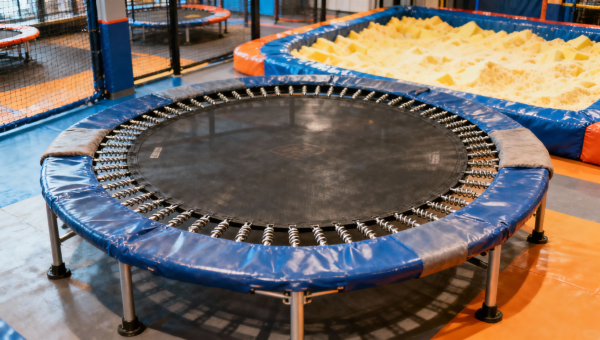
- Trampoline beds and jumping mats – repeated impact causes fabric fatigue, stretching, reduced rebound consistency, and seam stress.
- Springs and elastic connection systems – metal fatigue, corrosion, deformation, and loss of performance can develop faster in high-cycle usage zones.
- Edge pads and protective padding – compression, tearing, vinyl cracking, and hygiene-related surface breakdown are common.
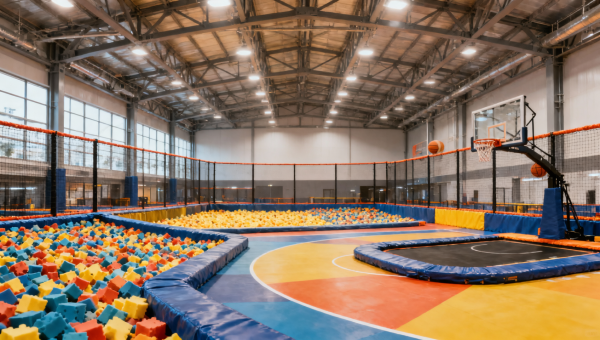
- Foam pit cubes, airbags, and landing systems – these suffer from compression loss, contamination, shape breakdown, and cover damage.
- Grip socks, soft barriers, netting, and enclosure materials – high-touch, high-friction items degrade quickly and often create avoidable replacement costs.
- Stitched play elements and soft-play skins – seams, coatings, and covers tend to fail before internal supports do.
- High-use accessories such as dodgeball features, slam-dunk lanes, ninja-course grips, and warped-wall contact surfaces – these often wear faster than standard open jump zones because user behavior is more aggressive.
For procurement teams, this means lifecycle planning should focus less on the headline attraction frame and more on the consumable or semi-consumable wear layers surrounding it.
Why do these parts wear out faster than operators expect?
Equipment wear is often underestimated because many buyers assess durability in static terms, while trampoline parks operate under repeated dynamic stress. A component may look robust in a showroom or specification sheet, yet fail early in live commercial use for several reasons:
- High repetition impact – thousands of landings per day create cumulative stress that is not obvious during initial inspection.
- User behavior – commercial parks serve children, teens, and adults who may jump off-axis, sit-drop repeatedly, drag shoes, or use equipment outside intended patterns.
- Mixed traffic profiles – party groups, school visits, and peak-weekend traffic accelerate wear much faster than average daily-use estimates.
- Poor cleaning compatibility – some vinyls, foams, coatings, and fabrics deteriorate when exposed to aggressive disinfectants.
- Climate and environment – humidity, salt air, UV exposure near windows, and poor HVAC control can shorten service life.
- Maintenance gaps – small seam failures, loose springs, or compressed foam blocks become larger failures when not addressed early.
- Incorrect spare-part strategy – long replacement lead times force operators to overuse worn parts beyond safe or efficient limits.
In other words, early wear is not always a sign of bad equipment. It is often a combination of design choice, material specification, traffic intensity, maintenance practice, and operational discipline. However, strong suppliers should be able to explain these variables clearly before purchase.
What should buyers inspect most carefully before sourcing trampoline park equipment?
For information researchers, procurement managers, and commercial evaluators, the best buying decisions come from checking wear-prone details instead of only comparing attraction layouts and unit pricing. The following areas deserve special scrutiny:
1. Jump surface material and stitching quality
Ask what material is used for the trampoline bed, what cycle testing has been performed, and how seams are reinforced. Stitch density, thread quality, and edge reinforcement often determine whether a mat keeps its performance or begins to distort early.
2. Spring specification and corrosion resistance
Not all spring systems are equal. Buyers should review spring grade, protective treatment, fatigue performance, and whether replacement sets are standardized and easy to source internationally.
3. Padding construction, not just thickness
Thicker padding is not automatically better if the cover material cracks or the foam compresses quickly. Focus on foam density, cover-grade vinyl, anti-microbial properties where relevant, stitch integrity, and replaceable modular design.
4. Foam pit or airbag replacement economics
Foam pits can become expensive if foam cubes compact quickly or require frequent full-batch replacement. Airbags may reduce some maintenance burdens, but buyers need to examine fan systems, cover wear, pressure consistency, and downtime risk.
5. Surface wear in hybrid attractions
Many modern trampoline parks now combine adventure playground features, ninja elements, climbing, and soft-play structures. These hybrid zones often create hidden wear points at grip handles, landing ramps, crawl tunnels, and coated contact surfaces.
6. Ease of part replacement
A durable product is valuable, but a quickly replaceable product is often even more important commercially. Check whether the supplier offers modular replacement parts, local warehousing, technical manuals, and fast after-sales support.
7. Documentation and compliance support
Strong suppliers should provide not only safety compliance documentation but also maintenance schedules, consumable replacement guidance, and realistic wear expectations based on usage profile.
How do wear-prone components affect ROI and operating costs?
The financial impact of wear is larger than the cost of the replacement part itself. For commercial operators, fast-wearing equipment affects business performance in several connected ways:
- Higher maintenance labor – staff spend more time inspecting, rotating, cleaning, and replacing parts.
- Revenue loss from downtime – if a popular attraction lane is closed, customer throughput and guest satisfaction can fall.
- Safety exposure – worn padding, fatigued mats, or unstable landing materials increase incident risk.
- Shorter refurbishment cycles – parks may need visible refreshes sooner to maintain brand image and customer confidence.
- Spare-part inventory costs – operators may need to stock more consumables to avoid service disruption.
- Warranty disputes – unclear definitions of normal wear versus product defect can create budget surprises.
This is why business buyers should calculate total cost of ownership, not just initial CAPEX. A lower purchase price can become more expensive if mats, pads, foam cubes, or netting need replacement far sooner than expected. For distributors and agents, understanding these wear patterns also improves product positioning and client trust.
How can buyers compare suppliers more effectively?
When comparing trampoline park equipment manufacturers or sourcing partners, it helps to move beyond generic claims such as “commercial grade” or “high quality.” Ask direct questions that reveal how well the supplier understands long-term wear:
- Which components are considered highest replacement-frequency items?
- What is the expected service life of mats, springs, pads, and landing systems under different traffic volumes?
- Which parts are covered by warranty, and what is excluded as normal wear?
- Can the supplier provide maintenance checklists and replacement intervals?
- Are spare parts standardized across multiple park projects?
- What lead times apply for common replacement components?
- Which materials are selected specifically for high-traffic commercial environments?
- Can they share reference projects with similar park size and traffic profile?
The most reliable suppliers are usually the ones that discuss wear openly instead of avoiding the topic. Honest lifecycle guidance is a sign of maturity, not weakness. For B2B buyers, that transparency is often more valuable than an aggressive upfront quote.
What sourcing strategies reduce premature wear and replacement risk?
Smarter sourcing decisions can significantly reduce lifecycle cost. Buyers do not need to eliminate wear completely; they need to control it through better specification and planning.
- Match equipment grade to traffic reality – do not buy for average attendance if your revenue model depends on peak-volume usage.
- Specify modular replaceable components – this lowers maintenance time and avoids replacing entire assemblies.
- Invest in operator training – poor daily inspection routines often shorten service life unnecessarily.
- Plan spare parts at purchase stage – include commonly worn items in the original sourcing package.
- Separate aesthetic finishes from impact-critical materials – visually attractive design should not compromise durability.
- Review cleaning protocols with the manufacturer – sanitation requirements should be compatible with the selected materials.
- Use data from comparable projects – similar venue size, age group mix, and operating hours produce more realistic lifecycle forecasts.
For commercial procurement teams, the strongest strategy is to treat wear-prone parts as planned operational assets rather than unexpected failures. That mindset improves budgeting, safety management, and supplier negotiations.
When is faster wear a design problem versus a normal operating reality?
Not every early replacement is evidence of poor manufacturing. In a busy trampoline park, some material degradation is inevitable. The key is to distinguish predictable wear from avoidable failure.
Usually normal wear: gradual pad compression, surface scuffing in high-contact areas, foam pit compaction over time, and scheduled spring or mat replacement after heavy usage cycles.
Potential design or quality issue: seam failure far earlier than projected, rapid vinyl cracking under standard indoor use, abnormal spring deformation, weak attachment points, or repeated failures in the same component area across multiple installations.
Commercial buyers should therefore ask suppliers for both expected wear patterns and failure escalation thresholds. A credible manufacturer or sourcing partner should help operators understand what is routine, what requires monitoring, and what signals a deeper engineering or material problem.
Conclusion
For anyone sourcing trampoline park equipment, the parts that wear out faster than expected are rarely the heavy steel frame. The real cost centers are the impact surfaces, padded protection zones, landing materials, stitched soft components, and other high-contact wear items that absorb daily operational abuse. Those are the components that deserve the closest commercial review.
The best purchasing decisions come from evaluating lifecycle durability, replacement frequency, spare-part access, and operational fit—not just attraction design and initial price. If buyers compare suppliers through that lens, they can reduce downtime, improve safety consistency, and build a more profitable long-term operation.
In practical terms, the smartest question is simple: which parts will need attention first, and how prepared is this supplier to support them when they do? That answer often tells you more about the real value of a trampoline park investment than any brochure ever will.
Search News
Hot Articles
- Stage Lighting & TrussCCTV5 Snooker Broadcast Drives 37% Surge in Stage Lighting Export InquiriesApr 21, 2026
- Indoor PlaygroundVietnam Mandates Child Finger-Trap Sensors for Indoor Play EquipmentApr 21, 2026
- Stage Lighting & TrussGuangdong vs. Shanxi CBA Game Highlights Domestic Smart Arena LightingApr 21, 2026
Popular Tags
Need ExpertConsultation?
Connect with our specialized leisureengineering team for procurementstrategies.
Recommended News
 Apr 21, 2026Vietnam Mandates Child Finger-Trap Sensors for Indoor Play EquipmentVietnam mandates child finger-trap sensors for indoor play equipment—comply with TCVN 9507:2023 by July 1, 2026 to clear customs & protect kids.● Theme Park Strategist
 Apr 20, 2026NES Launches Sports Community Curator ProgramSports Community Curator program launched by NES — join global fitness studios, uni clubs & outdoor groups to co-create, test gear & grow with Chinese sports brands.● Theme Park Strategist
 Apr 17, 2026CPSC AI Safety Alert: 200ms Delay in Child Playground AI Systems = HazardCPSC AI Safety Alert: 200ms delay in child playground AI systems = hazard. Learn how latency compliance impacts Target/Walmart listings, testing, and supply chain.● Theme Park Strategist
 Apr 17, 20262026 Shanghai Sailing Open Adopts Domestic SeaChronos Pro Timing SystemSeaChronos Pro timing system debuts at 2026 Shanghai Sailing Open — ITU-certified, millisecond-accurate, wind- and tide-integrated. A game-changer for marine sports tech.● Theme Park Strategist
 Apr 16, 2026FDA Proposes New Labeling Rules for Sports Nutrition Supplements with Chinese LabelsFDA's new labeling rules for sports nutrition supplements with Chinese labels take effect April 2026—learn compliance must-dos for U.S. importers, manufacturers & brands.● Theme Park Strategist
 Apr 15, 2026Saudi SASO Updates Amusement Ride Standards: VR Devices Now Require Mandatory EMC TestingSaudi SASO's new 2026 standard mandates EMC testing for VR amusement rides, impacting exporters. Learn key compliance strategies for Saudi market access.● Theme Park Strategist
 Apr 14, 2026Japan Mandates Multilingual E-Manuals for Fitness Equipment from April 2026Japan mandates multilingual e-manuals for fitness equipment from April 2026. Learn how this impacts manufacturers & importers with JIS T 0601-1 compliance requirements. Stay ahead of the regulation!● Theme Park Strategist
 Apr 13, 2026WTT Taiyuan Adopts Chinese AI Table Tennis Analysis System with ITTF Export CertificationWTT Taiyuan adopts Chinese AI table tennis analysis system with ITTF export certification, enabling real-time ball speed & spin tracking. A game-changer for sports tech in emerging markets like Southeast Asia & Middle East.● Theme Park Strategist
 Apr 13, 2026First Female Snooker Player Achieves Multiple Century Breaks as Chinese Table Gains WPBSA CertificationChinese snooker player Bai Yulu makes history with multiple century breaks using WPBSA-certified 'Tournament Pro X7' table, marking a milestone for Chinese manufacturing in professional snooker equipment. Discover how this impacts global markets.● Theme Park Strategist
 Apr 13, 2026RCEP Zero Tariff on China's TPU Sports Protective Gear Boosts ASEAN TradeRCEP's zero-tariff policy on China's TPU sports protective gear boosts ASEAN trade, giving Chinese exporters cost advantages over Korean rivals. Learn how manufacturers and distributors can capitalize on this opportunity.● Theme Park Strategist
 Apr 10, 2026Japan's JIS T 9001:2026 Sports Flooring Anti-Slip Standard Mandatory from April 2026Japan's JIS T 9001:2026 standard mandates anti-slip sports flooring (SCOF ≥ 0.6) from April 2026. Chinese exporters must adapt to meet new requirements. Learn key compliance strategies.● Theme Park Strategist
 Apr 10, 2026Bai Yulu Makes History at Snooker World Championship, Sparks Surge in Women's Sports Equipment DemandBai Yulu makes history at Snooker World Championship with two century breaks, sparking 185% surge in women's sports equipment demand. Discover how manufacturers, e-commerce & supply chains can capitalize on this trend.● Theme Park Strategist
 Apr 10, 20262026 Badminton Asia Championships Quarterfinals Schedule Announced, Shi Yuqi to Compete; Southeast Asia Racket Orders Face 6-8 Week Delays2026 Badminton Asia Championships quarterfinals schedule revealed with Shi Yuqi competing, while Southeast Asia faces 6-8 week racket delays. Learn how supply chain issues impact manufacturers and get strategies to navigate equipment shortages.● Theme Park Strategist
 Apr 10, 2026WTT Taiyuan Challenge Sparks Smart Equipment Demand: Japan Buyers Scrutinize AI Training TechDiscover how the WTT Taiyuan Challenge boosts demand for AI training tech as Japanese buyers evaluate smart sports equipment. Learn key opportunities for manufacturers with JIS-certified solutions.● Theme Park Strategist
 Apr 10, 2026Chinese Snooker Players' Success Spurs Global Demand for Cue AccessoriesChinese snooker players' success drives 210% global demand surge for cue accessories. Explore how manufacturers & exporters can capitalize on this trend with UK, German & Australian markets leading inquiries.● Theme Park Strategist
 Apr 10, 2026EU Updates EN 16830:2026 Eyewear Safety Standard, Impacting China's Sports Goggle ExportsEU's updated EN 16830:2026 eyewear safety standard impacts China's sports goggle exports with stricter CE certification requirements. Learn how manufacturers and exporters can adapt to new impact resistance, UV400+, and blue light blocking standards before the September 2026 deadline.● Theme Park Strategist
 Apr 22, 2026Vietnam Mandates Child Finger-Trap Sensors for Indoor Playground EquipmentVietnam mandates child finger-trap sensors for indoor playground equipment—comply with QCVN 128:2026 & TCVN 9350:2023 before Oct 2026!● Theme Park Strategist
 Apr 22, 2026How to Tell if an Indoor Playground Design Is Too GenericIndoor playground buyers: learn how to spot a generic indoor playground design before it feels like a trampoline park or adventure playground template, and protect brand appeal and ROI.● Theme Park Strategist
 Apr 22, 2026Indoor Playground Layout Mistakes That Limit Repeat VisitsIndoor playground and trampoline park layout mistakes can quietly reduce repeat visits, spend, and safety. Learn how zoning, arcade games flow, and adventure playground planning drive stronger returns.● Theme Park Strategist
 Apr 22, 2026Trampoline Park Equipment That Wears Out Faster Than ExpectedTrampoline park buyers: discover which indoor playground and adventure playground components wear out first, how to cut downtime, improve safety, and choose equipment with better long-term ROI.● Theme Park Strategist
 Apr 22, 2026What Makes a Trampoline Park Profitable Beyond Ticket Sales?Trampoline park profit goes beyond tickets with arcade games, indoor playground and adventure playground upgrades. Discover smarter revenue ideas for buyers and operators.● Theme Park Strategist
 Apr 21, 2026Trampoline park price per square foot explained simplyTrampoline park price per square foot explained simply—compare every trampoline park supplier and indoor playground manufacturer with clear cost drivers, scope tips, and smarter ROI insights.● Theme Park Strategist
 Apr 22, 2026Indoor playground manufacturer or trader? A practical way to tellIndoor playground manufacturer or indoor playground supplier? Learn practical checks to spot traders, compare trampoline park supplier options, reduce sourcing risk, and choose with confidence.● Theme Park Strategist
 Apr 22, 2026How indoor playground suppliers handle custom layoutsIndoor playground supplier insights: learn how an indoor playground manufacturer plans custom layouts for safety, traffic flow, branding, and trampoline park price—compare smarter and avoid costly redesigns.● Theme Park Strategist