Indoor Playground Layout Mistakes That Limit Repeat Visits
An indoor playground that looks exciting on opening day can still fail to bring families back. From poor traffic flow near arcade games to weak zoning between toddler areas and adventure playground features, small layout mistakes can reduce dwell time, safety, and spending. For buyers and operators evaluating an indoor playground or trampoline park project, understanding these design pitfalls is essential to improving repeat visits and long-term commercial performance.
In the sports and entertainment sector, layout decisions affect far more than visual appeal. They shape queue behavior, caregiver comfort, staff visibility, maintenance routines, birthday party conversion, and secondary revenue from food, redemption, and retail. For procurement teams, distributors, and project evaluators, the right layout is not just a design concern; it is a commercial performance variable that should be assessed before equipment lists are finalized.
A repeat-visit indoor playground usually performs well across 4 measurable areas: circulation efficiency, age-appropriate zoning, dwell-time support, and operational control. When one or more of these areas is weak, guest experience becomes inconsistent. Families may visit once for novelty but choose not to return within the next 30–90 days, which is often the period operators rely on to build habit-based traffic.
Poor Traffic Flow Reduces Dwell Time and Spending
One of the most common indoor playground layout mistakes is treating circulation as leftover space instead of a planned system. If entry, shoe storage, check-in, stroller parking, arcade games, café seating, and the main play structure compete within the first 8–15 meters, the result is congestion. Parents feel rushed, children become overstimulated, and front-of-house staff spend more time directing movement than supporting sales.
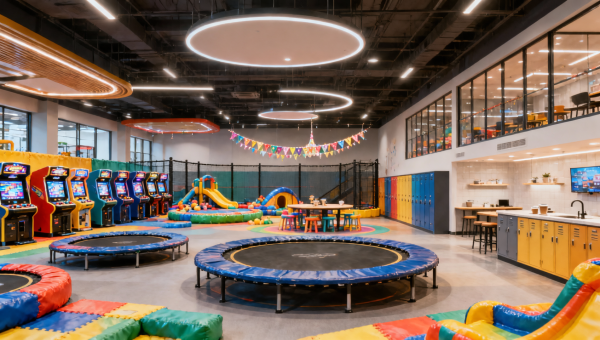
High-friction zones are especially damaging near revenue points. Arcade machines placed too close to entrance gates can block traffic and create stop-start movement. Redemption counters installed beside party room corridors can produce bottlenecks during peak periods. In many family entertainment venues, even a 1.2-meter aisle can feel narrow when strollers, children, and staff cross paths at the same time. For core circulation, 1.8–2.4 meters is usually more workable in medium to high-traffic sites.
Traffic flow should also support sightlines. If parents cannot understand the layout within the first 20–30 seconds of entry, they perceive the venue as harder to supervise. That perception alone can shorten visits. The goal is not simply to move people faster, but to reduce uncertainty while guiding them through high-value zones such as café seating, party booking displays, lockers, and add-on attractions.
Typical circulation errors in indoor playground projects
- Placing check-in desks directly opposite active play exits, causing incoming and outgoing guest streams to collide.
- Using decorative islands, retail bins, or claw machines in primary walking paths instead of perimeter zones.
- Failing to separate party guest flow from open-play visitor flow during weekends and school holidays.
- Creating dead-end toddler corners that force families to reverse through crowded areas.
The table below shows how layout-related circulation issues translate into operating problems and commercial impact. This is particularly useful during design review, supplier selection, or site feasibility discussions.
For buyers comparing equipment partners or design-build proposals, circulation should be reviewed as early as the concept stage. A vendor that only provides attractive renderings but cannot explain customer flow in 3 peak scenarios—weekday, weekend, and party turnover—may be increasing downstream operational cost.
Weak Zoning Creates Safety Friction and Limits Repeat Visits
An indoor playground serves multiple user groups at the same time: toddlers aged 1–3, younger children around 4–6, older children seeking challenge-based play, and adults who need seating, visibility, and comfort. When these groups are not zoned clearly, experience quality declines fast. A toddler area placed beside a high-energy ninja course or trampoline lane can create noise, collision risk, and parental anxiety.
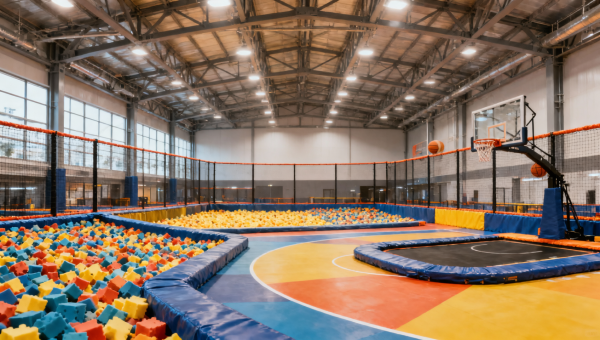
Good zoning is not only about fencing off areas. It involves play intensity, height progression, sound management, and transition logic. A well-planned venue usually separates low-impact, sensory, and soft play from medium- and high-intensity activity through distance, visual barriers, or intermediate zones. In practical terms, keeping toddler play at least one zoning layer away from slam-dunk areas, high slides, or active ball play often improves comfort and supervision.
Weak zoning also affects maintenance and staffing. If a staff member must supervise 3 incompatible activity types from one position, response time suffers. Operators then compensate with extra labor, which increases operating expense. For commercial buyers, that means layout decisions made before opening can influence payroll efficiency for years.
How to zone for age, energy level, and supervision
A practical zoning model uses 4 layers: welcome and support spaces, low-energy play, general family play, and high-energy challenge zones. This structure helps families orient themselves quickly while reducing cross-traffic. It also supports add-on revenue because adults are more likely to purchase food, drinks, or party upgrades when they can supervise children without constant repositioning.
Recommended planning priorities
- Place toddler soft play near seating and restroom access, ideally within a short walking distance of 10–20 meters.
- Separate trampolines, climbing walls, and high-adrenaline features from under-5 play by at least one buffer zone.
- Keep party rooms close enough for service efficiency but not on top of open-play circulation.
- Use open sightlines where possible, but avoid exposing quiet zones to continuous high-noise activity.
The following table helps procurement teams assess whether a proposed indoor playground layout supports safe and commercially sensible zoning across different play categories.
For distributors and project consultants, clear zoning is a strong selling point because it links design with operator outcomes. It reduces complaint frequency, improves perceived safety, and helps position the venue for repeat family use rather than one-time novelty traffic.
Ignoring Parent Experience Is a Repeat-Visit Mistake
Many indoor playground concepts are designed entirely from a child-excitement perspective. That is understandable at launch, but repeat visits are often decided by adults. If parents face uncomfortable seating, poor visibility, noisy café placement, weak charging access, or no calm area for younger siblings, the venue becomes a tiring outing rather than an easy repeat choice.
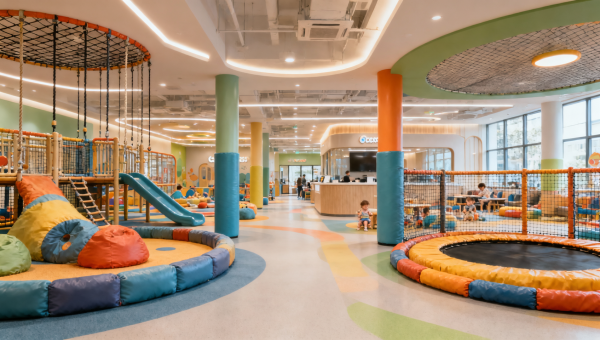
A parent-friendly environment does not require luxury fit-out. It requires practical support. Seating should cover several supervision angles, not only the most photogenic view. Table depth matters for food and laptops. Restrooms should be easy to reach without crossing high-energy play. In many successful family entertainment layouts, at least 20%–30% of front-facing non-play area is allocated to seating, waiting, food, and support functions.
This is also where layout connects directly to spend. Families stay longer when adults are comfortable. Longer stays create more opportunities for food and beverage purchases, token reloads, party inquiries, and return-pass sales. If the environment pushes caregivers to leave after 60–75 minutes, revenue per visit often remains under potential even when ticket sales look healthy.
Parent-centric design elements that support commercial outcomes
- Clear sightlines into at least 2 major play zones from the main seating bank.
- Separation between café queue and supervision seating so adults are not forced to abandon visibility.
- Convenient bag, coat, and stroller management to reduce clutter in aisles.
- Acoustic control near rest zones so the venue feels active but not exhausting after 90 minutes.
Another frequent mistake is placing all premium monetization near exits. While impulse sales can work there, not every purchase decision happens at departure. Membership desks, party displays, and café offers should appear in at least 2–3 decision points during the visit. Layout can quietly support conversion if those touchpoints are visible without disrupting circulation.
For B2B buyers, this means evaluating proposals beyond the equipment count. Ask whether the design includes a caregiver journey, not just a child journey. A project that adds 50 square meters of well-positioned support space may outperform a denser equipment layout over a 12–24 month operating horizon.
Overloading the Floor with Features Can Hurt Utilization
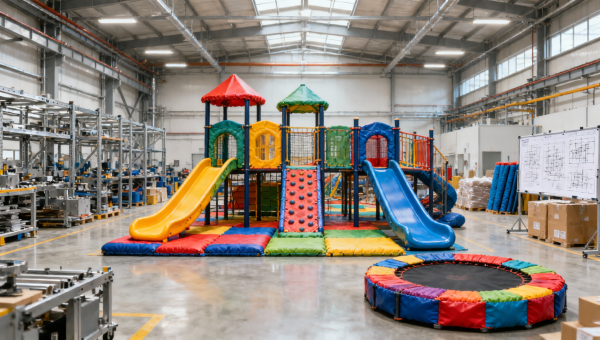
A common assumption in indoor playground planning is that more attractions automatically mean more value. In practice, over-programming the floor can reduce usability. If every corner is packed with slides, climbing elements, redemption games, and event props, guests have less room to orient, queue, rest, and transition. The venue may look impressive in a rendering but feel chaotic during actual operation.
Feature density should be balanced against throughput and supervision. Some attraction types have high visual impact but low hourly turnover. Others create hidden staffing demands. If too many low-capacity features are clustered together, queues become part of the guest experience. Families often tolerate this on the first visit, but repeat behavior declines when perceived play time is lower than ticket value.
Commercially effective layouts usually mix anchor attractions with free-flow play and support zones. A venue does not need 10 signature elements if 4–6 well-chosen zones are better integrated. Buyers should evaluate not only attraction count but also queue management, maintenance access, cleaning frequency, and replacement planning over a 3–5 year period.
Feature planning checklist for procurement and design review
During supplier comparison, use a practical review framework rather than relying only on visual concepts. The table below provides a layout-focused decision tool for balancing attraction value and operational efficiency.
This kind of review is valuable for sourcing teams working with OEM or custom fabricators. A supplier that can explain capacity logic, cleaning access, and replacement strategy is often more suitable for long-term commercial use than one focused only on theme aesthetics.
What buyers should ask before approving a dense layout
- How many children can each major zone handle at one time without queue spillover?
- How often do high-contact components require cleaning during peak periods?
- Can worn parts be replaced without shutting down adjacent attractions for several hours?
- Does the plan leave enough open space for birthday groups and caregiver regrouping?
Operational Blind Spots in Layout Planning Increase Long-Term Cost
Some of the most expensive layout mistakes are invisible during concept approval. Storage rooms are undersized, cleaning routes are awkward, party support areas are too far from service points, and staff cannot monitor multiple zones efficiently. These issues rarely appear in marketing visuals, but they affect labor, hygiene, guest recovery, and uptime from day one.
For example, if socks, wristbands, cleaning materials, birthday supplies, and redemption stock do not have dedicated back-of-house space, they often migrate into public areas. That weakens presentation and slows replenishment. If a venue needs 2 extra staff during weekends simply because supervision points were poorly positioned, layout has become a permanent payroll problem rather than a one-time design choice.
Project evaluation should therefore include a 5-step operational review: guest entry, play circulation, party turnover, cleaning cycle, and emergency response. Each step should be tested against peak demand, not only average demand. In many venues, the critical failures happen in 2-hour high-pressure windows rather than during normal daily operation.
Practical questions for buyers, consultants, and distributors
- Can one supervisor monitor key risk areas without blind spots created by decorative walls or oversized structures?
- Are cleaning teams able to access high-touch zones every 2–3 hours during peak sessions?
- Is there a realistic route for birthday food, gifts, and staff movement that does not cross the busiest family paths?
- Can spare parts and consumables be stored near point of use without entering guest-facing space?
Delivery and fit-out considerations
A well-performing indoor playground layout should also be realistic to deliver. Depending on project size and customization depth, concept confirmation may take 2–4 weeks, fabrication 4–10 weeks, and installation another 1–3 weeks. When layouts are overcomplicated, approval cycles lengthen and on-site changes become more likely. That can delay opening and create mismatch between purchased equipment and actual operating needs.
This is where a sourcing-led partner like GCT creates value for commercial buyers. By connecting procurement thinking with layout practicality, buyers can compare suppliers not only on price and appearance, but also on design logic, compliance readiness, service responsiveness, and long-term operating fit. For international distributors and agents, this approach also lowers the risk of supporting a project that photographs well but performs poorly after launch.
FAQ: What Buyers Should Clarify Before Finalizing an Indoor Playground Layout
How large should the toddler zone be in a family entertainment venue?
There is no universal size, but it should be proportionate to expected family traffic and clearly separated from high-intensity areas. In many mixed-age venues, planners reserve a dedicated low-impact section rather than adding a small toddler corner inside the main structure. The key is supervision, access to seating, and enough room for low-speed circulation.
What is the biggest layout mistake in trampoline park and indoor playground hybrids?
The biggest mistake is allowing high-energy and low-energy traffic to overlap. Trampoline lanes, challenge courses, and soft play should not share the same approach paths without clear transition control. Hybrid venues need stronger zoning because the energy gap between activities is wider, and guest expectations are more mixed.
How can procurement teams compare two design proposals more effectively?
Use a scorecard with at least 6 factors: circulation, zoning, parent visibility, staffing efficiency, maintenance access, and revenue support. This makes it easier to compare a visually impressive proposal against one with stronger long-term operating logic. Ask vendors to explain how the layout performs during peak occupancy, not only how it looks in presentation drawings.
When should layout review happen in the sourcing process?
Ideally before final equipment selection and before fabrication approvals. Once custom structures, themed elements, and power positions are fixed, changes become expensive. Early review reduces redesign risk and helps align commercial goals with available floor area, staffing model, and target visitor profile.
Indoor playground layout mistakes rarely fail at launch; they fail later by reducing comfort, clarity, and return motivation. Poor traffic flow, weak zoning, parent-unfriendly planning, feature overload, and operational blind spots all weaken repeat visits over time. For buyers and business evaluators, the most valuable design is the one that supports safe movement, easy supervision, efficient staffing, and repeatable revenue opportunities.
GCT supports commercial decision-makers in the sports and entertainment sector with sourcing insight that goes beyond equipment catalogs. If you are comparing indoor playground suppliers, planning a trampoline park, or reviewing a new family entertainment concept, now is the right time to assess layout performance before final procurement. Contact us to discuss your project, request a tailored sourcing perspective, or explore more commercial play solutions.
Search News
Hot Articles
- Stage Lighting & TrussCCTV5 Snooker Broadcast Drives 37% Surge in Stage Lighting Export InquiriesApr 21, 2026
- Indoor PlaygroundVietnam Mandates Child Finger-Trap Sensors for Indoor Play EquipmentApr 21, 2026
- Stage Lighting & TrussGuangdong vs. Shanxi CBA Game Highlights Domestic Smart Arena LightingApr 21, 2026
Popular Tags
Need ExpertConsultation?
Connect with our specialized leisureengineering team for procurementstrategies.
Recommended News
 Apr 21, 2026Vietnam Mandates Child Finger-Trap Sensors for Indoor Play EquipmentVietnam mandates child finger-trap sensors for indoor play equipment—comply with TCVN 9507:2023 by July 1, 2026 to clear customs & protect kids.● Theme Park Strategist
 Apr 20, 2026NES Launches Sports Community Curator ProgramSports Community Curator program launched by NES — join global fitness studios, uni clubs & outdoor groups to co-create, test gear & grow with Chinese sports brands.● Theme Park Strategist
 Apr 17, 2026CPSC AI Safety Alert: 200ms Delay in Child Playground AI Systems = HazardCPSC AI Safety Alert: 200ms delay in child playground AI systems = hazard. Learn how latency compliance impacts Target/Walmart listings, testing, and supply chain.● Theme Park Strategist
 Apr 17, 20262026 Shanghai Sailing Open Adopts Domestic SeaChronos Pro Timing SystemSeaChronos Pro timing system debuts at 2026 Shanghai Sailing Open — ITU-certified, millisecond-accurate, wind- and tide-integrated. A game-changer for marine sports tech.● Theme Park Strategist
 Apr 16, 2026FDA Proposes New Labeling Rules for Sports Nutrition Supplements with Chinese LabelsFDA's new labeling rules for sports nutrition supplements with Chinese labels take effect April 2026—learn compliance must-dos for U.S. importers, manufacturers & brands.● Theme Park Strategist
 Apr 15, 2026Saudi SASO Updates Amusement Ride Standards: VR Devices Now Require Mandatory EMC TestingSaudi SASO's new 2026 standard mandates EMC testing for VR amusement rides, impacting exporters. Learn key compliance strategies for Saudi market access.● Theme Park Strategist
 Apr 14, 2026Japan Mandates Multilingual E-Manuals for Fitness Equipment from April 2026Japan mandates multilingual e-manuals for fitness equipment from April 2026. Learn how this impacts manufacturers & importers with JIS T 0601-1 compliance requirements. Stay ahead of the regulation!● Theme Park Strategist
 Apr 13, 2026WTT Taiyuan Adopts Chinese AI Table Tennis Analysis System with ITTF Export CertificationWTT Taiyuan adopts Chinese AI table tennis analysis system with ITTF export certification, enabling real-time ball speed & spin tracking. A game-changer for sports tech in emerging markets like Southeast Asia & Middle East.● Theme Park Strategist
 Apr 13, 2026First Female Snooker Player Achieves Multiple Century Breaks as Chinese Table Gains WPBSA CertificationChinese snooker player Bai Yulu makes history with multiple century breaks using WPBSA-certified 'Tournament Pro X7' table, marking a milestone for Chinese manufacturing in professional snooker equipment. Discover how this impacts global markets.● Theme Park Strategist
 Apr 13, 2026RCEP Zero Tariff on China's TPU Sports Protective Gear Boosts ASEAN TradeRCEP's zero-tariff policy on China's TPU sports protective gear boosts ASEAN trade, giving Chinese exporters cost advantages over Korean rivals. Learn how manufacturers and distributors can capitalize on this opportunity.● Theme Park Strategist
 Apr 10, 2026Japan's JIS T 9001:2026 Sports Flooring Anti-Slip Standard Mandatory from April 2026Japan's JIS T 9001:2026 standard mandates anti-slip sports flooring (SCOF ≥ 0.6) from April 2026. Chinese exporters must adapt to meet new requirements. Learn key compliance strategies.● Theme Park Strategist
 Apr 10, 2026Bai Yulu Makes History at Snooker World Championship, Sparks Surge in Women's Sports Equipment DemandBai Yulu makes history at Snooker World Championship with two century breaks, sparking 185% surge in women's sports equipment demand. Discover how manufacturers, e-commerce & supply chains can capitalize on this trend.● Theme Park Strategist
 Apr 10, 20262026 Badminton Asia Championships Quarterfinals Schedule Announced, Shi Yuqi to Compete; Southeast Asia Racket Orders Face 6-8 Week Delays2026 Badminton Asia Championships quarterfinals schedule revealed with Shi Yuqi competing, while Southeast Asia faces 6-8 week racket delays. Learn how supply chain issues impact manufacturers and get strategies to navigate equipment shortages.● Theme Park Strategist
 Apr 10, 2026WTT Taiyuan Challenge Sparks Smart Equipment Demand: Japan Buyers Scrutinize AI Training TechDiscover how the WTT Taiyuan Challenge boosts demand for AI training tech as Japanese buyers evaluate smart sports equipment. Learn key opportunities for manufacturers with JIS-certified solutions.● Theme Park Strategist
 Apr 10, 2026Chinese Snooker Players' Success Spurs Global Demand for Cue AccessoriesChinese snooker players' success drives 210% global demand surge for cue accessories. Explore how manufacturers & exporters can capitalize on this trend with UK, German & Australian markets leading inquiries.● Theme Park Strategist
 Apr 10, 2026EU Updates EN 16830:2026 Eyewear Safety Standard, Impacting China's Sports Goggle ExportsEU's updated EN 16830:2026 eyewear safety standard impacts China's sports goggle exports with stricter CE certification requirements. Learn how manufacturers and exporters can adapt to new impact resistance, UV400+, and blue light blocking standards before the September 2026 deadline.● Theme Park Strategist
 Apr 22, 2026Vietnam Mandates Child Finger-Trap Sensors for Indoor Playground EquipmentVietnam mandates child finger-trap sensors for indoor playground equipment—comply with QCVN 128:2026 & TCVN 9350:2023 before Oct 2026!● Theme Park Strategist
 Apr 22, 2026How to Tell if an Indoor Playground Design Is Too GenericIndoor playground buyers: learn how to spot a generic indoor playground design before it feels like a trampoline park or adventure playground template, and protect brand appeal and ROI.● Theme Park Strategist
 Apr 22, 2026Indoor Playground Layout Mistakes That Limit Repeat VisitsIndoor playground and trampoline park layout mistakes can quietly reduce repeat visits, spend, and safety. Learn how zoning, arcade games flow, and adventure playground planning drive stronger returns.● Theme Park Strategist
 Apr 22, 2026Trampoline Park Equipment That Wears Out Faster Than ExpectedTrampoline park buyers: discover which indoor playground and adventure playground components wear out first, how to cut downtime, improve safety, and choose equipment with better long-term ROI.● Theme Park Strategist
 Apr 22, 2026What Makes a Trampoline Park Profitable Beyond Ticket Sales?Trampoline park profit goes beyond tickets with arcade games, indoor playground and adventure playground upgrades. Discover smarter revenue ideas for buyers and operators.● Theme Park Strategist
 Apr 21, 2026Trampoline park price per square foot explained simplyTrampoline park price per square foot explained simply—compare every trampoline park supplier and indoor playground manufacturer with clear cost drivers, scope tips, and smarter ROI insights.● Theme Park Strategist
 Apr 22, 2026Indoor playground manufacturer or trader? A practical way to tellIndoor playground manufacturer or indoor playground supplier? Learn practical checks to spot traders, compare trampoline park supplier options, reduce sourcing risk, and choose with confidence.● Theme Park Strategist
 Apr 22, 2026How indoor playground suppliers handle custom layoutsIndoor playground supplier insights: learn how an indoor playground manufacturer plans custom layouts for safety, traffic flow, branding, and trampoline park price—compare smarter and avoid costly redesigns.● Theme Park Strategist