What Makes a Reliable Playground Supplier?
Choosing the right playground supplier is about more than price—it affects safety, durability, compliance, and long-term project value. For buyers involved in playground planning, understanding how suppliers manage design support, certifications, and playground safety surfacing is essential. This guide explains the key factors that define a dependable partner, from product quality to installation-ready playground surfacing solutions.
For procurement teams, distributors, developers, and commercial evaluators, the supplier decision shapes far more than a single purchase order. It influences how quickly a project moves from concept to installation, whether the site meets local safety expectations, and how much maintenance burden will appear in years 2 to 5 of operation.
In amusement, leisure, school, hospitality, and public recreation projects, a reliable playground supplier combines engineering discipline, responsive communication, and practical delivery capability. The strongest partners do not just sell playground equipment; they help buyers reduce risk across design, compliance, surfacing, logistics, and after-sales support.
Why Reliability Matters More Than Initial Price
A low quotation can look attractive during early budgeting, especially when a project includes multiple cost centers such as site preparation, drainage, landscaping, fencing, and shade structures. However, in commercial playground planning, the lowest upfront price often becomes expensive if the supplier cannot provide consistent quality, clear compliance documents, or dependable lead times.
Reliable playground suppliers reduce hidden costs in at least 4 areas: design revisions, freight coordination, installation errors, and premature replacement. For example, if a supplier cannot align equipment fall height with the selected playground safety surfacing, the buyer may face redesign work, delayed approvals, or added sitework after equipment reaches the jobsite.
For commercial operators, durability has a measurable impact. A product line designed for high traffic should withstand repeated daily use, UV exposure, rain, and surface abrasion over a service life that commonly ranges from 8 to 15 years, depending on climate, usage intensity, and maintenance discipline. Weak materials may look acceptable at handover but show corrosion, color fading, or joint looseness within 12 to 24 months.
The same principle applies to playground surfacing solutions. Poorly matched or poorly installed surfacing can create drainage issues, trip edges, compaction loss, or impact attenuation problems. That is why experienced buyers treat equipment and playground surfacing as one integrated safety system rather than 2 separate procurement items.
Commercial Consequences of Choosing the Wrong Supplier
When a supplier lacks project discipline, the risk is rarely limited to product defects. It can affect opening schedules, insurance acceptance, public perception, and future warranty claims. In hospitality or municipal settings, even a delay of 2 to 6 weeks can disrupt seasonal revenue planning or tender obligations.
- Delayed technical drawings can hold back approval from architects, schools, or public works reviewers.
- Incomplete compliance files may slow internal purchasing decisions and site acceptance procedures.
- Unclear installation guidance increases the chance of anchoring errors, unsafe clearances, or surfacing mismatch.
- Weak spare parts support can extend downtime from a few days to several weeks.
For distributors and agents, supplier reliability also affects reputation. If replacement parts, color consistency, or packaging quality vary from shipment to shipment, the distributor absorbs the relationship damage even when manufacturing is outsourced elsewhere.
Core Criteria That Define a Reliable Playground Supplier
A dependable playground supplier should be assessed through a structured commercial lens. Buyers should review at least 6 criteria: product engineering, safety documentation, design assistance, manufacturing consistency, logistics coordination, and after-sales responsiveness. Looking at only catalog appearance or unit price does not provide enough information for commercial decision-making.
The first checkpoint is technical clarity. Reliable suppliers can explain material options, age-group suitability, load assumptions, fall height implications, and site space requirements in clear terms. They should also provide layout drawings, recommended use zones, and installation references before final approval, not after production starts.
The second checkpoint is consistency between promise and delivery. A supplier may offer custom colors, themed structures, or OEM/ODM adaptation, but buyers should verify whether these options can be delivered within normal lead times such as 4 to 10 weeks for standard systems or 8 to 16 weeks for custom programs. Customization is valuable only when process control is strong.
The third checkpoint is support depth. Commercial buyers often need pre-sales drawing assistance, bill of materials clarity, surfacing recommendations, packaging logic for phased installation, and post-installation spare parts planning. A reliable partner should support the full project cycle, not just the factory dispatch stage.
Practical Evaluation Checklist
The table below shows how procurement teams can compare playground suppliers using practical, non-marketing criteria. This approach is especially useful for schools, hospitality groups, public projects, and distribution partners evaluating multiple offers at the same time.
The strongest suppliers usually score well across all 5 areas rather than overperforming in only one. If a supplier offers low cost but weak documentation or slow service response, the total project risk remains high. Buyers should evaluate the entire delivery model, not just the product brochure.
Questions Buyers Should Ask Early
- What age groups is each play structure designed for, and how are activity zones separated?
- What is the required critical fall height relationship between equipment and playground safety surfacing?
- What is the standard lead time for stocked models versus custom configurations?
- How quickly can spare parts be supplied if a component is damaged during installation or use?
- What maintenance tasks are recommended every 3, 6, and 12 months?
Safety Compliance, Surfacing, and Documentation Standards
Safety is one of the clearest indicators of supplier reliability. A serious playground supplier understands that equipment selection, safety clearances, and surfacing performance are interconnected. This is especially important in commercial projects where the buyer may need approval from architects, school boards, municipalities, hotel operators, or insurance reviewers before installation begins.
A reliable supplier should provide documentation relevant to the destination market, such as product test references, material specifications, maintenance instructions, and installation guidance. Even when the buyer works with an independent installer, clear instructions help avoid field mistakes such as incorrect footing depth, improper bolt torque, or unsafe spacing between moving and static components.
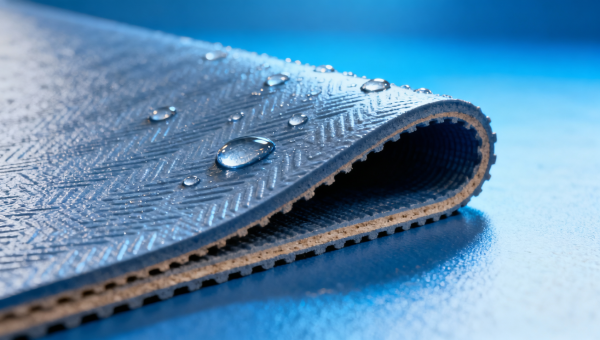
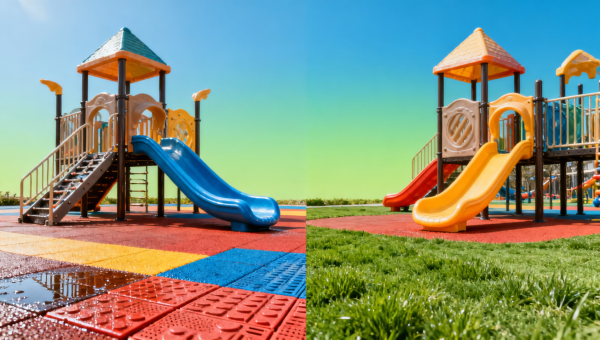
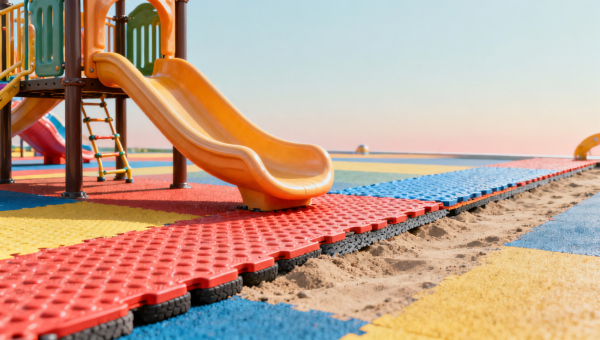
Playground safety surfacing deserves special attention because it is often the difference between a compliant installation and a rejected site. Different surfacing options perform differently depending on fall height, drainage, climate, maintenance resources, and expected traffic. Typical categories include poured-in-place rubber, rubber tiles, engineered wood fiber, synthetic turf systems with pads, and bonded loose-fill variations.
Buyers should request a complete view of the equipment-to-surfacing relationship. For example, if a structure includes elevated decks, climbers, or slides with higher exit points, the selected playground surfacing must be matched to the critical fall height requirement. In many project reviews, surfacing is not a side item; it is a central safety decision with long-term maintenance implications.
Comparing Common Playground Surfacing Options
The table below outlines practical trade-offs between common playground safety surfacing choices. Final suitability depends on local standards, climate, and maintenance capability, but these categories help buyers frame early conversations with playground suppliers and site planners.
The key takeaway is that no single surfacing option is best for every project. A reliable playground supplier will explain where each solution works well, where it may underperform, and how maintenance expectations change over a 3-year or 5-year operating window.
Documentation Buyers Should Request
- Product layouts showing dimensions, use zones, and age recommendations.
- Installation manuals with footing, anchoring, and assembly sequence details.
- Maintenance guidance specifying inspection intervals such as monthly, quarterly, and annual checks.
- Material information for steel, plastic, aluminum, rope, timber, coatings, and fasteners.
- Surfacing recommendations linked to fall height and site condition assumptions.
Manufacturing Quality, Delivery Capability, and Service Responsiveness
Even a well-designed playground system can create commercial problems if manufacturing consistency is weak. Buyers should look beyond catalog photos and ask how the supplier controls fabrication accuracy, hardware packaging, coating quality, and final pre-shipment inspection. In larger projects, small errors repeated across 30, 50, or 100 components can slow installation significantly.
Reliable playground suppliers usually have documented production steps and defined inspection checkpoints. These may include tube cutting and welding verification, coating checks, component labeling, hardware counting, and package marking by installation zone. For a multi-tower structure or themed play area, shipment organization can save several days of on-site labor.
Delivery capability also matters for distributors and project developers managing tight calendars. Standard lead times in the sector may range from 4 to 8 weeks for common product lines and 8 to 16 weeks for custom structures, depending on volume, material mix, and seasonality. What matters is not only the promised lead time, but also the supplier’s ability to update schedules early when changes occur.
After-sales support is another major trust signal. Responsive suppliers provide spare parts lists, as-built references, maintenance guidance, and a clear issue escalation path. A good benchmark is an initial service response within 24 to 72 hours for commercial inquiries, with replacement part planning based on realistic transit times rather than vague promises.
Typical Delivery and Support Expectations
The table below summarizes what commercial buyers often expect from a professionally managed playground supplier. These are not universal rules, but they provide a practical baseline for supplier comparison during sourcing and qualification.
Suppliers that provide transparent timelines, packing lists, and service procedures are generally easier to work with over the long term. In contrast, vague communication during the quotation stage often becomes a larger operational problem once manufacturing or installation begins.
Operational Warning Signs
- No clear answer on spare parts availability for 3 to 5 years after installation.
- Inability to explain how surfacing recommendations relate to equipment fall heights.
- Repeated changes to drawings, bills of material, or package counts without traceable revision control.
- No installation sequence guidance for complex structures or themed assemblies.
- Overly broad promises on delivery without milestone dates or documentation.
How Buyers, Distributors, and Project Teams Should Select a Supplier
Selection works best when buyers use a weighted evaluation process rather than a purely price-based comparison. For example, a procurement team may allocate 30% to safety and documentation, 25% to product durability, 20% to delivery capability, 15% to design support, and 10% to after-sales service. This method helps commercial decision-makers defend the purchase internally.
Distributors and agents should add channel-specific criteria such as branding flexibility, packaging consistency, replacement part logistics, and responsiveness to technical questions from end customers. A supplier that performs well in factory-direct project sales may not automatically be a good fit for dealer networks if documentation and support systems are weak.
Buyers should also check whether the supplier understands different application scenarios. A school playground, a hotel family zone, a municipal park, and an indoor leisure center all have different traffic patterns, design priorities, and maintenance expectations. A reliable supplier adapts recommendations to the environment rather than offering the same package to every project type.
For organizations managing international sourcing, communication discipline is especially important. Confirm who handles technical review, who issues revised drawings, how many approval rounds are included, and what commercial terms apply to custom changes after sign-off. These details often determine whether a project remains controlled or drifts into avoidable cost and time overruns.
A 5-Step Sourcing Process
- Define the project brief, including age groups, site dimensions, target budget range, surfacing preference, and local approval needs.
- Request preliminary layouts, equipment specifications, and playground safety surfacing recommendations from 2 to 4 shortlisted suppliers.
- Compare documentation quality, lead time clarity, material details, and after-sales processes using a scoring sheet.
- Review commercial terms, spare parts support, packaging logic, and installation guidance before final selection.
- Approve the final drawing set and maintain revision control through production, delivery, and handover.
FAQ for Commercial Playground Sourcing
How do I know if a playground supplier is suitable for public or institutional projects?
Check whether the supplier can provide structured layout drawings, installation guidance, maintenance schedules, and surfacing compatibility information. Public and institutional projects usually require more documentation discipline than simple retail purchases.
How important is playground safety surfacing in supplier selection?
It is critical. Surfacing performance must align with equipment design, fall height, drainage conditions, and long-term maintenance resources. Buyers should treat surfacing as part of the full playground system, not as an afterthought.
What lead time should buyers expect?
For common systems, 4 to 8 weeks is a typical planning range, while custom projects may require 8 to 16 weeks. Shipping, customs, and on-site preparation may add additional time, so buyers should build schedule buffers into project plans.
What is a common mistake during supplier comparison?
The most common mistake is comparing only equipment prices without reviewing documentation quality, installation readiness, surfacing compatibility, and spare parts support. The apparent savings can disappear quickly if project delays or rework occur.
A reliable playground supplier stands out through technical transparency, dependable manufacturing, strong documentation, practical surfacing guidance, and responsive service after delivery. For commercial buyers in sports and entertainment environments, these factors directly affect safety, uptime, lifecycle cost, and project credibility.
Global Commercial Trade supports professional sourcing decisions by helping buyers evaluate suppliers through a commercial, risk-aware lens. If you are planning a new playground project, expanding a distribution portfolio, or comparing playground surfacing solutions for a public or hospitality site, now is the right time to review your options in detail.
Contact us to discuss your sourcing priorities, request a tailored supplier evaluation framework, or explore more solutions for commercial playground equipment and safety surfacing.
Search News
Hot Articles
- Pro Stage AudioFIFA Adopts Chinese Mini-LED Displays for 2026 World Cup VAR SystemApr 24, 2026
- Outdoor RidesChina FA Warns Nanjing City Over Fan Conduct; ISO 20785 Compliance AcceleratesApr 24, 2026
- Pro Stage AudioFan Zhendong Visits Silicon Valley as MLTT Investor, AI Ping-Pong Tech Draws US InterestApr 24, 2026
Popular Tags
Need ExpertConsultation?
Connect with our specialized leisureengineering team for procurementstrategies.
Recommended News
 Apr 24, 2026Vietnam Mandates Child Finger-Trap Sensors for Indoor Playground EquipmentVietnam mandates child finger-trap sensors for indoor playground equipment—VINA-CE certified & third-party tested. Act now to ensure compliance, avoid shipment delays, and meet April 23, 2026 deadline.● Theme Park Strategist
 Apr 23, 2026Fan Zhendong Visits Silicon Valley as MLTT Investor, AI Ping-Pong Tech Draws AttentionAI ping-pong tech takes center stage as Fan Zhendong visits Silicon Valley as MLTT investor—key for smart sports hardware, AI coaching platforms & SaaS providers.● Theme Park Strategist
 Apr 23, 2026Vietnam Mandates Child Finger-Trap Sensors for Indoor Play EquipmentChild finger-trap sensors now mandatory for indoor play equipment in Vietnam—learn how QCVN 121:2026 impacts exporters, manufacturers & suppliers ahead of July 1, 2026 enforcement.● Theme Park Strategist
 Apr 22, 2026Vietnam Mandates Child Finger-Trap Sensors for Indoor Playground EquipmentVietnam mandates child finger-trap sensors for indoor playground equipment—comply with QCVN 128:2026 & TCVN 9350:2023 before Oct 2026!● Theme Park Strategist
 Apr 21, 2026Vietnam Mandates Child Finger-Trap Sensors for Indoor Play EquipmentVietnam mandates child finger-trap sensors for indoor play equipment—comply with TCVN 9507:2023 by July 1, 2026 to clear customs & protect kids.● Theme Park Strategist
 Apr 20, 2026NES Launches Sports Community Curator ProgramSports Community Curator program launched by NES — join global fitness studios, uni clubs & outdoor groups to co-create, test gear & grow with Chinese sports brands.● Theme Park Strategist
 Apr 17, 2026CPSC AI Safety Alert: 200ms Delay in Child Playground AI Systems = HazardCPSC AI Safety Alert: 200ms delay in child playground AI systems = hazard. Learn how latency compliance impacts Target/Walmart listings, testing, and supply chain.● Theme Park Strategist
 Apr 17, 20262026 Shanghai Sailing Open Adopts Domestic SeaChronos Pro Timing SystemSeaChronos Pro timing system debuts at 2026 Shanghai Sailing Open — ITU-certified, millisecond-accurate, wind- and tide-integrated. A game-changer for marine sports tech.● Theme Park Strategist
 Apr 16, 2026FDA Proposes New Labeling Rules for Sports Nutrition Supplements with Chinese LabelsFDA's new labeling rules for sports nutrition supplements with Chinese labels take effect April 2026—learn compliance must-dos for U.S. importers, manufacturers & brands.● Theme Park Strategist
 Apr 15, 2026Saudi SASO Updates Amusement Ride Standards: VR Devices Now Require Mandatory EMC TestingSaudi SASO's new 2026 standard mandates EMC testing for VR amusement rides, impacting exporters. Learn key compliance strategies for Saudi market access.● Theme Park Strategist
 Apr 14, 2026Japan Mandates Multilingual E-Manuals for Fitness Equipment from April 2026Japan mandates multilingual e-manuals for fitness equipment from April 2026. Learn how this impacts manufacturers & importers with JIS T 0601-1 compliance requirements. Stay ahead of the regulation!● Theme Park Strategist
 Apr 13, 2026WTT Taiyuan Adopts Chinese AI Table Tennis Analysis System with ITTF Export CertificationWTT Taiyuan adopts Chinese AI table tennis analysis system with ITTF export certification, enabling real-time ball speed & spin tracking. A game-changer for sports tech in emerging markets like Southeast Asia & Middle East.● Theme Park Strategist
 Apr 13, 2026First Female Snooker Player Achieves Multiple Century Breaks as Chinese Table Gains WPBSA CertificationChinese snooker player Bai Yulu makes history with multiple century breaks using WPBSA-certified 'Tournament Pro X7' table, marking a milestone for Chinese manufacturing in professional snooker equipment. Discover how this impacts global markets.● Theme Park Strategist
 Apr 13, 2026RCEP Zero Tariff on China's TPU Sports Protective Gear Boosts ASEAN TradeRCEP's zero-tariff policy on China's TPU sports protective gear boosts ASEAN trade, giving Chinese exporters cost advantages over Korean rivals. Learn how manufacturers and distributors can capitalize on this opportunity.● Theme Park Strategist
 Apr 10, 2026Japan's JIS T 9001:2026 Sports Flooring Anti-Slip Standard Mandatory from April 2026Japan's JIS T 9001:2026 standard mandates anti-slip sports flooring (SCOF ≥ 0.6) from April 2026. Chinese exporters must adapt to meet new requirements. Learn key compliance strategies.● Theme Park Strategist
 Apr 10, 2026Bai Yulu Makes History at Snooker World Championship, Sparks Surge in Women's Sports Equipment DemandBai Yulu makes history at Snooker World Championship with two century breaks, sparking 185% surge in women's sports equipment demand. Discover how manufacturers, e-commerce & supply chains can capitalize on this trend.● Theme Park Strategist
 Apr 10, 20262026 Badminton Asia Championships Quarterfinals Schedule Announced, Shi Yuqi to Compete; Southeast Asia Racket Orders Face 6-8 Week Delays2026 Badminton Asia Championships quarterfinals schedule revealed with Shi Yuqi competing, while Southeast Asia faces 6-8 week racket delays. Learn how supply chain issues impact manufacturers and get strategies to navigate equipment shortages.● Theme Park Strategist
 Apr 10, 2026WTT Taiyuan Challenge Sparks Smart Equipment Demand: Japan Buyers Scrutinize AI Training TechDiscover how the WTT Taiyuan Challenge boosts demand for AI training tech as Japanese buyers evaluate smart sports equipment. Learn key opportunities for manufacturers with JIS-certified solutions.● Theme Park Strategist
 Apr 10, 2026Chinese Snooker Players' Success Spurs Global Demand for Cue AccessoriesChinese snooker players' success drives 210% global demand surge for cue accessories. Explore how manufacturers & exporters can capitalize on this trend with UK, German & Australian markets leading inquiries.● Theme Park Strategist
 Apr 10, 2026EU Updates EN 16830:2026 Eyewear Safety Standard, Impacting China's Sports Goggle ExportsEU's updated EN 16830:2026 eyewear safety standard impacts China's sports goggle exports with stricter CE certification requirements. Learn how manufacturers and exporters can adapt to new impact resistance, UV400+, and blue light blocking standards before the September 2026 deadline.● Theme Park Strategist
 Apr 24, 2026Which Playground Supplier Suits Your Project?Playground supplier selection starts with safety, playground planning, and playground surfacing. Learn how to compare compliance, support, and total value for smarter procurement.● Theme Park Strategist
 Apr 24, 2026Playground Safety Surfacing: Cost vs ValuePlayground safety surfacing cost vs value explained: compare playground surfacing options, compliance, maintenance, and ROI for smarter playground planning and supplier decisions.● Theme Park Strategist
 Apr 24, 2026How to Choose Playground Safety SurfacingPlayground safety surfacing guide for smarter playground planning: compare compliant playground surfacing options, lifecycle cost, and how to choose a reliable playground supplier.● Theme Park Strategist
 Apr 24, 2026Playground Surfacing Options ComparedPlayground surfacing options compared: discover the best playground safety surfacing for smarter playground planning, lower lifecycle costs, and confident supplier selection.● Theme Park Strategist