What Makes Playground Structures Last
Durable playground structures are not defined by one feature alone. For commercial buyers, long service life usually comes from the right combination of material selection, corrosion and UV resistance, sound structural engineering, compliant manufacturing, and a supplier that can prove performance over time. In practice, the longest-lasting playground equipment is the equipment that fits the site, survives local climate, withstands repeated high-traffic use, and remains easy to inspect, maintain, and replace when needed.
For procurement teams, distributors, and commercial project evaluators, the real question is not simply “Which playground structure looks strongest?” It is “Which system will still be safe, attractive, and cost-efficient after years of outdoor exposure and daily use?” That is the standard that should guide sourcing decisions for leisure parks, schools, public spaces, resorts, and family entertainment venues.
What actually makes playground structures last?
Long-lasting playground structures typically share six characteristics: durable base materials, protective surface treatments, weather-smart design, strong joints and hardware, verified safety compliance, and dependable after-sales support. If one of these is weak, service life drops quickly.
For example, thick steel tubing alone does not guarantee durability if weld quality is inconsistent or coatings fail in humid climates. Likewise, attractive plastic components may fade, crack, or become brittle if they are not formulated for long-term UV exposure. Commercial playground longevity is always a system issue, not a single-material issue.
Buyers comparing playground swings, climbing systems, slides, and themed structures should evaluate durability through total lifecycle performance:
- How well does the structure resist rust, fading, cracking, and deformation?
- Can it tolerate heavy user frequency without loosening or premature wear?
- Will replacement parts remain available?
- How demanding is routine maintenance?
- Can the equipment continue meeting safety expectations after years of use?
Which materials hold up best in commercial playground environments?
Material choice is usually the biggest predictor of lifespan. Different playground structures fail in different ways depending on climate, usage intensity, and maintenance conditions.
Galvanized and powder-coated steel
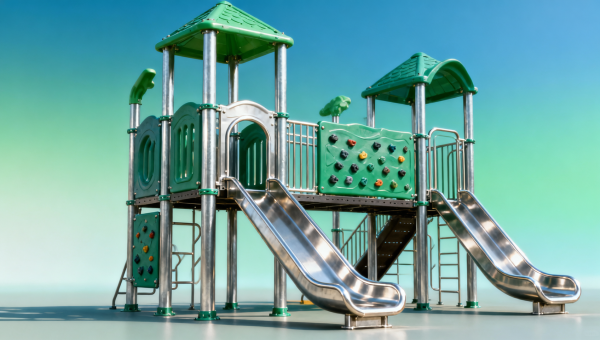
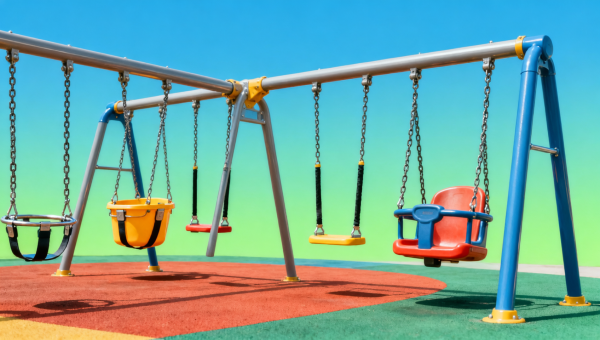
Steel is widely used in commercial playground equipment because it provides high structural strength and good design flexibility. When properly galvanized and finished with a durable powder coating, steel can perform very well in public and high-traffic environments. It is often a strong choice for support posts, frames, swing sets, and large integrated structures.
What buyers should verify:
- Whether the steel is galvanized inside and out, not just surface painted
- Coating thickness and corrosion-resistance testing
- Weld consistency and edge finishing
- Suitability for coastal, rainy, or high-humidity sites
Stainless steel
For premium projects or harsh environments, stainless steel can offer superior corrosion resistance and lower long-term maintenance risk. It is especially valuable in coastal locations, water-adjacent recreation areas, and upscale commercial spaces where appearance retention matters. The higher upfront cost can be justified when lifecycle value is the priority.
Aluminum
Aluminum is lightweight and corrosion-resistant, making it useful in select playground components. However, it should still be assessed for structural suitability, impact loads, and compatibility with other metals to avoid galvanic corrosion in mixed-material assemblies.
HDPE, LLDPE, and engineered plastics
Plastic panels, slides, roofs, and activity components can last well if they are made from commercial-grade resins with strong UV stabilizers. High-density polyethylene and rotationally molded plastics are common because they resist moisture and are generally easy to clean. The concern is not whether plastic is used, but whether the formulation is suitable for years of outdoor service.
Lower-quality plastic can become chalky, brittle, discolored, or warped. In hot regions, heat resistance also matters.
Wood and wood-plastic combinations
Wood can create a natural aesthetic, but its durability depends heavily on species, treatment quality, sealing, moisture exposure, and maintenance discipline. For many institutional buyers, wood raises ongoing maintenance demands compared with metal-and-polymer systems. In projects where low maintenance is a priority, engineered alternatives may be a more predictable option.
How do weather, climate, and site conditions affect service life?
Even the best playground structures can fail early if they are not matched to the environment. Buyers should assess durability in relation to the installation site, not in isolation.
Key environmental stress factors include:
- UV exposure: causes fading, embrittlement, and surface degradation in plastics, coatings, and some rubber elements
- Humidity and rainfall: increase corrosion risk and accelerate coating failure
- Salt air: especially aggressive in coastal markets and demands higher corrosion resistance
- Temperature swings: create expansion and contraction stress in joints and mixed materials
- Freeze-thaw cycles: can affect footings, anchoring stability, and surface materials
- Sand, dust, and pollution: increase abrasion and maintenance burden
This is why a playground structure that performs well in a dry inland climate may not be the best option for a seaside resort or tropical leisure park. Commercial buyers should ask suppliers for project references in similar environmental conditions, not just general product catalogs.
Why structural design matters as much as raw material quality
Durability is also determined by engineering details. Two products made from similar materials can have very different lifespans because of how they are designed and assembled.
Important structural factors include:
- Load distribution: well-designed frames reduce stress concentration at key joints
- Weld and connection quality: weak welds and poorly designed brackets often fail before the main structure
- Fastener performance: corrosion-resistant bolts, tamper-resistant hardware, and secure locking systems improve reliability
- Water drainage: structures should avoid water-trapping points inside posts, platforms, and connectors
- Component replaceability: modular systems extend usable life because wear parts can be replaced without removing the entire structure
- Movement design: in playground swings and dynamic elements, bearings, hangers, and pivot points must be engineered for repeated cycles
For high-traffic installations, fatigue resistance is especially important. Equipment in amusement and leisure parks, destination resorts, municipal playgrounds, and school campuses experiences much heavier use than residential products. Commercial sourcing teams should avoid applying residential durability assumptions to commercial procurement.
What are the most common reasons playground equipment fails early?
Early failure is often caused by a mismatch between promised quality and actual use conditions. The most common issues include:
- Thin or poorly protected metal that rusts from the inside or at weld points
- Low-grade plastic that fades or cracks under UV exposure
- Inadequate anchoring or foundation design
- Poor drainage that traps water inside structural members
- Weak hardware, moving parts, or connection assemblies
- Lack of spare parts and unclear maintenance guidance
- Improper installation by unqualified teams
- Heavy use beyond intended capacity
In many commercial disputes, the problem is not only manufacturing quality. It is also poor specification at the purchasing stage. If the buyer does not define expected traffic levels, climate exposure, compliance needs, and maintenance capacity, even a decent product may underperform.
How should buyers evaluate supplier quality and durability claims?
For procurement professionals and business evaluators, supplier credibility is a major part of product longevity. A well-built playground structure is only valuable if the manufacturer can consistently produce to the same standard and support the product after installation.
Ask for evidence in five areas:
1. Compliance and testing
Request documentation related to applicable playground safety standards, material testing, coating performance, and load testing. Depending on the target market, relevant compliance frameworks may vary, so documentation should align with the project destination.
2. Manufacturing controls
Understand how the supplier controls welding, coating application, raw material sourcing, dimensional accuracy, and final inspection. Consistent process discipline usually matters more than marketing language.
3. Real project references
Look for installations with several years of service history, ideally in similar climates and usage conditions. Long-term reference projects tell buyers much more than showroom samples.
4. Warranty and spare parts support
A meaningful warranty is useful, but spare parts availability is often even more important. Ask how long replacement components will remain available and whether wear parts are standardized.
5. Installation and maintenance guidance
Even durable playground equipment requires proper installation and periodic inspection. Strong suppliers provide clear manuals, maintenance schedules, parts identification, and troubleshooting support.
What should procurement teams compare beyond upfront price?
When buyers focus only on acquisition cost, they often underestimate the real economics of commercial playground structures. A cheaper system may lead to higher ownership cost if it needs frequent repairs, cosmetic refurbishment, or early replacement.
A stronger sourcing comparison should include:
- Expected service life in the target environment
- Annual maintenance effort and cost
- Likelihood of corrosion, fading, cracking, or mechanical wear
- Downtime risk and user safety exposure
- Ease of cleaning and routine inspection
- Availability and cost of replacement parts
- Brand impact for public or premium commercial venues
For distributors and resellers, durability also affects reputation. If installed systems age poorly, customer trust declines, service claims increase, and future sales become harder. In that sense, long-lasting playground structures are not just a product issue but a channel-value issue.
How can buyers identify a playground structure built for long-term commercial use?
There are several practical signals that a product is designed for lasting commercial performance:
- Documented use of commercial-grade metals and UV-stabilized polymers
- Corrosion-resistant hardware and protected connection points
- Smooth welds, clean finishing, and no obvious water-trap design flaws
- Modular component architecture for easier replacement and upgrades
- Market-specific certification readiness
- Proven installations in schools, parks, resorts, or other high-traffic sites
- Transparent maintenance instructions and inspection intervals
- Supplier readiness to customize for climate, usage intensity, and branding needs
For large projects, buyers should also assess whether the manufacturer can support OEM or ODM needs without compromising structural reliability. Custom design should never weaken durability fundamentals.
Final takeaway for commercial buyers
What makes playground structures last is not one premium material or one attractive design feature. Lasting performance comes from a combination of robust material engineering, climate-appropriate protection, sound structural design, certified safety, quality manufacturing, and dependable supplier support.
For sourcing teams in the amusement and leisure sector, the smartest buying decision is usually the one that reduces lifecycle risk, not simply initial cost. If a supplier can demonstrate real-world durability, compliance discipline, spare parts continuity, and suitability for your operating environment, that supplier is far more likely to deliver playground structures that remain safe, functional, and visually strong for years.
In short, durable playground equipment is built to handle weather, traffic, maintenance realities, and time. That is the standard commercial buyers should use when evaluating any playground swings, climbing systems, or full-scale playground installations.
Search News
Hot Articles
- Stage Lighting & TrussCCTV5 Snooker Broadcast Drives 37% Surge in Stage Lighting Export InquiriesApr 21, 2026
- Indoor PlaygroundVietnam Mandates Child Finger-Trap Sensors for Indoor Play EquipmentApr 21, 2026
- Stage Lighting & TrussGuangdong vs. Shanxi CBA Game Highlights Domestic Smart Arena LightingApr 21, 2026
Popular Tags
Need ExpertConsultation?
Connect with our specialized leisureengineering team for procurementstrategies.
Recommended News
 Apr 21, 2026Vietnam Mandates Child Finger-Trap Sensors for Indoor Play EquipmentVietnam mandates child finger-trap sensors for indoor play equipment—comply with TCVN 9507:2023 by July 1, 2026 to clear customs & protect kids.● Theme Park Strategist
 Apr 20, 2026NES Launches Sports Community Curator ProgramSports Community Curator program launched by NES — join global fitness studios, uni clubs & outdoor groups to co-create, test gear & grow with Chinese sports brands.● Theme Park Strategist
 Apr 17, 2026CPSC AI Safety Alert: 200ms Delay in Child Playground AI Systems = HazardCPSC AI Safety Alert: 200ms delay in child playground AI systems = hazard. Learn how latency compliance impacts Target/Walmart listings, testing, and supply chain.● Theme Park Strategist
 Apr 17, 20262026 Shanghai Sailing Open Adopts Domestic SeaChronos Pro Timing SystemSeaChronos Pro timing system debuts at 2026 Shanghai Sailing Open — ITU-certified, millisecond-accurate, wind- and tide-integrated. A game-changer for marine sports tech.● Theme Park Strategist
 Apr 16, 2026FDA Proposes New Labeling Rules for Sports Nutrition Supplements with Chinese LabelsFDA's new labeling rules for sports nutrition supplements with Chinese labels take effect April 2026—learn compliance must-dos for U.S. importers, manufacturers & brands.● Theme Park Strategist
 Apr 15, 2026Saudi SASO Updates Amusement Ride Standards: VR Devices Now Require Mandatory EMC TestingSaudi SASO's new 2026 standard mandates EMC testing for VR amusement rides, impacting exporters. Learn key compliance strategies for Saudi market access.● Theme Park Strategist
 Apr 14, 2026Japan Mandates Multilingual E-Manuals for Fitness Equipment from April 2026Japan mandates multilingual e-manuals for fitness equipment from April 2026. Learn how this impacts manufacturers & importers with JIS T 0601-1 compliance requirements. Stay ahead of the regulation!● Theme Park Strategist
 Apr 13, 2026WTT Taiyuan Adopts Chinese AI Table Tennis Analysis System with ITTF Export CertificationWTT Taiyuan adopts Chinese AI table tennis analysis system with ITTF export certification, enabling real-time ball speed & spin tracking. A game-changer for sports tech in emerging markets like Southeast Asia & Middle East.● Theme Park Strategist
 Apr 13, 2026First Female Snooker Player Achieves Multiple Century Breaks as Chinese Table Gains WPBSA CertificationChinese snooker player Bai Yulu makes history with multiple century breaks using WPBSA-certified 'Tournament Pro X7' table, marking a milestone for Chinese manufacturing in professional snooker equipment. Discover how this impacts global markets.● Theme Park Strategist
 Apr 13, 2026RCEP Zero Tariff on China's TPU Sports Protective Gear Boosts ASEAN TradeRCEP's zero-tariff policy on China's TPU sports protective gear boosts ASEAN trade, giving Chinese exporters cost advantages over Korean rivals. Learn how manufacturers and distributors can capitalize on this opportunity.● Theme Park Strategist
 Apr 10, 2026Japan's JIS T 9001:2026 Sports Flooring Anti-Slip Standard Mandatory from April 2026Japan's JIS T 9001:2026 standard mandates anti-slip sports flooring (SCOF ≥ 0.6) from April 2026. Chinese exporters must adapt to meet new requirements. Learn key compliance strategies.● Theme Park Strategist
 Apr 10, 2026Bai Yulu Makes History at Snooker World Championship, Sparks Surge in Women's Sports Equipment DemandBai Yulu makes history at Snooker World Championship with two century breaks, sparking 185% surge in women's sports equipment demand. Discover how manufacturers, e-commerce & supply chains can capitalize on this trend.● Theme Park Strategist
 Apr 10, 20262026 Badminton Asia Championships Quarterfinals Schedule Announced, Shi Yuqi to Compete; Southeast Asia Racket Orders Face 6-8 Week Delays2026 Badminton Asia Championships quarterfinals schedule revealed with Shi Yuqi competing, while Southeast Asia faces 6-8 week racket delays. Learn how supply chain issues impact manufacturers and get strategies to navigate equipment shortages.● Theme Park Strategist
 Apr 10, 2026WTT Taiyuan Challenge Sparks Smart Equipment Demand: Japan Buyers Scrutinize AI Training TechDiscover how the WTT Taiyuan Challenge boosts demand for AI training tech as Japanese buyers evaluate smart sports equipment. Learn key opportunities for manufacturers with JIS-certified solutions.● Theme Park Strategist
 Apr 10, 2026Chinese Snooker Players' Success Spurs Global Demand for Cue AccessoriesChinese snooker players' success drives 210% global demand surge for cue accessories. Explore how manufacturers & exporters can capitalize on this trend with UK, German & Australian markets leading inquiries.● Theme Park Strategist
 Apr 10, 2026EU Updates EN 16830:2026 Eyewear Safety Standard, Impacting China's Sports Goggle ExportsEU's updated EN 16830:2026 eyewear safety standard impacts China's sports goggle exports with stricter CE certification requirements. Learn how manufacturers and exporters can adapt to new impact resistance, UV400+, and blue light blocking standards before the September 2026 deadline.● Theme Park Strategist
 Apr 22, 2026Vietnam Mandates Child Finger-Trap Sensors for Indoor Playground EquipmentVietnam mandates child finger-trap sensors for indoor playground equipment—comply with QCVN 128:2026 & TCVN 9350:2023 before Oct 2026!● Theme Park Strategist
 Apr 22, 2026Why Build an Inclusive Playground NowInclusive playground planning now boosts leisure park value with safer playground swings and playground structures, helping buyers reduce retrofit risk and attract more families.● Theme Park Strategist
 Apr 22, 2026What Makes Playground Structures LastPlayground structures that last depend on smart materials, weather resistance, and strong design. Explore how inclusive playground and playground swings buyers reduce lifecycle costs.● Theme Park Strategist
 Apr 22, 2026Which Playground Swings Are SafestPlayground swings safety guide: discover the safest playground swings for every leisure park or inclusive playground, with certified playground structures, surfacing, and buyer tips.● Theme Park Strategist
 Apr 22, 2026How to Tell if an Indoor Playground Design Is Too GenericIndoor playground buyers: learn how to spot a generic indoor playground design before it feels like a trampoline park or adventure playground template, and protect brand appeal and ROI.● Theme Park Strategist
 Apr 22, 2026Indoor Playground Layout Mistakes That Limit Repeat VisitsIndoor playground and trampoline park layout mistakes can quietly reduce repeat visits, spend, and safety. Learn how zoning, arcade games flow, and adventure playground planning drive stronger returns.● Theme Park Strategist
 Apr 22, 2026Trampoline Park Equipment That Wears Out Faster Than ExpectedTrampoline park buyers: discover which indoor playground and adventure playground components wear out first, how to cut downtime, improve safety, and choose equipment with better long-term ROI.● Theme Park Strategist
 Apr 22, 2026What Makes a Trampoline Park Profitable Beyond Ticket Sales?Trampoline park profit goes beyond tickets with arcade games, indoor playground and adventure playground upgrades. Discover smarter revenue ideas for buyers and operators.● Theme Park Strategist