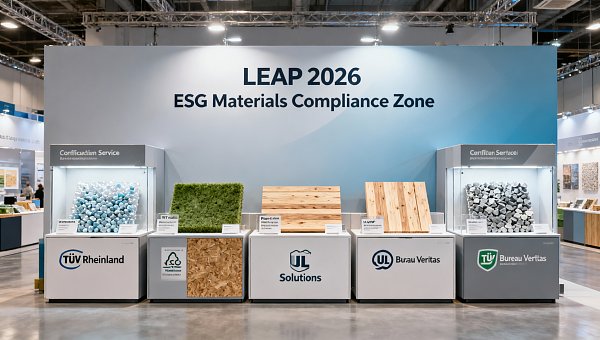
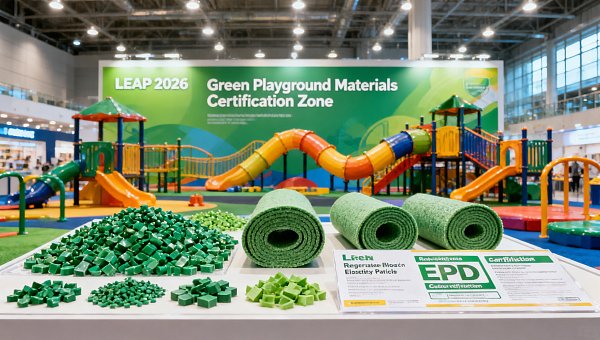
LEAP 2026 Adds ESG Materials Certification Zone
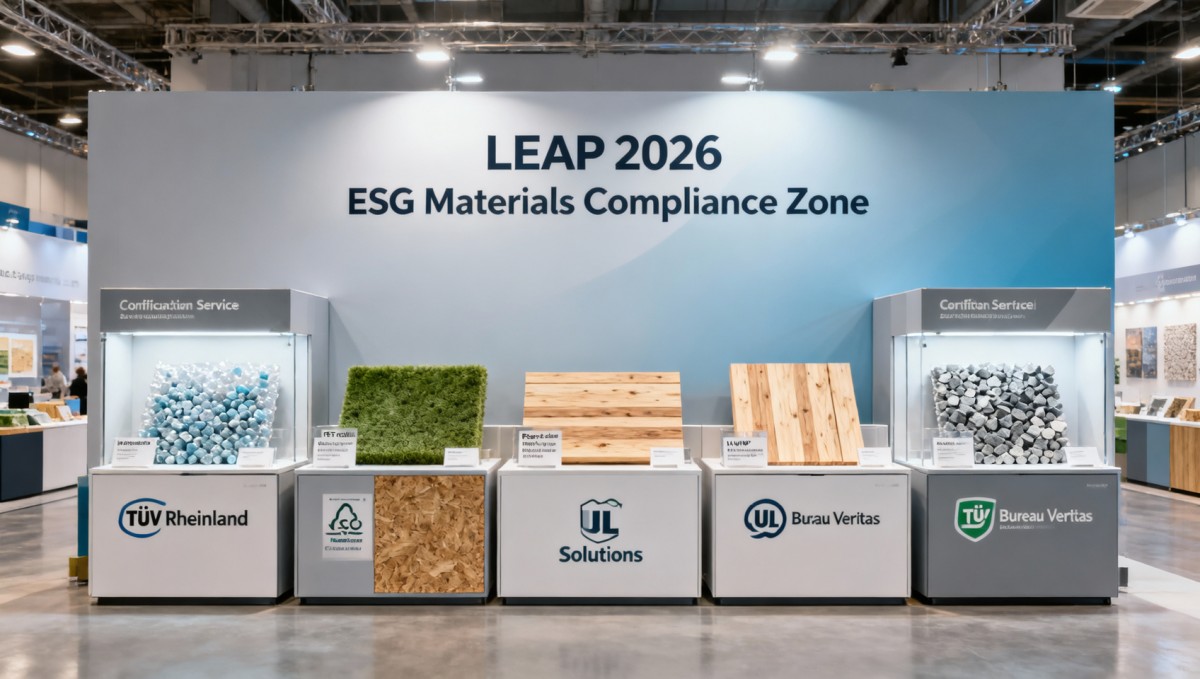
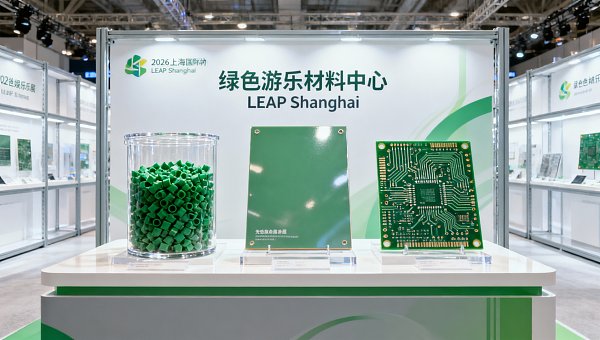
On May 14, 2026, the organizing committee of the Shanghai International Amusement Park Expo (LEAP) announced the launch of an ESG Materials Compliance Zone at the upcoming July 2026 edition — marking the first time a major Asian amusement equipment trade show has embedded third-party green materials verification directly into its exhibition infrastructure. The move responds to tightening ESG disclosure mandates from U.S. and EU-based theme park operators, particularly in supply chain transparency and environmental claims substantiation.
Event Overview
On May 14, 2026, the LEAP organizing committee announced that the 2026 Shanghai International Amusement Park Expo — scheduled for July — will feature a dedicated ‘ESG Materials Compliance Zone’. This zone offers indoor playground and outdoor ride suppliers integrated services including third-party green material testing, verification of recycled content, and carbon footprint statement validation. The zone is jointly endorsed by TÜV Rheinland (Germany), UL Solutions (USA), and Bureau Veritas (France).
Industries Affected
Direct Export Trading Companies: These firms face heightened due diligence pressure when quoting for European or North American clients — especially large chains requiring auditable ESG documentation prior to PO issuance. The absence of verified data may now delay or disqualify bids, as procurement teams increasingly treat ESG compliance as a hard gate rather than a soft preference.
Raw Material Procurement Enterprises: Suppliers sourcing polymers, coatings, steel alloys, or timber composites must now validate upstream sustainability attributes — e.g., recycled PET content, FSC-certified wood fiber, or low-GWP foam formulations. Failure to secure traceable, certified inputs risks downstream rejection during buyer audits.
Manufacturing Enterprises (OEM/ODM): Factories producing play structures, ride components, or interactive flooring must align production records with ESG reporting requirements — including batch-level material declarations, energy source tracking, and waste diversion metrics. Internal documentation systems not designed for audit readiness may require near-term upgrades.
Supply Chain Service Providers: Testing labs, certification consultants, and ESG data platform vendors are seeing accelerated demand for localized support — especially bilingual (English–Chinese) verification workflows and ISO 14067-aligned carbon accounting tailored to amusement equipment assemblies. Their role shifts from optional advisor to operational enabler.
Key Focus Areas & Recommended Actions
Verify Material Traceability Before Exhibition Registration
Suppliers planning to access the ESG Zone must submit full bill-of-materials (BOM) with supplier-level sustainability certificates at least 30 days pre-show. Late submissions will not be accommodated — even if lab capacity exists.
Pre-qualify Third-Party Labs Against TÜV/UL/BV Criteria
Not all local testing facilities meet the technical scopes accepted by the three endorsing bodies. Companies should cross-check lab accreditation scope documents — specifically for EN 1176/1177 compliance integration, ISO 14040/44 LCA methodology, and recycled content quantification per ISO 14021.
Prepare Dual-Language ESG Dossiers
Buyer-facing documentation (e.g., Product Environmental Profile sheets) must include English versions validated by accredited signatories. Chinese-only reports — even if internally robust — are not accepted for zone participation or buyer handover.
Editorial Insight / Industry Observation
Observably, the LEAP ESG Zone reflects a structural shift: ESG is no longer a marketing add-on but a functional checkpoint embedded in trade fair architecture. Analysis shows this mirrors parallel developments at Spielwarenmesse Nuremberg and IAAPA Expo Orlando — where certification booths now occupy floor space previously reserved for VR demos or influencer lounges. From an industry perspective, this signals that regulatory convergence (e.g., EU CSDDD, U.S. SEC climate disclosure proposals) is accelerating de facto standardization — even without harmonized global rules. Current evidence suggests the threshold for ‘ESG-ready’ is rising faster among B2B buyers than among regulators themselves.
Conclusion
The introduction of the ESG Materials Compliance Zone at LEAP 2026 does not merely signal policy responsiveness — it functions as an early-warning system for broader supply chain recalibration. Rather than representing a one-off compliance exercise, it better serves as a litmus test for how rapidly manufacturers and exporters can operationalize verifiable environmental claims across complex, multi-tiered product assemblies. A rational conclusion is that ESG verification is becoming infrastructural — less about ethics, more about eligibility.
Source Attribution
Official announcement issued by LEAP Organizing Committee, May 14, 2026; TÜV Rheinland Technical Bulletin #ESG-AMU-2026-05; UL Solutions Global Procurement Guidance v3.2 (April 2026); Bureau Veritas Amusement Equipment Verification Framework (Q2 2026). Note: Final scope of zone service fees, on-site turnaround times, and audit follow-up protocols remain pending official release — subject to continuous monitoring.
Search News
Hot Articles
- Arcade & VR MachinesUS CPSC to Enforce EMC Radiation Limits on Arcade Devices from June 2026May 15, 2026
- Pro Stage AudioJapan METI Updates JIS T 0601-2-57:2026 for Pro Stage Audio Immunity TestingMay 15, 2026
- Stage Lighting & Truss3 Chinese Stage Lighting Firms Join IOC 2028 LA Olympics Supplier ListMay 15, 2026
Popular Tags
Need ExpertConsultation?
Connect with our specialized leisureengineering team for procurementstrategies.
Recommended News
 May 15, 2026LEAP 2026 Adds ESG Materials Certification ZoneESG Materials Certification Zone debuts at LEAP 2026 — Asia’s first amusement trade show to embed third-party green material verification. Secure compliance, win global bids.● Theme Park Strategist
 May 13, 2026LEAP 2026 Adds ESG Materials Certification ZoneLEAP 2026 launches ESG Materials Certification Zone — get on-site EPD & GRS certification for playground equipment. Meet global buyers & boost sustainability credibility.● Theme Park Strategist
 May 12, 2026He Xinining Scores 23, Smith Records Triple-Double as Shenzhen Sweeps ZhejiangSmart sports infrastructure shines as He Xinining scores 23 and Smith posts a triple-double in Shenzhen’s CBA playoff sweep—showcasing interactive LED floors, voice lighting & biometric terminals.● Theme Park Strategist
 May 12, 2026Chinese Volleyball Team Adopts AI Training System Amid FIVB Rule UpdateAI training system adopted by Chinese volleyball team amid new FIVB rules — boosting global demand for smart sports equipment and certified AI motion analysis solutions.● Theme Park Strategist
 May 12, 20262026 National Rhythmic Gymnastics Championships Launch in Chengdu with Export-Ready Smart Venue TechSmart venue tech debuts at 2026 National Rhythmic Gymnastics Championships in Chengdu—export-ready pressure-sensing carpets & voice-controlled lighting attract global interest.● Theme Park Strategist
 May 12, 2026Sweden Men's Team Beats China After 26 Years; European Clubs Procure Chinese AI Ping-Pong MachinesAI ping-pong machines: Sweden’s historic win over China sparks European club demand for Chinese smart training tech—track tenders, compliance & logistics now.● Theme Park Strategist
 May 12, 2026NBA to Deploy New LED Interactive Courts in 2026–27 SeasonNBA SmartCourt v3.0 LED interactive courts launch in 2026–27: AR feedback, pressure sensing & certified Chinese suppliers—key for smart venue integrators and global manufacturers.● Theme Park Strategist
 May 12, 2026FIBA Updates 2026 Basketball Court Standards: Acoustic Flooring & LED Lighting Now MandatoryFIBA 2026 updates mandate acoustic flooring & LED lighting for certified basketball venues—key for exporters, manufacturers, and integrators. Act now!● Theme Park Strategist
 May 12, 20262026 LEAP Shanghai Adds Green Play Materials HubGreen Play Materials Hub at 2026 LEAP Shanghai helps exporters meet EU/US ESG demands—fast-track verification for playground materials with UL & TÜV.● Theme Park Strategist
 May 12, 2026CPSC Updates Playground Safety Standard, Affects China ExportsCPSC updates playground safety standard ASTM F1487-26 — critical for China exporters. New impact, gap & EMC rules demand urgent compliance action.● Theme Park Strategist
 May 10, 2026NBA to Deploy New LED Interactive Flooring from 2026–27 SeasonNBA to deploy LED interactive flooring from 2026–27 season — UL-certified, AR-enabled, pressure-sensing smart sports flooring for arenas & academies. Act now.● Theme Park Strategist
 May 10, 2026FIBA Updates 2026 Basketball Arena Standards: Acoustic Flooring and LED Lighting Now MandatoryFIBA 2026 arena standards now mandate acoustic flooring & tunable LED lighting—key for tenders, certification, and global sports infrastructure projects.● Theme Park Strategist
 May 09, 2026Chinese Volleyball Team’s漳州 Training Spurs Global Demand for Smart Training GearSmart training gear demand surges as Chinese volleyball team’s Zhangzhou camp adopts AI posture analysis & EMG vests—FIVB 2026 compliance drives global ODM orders.● Theme Park Strategist
 May 09, 2026Sweden Men's Team Beats China After 26 Years; European Clubs Order Chinese AI Ping-Pong MachinesSweden men's team beats China after 26 years—sparking EU demand for Chinese AI ping-pong machines. Discover how this win reshapes sports tech exports, certification, and firmware localization.● Theme Park Strategist
 May 09, 2026FIBA 2026 Venue Standards Mandate Acoustic Floors, Flicker-Free LEDFIBA 2026 Venue Standards mandate acoustic floors & flicker-free LED lighting—key for compliant basketball arenas. Discover requirements, certifications, and market impact.● Theme Park Strategist
 May 09, 2026Wu Yize’s Domestic Debut Spurs 37% Surge in Billiards Table Export InquiriesBilliards table export inquiries surge 37% after Wu Yize’s Chengdu debut—CE+UKCA & FIBA/BCA compliant models in high demand globally.● Theme Park Strategist
 May 09, 2026EPDM rubber flooring playground options compared by fall safetyEPDM rubber flooring playground options compared by fall safety—explore wet-pour, tiles, mats, and hybrid systems to find the safest, most durable choice.● Theme Park Strategist
 May 09, 2026Artificial grass for playground: better drainage, fewer closures?Artificial grass for playground projects can improve drainage, reduce puddles, and help cut closures after rain. Learn what affects performance, costs, and long-term usability.● Theme Park Strategist
 May 09, 2026Seesaws and spring riders: what gets damaged first outdoors?Seesaws and spring riders: discover what gets damaged first outdoors, how hidden wear affects safety and cost, and what to compare before you buy.● Theme Park Strategist
 May 09, 2026Commercial outdoor playground layouts that age better over timeCommercial outdoor playground layouts that age better over time: discover flexible, low-maintenance design strategies that improve safety, accessibility, and long-term ROI.● Theme Park Strategist
 May 09, 2026Swing sets wholesale: when lower prices mean weaker lifespanSwing sets wholesale is not just about the lowest quote. Learn how to compare durability, safety, compliance, and lifecycle cost to avoid hidden replacements and choose smarter commercial suppliers.● Theme Park Strategist
 May 09, 2026Inflatable bumper balls and the safety issues operators faceInflatable bumper balls raise fun—and operator risk. Explore key safety issues, compliance concerns, and smart sourcing tips to protect users, reputation, and revenue.● Theme Park Strategist
 May 09, 2026How durable are human hamster balls in high-turnover venues?Human hamster balls in high-turnover venues must resist seam stress, valve wear, and repeated impacts. Learn what specs matter most for safer, longer-lasting commercial use.● Theme Park Strategist
 May 08, 2026Indoor Ninja Warrior Course: Which Obstacles Keep Repeat Visits High?Indoor ninja warrior course design that drives repeat visits: discover the obstacles, layouts, and challenge features that boost engagement, competition, and long-term venue value.● Theme Park Strategist