US CPSC Tightens EMC Rules for Arcade & VR Machines Effective July 1
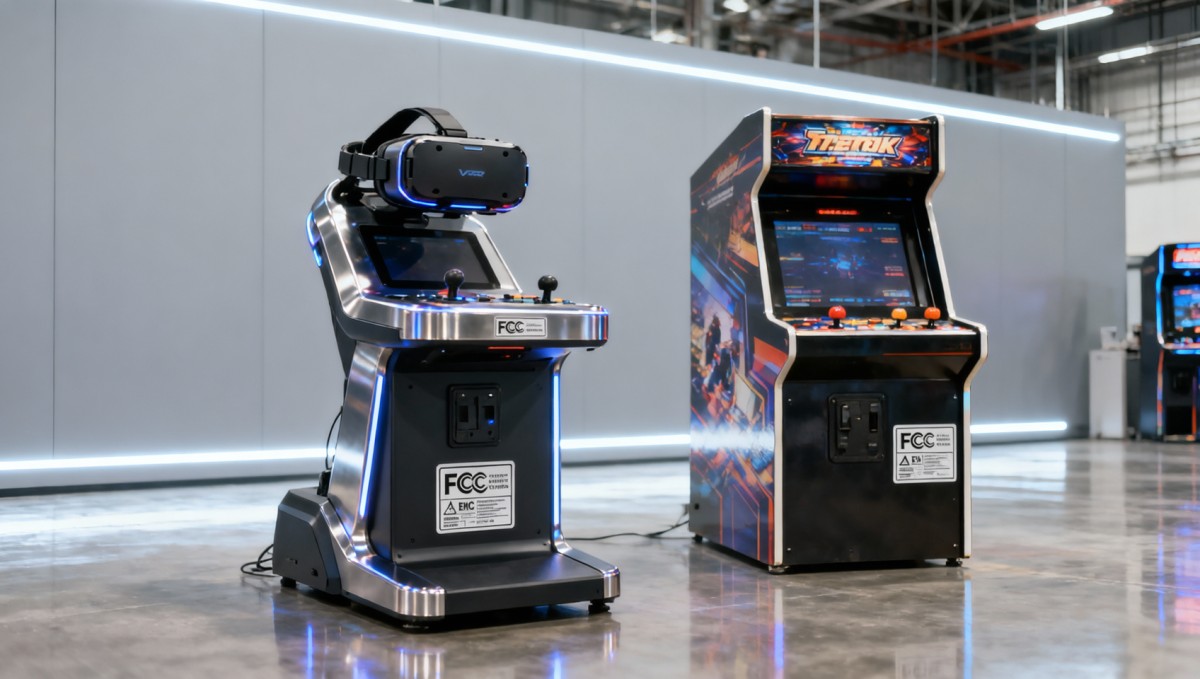
The U.S. Consumer Product Safety Commission (CPSC) has issued an emergency amendment to electromagnetic compatibility (EMC) requirements for arcade and virtual reality machines, mandating compliance with the updated FCC Part 15 Subpart B standard starting July 1, 2026 — affecting all manufacturers, importers, and distributors of commercial interactive entertainment equipment sold in the United States.
Emergency Amendment Enforces Stricter EMC Limits
On May 30, 2026, the CPSC published an emergency revision that tightens electromagnetic emission and immunity limits for arcade machines, VR-based motion-sensing devices, and other commercial interactive entertainment terminals. The updated requirements align with the revised FCC Part 15 Subpart B testing standard and take full effect on July 1, 2026. All such products placed on the U.S. market must carry a valid, updated FCC ID certification; units without compliant certification will be prohibited from importation and retail distribution.
Impact Across the Supply Chain
Export-oriented trading companies
These firms face immediate shipment delays and customs clearance risks if existing inventory lacks updated FCC ID documentation. Pre-shipment verification of certification status and test reports is now a mandatory gatekeeping step before U.S. entry.
Component and raw material suppliers
Suppliers of power supplies, RF-shielded enclosures, PCBs, and EMI filters may see revised technical specifications or tighter tolerance demands from OEMs seeking compliance. Documentation traceability — especially for EMC-critical subassemblies — becomes essential.
Contract manufacturers and OEMs
Manufacturers must revalidate product designs against the new emission thresholds, potentially requiring layout revisions, added shielding, or updated firmware-level noise mitigation. Production lines may need recalibration or requalification prior to July 1.
Compliance and certification service providers
Laboratories and third-party conformity assessment bodies are experiencing increased demand for expedited FCC Part 15 Subpart B testing, particularly for legacy models undergoing retrofit certification. Turnaround time and test capacity planning are now critical operational factors.
Key Compliance Actions for Enterprises
Immediate FCC ID recertification review
Companies must audit all active FCC IDs for arcade and VR equipment — confirming whether each covers the newly mandated emission classes, operating modes, and environmental conditions specified in the May 30 amendment.
EMC test report and technical file update
Legacy test reports must be reassessed against the revised measurement procedures and limit lines. Updated technical documentation — including schematics, BOMs with EMC-critical parts, and test setup photos — must accompany new applications.
Supplier qualification for EMC-sensitive components
OEMs should verify that key suppliers (e.g., display drivers, wireless modules, motion sensors) provide documented EMC performance data aligned with the tightened limits — not just component-level CE/FCC declarations.
Import logistics and labeling alignment
Customs brokers and fulfillment centers must ensure updated FCC ID labels, user manuals with revised compliance statements, and electronic filing data (e.g., ACE entries) reflect the certified configuration — deviations risk detention or refusal at port.
Industry Perspective: Rising Technical Barriers and Shortened Readiness Windows
Analysis shows this emergency revision reflects a broader trend toward harmonizing consumer electronics EMC enforcement with evolving RF density in public venues — especially as VR and haptic feedback systems integrate more wireless and high-speed digital interfaces. From an industry perspective, the compressed timeline (just over one month between publication and enforcement) signals reduced regulatory grace periods for iterative compliance. What deserves closer attention is the growing expectation for pre-certification design validation — rather than post-development remediation — across the interactive entertainment hardware sector. Observably, manufacturers with in-house EMC labs or long-standing relationships with accredited testing facilities hold a distinct advantage in meeting the July 1 deadline.
Strategic Implication for Global Hardware Suppliers
This amendment underscores that EMC compliance is no longer a static ‘one-time’ certification but an ongoing technical capability tied to product evolution, supply chain transparency, and real-time regulatory monitoring. For international suppliers, treating U.S. market access as contingent on dynamic standards alignment — rather than fixed checklist adherence — is now a baseline operational requirement.
Source Information and Verification Guidance
This article is based solely on the provided title, event date (2026-07-01), and summary describing the CPSC’s May 30, 2026 emergency amendment to EMC requirements for arcade and VR machines. Specific official source links were not provided in the input and should be verified continuously. Stakeholders are advised to monitor updates from the CPSC, the Federal Communications Commission (FCC), and accredited Telecommunication Certification Bodies (TCBs) for detailed implementation guidance, enforcement interpretations, and potential clarifications on transitional provisions or grandfathering clauses.
Search News
Hot Articles
- Arcade & VR MachinesChoosing a Racing Simulator Cockpit for an FEC: Durability and Guest FitOct 14, 2026
- Office Furniture & EquipChoosing Commercial Air Conditioners for Offices: Capacity, Zoning, and NoiseOct 13, 2026
- Fashion & Gem JewelryHow to Choose Designer Eyewear That Fits Your Store’s Customer ProfileOct 12, 2026
Popular Tags
Need ExpertConsultation?
Connect with our specialized leisureengineering team for procurementstrategies.
Recommended News
 Oct 14, 2026Choosing a Racing Simulator Cockpit for an FEC: Durability and Guest FitChoosing a racing simulator cockpit for FEC? Discover how to assess durability, guest fit, and maintenance to reduce downtime and select a cockpit built for busy venues.● Theme Park Strategist
 Oct 13, 2026Choosing Commercial Air Conditioners for Offices: Capacity, Zoning, and NoiseChoosing commercial air conditioners for offices? Compare capacity, zoning, and noise to improve comfort, avoid costly mistakes, and find the right system for your workplace.● Institutional Buyer
 Oct 12, 2026How to Choose Designer Eyewear That Fits Your Store’s Customer ProfileDesigner eyewear buying guide for retailers: match frames, price points, brand appeal, fit, and supplier support to your store’s customer profile for stronger sales.● Luxury Retail Analyst
 Oct 10, 2026A Practical Guide to Identifying Wooden Orchestral Instruments by Family and ToneWooden orchestral instruments made simple: identify strings, flutes, clarinets, oboes, and bassoons by sound source, design, and tone.● Pro Audio Engineer
 Oct 08, 2026How to Choose Animatronic Haunted House Props for High-Throughput AttractionsAnimatronic haunted house props for high-throughput attractions: compare motion, triggers, safety, and maintenance to create reliable scares that keep guests moving.● Theme Park Strategist
 Oct 07, 2026Thermal Diamond Testers: How They Work and When They Can Misidentify StonesThermal diamond tester guide: learn how it works, spot false positives from moissanite, and choose reliable verification methods for jewelry trade and retail.● Luxury Retail Analyst
 Oct 06, 2026What Is Driving Demand for Commercial Hospitality Projects Across the GCC?Commercial hospitality GCC demand is rising through destination-led tourism, mixed-use development, and premium operational standards. Explore the procurement strategies shaping resilient projects.● Hospitality Sourcing Dir
 Oct 05, 2026How to Select Hotel Hair Dryers That Balance Guest Safety, Durability, and CostHair dryer for hotels: learn how to select safe, durable, cost-efficient models with the right certifications, performance, maintenance, and supplier support.● Hospitality Sourcing Dir
 Oct 04, 2026Fast-Casual Restaurant Interiors: Design Choices That Improve Speed and Guest FlowRestaurant interiors for fast casual brands: discover design choices that improve guest flow, speed service, streamline pickup, and elevate every visit.● Hospitality Sourcing Dir
 Oct 03, 2026How to Select Leisure Park Equipment for Safe, High-Throughput Visitor AreasLeisure park equipment selection guide for safe, high-throughput venues—explore capacity, supervision, durability, accessibility, and supplier criteria.● Theme Park Strategist
 Oct 02, 2026Diamond Tester Wholesale: How to Vet Accuracy, Calibration, and MOQ Before OrderingDiamond tester wholesale guide: verify accuracy, calibration records, supplier quality controls, and MOQ terms before ordering. Source reliable testers with confidence.● Luxury Retail Analyst
 Oct 01, 2026How Hotels Can Choose Amenity Bottles That Balance Brand Image and Refill CostsHotel amenity bottles: learn how to balance premium brand presentation, refill costs, hygiene, durability, and efficient housekeeping workflows.● Hospitality Sourcing Dir
 Sep 30, 2026How to Choose an Aluminum Projector Ceiling Mount for Load, Drop, and Ceiling TypeChoose an aluminum projector ceiling mount with confidence. Learn how load capacity, drop length, ceiling structure, safety retention, and service access shape a reliable commercial AV installation.● Pro Audio Engineer
 Sep 29, 2026Poured Playground Safety Surfacing: How to Specify Thickness for Fall HeightsPoured playground safety surfacing: learn how to specify tested thickness by fall height, ASTM standards, substrate conditions, accessibility, and field verification.● Theme Park Strategist
 Sep 28, 2026How U.S. Schools Can Choose Laboratory Equipment for Safe, Compliant Science LabsSchool laboratory equipment USA: learn how to select safe, compliant lab furniture, ventilation, emergency systems, and durable tools for K–12 science labs.● Institutional Buyer
 Sep 27, 2026Custom Trampoline Park Equipment: Planning Capacity, Safety, and LayoutCustom trampoline park equipment for safer capacity, smooth guest flow, and efficient layouts. Explore practical planning insights for a high-performing park.● Theme Park Strategist
 Sep 26, 2026How to Choose Dynamic Microphones for Vocals in Live Stage SettingsDynamic microphones for vocals: learn how to match polar patterns, feedback control, durability, and clarity to live stage needs for reliable, professional sound.● Pro Audio Engineer
 Sep 25, 2026How to Evaluate a Wall-Mounted Hotel Hair Dryer Manufacturer for Bulk ProjectsHotel hair dryers wall mounted manufacturer evaluation guide: compare safety, durability, installation fit, OEM options, total cost, and reliable bulk-project support.● Hospitality Sourcing Dir
 Sep 24, 2026Conveyor Pizza Oven Price: What Buyers Should Budget for Capacity and FeaturesConveyor pizza oven price guide: compare capacity, features, installation costs, and quote factors to choose the right commercial oven for your operation.● Hospitality Sourcing Dir
 Sep 23, 2026How Restaurant Buyers Can Source Hospitality Supplies Without OverorderingHospitality supplies for restaurants: learn practical sourcing strategies to cut excess inventory, protect cash flow, improve supplier reliability, and keep every service running smoothly.● Hospitality Sourcing Dir
 Sep 22, 2026Commercial Kitchen Design Price: Budgeting by Layout, Equipment, and MEP ScopeCommercial kitchen design price explained: budget smarter for layout, equipment, MEP scope, compliance, installation, and long-term operational performance.● Hospitality Sourcing Dir
 Sep 21, 2026How Schools Can Cut Printing Costs When Buying Ink Cartridges in BulkSchool ink cartridges wholesale made smarter: cut printing costs with fleet planning, cost-per-page comparisons, reliable suppliers, and inventory controls.● Institutional Buyer
 Sep 20, 2026How to Evaluate a Luxury Retail Packaging Supplier for Premium Brand ConsistencyLuxury retail packaging supplier evaluation guide: protect premium brand consistency with proven quality control, material expertise, scalable production, and supply reliability.● Luxury Retail Analyst
 Sep 19, 2026How to Select a Spiral Dough Mixer for Bakery Batch Size and Dough HydrationSpiral dough mixer bakery guide: match batch size, flour load, and hydration to select reliable torque, temperature control, and consistent dough results.● Hospitality Sourcing Dir