Sensory Playground Ideas That Actually Work
Designing a sensory playground that truly engages children takes more than colorful surfaces and standard amusement equipment. The best ideas combine playground climbers, safe playground borders, and thoughtful sensory elements to improve play value, inclusion, and playground safety. In this guide, we explore practical sensory playground concepts that help buyers, planners, and distributors evaluate durable solutions for schools, parks, and commercial recreation spaces.
For commercial buyers in amusement, education, and public recreation, the question is not simply which play items look attractive on a project drawing. The more important issue is whether a sensory playground can support inclusive play, withstand 3–8 years of heavy use, and meet installation, maintenance, and safety requirements without creating hidden lifecycle costs.
A well-planned sensory play environment can increase dwell time, broaden age-group appeal, and create better developmental value than a standard equipment cluster. For procurement teams, that means evaluating material durability, tactile and auditory features, border design, surfacing compatibility, and traffic flow together rather than as separate line items.
Why Sensory Playground Design Matters in Commercial Recreation
Sensory playground ideas work best when they respond to how children actually interact with space. Many projects overinvest in visual appeal and underinvest in touch, sound, motion, and quiet zones. In practice, successful sensory playgrounds usually combine 4 core experience types: tactile engagement, vestibular movement, proprioceptive challenge, and calm retreat areas.
This matters for schools, municipal parks, family entertainment venues, and mixed-use commercial projects because a sensory-rich layout serves more users. Children aged 2–5 often need lower-height exploration elements, while children aged 5–12 benefit from climbing gradients, transfer access points, and more complex multi-sensory stations. A single-zone layout rarely supports both groups equally well.
From a B2B perspective, the right sensory playground design can also reduce complaints related to congestion, overstimulation, and poor accessibility. A project that separates active, social, and quiet play within a footprint of 150–500 square meters is generally easier to supervise and more adaptable to schools, parks, and hospitality recreation areas.
Key Performance Goals Buyers Should Define Early
Before selecting equipment, buyers should define measurable outcomes. These often include age range coverage, target capacity per hour, surface durability, and maintenance intervals. For example, a public park may require 30–50 users per hour during peak periods, while a school campus may prioritize structured circulation and lower noise output.
- Play capacity target: typically 20–60 children at one time depending on site size.
- Recommended zoning: at least 3 zones for active, sensory, and quiet-use functions.
- Inspection frequency: visual checks daily or weekly, with formal reviews every 1–3 months.
- Surface and border durability: planned service life commonly 5–10 years under commercial use.
These benchmarks help procurement teams compare proposals on actual operational value, not just appearance. They also help distributors and specifiers match product ranges to realistic project conditions.
Common Planning Mistakes
One common mistake is clustering all sensory features into one corner. Another is using too many high-stimulation elements in a compact area. In commercial settings, that can create bottlenecks, shorten dwell time, and reduce inclusive access. Good sensory playground ideas distribute stimulation across the site and offer choice rather than forcing one mode of play.
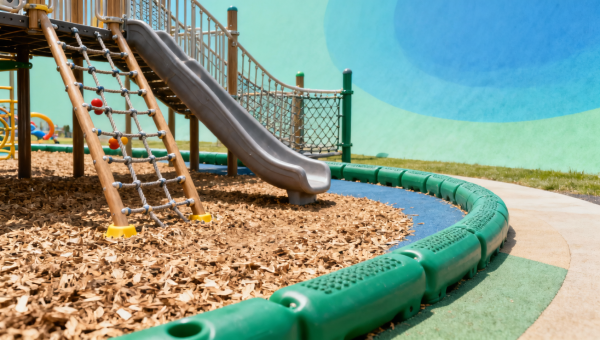
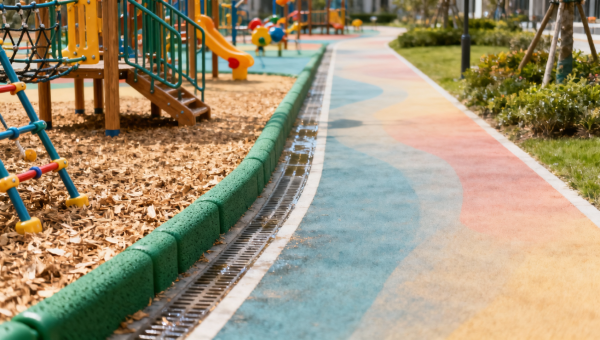
Another issue is underestimating the role of borders and transitions. Safe playground borders do more than contain loose-fill materials. They also define circulation, prevent run-off into active zones, and support wheelchair-friendly routing when integrated with proper surfacing transitions and edge conditions.
Sensory Playground Ideas That Deliver Better Play Value
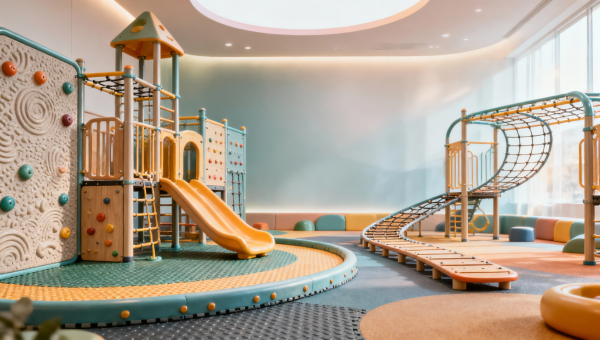
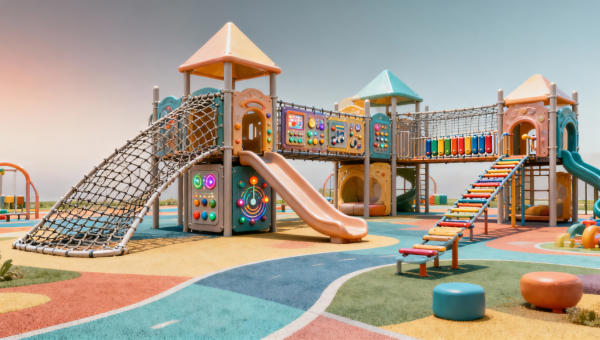
The most effective sensory playground ideas combine movement, tactile exploration, and social interaction in a way that feels intuitive. Buyers should look for modular combinations rather than isolated novelty items. A climber linked to textured panels, balance routes, and low-sound musical elements creates far more replay value than a single freestanding feature.
In commercial recreation projects, sensory value increases when each element supports more than one function. For instance, a low climbing mound may build coordination, provide elevation change, and create a visual boundary between age groups. Likewise, sensory panels can support touch, color recognition, and turn-taking at the same time.
The table below compares practical sensory play components that are often specified for schools, parks, and leisure spaces. It focuses on the play outcome, the best-fit application, and the sourcing priority.
The strongest pattern here is multifunctionality. Buyers typically get better value when one component supports 2–3 types of engagement. This approach improves utilization rates and reduces the need for overspecifying niche equipment that may receive limited daily use.
Ideas That Work in Different Site Types
For Schools
School projects usually benefit from compact sensory circuits, accessible transfer points, and supervised quiet corners. Installations often need to support repeated daily use across 180–220 school days per year, so wear resistance and low-maintenance finishes become more important than novelty features.
For Public Parks
Parks need broader age appeal and stronger vandal resistance. Here, sensory playground ideas should include visible route planning, durable borders, and open sightlines. Commercial park operators often prefer elements with fewer enclosed parts and easier replacement cycles of 7–14 days for common wear components.
For Leisure and Hospitality Spaces
Hotels, resorts, and family destinations typically seek lower-noise, visually integrated sensory play. Natural colors, compact climbers, and tactile panels work well when design aesthetics matter as much as functionality. In these environments, sensory features should complement the guest experience rather than dominate it.
How to Choose Playground Climbers, Borders, and Surfacing Together
A sensory playground succeeds when equipment selection and safety planning happen together. Playground climbers, borders, and surfaces influence how children move, how falls are managed, and how maintenance teams operate. Treating them as one coordinated system usually reduces installation conflicts and improves long-term performance.
For climbers, buyers should assess entry height, grip variation, spacing, and user throughput. For borders, the focus should be containment, drainage edge control, and trip-risk reduction. For surfacing, practical procurement questions include slip resistance, maintenance frequency, repair complexity, and compatibility with mobility access.
The following table helps compare common combinations used in sensory playground projects.
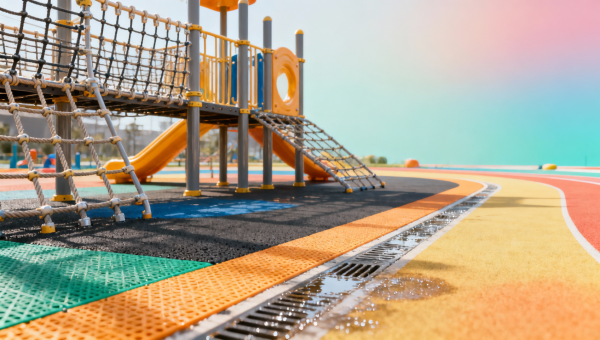
For many high-traffic sensory playground projects, the best result comes from mid-height climbers paired with unitary surfacing and clearly defined safe playground borders. This combination tends to improve inclusivity and reduce labor tied to surface redistribution, especially in municipal and educational settings.
Four Selection Criteria for Buyers
- Match equipment intensity to the user group. A site serving ages 2–12 needs graduated challenge, not one difficulty level.
- Check maintenance labor. A cheaper border or surface may create 12 months of avoidable upkeep.
- Review part replacement practicality. Common-wear parts should be replaceable without dismantling major structures.
- Evaluate visual supervision. Good sensory play should encourage exploration without creating blind spots.
These criteria are especially useful for distributors and project specifiers building multi-site bids, where consistency and after-sales support can affect overall portfolio value.
Implementation, Maintenance, and Risk Control
Even the best sensory playground ideas can underperform if site preparation, installation sequencing, and maintenance planning are weak. Commercial buyers should expect a 5-step process: concept zoning, equipment selection, safety review, installation planning, and post-installation inspection. On straightforward projects, this may take 4–8 weeks before full handover, while larger public works can take longer.
Risk control starts with layout logic. Active motion elements should not discharge directly into quiet sensory zones. Borders should not create abrupt trip edges. Musical or sound-play items should be positioned with enough offset to prevent noise concentration near rest areas, entrances, or adjacent hospitality functions.
Maintenance planning is equally important. Buyers often focus on purchase price but overlook cleaning frequency, fastener inspection, surface repair cycles, and spare-parts availability. A durable sensory playground should be designed for simple weekly checks and predictable seasonal servicing rather than reactive emergency maintenance.
Typical Risk Points to Review Before Ordering
- Overstimulating layouts where 3 or more sound and movement features are grouped too tightly.
- Border systems with sharp transitions or insufficient anchoring in high-traffic zones.
- Climbers selected without clear user-height planning, leading to mismatch with fall zones.
- Surface choices that look attractive initially but require frequent patching within 12–24 months.
- Imported components with unclear spare-part lead times, which can stretch replacements to 6–10 weeks.
Maintenance Framework for Commercial Operators
A practical maintenance framework uses three levels. Level 1 includes daily or weekly visual checks for damage, contamination, and loose components. Level 2 includes monthly checks for connectors, borders, and surfacing wear. Level 3 is a quarterly or semiannual technical review covering structural integrity, drainage, and usage wear patterns.
This system matters because sensory components can see uneven wear. Tactile panels, hand-contact features, and transition edges often degrade faster than main structural frames. Procurement teams should therefore ask not only about warranty terms, but also about standard replacement kits, average replenishment timelines, and regional service support.
Procurement Checklist and FAQ for Buyers and Distributors
When comparing sensory playground suppliers or OEM/ODM options, buyers need more than a product catalog. They need a sourcing checklist that covers functionality, commercial durability, and support responsiveness. For distributors, these details also influence channel reputation and repeat business.
A strong procurement review typically covers 6 areas: target age range, sensory function mix, border and surfacing compatibility, maintenance burden, delivery schedule, and replacement support. Asking these questions early reduces redesign risk and shortens approval cycles for schools, municipalities, and developers.
Quick Procurement Checklist
This checklist helps turn a sensory playground concept into a commercially workable specification. It is especially valuable when multiple stakeholders are involved, such as planners, school administrators, operators, and local distributors.
How do you choose sensory playground equipment for limited space?
Prioritize multifunction pieces. In a footprint under 200 square meters, use compact climbers, vertical tactile panels, balance routes, and one quiet retreat zone instead of several large standalone units. This keeps circulation open while still delivering at least 3 sensory modes.
What are the most overlooked safety items in sensory playground projects?
Buyers often overlook transitions between surfacing types, the height and profile of safe playground borders, and noise placement. These details affect accessibility, trip prevention, and user comfort as much as the main play structures do.
How long does delivery usually take for commercial sensory playground equipment?
For standard modular items, lead times often fall within 3–6 weeks. Customized sensory components, themed finishes, or combined border-surfacing packages may extend to 6–10 weeks depending on production scheduling, shipping mode, and site-readiness requirements.
Which buyers benefit most from sensory playground investment?
Schools, municipalities, family recreation venues, and hospitality projects all benefit when the goal is broader user inclusion, longer play duration, and better site differentiation. Distributors also benefit because sensory playground ranges create stronger specification value than standard catalog-only play sets.
The sensory playground ideas that actually work are the ones built around user behavior, safety planning, and lifecycle practicality. Buyers should evaluate playground climbers, safe playground borders, and sensory features as one integrated solution, with clear attention to age fit, maintenance burden, and commercial durability.
For sourcing teams, distributors, and project evaluators, the right design approach can improve inclusion, support better supervision, and deliver stronger long-term value across schools, parks, and leisure environments. If you are planning a new project or reviewing supply options, now is the time to get a tailored sourcing recommendation, compare suitable product combinations, and explore more commercial playground solutions with confidence.
Search News
Hot Articles
- Indoor PlaygroundFan Zhendong Visits Silicon Valley as MLTT Investor, AI Ping-Pong Tech Draws AttentionApr 23, 2026
- Stage Lighting & Truss2026 FIBA Women's World Cup Draw Opens Export Window for Arena Lighting & Timing SystemsApr 23, 2026
- Pro Stage AudioChina Upgrades Security Compliance for International Sports EventsApr 23, 2026
Popular Tags
Need ExpertConsultation?
Connect with our specialized leisureengineering team for procurementstrategies.
Recommended News
 Apr 23, 2026Fan Zhendong Visits Silicon Valley as MLTT Investor, AI Ping-Pong Tech Draws AttentionAI ping-pong tech takes center stage as Fan Zhendong visits Silicon Valley as MLTT investor—key for smart sports hardware, AI coaching platforms & SaaS providers.● Theme Park Strategist
 Apr 23, 2026Vietnam Mandates Child Finger-Trap Sensors for Indoor Play EquipmentChild finger-trap sensors now mandatory for indoor play equipment in Vietnam—learn how QCVN 121:2026 impacts exporters, manufacturers & suppliers ahead of July 1, 2026 enforcement.● Theme Park Strategist
 Apr 22, 2026Vietnam Mandates Child Finger-Trap Sensors for Indoor Playground EquipmentVietnam mandates child finger-trap sensors for indoor playground equipment—comply with QCVN 128:2026 & TCVN 9350:2023 before Oct 2026!● Theme Park Strategist
 Apr 21, 2026Vietnam Mandates Child Finger-Trap Sensors for Indoor Play EquipmentVietnam mandates child finger-trap sensors for indoor play equipment—comply with TCVN 9507:2023 by July 1, 2026 to clear customs & protect kids.● Theme Park Strategist
 Apr 20, 2026NES Launches Sports Community Curator ProgramSports Community Curator program launched by NES — join global fitness studios, uni clubs & outdoor groups to co-create, test gear & grow with Chinese sports brands.● Theme Park Strategist
 Apr 17, 2026CPSC AI Safety Alert: 200ms Delay in Child Playground AI Systems = HazardCPSC AI Safety Alert: 200ms delay in child playground AI systems = hazard. Learn how latency compliance impacts Target/Walmart listings, testing, and supply chain.● Theme Park Strategist
 Apr 17, 20262026 Shanghai Sailing Open Adopts Domestic SeaChronos Pro Timing SystemSeaChronos Pro timing system debuts at 2026 Shanghai Sailing Open — ITU-certified, millisecond-accurate, wind- and tide-integrated. A game-changer for marine sports tech.● Theme Park Strategist
 Apr 16, 2026FDA Proposes New Labeling Rules for Sports Nutrition Supplements with Chinese LabelsFDA's new labeling rules for sports nutrition supplements with Chinese labels take effect April 2026—learn compliance must-dos for U.S. importers, manufacturers & brands.● Theme Park Strategist
 Apr 15, 2026Saudi SASO Updates Amusement Ride Standards: VR Devices Now Require Mandatory EMC TestingSaudi SASO's new 2026 standard mandates EMC testing for VR amusement rides, impacting exporters. Learn key compliance strategies for Saudi market access.● Theme Park Strategist
 Apr 14, 2026Japan Mandates Multilingual E-Manuals for Fitness Equipment from April 2026Japan mandates multilingual e-manuals for fitness equipment from April 2026. Learn how this impacts manufacturers & importers with JIS T 0601-1 compliance requirements. Stay ahead of the regulation!● Theme Park Strategist
 Apr 13, 2026WTT Taiyuan Adopts Chinese AI Table Tennis Analysis System with ITTF Export CertificationWTT Taiyuan adopts Chinese AI table tennis analysis system with ITTF export certification, enabling real-time ball speed & spin tracking. A game-changer for sports tech in emerging markets like Southeast Asia & Middle East.● Theme Park Strategist
 Apr 13, 2026First Female Snooker Player Achieves Multiple Century Breaks as Chinese Table Gains WPBSA CertificationChinese snooker player Bai Yulu makes history with multiple century breaks using WPBSA-certified 'Tournament Pro X7' table, marking a milestone for Chinese manufacturing in professional snooker equipment. Discover how this impacts global markets.● Theme Park Strategist
 Apr 13, 2026RCEP Zero Tariff on China's TPU Sports Protective Gear Boosts ASEAN TradeRCEP's zero-tariff policy on China's TPU sports protective gear boosts ASEAN trade, giving Chinese exporters cost advantages over Korean rivals. Learn how manufacturers and distributors can capitalize on this opportunity.● Theme Park Strategist
 Apr 10, 2026Japan's JIS T 9001:2026 Sports Flooring Anti-Slip Standard Mandatory from April 2026Japan's JIS T 9001:2026 standard mandates anti-slip sports flooring (SCOF ≥ 0.6) from April 2026. Chinese exporters must adapt to meet new requirements. Learn key compliance strategies.● Theme Park Strategist
 Apr 10, 2026Bai Yulu Makes History at Snooker World Championship, Sparks Surge in Women's Sports Equipment DemandBai Yulu makes history at Snooker World Championship with two century breaks, sparking 185% surge in women's sports equipment demand. Discover how manufacturers, e-commerce & supply chains can capitalize on this trend.● Theme Park Strategist
 Apr 10, 20262026 Badminton Asia Championships Quarterfinals Schedule Announced, Shi Yuqi to Compete; Southeast Asia Racket Orders Face 6-8 Week Delays2026 Badminton Asia Championships quarterfinals schedule revealed with Shi Yuqi competing, while Southeast Asia faces 6-8 week racket delays. Learn how supply chain issues impact manufacturers and get strategies to navigate equipment shortages.● Theme Park Strategist
 Apr 10, 2026WTT Taiyuan Challenge Sparks Smart Equipment Demand: Japan Buyers Scrutinize AI Training TechDiscover how the WTT Taiyuan Challenge boosts demand for AI training tech as Japanese buyers evaluate smart sports equipment. Learn key opportunities for manufacturers with JIS-certified solutions.● Theme Park Strategist
 Apr 10, 2026Chinese Snooker Players' Success Spurs Global Demand for Cue AccessoriesChinese snooker players' success drives 210% global demand surge for cue accessories. Explore how manufacturers & exporters can capitalize on this trend with UK, German & Australian markets leading inquiries.● Theme Park Strategist
 Apr 10, 2026EU Updates EN 16830:2026 Eyewear Safety Standard, Impacting China's Sports Goggle ExportsEU's updated EN 16830:2026 eyewear safety standard impacts China's sports goggle exports with stricter CE certification requirements. Learn how manufacturers and exporters can adapt to new impact resistance, UV400+, and blue light blocking standards before the September 2026 deadline.● Theme Park Strategist
 Apr 23, 2026Sensory Playground Ideas That Actually WorkSensory playground ideas with playground climbers, playground borders, music accessories, and playground safety tips for parks, schools, hotels, and commercial furniture buyers.● Theme Park Strategist
 Apr 23, 2026What Makes a Good Sensory Playground?Discover what makes a good sensory playground with strong playground safety, playground borders, and playground climbers. Explore durable amusement equipment and music accessories for inclusive commercial spaces.● Theme Park Strategist
 Apr 23, 2026Best Playground Borders for Safer Play AreasPlayground borders improve playground safety, support sensory playground design, and pair with amusement equipment and playground climbers for durable, organized commercial play areas.● Theme Park Strategist
 Apr 23, 2026Are Playground Borders Worth the Cost?Playground borders improve playground safety, protect sensory playground layouts, and lower maintenance costs. Explore smart choices for amusement equipment and playground climbers.● Theme Park Strategist
 Apr 23, 2026What Playground Safety Complaints Usually Point to FirstPlayground safety complaints often first expose issues with playground borders, playground climbers, sensory playground surfacing, and amusement equipment planning. See what buyers should check.● Theme Park Strategist