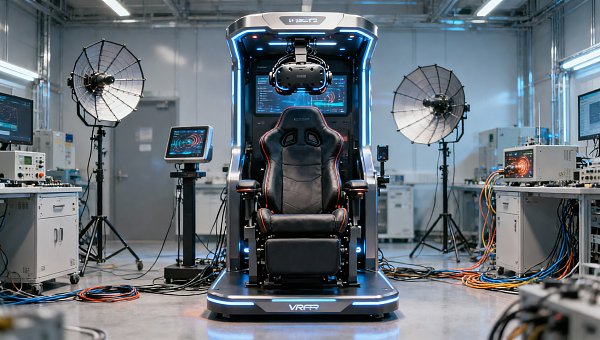
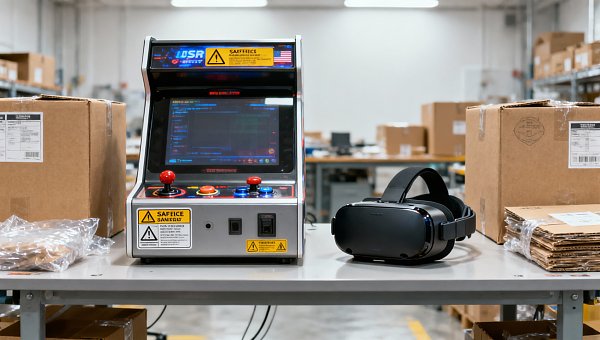
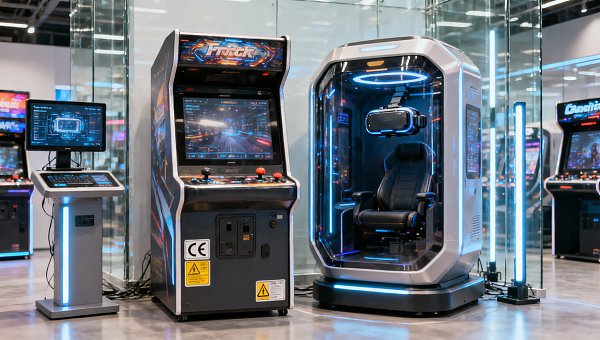
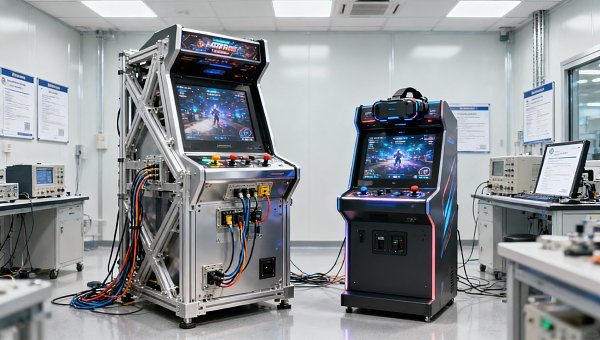
Canton Fair Phase II 2026 Highlights VR Ride Equipment Demand
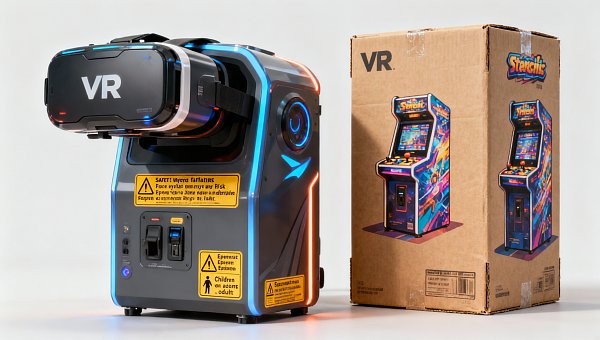
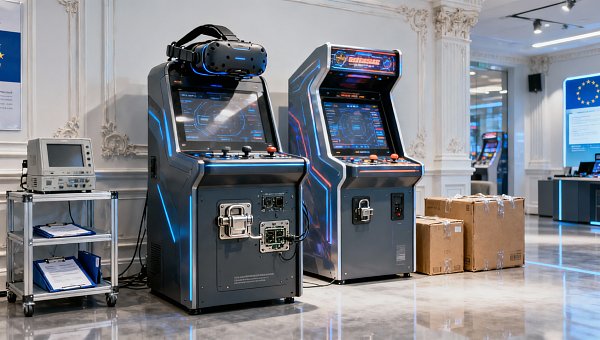
On May 22, 2026, the conclusion of Phase II of the 139th Canton Fair revealed a notable surge in overseas buyer interest in Arcade & VR Machines—particularly 4D motion VR Ride equipment—which ranked among the top three procurement priorities. This development carries implications for manufacturers of immersive entertainment hardware, cross-border export service providers, and localization-focused tech suppliers serving global leisure infrastructure markets.
Event Overview
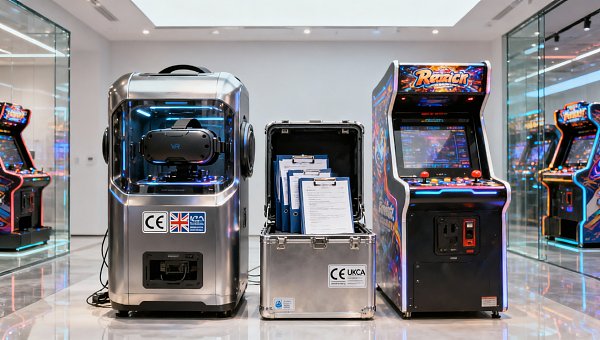
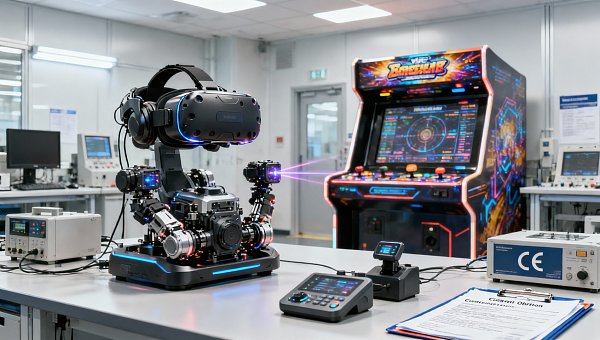
The second phase of the 139th Canton Fair closed on May 22, 2026. Official data indicated that Arcade & VR Machines—especially 4D motion VR Ride devices—ranked within the top three categories by overseas buyer procurement intent. Inquiries increased by 217% year-on-year. Buyers originated from Germany, Poland, Mexico, Brazil, and the United Arab Emirates. Over 40% of these buyers explicitly requested multi-language UI support, local payment integrations (e.g., Mercado Pago, STC Pay), and dual CE + RoHS certification.
Industries Affected by This Development
Direct Export Trading Enterprises
These firms face heightened demand for technical compliance documentation and regional payment gateway integration. The requirement for CE+RoHS certification and localized UI/payment interfaces directly affects quotation preparation, contract terms, and post-sale support scope.
Manufacturers of VR Ride Systems and Motion Platforms
Hardware producers must accommodate configuration flexibility for language packs, firmware-level payment SDKs, and modular certification pathways. The 217% inquiry growth signals potential volume shifts—but only if product specifications align with stated localization and regulatory expectations.
Supply Chain Service Providers (Certification, Localization, Logistics)
Third-party service providers specializing in EU/MEA/LATAM market access—including CE conformity assessment, Arabic/Spanish/Portuguese UI translation, and regional payment gateway testing—are seeing intensified request volumes. Demand is no longer generic; it is tied to specific device categories and defined technical criteria.
Distribution and Channel Partners in Leisure Infrastructure
Regional distributors of amusement park equipment—especially those active in emerging markets—are receiving more inbound requests referencing Canton Fair-sourced VR Ride units. Their role is shifting from logistics coordination toward pre-deployment validation (e.g., verifying STC Pay compatibility or Arabic menu rendering).
Key Focus Areas and Recommended Actions for Relevant Businesses
Monitor official updates on certification pathways for VR-based attractions
CE and RoHS apply broadly to electronics—but their enforcement context varies across amusement ride classifications. Current buyer emphasis suggests regulators may soon treat VR Ride platforms as integrated mechanical-electronic systems rather than standalone IT devices. Firms should track notifications from EU Notified Bodies and GCC Standardization Organization regarding classification updates.
Prioritize verification of local payment interface readiness for target markets
Mercado Pago (Mexico/Brazil) and STC Pay (UAE) are not drop-in SDKs; integration requires sandbox testing, merchant onboarding, and settlement reconciliation protocols. Exporters should confirm whether their current firmware supports dynamic payment gateway switching—and whether backend reporting meets regional financial authority requirements.
Assess UI localization beyond language: include regional UX conventions
Multi-language UI is necessary but insufficient. For example, Arabic UI requires right-to-left layout adaptation and culturally appropriate iconography; Portuguese (Brazil) vs. Portuguese (Portugal) variants differ in terminology and date formatting. Buyers’ explicit mention of ‘multi-language UI’ signals expectation of functional, not cosmetic, localization.
Prepare modular certification documentation packages per region
Rather than pursuing blanket CE+RoHS declarations, firms should develop modular technical files—separating motion platform mechanics, VR headset electronics, and software architecture—to streamline future adaptations for GCC, LATAM, or ASEAN markets where similar regulatory frameworks are emerging.
Editorial Observation / Industry Perspective
Observably, this trend reflects a maturing stage in global adoption of immersive ride technology—not just as novelty attractions, but as standardized infrastructure components requiring interoperable compliance. Analysis shows the 217% inquiry increase is concentrated among buyers with prior experience deploying VR-based attractions, suggesting demand is shifting from exploratory sampling toward repeat procurement cycles. From an industry perspective, this is less a short-term spike and more an early signal of tightening regional operational requirements for VR Ride vendors. It is not yet evidence of widespread deployment, but it does indicate that procurement decision-making is becoming more technically prescriptive and jurisdictionally aware.
Current more appropriate interpretation is that this represents a threshold moment: localization and certification are transitioning from competitive differentiators into baseline eligibility criteria for participation in key leisure equipment tenders.
Conclusion
The Canton Fair Phase II 2026 data point underscores an evolving procurement logic among international buyers of VR Ride equipment—one increasingly anchored in regulatory readiness, regional payment compatibility, and functional UI localization. It does not signal immediate market saturation or guaranteed order conversion, but rather highlights a narrowing of acceptable product profiles for global distribution. For stakeholders, the implication is procedural: alignment with these criteria is now a prerequisite for engagement—not a value-add to be negotiated later.
Source Attribution
Main source: Official statistics released by the China Foreign Trade Centre (CFTC) following the close of Phase II of the 139th Canton Fair on May 22, 2026.
Areas requiring ongoing observation: Certification enforcement timelines for VR-based motion platforms in non-EU jurisdictions (e.g., UAE’s ESMA, Brazil’s INMETRO), and buyer follow-up conversion rates from Canton Fair inquiries to signed contracts.
Search News
Hot Articles
- Fashion & Gem JewelryThermal Diamond Testers: How They Work and When They Can Misidentify StonesOct 07, 2026
- Commercial KitchenWhat Is Driving Demand for Commercial Hospitality Projects Across the GCC?Oct 06, 2026
- Hotel Room AmenitiesHow to Select Hotel Hair Dryers That Balance Guest Safety, Durability, and CostOct 05, 2026
Popular Tags
Need ExpertConsultation?
Connect with our specialized leisureengineering team for procurementstrategies.
Recommended News
 Sep 15, 2026How to Choose Coin-Operated Pool Tables for Bars, Hotels, and Arcade VenuesCoin operated pool tables for bars, hotels, and arcades: compare sizes, payment systems, durability, service access, and revenue potential.● Theme Park Strategist
 Sep 08, 2026What to Look for in a Flight Simulator Chair Manufacturer for Commercial VR CentersChoose a flight simulator chair manufacturer that delivers durable, safe, customizable seating for commercial VR centers. Explore key sourcing criteria now.● Theme Park Strategist
 Aug 25, 2026What to Evaluate Before Buying Commercial Self Service Photo Booths for VenuesCommercial self service photo booths for venues: learn how to evaluate durability, software stability, branding flexibility, support, and total ROI before you buy.● Theme Park Strategist
 Aug 23, 2026How to Evaluate Wholesale Vending Machines for Multi-Location Business DeploymentWholesale vending machines for multi-location deployment require more than low unit cost. Learn how to compare reliability, payments, telemetry, and supplier support to scale smarter.● Theme Park Strategist
 Aug 17, 2026U.S. CPSC Urges Bilingual Warnings for Arcade and VR MachinesU.S. CPSC urges bilingual safety warnings for Arcade & VR Machines—learn what exporters, importers, and distributors must do now to avoid delays and returns.● Theme Park Strategist
 Aug 16, 2026EU Enforces EN IEC 62368-1:2026 Certification for Arcade and VR MachinesEU Enforces EN IEC 62368-1:2026 certification for arcade and VR machines, reshaping EU market access, customs clearance, and compliance planning for exporters and distributors.● Theme Park Strategist
 Aug 13, 2026UFLPA’s new guidelines take effect: Exports of Arcade and VR equipment face full-link labor compliance requirementsUFLPA’s new guide takes effect: Arcade and VR machine exports to the U.S. now face full-chain labor compliance checks. Discover key risks and action steps.● Theme Park Strategist
 Aug 12, 2026EU PPWR takes effect, Arcade and VR packaging incorporate heavy metal and PFAS restrictionsEU PPWR now applies to Arcade and VR packaging, tightening heavy metal and PFAS compliance. Learn how exporters can avoid delays, fines, and customs risks.● Theme Park Strategist
 Aug 11, 2026CPSC Sets Bilingual Labels for Arcade and VR ImportsCPSC bilingual labels for arcade and VR imports become mandatory on October 1, 2026. Learn the new English-Spanish warning rules, customs risks, and key compliance steps now.● Theme Park Strategist
 Aug 10, 2026EU Rule Takes Effect for Arcade & VR Machine ClearanceArcade & VR Machine clearance in the EU now depends on EN IEC 62368-1:2026+A11:2026 compliance. Learn what changed, who is affected, and how to avoid customs delays.● Theme Park Strategist
 Aug 09, 2026CPSC Requires New Labels for Arcade and VR ImportsCPSC requires new labels for Arcade and VR imports starting Oct 1, 2026. Learn the multilingual warning rules, compliance risks, and key steps exporters and buyers must take now.● Theme Park Strategist
 Aug 08, 2026EU Entry Rule Tightens for Arcade & VR MachinesArcade & VR Machines entering the EU now face stricter CE compliance under EN IEC 62368-1:2026+A11:2026. Learn the new rule, risks, and what exporters must do now.● Theme Park Strategist
 Aug 07, 2026CPSC Notice Tightens U.S. Entry Rules for Arcade and VR MachinesCPSC Notice Tightens U.S. Entry Rules for Arcade and VR Machines: learn the new labeling, FCC, UN38.3, and compliance document requirements before October 1, 2026.● Theme Park Strategist
 Aug 06, 2026EU Rule Takes Effect for CE-UKCA Labels on Arcade & VR MachinesArcade & VR Machines face new CE-UKCA label and ECPD filing rules in the EU and UK. Learn what manufacturers, importers, and distributors must do now to avoid delays.● Theme Park Strategist
 Aug 05, 2026CPSC Recalls Arcade and VR Machines Over UL 62368-1CPSC recalls arcade and VR machines over UL 62368-1 non-compliance. Learn how this 2026 safety action may affect imports, distribution, customs clearance, and market access.● Theme Park Strategist
 Aug 02, 2026EU Sets New Certification Rule for Arcade and VR MachinesArcade and VR Machines face a new EU certification rule from Oct 1, 2026. Learn how EN IEC 62368-1:2026+A11:2026 affects CE marking, customs clearance, and market access.● Theme Park Strategist
 Aug 01, 2026CPSC Moves to Require Bilingual Warnings on Arcade and VR MachinesCPSC bilingual warnings for Arcade and VR Machines may reshape U.S. import compliance. Learn how English-Spanish labels affect packaging, customs risk, and shipment readiness.● Theme Park Strategist
 Jul 31, 2026EU Sets EN IEC 62368-1:2025 Rule for Arcade and VR MachinesEU Sets EN IEC 62368-1:2025 Rule for Arcade and VR Machines. Learn the new EU compliance deadlines, safety updates, and key actions for manufacturers, OEMs, and distributors.● Theme Park Strategist
 Jul 30, 2026CPSC Sets New Warning Label Rule for Arcade & VR MachinesCPSC sets a new warning label rule for Arcade & VR Machines effective August 15, 2026. Learn key compliance risks, multilingual label requirements, and shipment actions now.● Theme Park Strategist
 Jul 29, 2026EU Enforces New Safety Standard for Arcade and VR MachinesEU Enforces New Safety Standard for Arcade and VR Machines: learn how EN IEC 62368-1 affects CE compliance, customs clearance, and EU market access for exporters and buyers.● Theme Park Strategist
 Jul 28, 2026CPSC Sets ASTM F3472-26 Rule for Arcade & VR ImportsCPSC ASTM F3472-26 rule reshapes Arcade & VR imports to the U.S. Learn key compliance deadlines, certification risks, and what exporters, OEM/ODM suppliers, and buyers should do now.● Theme Park Strategist
 Jul 27, 2026EU Rule Takes Effect for Arcade & VR Machine CybersecurityEU Rule Takes Effect for Arcade & VR Machine Cybersecurity: learn how EN IEC 62443-3-3:2025 affects compliance, customs clearance, sales continuity, and supplier planning in the EU market.● Theme Park Strategist
 Jul 25, 2026CPSC Sets Bilingual Warning Rule for Arcade and VR ImportsCPSC bilingual warning rule for arcade and VR imports takes effect August 1, 2026. Learn how OEM/ODM exporters can avoid CBP delays, relabel shipments, and protect U.S. delivery timelines.● Theme Park Strategist
 Jul 24, 2026EU Enforces New Safety Standard for Arcade and VR MachinesEU Enforces New Safety Standard for Arcade and VR Machines: learn how EN IEC 62368-1:2026+A11:2026 reshapes EU compliance, CE documentation, testing timelines, and export readiness.● Theme Park Strategist