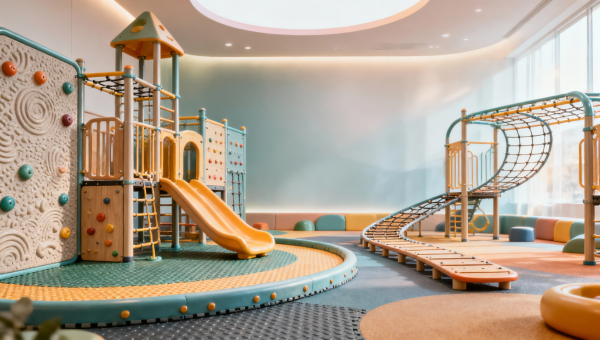
Playground Climbers: Which Type Fits Best?
Choosing the right playground climbers is not only a design decision—it is a purchasing decision that affects safety, age suitability, maintenance cost, user appeal, and long-term return on investment. For schools, parks, family entertainment venues, and commercial recreation projects, the best climber type depends less on what looks impressive and more on who will use it, how often it will be used, what safety standards apply, and how the site is planned. In most cases, there is no single “best” option. The right choice is the one that matches the target age group, available footprint, supervision level, accessibility goals, and expected wear.
For buyers comparing playground climbers, the most practical approach is to evaluate each type against five factors: user age, play value, site constraints, compliance requirements, and lifecycle cost. Some climbers are better for early childhood development, some are ideal for high-capacity public spaces, and others are better suited to themed or sensory playground concepts. This guide explains which type fits best and how to make a more informed sourcing decision.
What buyers usually want to know first: which playground climber is the safest and most practical?
The most useful short answer is this: low-height modular climbers are often the safest and most practical for broad commercial use, while rope climbers, net structures, and tall integrated systems offer stronger play appeal for older children but require more careful planning. If the project serves multiple age groups, a combination approach usually performs best.
Procurement teams and project evaluators typically want to avoid two common mistakes. The first is selecting a climber based on appearance without considering fall zones, age grading, or maintenance demands. The second is buying a system that is too limited, resulting in low engagement and poor long-term value. A well-chosen climber should balance challenge with safety, support repeat use, and fit the surrounding playground equipment rather than compete with it.
From a commercial standpoint, the best playground climbers are those that:
- match the intended user age range,
- meet local and international safety compliance requirements,
- fit the available site dimensions and surfacing plan,
- offer durable materials for heavy traffic environments, and
- create enough play value to justify investment.
How different types of playground climbers compare
Not all climbers serve the same purpose. Some are designed for motor skill development, some for adventurous play, and some for visual impact in destination playgrounds. Buyers should compare them by function, supervision needs, installation complexity, and replacement cost.
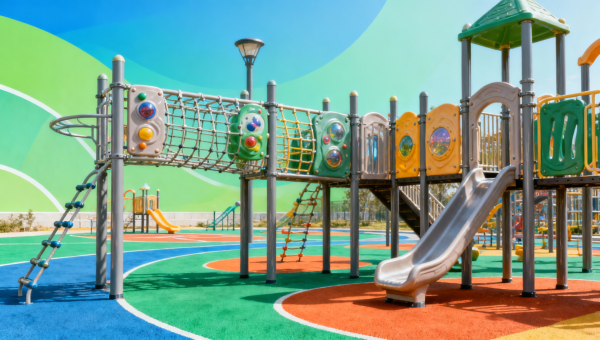
1. Modular platform climbers
These are common in schools, public parks, residential developments, and commercial mixed-use spaces. They often include steps, decks, climbing panels, ladders, and small bridges.
Best for: broad age appeal, structured play zones, predictable safety management
Advantages: easy age zoning, flexible layouts, straightforward maintenance, easy integration with slides and other play elements
Considerations: may offer less excitement for older children if not combined with more challenging features
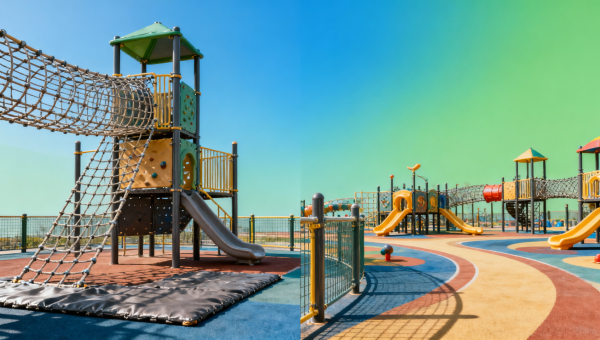
2. Rope climbers and net climbers
These are popular in modern parks and destination playgrounds because they encourage balance, coordination, and social play. Pyramid nets and three-dimensional rope structures are especially effective for medium to large sites.
Best for: school-age children, parks with higher play capacity, challenge-based play environments
Advantages: high visual appeal, strong user engagement, efficient use of vertical space, multi-user play
Considerations: requires careful attention to fall height, anchoring systems, inspection routines, and age suitability
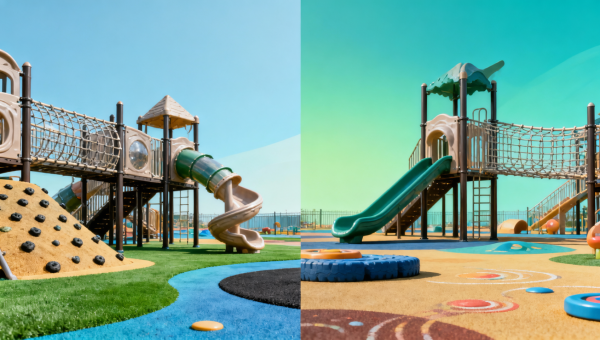
3. Rock and boulder climbers
These can be molded artificial rock walls, low boulder formations, or themed climbing surfaces. They work well in nature-themed, adventure, or sensory playground concepts.
Best for: themed spaces, tactile play, compact challenge zones
Advantages: strong aesthetic value, supports imaginative play, can fit landscape-oriented projects
Considerations: route complexity must match age group; textured surfaces must remain safe and durable over time
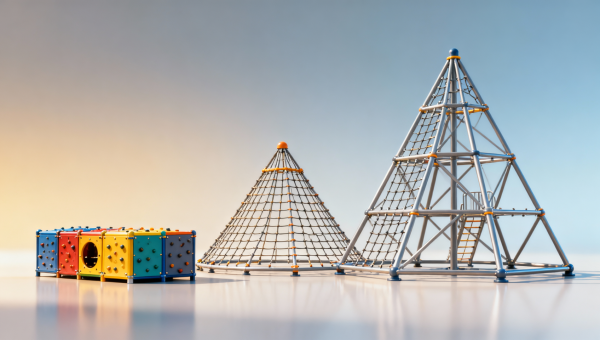
4. Freestanding geometric climbers
These include domes, cubes, arches, and steel-framed climbing structures. They are often chosen for compact spaces or minimalist urban playgrounds.
Best for: visual simplicity, open-view supervision, smaller footprints
Advantages: durable, often lower maintenance than large integrated systems, clear challenge progression
Considerations: may need complementary equipment to broaden play value
5. Integrated adventure play systems
These combine climbers with slides, tunnels, sensory elements, overhead events, and linked activity panels. They are common in high-investment commercial and municipal projects.
Best for: destination playgrounds, family venues, large public installations
Advantages: high engagement, strong visual presence, supports longer dwell time, suitable for themed environments
Considerations: higher upfront cost, more complex installation, broader inspection and maintenance scope
Which climber type fits best by age group?
Age suitability is one of the most important decision points. A climber that is ideal for one age segment may create safety issues or poor play value for another.
For toddlers and preschool users
Low-height climbers with easy-grip handholds, ramps, wide steps, and protected transitions are usually the best choice. Buyers should prioritize confidence-building movement, low fall height, and simple circulation. Sensory playground features can add value here, especially for early learning settings and inclusive recreation areas.
For ages 5 to 12
Rope climbers, modular challenge structures, and medium-height net systems often perform best. Children in this group benefit from equipment that supports strength, coordination, balance, and social interaction. This is also the age range where under-designed climbers lose appeal quickly.
For mixed-age public environments
If the playground serves families, municipalities, schools, or hospitality venues with a wide user range, zoning is essential. Instead of looking for one climber that does everything, buyers should consider separate but visually connected areas for younger and older users. This reduces risk while improving user satisfaction.
How site conditions influence the best playground climber choice
Even a strong product can become the wrong choice if the site conditions are not right. Commercial buyers should assess the physical environment before comparing supplier catalogs.
Available footprint
Compact urban projects may benefit from vertical rope pyramids, geometric climbers, or low-footprint steel systems. Larger sites can support multi-event climbers or integrated amusement equipment with dedicated circulation paths.
Fall zone and surfacing requirements
Climbers need proper use zones and impact-attenuating surfacing. The higher and more complex the structure, the more critical the surfacing specification becomes. Buyers should evaluate whether the project requires poured-in-place rubber, rubber tiles, engineered wood fiber, or another compliant solution.
Traffic level
High-use schoolyards and public parks should prioritize durable finishes, reinforced connectors, UV-resistant materials, and easy replacement parts. A product that performs well in a lightly used community area may not be suitable for a city park or commercial leisure destination.
Environmental exposure
Coastal, humid, or high-UV climates affect material performance. Steel coatings, rope quality, plastic stability, and corrosion resistance should all be reviewed during sourcing. This is especially important for global buyers comparing OEM or ODM manufacturers across regions.
What safety and compliance questions should procurement teams ask?
Safety compliance should never be treated as a final checklist item. It should shape the selection process from the beginning. The right playground climber is not only engaging but also documented, testable, and suitable for the intended installation market.
Buyers should ask suppliers the following:
- Which standards does the climber meet, such as ASTM, EN, or relevant local regulations?
- What is the certified age grading?
- What is the critical fall height and required surfacing specification?
- Are test reports current and issued by credible bodies?
- What inspection and maintenance schedule is recommended?
- How are pinch points, entrapment risks, and structural durability addressed?
For distributors and project specifiers, documentation quality matters almost as much as the equipment itself. Clear installation manuals, material certifications, warranty terms, and spare-parts support reduce project risk and improve buyer confidence.
How to evaluate long-term value, not just purchase price
Cost comparisons often fail because buyers only compare initial quotations. In reality, the best playground climber is the one that delivers the strongest lifecycle value for the intended use case.
Key cost factors include:
- installation complexity,
- surfacing requirements,
- maintenance frequency,
- replacement part availability,
- coating and material durability,
- expected service life, and
- ability to maintain user interest over time.
For example, a low-cost climber may become expensive if it requires frequent repairs or attracts limited use. A higher-value rope structure or integrated play unit may justify a larger upfront investment if it increases throughput, supports stronger community engagement, and reduces the need for future upgrades.
For commercial venues, user dwell time and repeat visitation can also matter. In leisure parks, hospitality family zones, and mixed-use developments, better play value can support broader commercial outcomes.
When sensory playground concepts and inclusive design should influence your choice
For many modern projects, the decision is no longer only about climbing challenge. Buyers increasingly need playground climbers that work within sensory playground concepts and inclusive design goals. This is especially relevant for schools, public institutions, healthcare-adjacent spaces, and civic projects.
In these cases, the best climber may not be the tallest or most complex. It may be the one that offers:
- graduated challenge levels,
- clear visual routes,
- supportive handholds and transfer points,
- tactile variety without overstimulation,
- space for social interaction, and
- integration with quiet or sensory-supportive elements.
Inclusive planning also affects the surrounding layout. Playground borders, surfacing transitions, circulation paths, and access points all contribute to whether a climber is truly usable in practice.
A practical sourcing framework for selecting the right playground climbers
For procurement teams, dealers, and distributors, a simple decision framework can reduce sourcing errors.
- Define the primary user group. Separate by age, supervision level, and expected activity style.
- Assess the site. Review dimensions, surfacing, climate, visibility, and installation constraints.
- Set the project goal. Is the priority safety, visual impact, play capacity, inclusivity, or budget efficiency?
- Shortlist climber types. Compare modular, rope, rock, geometric, and integrated systems against the project brief.
- Verify compliance and documentation. Confirm standards, test reports, warranties, and maintenance support.
- Calculate lifecycle cost. Include installation, inspection, replacement parts, and expected service life.
- Check supplier reliability. Review manufacturing quality, project references, lead times, and customization capability.
This method is especially useful for B2B buyers managing cross-border sourcing, dealer portfolio expansion, or public-sector project bidding.
Final answer: which type of playground climber fits best?
The best playground climber depends on the project context, but the clearest rule is this: choose by user need and operating reality, not by appearance alone. For early childhood and lower-risk environments, low-height modular climbers are often the best fit. For older children and high-engagement public play, rope climbers and net structures usually offer the strongest value. For themed or design-led spaces, rock climbers and integrated adventure systems can be the right choice when supported by proper planning and budget.
For most commercial and institutional buyers, the strongest solution is often a balanced mix—one that combines accessible entry-level climbing with more advanced challenge features, supported by compliant surfacing, durable materials, and a clear maintenance plan.
In short, the right playground climbers are those that safely attract use, fit the site, meet standards, and continue delivering value long after installation. When buyers evaluate climbers through the lens of age fit, compliance, durability, and lifecycle return, sourcing decisions become much more confident—and much more effective.
Search News
Hot Articles
- Indoor PlaygroundFan Zhendong Visits Silicon Valley as MLTT Investor, AI Ping-Pong Tech Draws AttentionApr 23, 2026
- Stage Lighting & Truss2026 FIBA Women's World Cup Draw Opens Export Window for Arena Lighting & Timing SystemsApr 23, 2026
- Pro Stage AudioChina Upgrades Security Compliance for International Sports EventsApr 23, 2026
Popular Tags
Need ExpertConsultation?
Connect with our specialized leisureengineering team for procurementstrategies.
Recommended News
 Apr 23, 2026Fan Zhendong Visits Silicon Valley as MLTT Investor, AI Ping-Pong Tech Draws AttentionAI ping-pong tech takes center stage as Fan Zhendong visits Silicon Valley as MLTT investor—key for smart sports hardware, AI coaching platforms & SaaS providers.● Theme Park Strategist
 Apr 23, 2026Vietnam Mandates Child Finger-Trap Sensors for Indoor Play EquipmentChild finger-trap sensors now mandatory for indoor play equipment in Vietnam—learn how QCVN 121:2026 impacts exporters, manufacturers & suppliers ahead of July 1, 2026 enforcement.● Theme Park Strategist
 Apr 22, 2026Vietnam Mandates Child Finger-Trap Sensors for Indoor Playground EquipmentVietnam mandates child finger-trap sensors for indoor playground equipment—comply with QCVN 128:2026 & TCVN 9350:2023 before Oct 2026!● Theme Park Strategist
 Apr 21, 2026Vietnam Mandates Child Finger-Trap Sensors for Indoor Play EquipmentVietnam mandates child finger-trap sensors for indoor play equipment—comply with TCVN 9507:2023 by July 1, 2026 to clear customs & protect kids.● Theme Park Strategist
 Apr 20, 2026NES Launches Sports Community Curator ProgramSports Community Curator program launched by NES — join global fitness studios, uni clubs & outdoor groups to co-create, test gear & grow with Chinese sports brands.● Theme Park Strategist
 Apr 17, 2026CPSC AI Safety Alert: 200ms Delay in Child Playground AI Systems = HazardCPSC AI Safety Alert: 200ms delay in child playground AI systems = hazard. Learn how latency compliance impacts Target/Walmart listings, testing, and supply chain.● Theme Park Strategist
 Apr 17, 20262026 Shanghai Sailing Open Adopts Domestic SeaChronos Pro Timing SystemSeaChronos Pro timing system debuts at 2026 Shanghai Sailing Open — ITU-certified, millisecond-accurate, wind- and tide-integrated. A game-changer for marine sports tech.● Theme Park Strategist
 Apr 16, 2026FDA Proposes New Labeling Rules for Sports Nutrition Supplements with Chinese LabelsFDA's new labeling rules for sports nutrition supplements with Chinese labels take effect April 2026—learn compliance must-dos for U.S. importers, manufacturers & brands.● Theme Park Strategist
 Apr 15, 2026Saudi SASO Updates Amusement Ride Standards: VR Devices Now Require Mandatory EMC TestingSaudi SASO's new 2026 standard mandates EMC testing for VR amusement rides, impacting exporters. Learn key compliance strategies for Saudi market access.● Theme Park Strategist
 Apr 14, 2026Japan Mandates Multilingual E-Manuals for Fitness Equipment from April 2026Japan mandates multilingual e-manuals for fitness equipment from April 2026. Learn how this impacts manufacturers & importers with JIS T 0601-1 compliance requirements. Stay ahead of the regulation!● Theme Park Strategist
 Apr 13, 2026WTT Taiyuan Adopts Chinese AI Table Tennis Analysis System with ITTF Export CertificationWTT Taiyuan adopts Chinese AI table tennis analysis system with ITTF export certification, enabling real-time ball speed & spin tracking. A game-changer for sports tech in emerging markets like Southeast Asia & Middle East.● Theme Park Strategist
 Apr 13, 2026First Female Snooker Player Achieves Multiple Century Breaks as Chinese Table Gains WPBSA CertificationChinese snooker player Bai Yulu makes history with multiple century breaks using WPBSA-certified 'Tournament Pro X7' table, marking a milestone for Chinese manufacturing in professional snooker equipment. Discover how this impacts global markets.● Theme Park Strategist
 Apr 13, 2026RCEP Zero Tariff on China's TPU Sports Protective Gear Boosts ASEAN TradeRCEP's zero-tariff policy on China's TPU sports protective gear boosts ASEAN trade, giving Chinese exporters cost advantages over Korean rivals. Learn how manufacturers and distributors can capitalize on this opportunity.● Theme Park Strategist
 Apr 10, 2026Japan's JIS T 9001:2026 Sports Flooring Anti-Slip Standard Mandatory from April 2026Japan's JIS T 9001:2026 standard mandates anti-slip sports flooring (SCOF ≥ 0.6) from April 2026. Chinese exporters must adapt to meet new requirements. Learn key compliance strategies.● Theme Park Strategist
 Apr 10, 2026Bai Yulu Makes History at Snooker World Championship, Sparks Surge in Women's Sports Equipment DemandBai Yulu makes history at Snooker World Championship with two century breaks, sparking 185% surge in women's sports equipment demand. Discover how manufacturers, e-commerce & supply chains can capitalize on this trend.● Theme Park Strategist
 Apr 10, 20262026 Badminton Asia Championships Quarterfinals Schedule Announced, Shi Yuqi to Compete; Southeast Asia Racket Orders Face 6-8 Week Delays2026 Badminton Asia Championships quarterfinals schedule revealed with Shi Yuqi competing, while Southeast Asia faces 6-8 week racket delays. Learn how supply chain issues impact manufacturers and get strategies to navigate equipment shortages.● Theme Park Strategist
 Apr 10, 2026WTT Taiyuan Challenge Sparks Smart Equipment Demand: Japan Buyers Scrutinize AI Training TechDiscover how the WTT Taiyuan Challenge boosts demand for AI training tech as Japanese buyers evaluate smart sports equipment. Learn key opportunities for manufacturers with JIS-certified solutions.● Theme Park Strategist
 Apr 10, 2026Chinese Snooker Players' Success Spurs Global Demand for Cue AccessoriesChinese snooker players' success drives 210% global demand surge for cue accessories. Explore how manufacturers & exporters can capitalize on this trend with UK, German & Australian markets leading inquiries.● Theme Park Strategist
 Apr 10, 2026EU Updates EN 16830:2026 Eyewear Safety Standard, Impacting China's Sports Goggle ExportsEU's updated EN 16830:2026 eyewear safety standard impacts China's sports goggle exports with stricter CE certification requirements. Learn how manufacturers and exporters can adapt to new impact resistance, UV400+, and blue light blocking standards before the September 2026 deadline.● Theme Park Strategist
 Apr 24, 2026How to Improve Playground Safety on BudgetPlayground safety on a budget: compare amusement equipment, playground borders, playground climbers, and sensory playground upgrades to cut risk, lower maintenance, and improve value.● Theme Park Strategist
 Apr 24, 2026Playground Safety Upgrades That Matter MostPlayground safety upgrades that matter most: compare playground borders, sensory playground design, playground climbers and amusement equipment to improve compliance, inclusion, durability, and long-term value.● Theme Park Strategist
 Apr 24, 2026Common Playground Climbers Safety MistakesPlayground climbers safety mistakes can raise playground safety risks fast. Learn how playground borders, sensory playground planning, and compliant amusement equipment help buyers choose safer, durable solutions.● Theme Park Strategist
 Apr 24, 2026Playground Climbers: Which Type Fits Best?Playground climbers guide for safer, smarter buying: compare types by age, playground safety, sensory playground design, and amusement equipment value to choose the best fit.● Theme Park Strategist
 Apr 23, 2026Sensory Playground Ideas That Actually WorkSensory playground ideas with playground climbers, playground borders, music accessories, and playground safety tips for parks, schools, hotels, and commercial furniture buyers.● Theme Park Strategist