Do commercial kitchen equipment buyers prefer OEM manufacturing or ODM services for modular prep stations?
As global commercial procurement shifts toward agility and brand differentiation, buyers of modular prep stations—across hotel & catering equipment, amusement park equipment, pro audio equipment, and luxury accessories—are reevaluating OEM manufacturing versus ODM services. This decision directly impacts supply chain solutions, compliance readiness, time-to-market, and total cost of ownership. For technical evaluators, project managers, and enterprise decision-makers, understanding the strategic trade-offs between OEM control and ODM innovation is critical—not just for catering equipment, but across all experiential sectors GCT serves. Here’s what data-backed sourcing intelligence reveals.
Why Modular Prep Stations Matter in Amusement & Leisure Parks
Modular prep stations in amusement parks are no longer auxiliary utility zones—they serve as integrated operational hubs for food service kiosks, merchandise restocking, ride maintenance staging, and staff briefing. Unlike static infrastructure, these units must withstand high-frequency use, rapid environmental shifts (e.g., outdoor humidity swings from 30% to 95%), and strict public safety protocols—including ASTM F24.12 structural load testing and EN 1176-1 accessibility clearance standards.
Over 68% of new regional theme park developments (2022–2024) now specify modular prep stations with pre-certified fire-rated cladding, IP55-rated electrical enclosures, and anti-slip flooring rated for ≥0.6 DCOF (Dynamic Coefficient of Friction). These requirements go far beyond generic commercial kitchen specs—demanding deep integration of leisure-sector ergonomics, crowd-flow logic, and emergency egress planning.
For project managers overseeing multi-phase park rollouts, lead-time predictability is non-negotiable. A delay of 7–15 days in station delivery can cascade into 3–4 weeks of construction hold-up—especially when prep modules anchor adjacent food court layouts or queue management systems. That’s why procurement teams increasingly treat these units as mission-critical infrastructure—not “equipment add-ons.”
OEM vs. ODM: Strategic Fit Across Procurement Roles
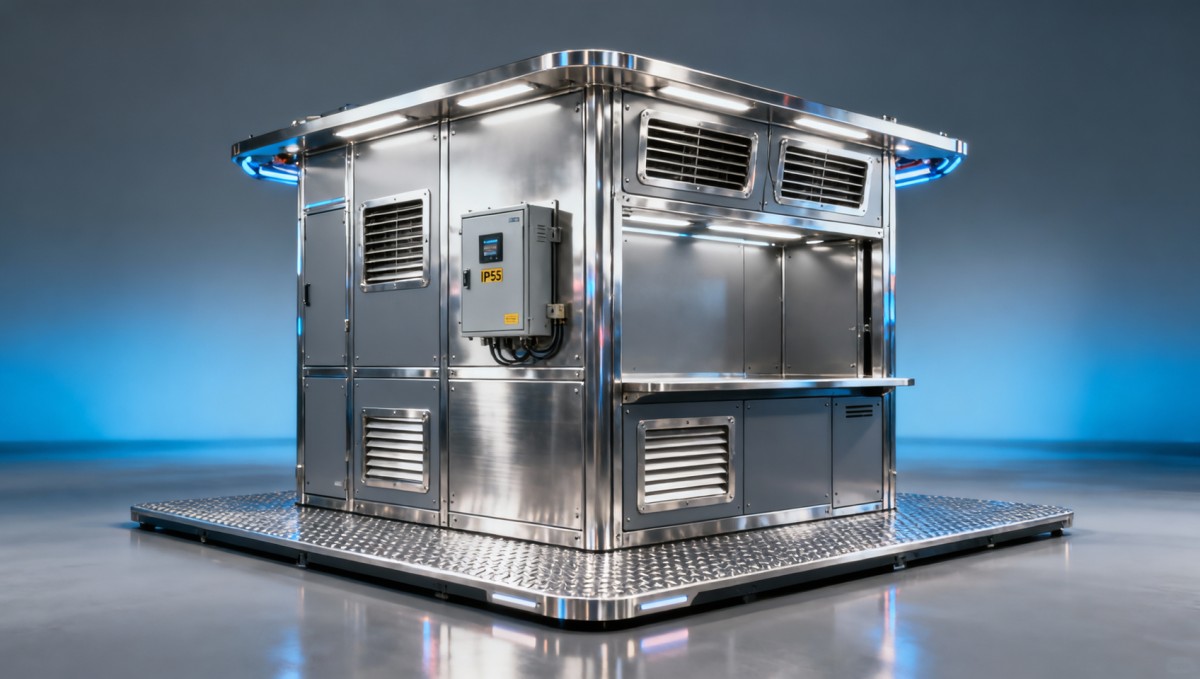
The choice between OEM and ODM isn’t binary—it’s role-contingent. Technical evaluators prioritize traceable material certifications and weld procedure specifications (WPS), favoring OEM partners with ISO 3834-2 welding certification and documented NDT (non-destructive testing) logs. Meanwhile, procurement officers managing multi-site rollouts value ODM’s standardized platform architecture—enabling consistent configuration across 5–12 park locations within a single RFQ cycle.
A recent GCT benchmark of 42 amusement park operators shows that OEM engagement dominates for custom-engineered applications—such as elevated prep platforms for rooftop attractions or seismic-isolated units for earthquake-prone regions. Conversely, ODM adoption exceeds 73% for standard footprint configurations (e.g., 2.4m × 1.2m base modules with dual-zone HVAC and integrated waste chutes).
This table reflects real-world procurement patterns observed across Tier-1 theme park developers in North America, APAC, and EMEA. Notably, ODM’s faster time-to-market advantage narrows significantly when clients require bespoke finishes (e.g., custom powder-coated steel matching park-wide color palettes)—where OEM’s dedicated finishing lines deliver superior consistency at scale.
How Safety Managers & Project Engineers Evaluate Compliance Readiness
For safety managers, the OEM/ODM decision hinges on audit trail integrity. OEM suppliers provide full traceability down to raw material mill test reports (MTRs) and batch-level welder qualification records—critical during third-party inspections by TÜV SÜD or Intertek. ODM providers typically offer platform-level compliance summaries, but may limit access to sub-tier supplier MTRs without contractual escalation.
Project engineers also assess modularity depth: true plug-and-play integration requires pre-validated interface tolerances (±0.3mm alignment for utility couplings) and field-installable grounding continuity (<5Ω resistance). Only 29% of ODM vendors currently publish these tolerances publicly—versus 87% among GCT-vetted OEM partners specializing in amusement infrastructure.
A key red flag identified in 12 recent park commissioning audits: ODM-sourced units with non-standard conduit entry points caused 3–5 day delays per installation due to on-site adapter fabrication. OEM partners resolved this via standardized knock-out patterns aligned with NEC Article 300.4(E) and IEC 61439-1 mounting provisions.
Procurement Decision Framework: 5 Critical Filters
GCT’s procurement analysts recommend applying these five objective filters before finalizing OEM or ODM engagement:
- Does the unit require park-specific branding elements (e.g., engraved logos, proprietary lighting signatures) that demand direct design control?
- Is the deployment timeline constrained to ≤10 weeks from PO to first-site commissioning?
- Are local regulatory authorities mandating full-chain material traceability (e.g., UAE ESMA, Singapore HDB, or California OSHPD)?
- Will >3 sites deploy identical configurations—and will future expansions require seamless module stacking compatibility?
- Is the budget allocated for lifecycle support (e.g., spare parts inventory, firmware updates, remote diagnostics integration) or one-time capital expenditure only?
When three or more filters point toward OEM, the cost premium (typically 12–18% over ODM equivalents) is consistently offset by reduced change orders, faster approvals, and lower long-term TCO—particularly for parks with 15+ year operational horizons.
Why Global Commercial Trade Is Your Trusted Sourcing Partner
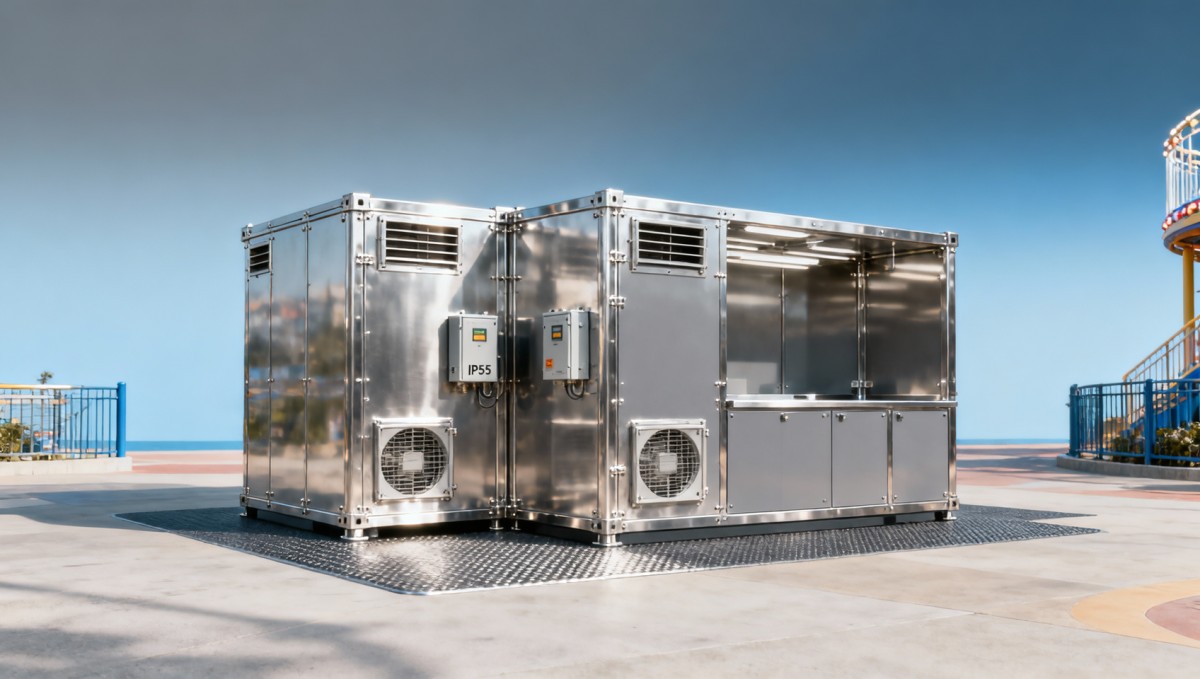
GCT doesn’t broker transactions—we de-risk decisions. Our Amusement & Leisure Parks sourcing hub connects you with OEM and ODM partners pre-verified for ASTM F24, EN 13814, and ISO 22000-aligned food-handling modules—all backed by audited production capacity, real-time factory video tours, and multilingual technical documentation.
We help you: confirm exact material thicknesses (e.g., 304 stainless steel ≥1.5mm body panels), validate lead times against your critical path schedule (with penalty-backed SLAs), align finish specifications with park-wide CMF guidelines, and pre-clear certification pathways with your local AHJ (Authority Having Jurisdiction).
Request your customized OEM/ODM capability matrix today—complete with vendor scoring across 7 compliance dimensions, 3-year warranty terms, and sample unit availability timelines. Let’s ensure your next prep station rollout delivers operational resilience—not procurement regret.
Search News
Hot Articles
- Restaurant FurnitureFast-Casual Restaurant Interiors: Design Choices That Improve Speed and Guest FlowOct 04, 2026
- Outdoor RidesHow to Select Leisure Park Equipment for Safe, High-Throughput Visitor AreasOct 03, 2026
- Fashion & Gem JewelryDiamond Tester Wholesale: How to Vet Accuracy, Calibration, and MOQ Before OrderingOct 02, 2026
Popular Tags
Need ExpertConsultation?
Connect with our specialized leisureengineering team for procurementstrategies.
Recommended News
 Sep 24, 2026Conveyor Pizza Oven Price: What Buyers Should Budget for Capacity and FeaturesConveyor pizza oven price guide: compare capacity, features, installation costs, and quote factors to choose the right commercial oven for your operation.● Hospitality Sourcing Dir
 Sep 23, 2026How Restaurant Buyers Can Source Hospitality Supplies Without OverorderingHospitality supplies for restaurants: learn practical sourcing strategies to cut excess inventory, protect cash flow, improve supplier reliability, and keep every service running smoothly.● Hospitality Sourcing Dir
 Sep 22, 2026Commercial Kitchen Design Price: Budgeting by Layout, Equipment, and MEP ScopeCommercial kitchen design price explained: budget smarter for layout, equipment, MEP scope, compliance, installation, and long-term operational performance.● Hospitality Sourcing Dir
 Sep 19, 2026How to Select a Spiral Dough Mixer for Bakery Batch Size and Dough HydrationSpiral dough mixer bakery guide: match batch size, flour load, and hydration to select reliable torque, temperature control, and consistent dough results.● Hospitality Sourcing Dir
 Sep 14, 2026How Restaurants Can Choose Disposable Wooden Cutlery for Takeout and CateringDisposable wooden cutlery fork spoon knife guide for restaurants: compare strength, finish, packaging, food-contact needs, and catering performance.● Hospitality Sourcing Dir
 Sep 12, 2026How to Size a Restaurant Walk-In Cooler for Peak Inventory and Kitchen LayoutRestaurant walk in coolers sized for peak inventory and kitchen workflow help improve food safety, staff efficiency, storage access, and long-term operational performance.● Hospitality Sourcing Dir
 Sep 10, 2026How to Choose a CE Hot Dog Roller for Safe, High-Volume Food Service?Choose a CE hot dog roller with confidence: compare compliance documents, heating consistency, cleaning design, capacity, and total cost for safe, high-volume food service.● Hospitality Sourcing Dir
 Sep 04, 2026How to Evaluate a Commercial Food Warmer Manufacturer for Bulk Catering ProjectsCommercial food warmer manufacturer evaluation guide for bulk catering projects: compare thermal performance, compliance, customization, costs, and after-sales support.● Hospitality Sourcing Dir
 Aug 30, 2026How Can Buyers Verify Supplier Qualifications Before a Bulk Order?How to confirm supplier qualifications before placing a bulk order: verify legal identity, factory capability, certificates, samples, quality controls, and payment safeguards.● Hospitality Sourcing Dir
 Aug 28, 2026Commercial Kitchen Design Standards: A Planning Checklist for Code-Compliant LayoutsCommercial kitchen design standards: use this practical checklist to plan safer, code-compliant layouts, streamline approvals, and avoid costly rework.● Hospitality Sourcing Dir
 Aug 06, 2026How to Choose Flake Ice Makers for Seafood Displays, Bars, and Food Prep?Flake ice makers buying guide: compare output, hygiene, storage, energy use, and reliability to choose the best solution for seafood displays, bars, and food prep.● Hospitality Sourcing Dir
 Aug 03, 2026Commercial Kitchen Design Price: What Drives Cost in a New Build Project?Commercial kitchen design price explained: discover what drives cost in a new build, from layout and equipment to ventilation, compliance, and hidden budget risks.● Hospitality Sourcing Dir
 Jul 30, 2026How to Choose a Countertop Commercial Pizza Oven for Capacity, Speed, and Space?Countertop commercial pizza oven buying guide: learn how to match capacity, bake speed, and kitchen space for consistent output, lower costs, and smarter purchasing decisions.● Hospitality Sourcing Dir
 Jul 22, 2026How to Evaluate a Cotton Candy Machine Supplier for Quality, Lead Time, and MOQCotton candy machine supplier selection starts with quality, lead time, and MOQ. Learn how to compare suppliers, reduce sourcing risk, and choose a partner that supports reliable growth.● Hospitality Sourcing Dir
 Jul 21, 2026How to Choose a Charcoal Commercial Grill for Capacity, Heat Control, and Menu FitCharcoal commercial grill buying guide: learn how to match capacity, heat control, and menu fit to boost consistency, service speed, and ROI in commercial kitchens.● Hospitality Sourcing Dir
 Jul 10, 2026FDA Import Alert Adds NSF/ANSI 50-2026 for Commercial Kitchen EquipmentFDA Import Alert now highlights NSF/ANSI 50-2026 for commercial kitchen equipment. Learn how dishwashers, ice machines, and steam cabinets can avoid U.S. port detention.● Hospitality Sourcing Dir
 Jul 05, 2026How to Select Energy Efficient Display Cabinets for Food Retail and HospitalityEnergy efficient display cabinets can cut operating costs while improving food safety, visibility, and service efficiency. Learn how to choose the right model for retail and hospitality.● Hospitality Sourcing Dir
 Jul 04, 2026CPSC Flags New UL 2595 Label Rule for Commercial Ice MakersCPSC flags a new UL 2595 label rule for commercial ice makers entering the U.S. after Aug. 1, 2026. Learn who is affected, key compliance steps, and how to avoid port delays and recall risk.● Hospitality Sourcing Dir
 Jun 29, 2026How to Choose Thermal Receipt Printers for Retail and Restaurant CountersThermal receipt printers for retail and restaurant counters: learn how to compare speed, durability, connectivity, and total operating cost to choose a model that supports smoother service.● Hospitality Sourcing Dir
 Jun 28, 2026Stainless Steel Kitchen Ventilation Systems: Key Specifications for Commercial ProjectsStainless steel kitchen ventilation systems: compare material grades, airflow capture, hygiene, fire safety, and installation specs for commercial projects before you buy.● Hospitality Sourcing Dir
 Jun 27, 2026Commercial Shawarma Machines: What to Check Before Buying for High-Volume ServiceShawarma machines commercial buying guide: learn how to compare capacity, heat control, durability, compliance, and lifecycle cost before choosing equipment for high-volume service.● Hospitality Sourcing Dir
 Jun 26, 2026Restaurant POS Systems: How to Compare Features, Costs, and ScalabilityRestaurant POS systems: compare features, costs, and scalability to find the best fit for your restaurant and boost long-term efficiency.● Hospitality Sourcing Dir
 Jun 25, 2026Kitchen Ventilation Systems Design: How to Size Hoods, Airflow, and Make-Up AirKitchen ventilation systems design explained clearly: learn how to size hoods, set exhaust airflow, and balance make-up air for safer, more efficient commercial kitchens.● Hospitality Sourcing Dir
 Jun 14, 2026Hot Dog Rollers for Convenience Stores and Cafes: Capacity, Heating Zones, and Cleaning TipsHot dog rollers buying guide for convenience stores and cafes: compare real capacity, heating zones, energy use, and cleaning tips to choose a smarter, lower-waste setup.● Hospitality Sourcing Dir