FIFA Cuts 2026 World Cup Broadcast Fees, Opens IP Licensing for Arcade/VR Firms
FIFA’s May 21, 2026 announcement — lowering global broadcast rights fees and launching a formal IP licensing pathway for arcade and VR hardware manufacturers — marks a strategic pivot toward diversified digital engagement. The move directly impacts China’s export-oriented interactive entertainment hardware sector, where regulatory clarity on official asset usage has long been a bottleneck for overseas commercial deployment.
Event Overview
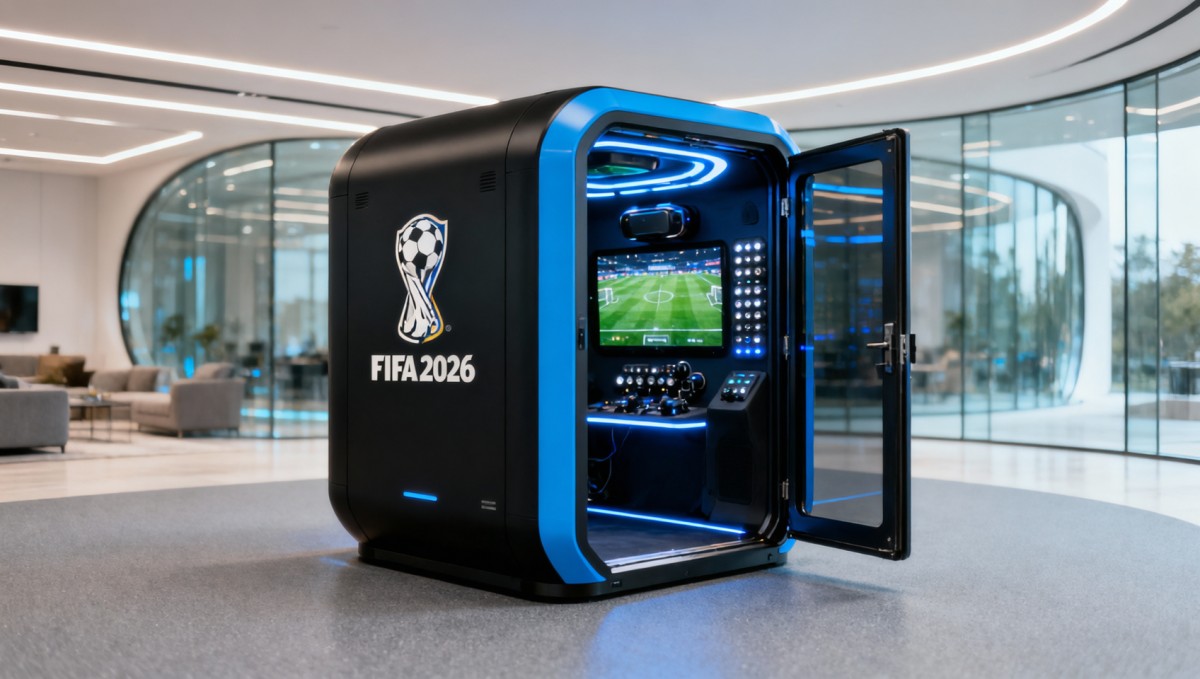
On May 21, 2026, the Fédération Internationale de Football Association (FIFA) officially announced a reduction in global broadcast rights fees for the 2026 FIFA World Cup. Concurrently, FIFA opened a certified digital interactive content IP licensing channel, explicitly permitting authorized arcade and VR equipment manufacturers — subject to compliance verification — to integrate official tournament visual assets, match audio elements, and real-time dynamic data APIs into their products.
Industries Affected
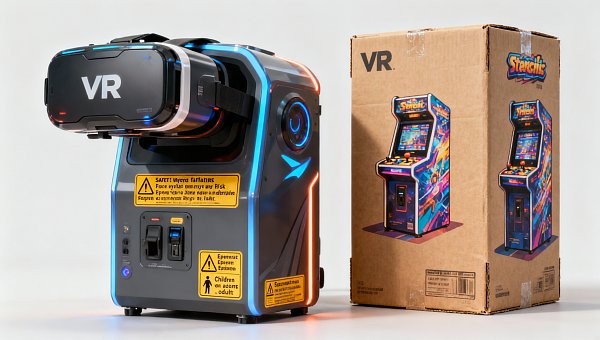
Direct Export Enterprises: Chinese arcade and VR system integrators targeting North American, European, and Southeast Asian commercial venues (e.g., family entertainment centers, shopping mall operators, VR arcades) gain immediate access to time-bound, low-barrier licensing. Impact manifests as accelerated go-to-market timelines for World Cup-themed cabinets and experiential pods, reduced legal risk in asset reuse, and improved margin visibility due to predictable royalty structures.
Raw Material Procurement Firms: Suppliers of display modules, motion-tracking sensors, haptic feedback components, and licensed audio playback ICs may see modest demand uptick — but only if tied to certified OEM programs. The policy does not stimulate broad component demand; rather, it shifts procurement focus toward traceable, compliance-ready subassemblies with documented IP clearance pathways.
Contract Manufacturing & Assembly Firms: EMS providers specializing in immersive hardware face increased qualification requirements. To support licensed product lines, they must now accommodate audit-ready documentation for firmware signing, secure asset storage, and data interface governance — raising operational overhead but also creating differentiation opportunities among Tier-2 suppliers.
Supply Chain Service Providers: Logistics and customs brokerage firms handling cross-border shipments of licensed hardware must now verify and retain evidence of FIFA certification status per SKU. This introduces new documentation layers — including license ID references in commercial invoices and certificates of origin — increasing administrative load without commensurate tariff implications.
Key Considerations and Recommended Actions
Verify Eligibility Before Committing to Localization
Manufacturers should confirm their certification tier (Tier A: full IP integration; Tier B: static asset use only) via FIFA’s official portal prior to initiating UI redesign or firmware development — as retroactive approval is not guaranteed.
Align Data Interface Integration with FIFA’s API Governance Framework
Dynamic data usage (e.g., live score feeds, player tracking overlays) requires adherence to FIFA’s newly published API rate limits, authentication protocols, and regional data residency rules — non-compliance risks immediate revocation of license privileges.
Factor in Certification Timeline When Planning Launch Windows
The application-to-approval cycle averages 8–12 weeks per product line, according to FIFA’s published service-level agreement. Firms targeting Q4 2026 commercial rollout must submit applications by early August 2026 at the latest.
Editorial Perspective / Industry Observation
Analysis shows this is less a revenue-driven concession and more a structural response to declining linear broadcast viewership and rising demand for participatory fan experiences. FIFA’s decision to decouple IP licensing from traditional media rights signals a longer-term bet on hardware-mediated fandom — particularly in markets where stadium access remains logistically or financially constrained. Observably, the window for Chinese vendors is narrow: the licensing program is valid only for the 2026 tournament cycle and does not auto-renew. From an industry standpoint, this represents a tactical opportunity — not a strategic shift — and its scalability hinges on post-tournament evaluation of consumer engagement metrics across licensed devices.
Conclusion
This policy change offers a timely, bounded catalyst for Chinese arcade and VR exporters — one that lowers entry friction but demands disciplined compliance execution. It does not alter underlying competitive dynamics in hardware manufacturing, nor does it mitigate macro challenges such as shipping cost volatility or regional content regulation. Rather, it creates a time-limited corridor for value-added differentiation in a crowded global market. A rational interpretation is that success will favor firms with pre-established certification infrastructure and agile firmware update capabilities — not those relying solely on hardware novelty.
Source Attribution
Official announcement: FIFA Media Release #FIFA2026-IP-20260521, published May 21, 2026, on fifa.com. Additional technical specifications available via FIFA Digital Partner Portal (access restricted to registered applicants). Note: Licensing terms, fee schedules, and regional eligibility criteria remain subject to periodic updates; ongoing monitoring of FIFA’s Partner Communications Dashboard is recommended.
Search News
Hot Articles
- Fashion & Gem JewelryThermal Diamond Testers: How They Work and When They Can Misidentify StonesOct 07, 2026
- Commercial KitchenWhat Is Driving Demand for Commercial Hospitality Projects Across the GCC?Oct 06, 2026
- Hotel Room AmenitiesHow to Select Hotel Hair Dryers That Balance Guest Safety, Durability, and CostOct 05, 2026
Popular Tags
Need ExpertConsultation?
Connect with our specialized leisureengineering team for procurementstrategies.
Recommended News
 Sep 15, 2026How to Choose Coin-Operated Pool Tables for Bars, Hotels, and Arcade VenuesCoin operated pool tables for bars, hotels, and arcades: compare sizes, payment systems, durability, service access, and revenue potential.● Theme Park Strategist
 Sep 08, 2026What to Look for in a Flight Simulator Chair Manufacturer for Commercial VR CentersChoose a flight simulator chair manufacturer that delivers durable, safe, customizable seating for commercial VR centers. Explore key sourcing criteria now.● Theme Park Strategist
 Aug 25, 2026What to Evaluate Before Buying Commercial Self Service Photo Booths for VenuesCommercial self service photo booths for venues: learn how to evaluate durability, software stability, branding flexibility, support, and total ROI before you buy.● Theme Park Strategist
 Aug 23, 2026How to Evaluate Wholesale Vending Machines for Multi-Location Business DeploymentWholesale vending machines for multi-location deployment require more than low unit cost. Learn how to compare reliability, payments, telemetry, and supplier support to scale smarter.● Theme Park Strategist
 Aug 17, 2026U.S. CPSC Urges Bilingual Warnings for Arcade and VR MachinesU.S. CPSC urges bilingual safety warnings for Arcade & VR Machines—learn what exporters, importers, and distributors must do now to avoid delays and returns.● Theme Park Strategist
 Aug 16, 2026EU Enforces EN IEC 62368-1:2026 Certification for Arcade and VR MachinesEU Enforces EN IEC 62368-1:2026 certification for arcade and VR machines, reshaping EU market access, customs clearance, and compliance planning for exporters and distributors.● Theme Park Strategist
 Aug 13, 2026UFLPA’s new guidelines take effect: Exports of Arcade and VR equipment face full-link labor compliance requirementsUFLPA’s new guide takes effect: Arcade and VR machine exports to the U.S. now face full-chain labor compliance checks. Discover key risks and action steps.● Theme Park Strategist
 Aug 12, 2026EU PPWR takes effect, Arcade and VR packaging incorporate heavy metal and PFAS restrictionsEU PPWR now applies to Arcade and VR packaging, tightening heavy metal and PFAS compliance. Learn how exporters can avoid delays, fines, and customs risks.● Theme Park Strategist
 Aug 11, 2026CPSC Sets Bilingual Labels for Arcade and VR ImportsCPSC bilingual labels for arcade and VR imports become mandatory on October 1, 2026. Learn the new English-Spanish warning rules, customs risks, and key compliance steps now.● Theme Park Strategist
 Aug 10, 2026EU Rule Takes Effect for Arcade & VR Machine ClearanceArcade & VR Machine clearance in the EU now depends on EN IEC 62368-1:2026+A11:2026 compliance. Learn what changed, who is affected, and how to avoid customs delays.● Theme Park Strategist
 Aug 09, 2026CPSC Requires New Labels for Arcade and VR ImportsCPSC requires new labels for Arcade and VR imports starting Oct 1, 2026. Learn the multilingual warning rules, compliance risks, and key steps exporters and buyers must take now.● Theme Park Strategist
 Aug 08, 2026EU Entry Rule Tightens for Arcade & VR MachinesArcade & VR Machines entering the EU now face stricter CE compliance under EN IEC 62368-1:2026+A11:2026. Learn the new rule, risks, and what exporters must do now.● Theme Park Strategist
 Aug 07, 2026CPSC Notice Tightens U.S. Entry Rules for Arcade and VR MachinesCPSC Notice Tightens U.S. Entry Rules for Arcade and VR Machines: learn the new labeling, FCC, UN38.3, and compliance document requirements before October 1, 2026.● Theme Park Strategist
 Aug 06, 2026EU Rule Takes Effect for CE-UKCA Labels on Arcade & VR MachinesArcade & VR Machines face new CE-UKCA label and ECPD filing rules in the EU and UK. Learn what manufacturers, importers, and distributors must do now to avoid delays.● Theme Park Strategist
 Aug 05, 2026CPSC Recalls Arcade and VR Machines Over UL 62368-1CPSC recalls arcade and VR machines over UL 62368-1 non-compliance. Learn how this 2026 safety action may affect imports, distribution, customs clearance, and market access.● Theme Park Strategist
 Aug 02, 2026EU Sets New Certification Rule for Arcade and VR MachinesArcade and VR Machines face a new EU certification rule from Oct 1, 2026. Learn how EN IEC 62368-1:2026+A11:2026 affects CE marking, customs clearance, and market access.● Theme Park Strategist
 Aug 01, 2026CPSC Moves to Require Bilingual Warnings on Arcade and VR MachinesCPSC bilingual warnings for Arcade and VR Machines may reshape U.S. import compliance. Learn how English-Spanish labels affect packaging, customs risk, and shipment readiness.● Theme Park Strategist
 Jul 31, 2026EU Sets EN IEC 62368-1:2025 Rule for Arcade and VR MachinesEU Sets EN IEC 62368-1:2025 Rule for Arcade and VR Machines. Learn the new EU compliance deadlines, safety updates, and key actions for manufacturers, OEMs, and distributors.● Theme Park Strategist
 Jul 30, 2026CPSC Sets New Warning Label Rule for Arcade & VR MachinesCPSC sets a new warning label rule for Arcade & VR Machines effective August 15, 2026. Learn key compliance risks, multilingual label requirements, and shipment actions now.● Theme Park Strategist
 Jul 29, 2026EU Enforces New Safety Standard for Arcade and VR MachinesEU Enforces New Safety Standard for Arcade and VR Machines: learn how EN IEC 62368-1 affects CE compliance, customs clearance, and EU market access for exporters and buyers.● Theme Park Strategist
 Jul 28, 2026CPSC Sets ASTM F3472-26 Rule for Arcade & VR ImportsCPSC ASTM F3472-26 rule reshapes Arcade & VR imports to the U.S. Learn key compliance deadlines, certification risks, and what exporters, OEM/ODM suppliers, and buyers should do now.● Theme Park Strategist
 Jul 27, 2026EU Rule Takes Effect for Arcade & VR Machine CybersecurityEU Rule Takes Effect for Arcade & VR Machine Cybersecurity: learn how EN IEC 62443-3-3:2025 affects compliance, customs clearance, sales continuity, and supplier planning in the EU market.● Theme Park Strategist
 Jul 25, 2026CPSC Sets Bilingual Warning Rule for Arcade and VR ImportsCPSC bilingual warning rule for arcade and VR imports takes effect August 1, 2026. Learn how OEM/ODM exporters can avoid CBP delays, relabel shipments, and protect U.S. delivery timelines.● Theme Park Strategist
 Jul 24, 2026EU Enforces New Safety Standard for Arcade and VR MachinesEU Enforces New Safety Standard for Arcade and VR Machines: learn how EN IEC 62368-1:2026+A11:2026 reshapes EU compliance, CE documentation, testing timelines, and export readiness.● Theme Park Strategist