EU CE Checks Tighten on Arcade & VR Machine Exports
From June 2026, exports of Arcade & VR Machines to the EU are facing a more targeted form of CE spot checking, with Germany’s TÜV Rheinland and the Netherlands’ KEMA jointly focusing on human-machine interaction response delay under ISO/IEC 9241-411:2023. The first round of inspections has already drawn attention across the VR motion equipment segment, after 37% of sampled Chinese products were asked to make corrections because touch latency exceeded 120 ms. For manufacturers, exporters, certification teams, and EU-facing buyers, the issue is worth close attention because compliance is no longer limited to general CE documentation and now extends more directly into measurable user interaction performance.
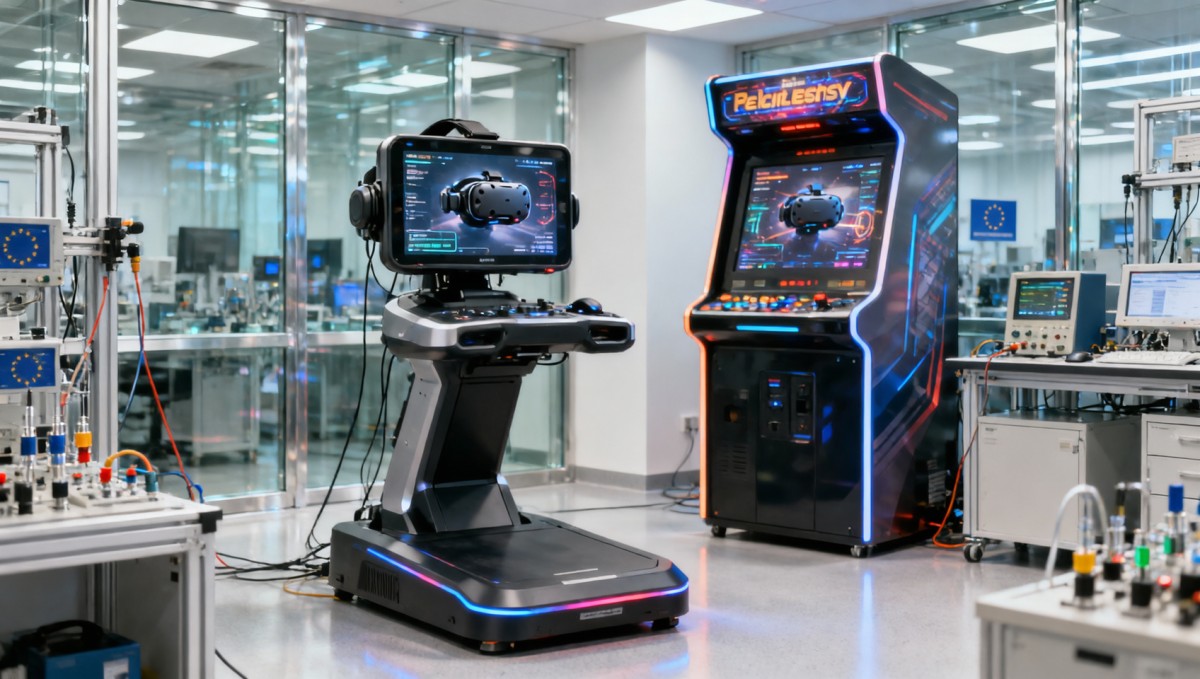
What the new CE sampling program confirms
According to the provided information, TÜV Rheinland and KEMA began a dedicated CE spot-check program for Arcade & VR Machines in June 2026.
The inspection focus is human-machine interaction response delay, with testing aligned to ISO/IEC 9241-411:2023.
In the first round of sampling, 37% of Chinese VR motion-sensing devices were required to undertake rectification because touch response delay was above 120 ms.
The new requirement also states that all newly declared models must provide a third-party measured test report and must indicate the operating status of “Low-Latency Mode.”
Where the pressure is likely to appear across the supply chain
Export-oriented device makers may face a higher proof burden
From an industry perspective, manufacturers selling Arcade & VR Machines into the EU may be affected first because the new checks move compliance from document preparation into performance verification. The main impact is likely to appear in model declaration, pre-shipment testing, and technical file preparation. What deserves closer attention is whether existing internal test methods can match the third-party measured report now required for newly declared models.
Traders and market-entry teams may need to reassess shipment readiness
For direct trading companies and market-entry teams, the issue is not only product performance but also whether submission materials are complete at the point of declaration. The practical effect may be seen in delivery planning, customer communication, and coordination with testing bodies. If a product requires rectification after sampling, timing risks may become more visible in the export process.
Certification and compliance service providers will need to focus on test alignment
For certification consultants, labs, and compliance coordinators, the key change is that response delay has become a high-frequency non-conformity item in this inspection round. Analysis shows that service work may shift toward earlier identification of latency risks, clearer interpretation of test conditions, and more explicit handling of the “Low-Latency Mode” status in reporting and labeling.
EU buyers and channel partners may pay closer attention to verifiable performance claims
For buyers, distributors, and operators in the EU market, this development may affect supplier screening and product acceptance. The impact is likely to center on whether suppliers can provide compliant third-party test evidence for new models and whether the stated operating mode is clearly identified. In business terms, documentation quality may become more closely tied to procurement confidence.
What companies should watch right now
Whether current models can pass latency checks before formal submission
Analysis shows that companies with EU-bound VR motion products should first distinguish between existing shipped models and newly declared models, while paying particular attention to measured touch response delay. The immediate operational issue is whether products are already near or above the 120 ms line cited in the first inspection round.
How third-party testing will be incorporated into declaration workflows
The new rule makes third-party measured reports a required part of new model submission. What deserves closer attention is not only obtaining a report, but also when in the product cycle the testing is arranged, how results are documented, and whether the report format is consistent with declaration needs.
The practical meaning of “Low-Latency Mode” marking
Companies should also pay attention to how the required “Low-Latency Mode” operating status is presented in product materials and compliance documentation. Observably, this is not just a wording issue; it is tied to how the product is represented during testing and submission. The distinction between a feature description and a compliance-relevant operating state may matter in actual implementation.
How to prepare for rectification and customer communication
Given that some sampled products were required to rectify, exporters and account teams may need internal plans for follow-up actions, revised schedules, and explanation to EU customers. From an industry perspective, the operational difference between a policy signal and a business disruption often lies in how quickly documentation, testing, and communication can be coordinated.
Why this looks like more than a one-off technical detail
This section is an observation rather than a confirmed fact. It is more appropriate to understand this development as a targeted compliance signal rather than a complete regulatory reset. The reason is that the focus of inspection is very specific: measurable interaction delay, third-party verification, and explicit operating-state labeling. That combination suggests closer scrutiny of user-experience-related technical performance within CE-related market access work for this product category.
At the same time, it is too early to treat the current situation as a settled long-term outcome for the entire sector. The available information confirms a dedicated sampling action and an initial non-compliance rate in one inspection round, but further observation is still needed on how broadly this checking approach will be applied across product types and submission cases.
How the industry may best interpret the latest move
In summary, this update matters because it shifts attention from broad CE preparedness to a narrower and more testable compliance point in Arcade & VR Machines exported to the EU. The immediate significance is practical: latency measurement, third-party reporting, and operating-mode identification now deserve a more central place in export preparation for relevant products.
A neutral reading is that the development should currently be viewed as a strong near-term compliance signal with possible longer-term implications, rather than as a final verdict on the whole market. For companies involved in manufacturing, exporting, testing, or buying these products, continued monitoring and early technical verification appear more appropriate than waiting for problems to emerge during sampling.
Basis of this article and points that still require verification
This article is based on the user-provided news title, event date, and event summary. The confirmed information used here is limited to the reported June 2026 launch of a dedicated CE spot-check program by TÜV Rheinland and KEMA, the inspection focus on response delay under ISO/IEC 9241-411:2023, the first-round finding that 37% of sampled Chinese VR motion-sensing devices were asked to rectify due to touch latency above 120 ms, and the requirement for third-party measured reports plus “Low-Latency Mode” status marking for newly declared models.
For this type of industry update, relevant source categories usually include official notices, company announcements, industry association information, authoritative media coverage, and standard organization documents. A specific official source link was not provided in the input, so further verification remains necessary. Follow-up attention should focus on any additional official wording, implementation clarifications, and whether the scope of sampling expands across more Arcade & VR Machine categories.
Search News
Hot Articles
- Indoor PlaygroundTurnkey Playground Installation: What's Included and What Costs Extra?Oct 18, 2026
- Musical InstrumentsProfessional String Instruments: How to Evaluate Tone, Response, and ProjectionOct 17, 2026
- Restaurant FurnitureBuying Hotel Lobby Furniture Wholesale: MOQs, Freight Costs, and Lead TimesOct 16, 2026
Popular Tags
Need ExpertConsultation?
Connect with our specialized leisureengineering team for procurementstrategies.
Recommended News
 Oct 14, 2026Choosing a Racing Simulator Cockpit for an FEC: Durability and Guest FitChoosing a racing simulator cockpit for FEC? Discover how to assess durability, guest fit, and maintenance to reduce downtime and select a cockpit built for busy venues.● Theme Park Strategist
 Sep 15, 2026How to Choose Coin-Operated Pool Tables for Bars, Hotels, and Arcade VenuesCoin operated pool tables for bars, hotels, and arcades: compare sizes, payment systems, durability, service access, and revenue potential.● Theme Park Strategist
 Sep 08, 2026What to Look for in a Flight Simulator Chair Manufacturer for Commercial VR CentersChoose a flight simulator chair manufacturer that delivers durable, safe, customizable seating for commercial VR centers. Explore key sourcing criteria now.● Theme Park Strategist
 Aug 25, 2026What to Evaluate Before Buying Commercial Self Service Photo Booths for VenuesCommercial self service photo booths for venues: learn how to evaluate durability, software stability, branding flexibility, support, and total ROI before you buy.● Theme Park Strategist
 Aug 23, 2026How to Evaluate Wholesale Vending Machines for Multi-Location Business DeploymentWholesale vending machines for multi-location deployment require more than low unit cost. Learn how to compare reliability, payments, telemetry, and supplier support to scale smarter.● Theme Park Strategist
 Aug 17, 2026U.S. CPSC Urges Bilingual Warnings for Arcade and VR MachinesU.S. CPSC urges bilingual safety warnings for Arcade & VR Machines—learn what exporters, importers, and distributors must do now to avoid delays and returns.● Theme Park Strategist
 Aug 16, 2026EU Enforces EN IEC 62368-1:2026 Certification for Arcade and VR MachinesEU Enforces EN IEC 62368-1:2026 certification for arcade and VR machines, reshaping EU market access, customs clearance, and compliance planning for exporters and distributors.● Theme Park Strategist
 Aug 13, 2026UFLPA’s new guidelines take effect: Exports of Arcade and VR equipment face full-link labor compliance requirementsUFLPA’s new guide takes effect: Arcade and VR machine exports to the U.S. now face full-chain labor compliance checks. Discover key risks and action steps.● Theme Park Strategist
 Aug 12, 2026EU PPWR takes effect, Arcade and VR packaging incorporate heavy metal and PFAS restrictionsEU PPWR now applies to Arcade and VR packaging, tightening heavy metal and PFAS compliance. Learn how exporters can avoid delays, fines, and customs risks.● Theme Park Strategist
 Aug 11, 2026CPSC Sets Bilingual Labels for Arcade and VR ImportsCPSC bilingual labels for arcade and VR imports become mandatory on October 1, 2026. Learn the new English-Spanish warning rules, customs risks, and key compliance steps now.● Theme Park Strategist
 Aug 10, 2026EU Rule Takes Effect for Arcade & VR Machine ClearanceArcade & VR Machine clearance in the EU now depends on EN IEC 62368-1:2026+A11:2026 compliance. Learn what changed, who is affected, and how to avoid customs delays.● Theme Park Strategist
 Aug 09, 2026CPSC Requires New Labels for Arcade and VR ImportsCPSC requires new labels for Arcade and VR imports starting Oct 1, 2026. Learn the multilingual warning rules, compliance risks, and key steps exporters and buyers must take now.● Theme Park Strategist
 Aug 08, 2026EU Entry Rule Tightens for Arcade & VR MachinesArcade & VR Machines entering the EU now face stricter CE compliance under EN IEC 62368-1:2026+A11:2026. Learn the new rule, risks, and what exporters must do now.● Theme Park Strategist
 Aug 07, 2026CPSC Notice Tightens U.S. Entry Rules for Arcade and VR MachinesCPSC Notice Tightens U.S. Entry Rules for Arcade and VR Machines: learn the new labeling, FCC, UN38.3, and compliance document requirements before October 1, 2026.● Theme Park Strategist
 Aug 06, 2026EU Rule Takes Effect for CE-UKCA Labels on Arcade & VR MachinesArcade & VR Machines face new CE-UKCA label and ECPD filing rules in the EU and UK. Learn what manufacturers, importers, and distributors must do now to avoid delays.● Theme Park Strategist
 Aug 05, 2026CPSC Recalls Arcade and VR Machines Over UL 62368-1CPSC recalls arcade and VR machines over UL 62368-1 non-compliance. Learn how this 2026 safety action may affect imports, distribution, customs clearance, and market access.● Theme Park Strategist
 Aug 02, 2026EU Sets New Certification Rule for Arcade and VR MachinesArcade and VR Machines face a new EU certification rule from Oct 1, 2026. Learn how EN IEC 62368-1:2026+A11:2026 affects CE marking, customs clearance, and market access.● Theme Park Strategist
 Aug 01, 2026CPSC Moves to Require Bilingual Warnings on Arcade and VR MachinesCPSC bilingual warnings for Arcade and VR Machines may reshape U.S. import compliance. Learn how English-Spanish labels affect packaging, customs risk, and shipment readiness.● Theme Park Strategist
 Jul 31, 2026EU Sets EN IEC 62368-1:2025 Rule for Arcade and VR MachinesEU Sets EN IEC 62368-1:2025 Rule for Arcade and VR Machines. Learn the new EU compliance deadlines, safety updates, and key actions for manufacturers, OEMs, and distributors.● Theme Park Strategist
 Jul 30, 2026CPSC Sets New Warning Label Rule for Arcade & VR MachinesCPSC sets a new warning label rule for Arcade & VR Machines effective August 15, 2026. Learn key compliance risks, multilingual label requirements, and shipment actions now.● Theme Park Strategist
 Jul 29, 2026EU Enforces New Safety Standard for Arcade and VR MachinesEU Enforces New Safety Standard for Arcade and VR Machines: learn how EN IEC 62368-1 affects CE compliance, customs clearance, and EU market access for exporters and buyers.● Theme Park Strategist
 Jul 28, 2026CPSC Sets ASTM F3472-26 Rule for Arcade & VR ImportsCPSC ASTM F3472-26 rule reshapes Arcade & VR imports to the U.S. Learn key compliance deadlines, certification risks, and what exporters, OEM/ODM suppliers, and buyers should do now.● Theme Park Strategist
 Jul 27, 2026EU Rule Takes Effect for Arcade & VR Machine CybersecurityEU Rule Takes Effect for Arcade & VR Machine Cybersecurity: learn how EN IEC 62443-3-3:2025 affects compliance, customs clearance, sales continuity, and supplier planning in the EU market.● Theme Park Strategist
 Jul 25, 2026CPSC Sets Bilingual Warning Rule for Arcade and VR ImportsCPSC bilingual warning rule for arcade and VR imports takes effect August 1, 2026. Learn how OEM/ODM exporters can avoid CBP delays, relabel shipments, and protect U.S. delivery timelines.● Theme Park Strategist