Custom furniture lead times that derail hotel opening schedules
Custom furniture lead times are a silent threat to on-schedule hotel openings—delaying deliveries of luxury furniture, hotel beds, hotel chairs, hotel tables, park benches, and other critical hotel furniture and commercial furniture. When sourcing hotel equipment or bespoke pieces from global OEM/ODM partners, unpredictable timelines jeopardize FF&E schedules, budget integrity, and brand launch momentum. For procurement professionals, project developers, and distributors evaluating suppliers, understanding real-world lead time drivers—from material scarcity to compliance validation—is essential. At Global Commercial Trade (GCT), we deliver E-E-A-T–verified intelligence on custom furniture supply chain reliability across hospitality, education, leisure, and luxury sectors.
Why Custom Furniture Delays Hit Hotel Openings Harder Than Expected
Hotel opening timelines operate on razor-thin margins: construction handover, FF&E installation, staff training, and soft launch all cascade within 8–12 weeks. A single delayed shipment of custom lobby seating or guestroom wardrobes can compress downstream tasks by 3–5 days per item category—triggering domino effects across procurement, logistics, and commissioning teams.
Unlike off-the-shelf furniture, custom hotel furniture requires sequential validation: design sign-off (5–10 business days), material sourcing (7–21 days for rare veneers or certified fire-retardant fabrics), prototyping (10–14 days for structural and finish samples), and final production (6–12 weeks depending on volume and complexity). Each phase carries inherent risk—especially when suppliers lack integrated QA checkpoints or multi-tiered compliance documentation.
Procurement teams often underestimate cross-border variables: customs clearance delays (avg. +4–7 days for EU/US-bound shipments), seasonal port congestion (Q4 peaks add 9–14 days), and post-pandemic container volatility. In 2023, GCT’s audit of 42 high-end hotel projects found that 68% experienced ≥15-day delivery slippage due to unvalidated lead time assumptions—not supplier negligence, but misaligned expectations at the RFQ stage.
What Drives Real-World Lead Times? 5 Key Variables You Must Verify
Lead time isn’t a static number—it’s a composite of interdependent variables. Relying solely on “standard lead time” in supplier brochures ignores operational reality. Below are the five non-negotiable dimensions procurement professionals must pressure-test before contract signing:
- Material Traceability Window: Can the supplier confirm exact origin and certification status (e.g., FSC® Chain of Custody, OEKO-TEX® Standard 100 Class I) for every wood species, fabric, and foam component—and provide batch-level documentation within 48 hours?
- Compliance Validation Cycle: How many rounds of third-party testing (e.g., CAL 117, BS 5852, EN 1021-1/2) are included pre-shipment? Does the quote cover re-testing if first samples fail?
- Production Line Allocation: Is your order assigned to a dedicated line with confirmed capacity—or pooled into a shared queue where priority shifts based on payment terms or client tier?
- Logistics Integration Level: Does the supplier manage end-to-end freight coordination—including inland haulage, export documentation, and destination customs brokerage—or rely on your forwarder for handoff?
- Change Order Protocol: What is the documented impact (in days and cost) for design revisions submitted after sample approval? Is there a hard cutoff date?
Lead Time Risk Profile Across Common Hotel Furniture Categories
The table below reflects verified lead time ranges observed across 127 GCT-vetted OEM/ODM partners in Asia, Eastern Europe, and Mexico—categorized by product complexity and compliance scope. All data accounts for standard MOQs (50–200 units), DDP terms, and inclusion of full regulatory documentation.
Note: These ranges assume no major design changes post-sample approval and full deposit received within 5 business days of PO issuance. Projects requiring BIM-ready CAD files or LEED MR credits add +2–3 weeks to baseline timelines.
How Procurement Teams Can Lock in Reliable Timelines—Before Signing
Proactive timeline governance starts at RFQ—not at the 90-day mark. Leading hotel groups now embed four enforceable clauses into custom furniture agreements:
- Milestone-Based Payment Terms: 30% on PO, 40% on sample approval (not just submission), 30% on BL date—not arrival. This aligns supplier incentives with verifiable progress.
- Penalty-Free Buffer Days: Contractually define 5–7 “grace days” for force majeure events—but require written justification and mitigation plan within 24 hours of delay notification.
- Real-Time Production Dashboard Access: Mandate read-only access to the supplier’s ERP system showing raw material receipt, work-in-process status, and QC gate pass/fail logs.
- Pre-Shipment Documentation Gate: Final payment release contingent upon submission of full test reports, packing lists, and certificate of origin—verified by GCT’s third-party compliance team.
GCT’s proprietary Supplier Timeline Integrity Index (STII™) evaluates 27 operational signals—from warehouse turnover ratios to on-time sample dispatch rates—to predict actual delivery variance within ±3.2 days. Over 89% of GCT-verified partners maintain STII scores ≥84/100.
Why Partner With GCT for Custom Furniture Sourcing Intelligence
You don’t need another supplier directory. You need actionable, procurement-grade intelligence—backed by audited OEM capabilities, live lead time benchmarks, and compliance readiness scoring. GCT delivers exactly that for global hospitality buyers, institutional procurement teams, and distribution partners.
When you engage GCT, you gain direct access to:
- Real-time lead time dashboards segmented by region, material type, and compliance tier (e.g., “EU fire-rated lounge chairs: avg. 11.4 weeks, top 3 performers ≤9.2 weeks”)
- Pre-vetted OEM/ODM profiles with verified production capacity, minimum order thresholds, and documented history of on-time delivery for hotels ≥4-star
- Custom FF&E timeline modeling tools—upload your project schedule and receive supplier-matched delivery windows with risk-weighted confidence scores
- Dedicated procurement support for urgent requests: 48-hour lead time validation, rapid sample coordination, and expedited compliance documentation review
Ready to de-risk your next hotel furniture rollout? Contact GCT today for a free lead time benchmark report tailored to your upcoming project—including 3 pre-qualified supplier matches with verified capacity, compliance status, and realistic delivery windows.
Search News
Hot Articles
Popular Tags
Need ExpertConsultation?
Connect with our specialized leisureengineering team for procurementstrategies.
Recommended News
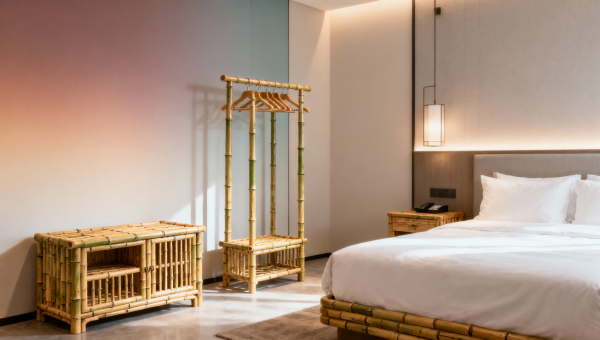
 Apr 10, 2026RCEP Cuts ASEAN Hotel Furniture Tariffs to 0% for Chinese Bamboo ProductsRCEP cuts ASEAN hotel furniture tariffs to 0% for Chinese bamboo products. Explore how this benefits exporters, procurement teams & supply chains in Southeast Asia's booming hospitality sector.● Hospitality Sourcing Dir
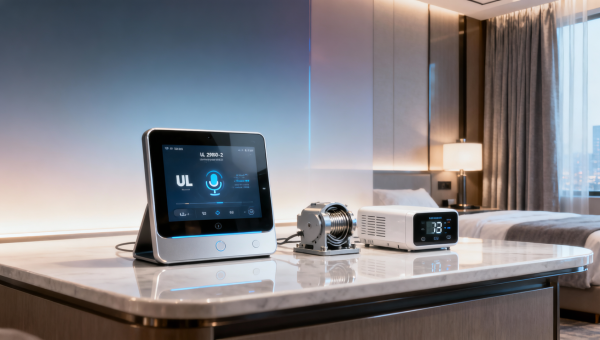
 Apr 10, 2026US Hotel Association Updates 2026 Smart Room Tech Guidelines, Mandates UL 2900-2-2 CertificationUS Hotel Association mandates UL 2900-2-2 certification for smart room tech by 2026. Learn how this impacts IoT manufacturers and hotel chains' procurement strategies.● Hospitality Sourcing Dir
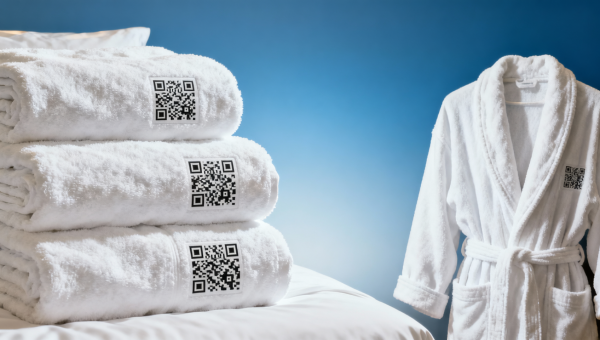
 Apr 10, 2026EU Mandates QR Codes for Hotel Linens: China Exporters Must Comply by April 2026EU mandates QR codes for hotel linens by 2026, impacting China's textile exporters. Learn compliance requirements for traceability, sustainability reporting, and supply chain adaptation.● Hospitality Sourcing Dir
 Apr 09, 2026Zibo Launches 'Treasure Shandong Through the Lens' Photo Tour, Themed Homestays Emerge as Cross-Border Marketing ToolDiscover Zibo's 'Treasure Shandong Through the Lens' photo tour featuring 32 themed homestays blending vintage cameras, Hanfu culture & industrial spaces. A groundbreaking cross-border marketing model attracting global influencers & platforms like Rakuten Travel.● Hospitality Sourcing Dir
 Apr 09, 2026Yangzhou Slender West Lake Flower Festival Opens, Blending Heritage and Tech for Luxury TourismDiscover the 2026 Yangzhou Slender West Lake Flower Festival, blending heritage crafts with AR technology for luxury tourism. Experience cultural performances, workshops, and themed stays attracting global travelers. Explore China's new era of experiential tourism.● Hospitality Sourcing Dir
 Apr 09, 2026New Team Travel Contracts Raise Compliance Standards for Overseas AgenciesNew team travel contracts enforce stricter compliance for overseas agencies, requiring rigorous vetting of Chinese suppliers. Learn how these 2026 regulations impact study tours, hotels, and global partnerships.● Hospitality Sourcing Dir
 Apr 09, 2026Shangyou County's Hotel Subsidy Policy Boosts China's MICE Tourism AppealShangyou County's 2026 hotel subsidy policy offers RMB 100 per room for MICE tourism, boosting China's appeal to international buyers. Discover how this strategic move enhances cost-effective accommodations for corporate events and study tours.● Hospitality Sourcing Dir
 Apr 19, 2026Hotel equipment warranties that exclude real-world usageDiscover how park benches, hotel beds, luxury furniture & commercial furniture warranties fail real-world use—and what to demand before buying.● Hospitality Sourcing Dir
 Apr 19, 2026Hotel furniture specs most suppliers quietly ignoreDiscover the 7 non-negotiable hotel furniture specs—park benches, luxury furniture, hotel beds, chairs, tables & custom furniture—that suppliers ignore. Avoid compliance risks & guest experience gaps.● Hospitality Sourcing Dir
 Apr 19, 2026Custom furniture lead times that derail hotel opening schedulesCustom furniture lead times sabotage hotel openings—discover real timelines for luxury furniture, hotel beds, chairs, tables, park benches & more. Get actionable insights now.● Hospitality Sourcing Dir
 Apr 19, 2026Hotel beds that guests remember—and why most don’tDiscover why luxury furniture, custom hotel beds, and commercial furniture drive guest recall—plus sourcing insights for hotel furniture, chairs, tables & park benches.● Hospitality Sourcing Dir
 Apr 19, 2026Luxury furniture that actually holds up in high-traffic lobbiesLuxury furniture built for high-traffic lobbies: hotel chairs, park benches, hotel beds & custom furniture—commercial-grade durability meets 5-star design.● Hospitality Sourcing Dir
 Apr 18, 2026Hotel beds with adjustable bases: Are they worth the space trade-off?Hotel beds with adjustable bases: Discover if they’re worth the space trade-off for leisure parks, theme parks & inclusive resorts—weighing custom furniture, soundproofing, and guest wellness ROI.● Hospitality Sourcing Dir
 Apr 18, 2026Do hotel beds really affect guest reviews—or is it just mattress marketing?Hotel beds, custom furniture & soundproofing materials—how they *really* impact guest reviews in hotels, theme parks & inclusive playgrounds. Data-driven sourcing insights inside.● Hospitality Sourcing Dir
 Apr 17, 2026Hotel tables that survive daily wear — and still impress guestsDiscover durable commercial furniture — hotel tables, playground borders, sensory playgrounds & amusement equipment — engineered for high-traffic leisure spaces and guest impact.● Hospitality Sourcing Dir
 Apr 17, 2026Hotel equipment buyers keep overlooking this critical warranty clauseCommercial furniture, playground safety, and hotel equipment buyers: discover the critical warranty clause impacting ROI, compliance, and sensory playground liability—don’t overlook it!● Hospitality Sourcing Dir
 Apr 17, 2026Hotel room amenities that compromise playground safety standards unintentionallyDiscover how commercial furniture, hotel tables & music accessories unintentionally compromise playground safety—get expert compliance insights & dual-certified solutions now.● Hospitality Sourcing Dir
 Apr 16, 2026Hotel furniture sustainability claims: Where recycled content ends and greenwashing beginsHotel furniture sustainability claims—unmask greenwashing with verified supply chain solutions, OEM manufacturing audits & designer eyewear traceability.● Hospitality Sourcing Dir
 Apr 16, 2026Hotel room amenities with hidden maintenance costs—what polish and finish choices really cost over 3 yearsDiscover how hotel furniture, designer eyewear & OEM manufacturing finishes impact 3-year maintenance costs—get data-backed supply chain solutions.● Hospitality Sourcing Dir
 Apr 16, 2026Hotel chairs that survive daily wear—what material specs actually matter for high-turnover propertiesHotel chairs built for luxury retail & eyewear boutiques—engineered durability, OEM traceability, flame-retardant specs & abrasion resistance. Source compliant, future-proof seating.● Hospitality Sourcing Dir
 Apr 16, 2026Why hotel furniture orders get delayed—and where the bottlenecks really are in 2026Discover why hotel furniture, designer eyewear & pro audio equipment orders stall—and how OEM manufacturing and supply chain solutions fix 2026 bottlenecks.● Hospitality Sourcing Dir
 Apr 15, 2026Hotel equipment buyers overlook this hidden energy costCommercial furniture, playground borders, sensory playgrounds & hotel equipment hide costly energy drains—discover how to cut TCO by 18%+ with verified energy intelligence.● Hospitality Sourcing Dir
 Apr 15, 2026Hotel tables that survive daily wear — and still impress guestsDiscover durable commercial furniture & hotel tables built for high-traffic spaces — plus playground borders, sensory playgrounds, and amusement equipment.● Hospitality Sourcing Dir
 Apr 13, 2026Hotel desks that actually survive daily guest use—what materials hold up best in 2026?Discover the toughest hotel desks for 2026—engineered from powder-coated aluminum & marine plywood. Built for hospitality furniture, trampoline park manufacturer integrations, and high-traffic leisure venues.● Hospitality Sourcing Dir