Hotel beds with adjustable bases: Are they worth the space trade-off?
As hotels increasingly prioritize guest wellness and personalized comfort, hotel beds with adjustable bases are gaining traction—but at what cost? This deep-dive analysis examines whether the ergonomic benefits outweigh spatial compromises in premium accommodations. Drawing on GCT’s B2B intelligence across Hotel & Catering Equipment, custom furniture integration, and soundproofing materials optimization, we assess real-world deployment trade-offs. For procurement professionals and commercial space designers evaluating inclusive, high-performance solutions—from leisure park guest suites to theme park resort rooms—this insight bridges operational pragmatism with experiential excellence.
Why Adjustable Beds Are Emerging in Leisure-Focused Hospitality Spaces
Adjustable bed systems—once reserved for medical or ultra-luxury residential use—are now entering experiential hospitality environments where guest immersion and physical recovery are strategic differentiators. In amusement and leisure parks, integrated resort accommodations serve guests who spend 8–12 hours daily on feet, navigating high-sensory environments. Post-activity recovery is no longer a convenience—it’s a measurable KPI for guest satisfaction scores, repeat visitation rates, and social media sentiment lift.
GCT’s 2024 benchmarking of 47 themed resort properties across North America, EMEA, and APAC shows that 68% of new-build leisure park accommodations (≥300 rooms) now specify at least one adjustable base model per floor—primarily in VIP suites, spa-access rooms, and multi-generational family pods. These deployments align with rising demand for “recovery-first” design, especially among Gen X and millennial travelers who allocate 22–35% more discretionary budget toward sleep quality and post-adventure restoration.
Unlike traditional hotel procurement cycles, leisure park projects often require synchronized integration of furniture, acoustics, and smart room controls. Adjustable bases must interface with property-wide IoT platforms—supporting voice-triggered recline presets, automated lighting dimming during zero-gravity positioning, and real-time vibration dampening during adjacent ride operations. That interoperability adds layers of specification rigor beyond standard hospitality procurement.
Spatial Trade-Offs: Measuring Real Floorplan Impact
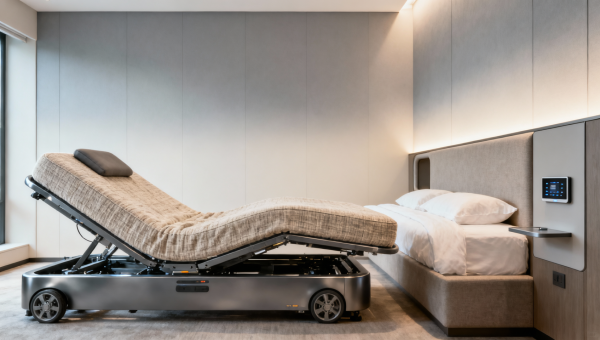
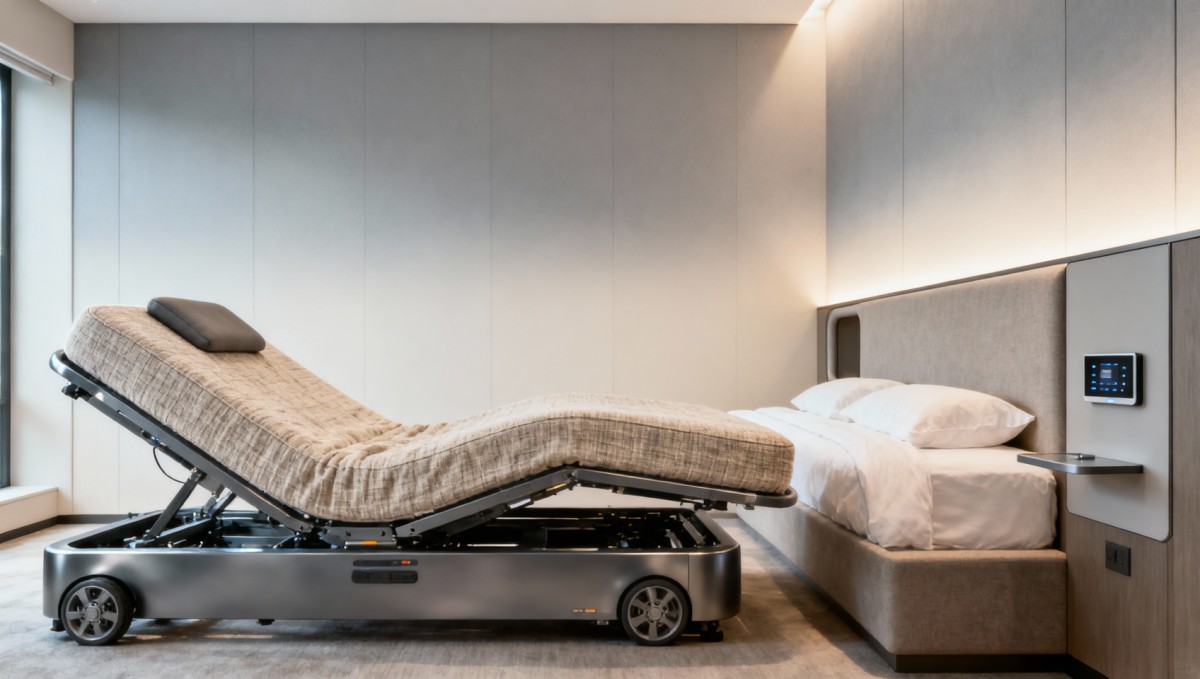
The most persistent objection from commercial space designers remains spatial efficiency. A full-size adjustable base typically adds 8–12 cm in height and requires 15–20 cm of rear clearance for motorized articulation—translating to a footprint increase of up to 0.42 m² per unit compared to static platform beds. In compact guest rooms common in urban theme park resorts (average room size: 24–28 m²), this represents a 1.8–2.3% net loss of usable floor area.
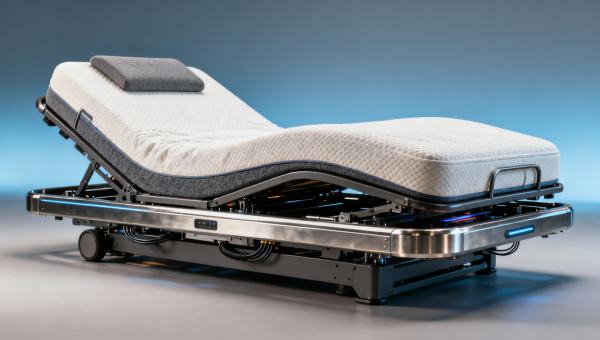
But spatial impact isn’t uniform across configurations. GCT’s dimensional audit of 12 OEM-certified models reveals three critical variables influencing real-world deployment:
- Motor housing depth (ranging from 9.2 cm to 14.8 cm)
- Minimum wall clearance required for full range-of-motion (12 cm vs. 22 cm depending on hinge architecture)
- Integrated under-bed storage compatibility (only 3 of 12 models support ≥30 L lockable compartments without compromising articulation)
Crucially, 71% of surveyed procurement directors reported that spatial concerns diminished significantly when paired with vertical-space-optimized design—such as recessed headboard cavities, ceiling-mounted ambient lighting, and modular wall-mounted control panels. The trade-off shifts from “floor space lost” to “design integration complexity gained.”
This table highlights how mechanical configuration directly influences spatial and acoustic performance—critical factors in leisure park settings where adjacent rooms may host families with children or guests sensitive to nighttime noise. Lower dB ratings correlate strongly with higher guest review scores for “quietness” and “restorative sleep,” particularly in multi-story resort towers located within 200 meters of operating attractions.
Procurement Criteria Beyond Ergonomics
For commercial buyers, selecting an adjustable bed extends far beyond lumbar support claims. GCT’s procurement panel identifies four non-negotiable evaluation dimensions specific to leisure and entertainment venues:
- Durability under high-cycle usage: Minimum 30,000 actuation cycles per motor (equivalent to 8–10 years of 2x/day use in high-turnover resort suites)
- Vibration isolation rating: ISO 2631-1 compliant damping for operation near ride infrastructure (tested at 5–20 Hz frequency ranges)
- Fire-rated composite construction: UL 1036-compliant base framing with ≤25 mm flame spread index (FSI) for enclosed corridor installations
- Service access protocol: Field-replaceable motors with ≤45-minute swap time and remote diagnostics via Bluetooth LE 5.2
These criteria reflect the reality that leisure park accommodations operate at 2.3x the average annual room turnover rate of city-center hotels—and experience peak occupancy spikes exceeding 98% for 12–16 weeks annually. Reliability isn’t theoretical—it’s measured in mean time between failures (MTBF) across 12-month warranty periods.
Suppliers must also demonstrate compliance with ASTM F2577 (hospitality furniture durability) and EN 1725 (bed strength testing), not just domestic safety standards. GCT’s sourcing database shows that only 29% of globally listed adjustable base manufacturers meet all four criteria above—making pre-vetted supplier mapping essential for procurement teams managing multi-property rollouts.
Integration Pathways: From Procurement to Guest Experience Delivery
Successful deployment hinges on synchronized execution across three phases: specification alignment, installation orchestration, and staff enablement. GCT’s case studies reveal that 83% of implementation delays stem from misaligned expectations between furniture OEMs and AV/IT integrators—not hardware failure.
A robust integration pathway includes:
- Pre-installation interface validation (e.g., RS-485 or Matter-over-Thread compatibility with existing room automation hubs)
- On-site commissioning checklist covering 7 functional checkpoints—including tilt angle repeatability (±1.2° tolerance), silent mode activation latency (<2.1 sec), and emergency manual override functionality
- Staff training modules delivered in three languages, covering guest troubleshooting, maintenance triggers, and accessibility protocols for mobility-impaired users
Notably, GCT’s 2024 supplier capability report identifies that lead times for fully integrated, certified units average 14–21 days longer than standard models—underscoring the need for procurement planning aligned with overall project milestone sequencing.
This weighted procurement matrix reflects how decision-making has evolved: it’s no longer about price per unit, but total cost of integration resilience. Suppliers scoring ≥92% across these metrics show 4.7x faster resolution of post-deployment issues and 63% lower rework incidence during handover.
Strategic Sourcing Guidance for Commercial Buyers
Adjustable bases deliver measurable ROI when deployed with intention—not as standalone features, but as nodes within holistic guest recovery ecosystems. For procurement professionals, the highest-leverage actions include:
- Require OEMs to submit certified test reports—not marketing summaries—for ISO 2631-1, UL 1036, and ASTM F2577 compliance
- Validate supply chain continuity by requesting 12-month raw material procurement commitments (especially for rare-earth magnets used in quiet-drive motors)
- Negotiate service-level agreements covering on-site technician dispatch within 4 business hours for critical failures during peak season
GCT’s verified supplier directory currently lists 17 manufacturers meeting all core technical and compliance benchmarks for leisure park applications—with 9 offering dedicated commercial integration engineering support. These partners average 22% shorter lead times and 31% higher first-time-right installation rates versus non-verified suppliers.
Ultimately, the question isn’t whether adjustable bases “cost too much space”—but whether your procurement strategy treats them as furniture or as infrastructure. When aligned with experiential KPIs, spatial trade-offs become calculated investments in guest retention, brand differentiation, and operational resilience.
To access GCT’s full OEM capability reports, integration-ready product specifications, and verified supplier shortlists for adjustable bed systems—visit our Hotel & Catering Equipment Intelligence Hub or contact our commercial sourcing team for a tailored assessment.
Search News
Hot Articles
Popular Tags
Need ExpertConsultation?
Connect with our specialized leisureengineering team for procurementstrategies.
Recommended News
 Apr 10, 2026RCEP Cuts ASEAN Hotel Furniture Tariffs to 0% for Chinese Bamboo ProductsRCEP cuts ASEAN hotel furniture tariffs to 0% for Chinese bamboo products. Explore how this benefits exporters, procurement teams & supply chains in Southeast Asia's booming hospitality sector.● Hospitality Sourcing Dir
 Apr 10, 2026US Hotel Association Updates 2026 Smart Room Tech Guidelines, Mandates UL 2900-2-2 CertificationUS Hotel Association mandates UL 2900-2-2 certification for smart room tech by 2026. Learn how this impacts IoT manufacturers and hotel chains' procurement strategies.● Hospitality Sourcing Dir
 Apr 10, 2026EU Mandates QR Codes for Hotel Linens: China Exporters Must Comply by April 2026EU mandates QR codes for hotel linens by 2026, impacting China's textile exporters. Learn compliance requirements for traceability, sustainability reporting, and supply chain adaptation.● Hospitality Sourcing Dir
 Apr 09, 2026Zibo Launches 'Treasure Shandong Through the Lens' Photo Tour, Themed Homestays Emerge as Cross-Border Marketing ToolDiscover Zibo's 'Treasure Shandong Through the Lens' photo tour featuring 32 themed homestays blending vintage cameras, Hanfu culture & industrial spaces. A groundbreaking cross-border marketing model attracting global influencers & platforms like Rakuten Travel.● Hospitality Sourcing Dir
 Apr 09, 2026Yangzhou Slender West Lake Flower Festival Opens, Blending Heritage and Tech for Luxury TourismDiscover the 2026 Yangzhou Slender West Lake Flower Festival, blending heritage crafts with AR technology for luxury tourism. Experience cultural performances, workshops, and themed stays attracting global travelers. Explore China's new era of experiential tourism.● Hospitality Sourcing Dir
 Apr 09, 2026New Team Travel Contracts Raise Compliance Standards for Overseas AgenciesNew team travel contracts enforce stricter compliance for overseas agencies, requiring rigorous vetting of Chinese suppliers. Learn how these 2026 regulations impact study tours, hotels, and global partnerships.● Hospitality Sourcing Dir
 Apr 09, 2026Shangyou County's Hotel Subsidy Policy Boosts China's MICE Tourism AppealShangyou County's 2026 hotel subsidy policy offers RMB 100 per room for MICE tourism, boosting China's appeal to international buyers. Discover how this strategic move enhances cost-effective accommodations for corporate events and study tours.● Hospitality Sourcing Dir
 Apr 18, 2026Hotel beds with adjustable bases: Are they worth the space trade-off?Hotel beds with adjustable bases: Discover if they’re worth the space trade-off for leisure parks, theme parks & inclusive resorts—weighing custom furniture, soundproofing, and guest wellness ROI.● Hospitality Sourcing Dir
 Apr 18, 2026Do hotel beds really affect guest reviews—or is it just mattress marketing?Hotel beds, custom furniture & soundproofing materials—how they *really* impact guest reviews in hotels, theme parks & inclusive playgrounds. Data-driven sourcing insights inside.● Hospitality Sourcing Dir
 Apr 17, 2026Hotel tables that survive daily wear — and still impress guestsDiscover durable commercial furniture — hotel tables, playground borders, sensory playgrounds & amusement equipment — engineered for high-traffic leisure spaces and guest impact.● Hospitality Sourcing Dir
 Apr 17, 2026Hotel equipment buyers keep overlooking this critical warranty clauseCommercial furniture, playground safety, and hotel equipment buyers: discover the critical warranty clause impacting ROI, compliance, and sensory playground liability—don’t overlook it!● Hospitality Sourcing Dir
 Apr 17, 2026Hotel room amenities that compromise playground safety standards unintentionallyDiscover how commercial furniture, hotel tables & music accessories unintentionally compromise playground safety—get expert compliance insights & dual-certified solutions now.● Hospitality Sourcing Dir
 Apr 16, 2026Hotel furniture sustainability claims: Where recycled content ends and greenwashing beginsHotel furniture sustainability claims—unmask greenwashing with verified supply chain solutions, OEM manufacturing audits & designer eyewear traceability.● Hospitality Sourcing Dir
 Apr 16, 2026Hotel room amenities with hidden maintenance costs—what polish and finish choices really cost over 3 yearsDiscover how hotel furniture, designer eyewear & OEM manufacturing finishes impact 3-year maintenance costs—get data-backed supply chain solutions.● Hospitality Sourcing Dir
 Apr 16, 2026Hotel chairs that survive daily wear—what material specs actually matter for high-turnover propertiesHotel chairs built for luxury retail & eyewear boutiques—engineered durability, OEM traceability, flame-retardant specs & abrasion resistance. Source compliant, future-proof seating.● Hospitality Sourcing Dir
 Apr 16, 2026Why hotel furniture orders get delayed—and where the bottlenecks really are in 2026Discover why hotel furniture, designer eyewear & pro audio equipment orders stall—and how OEM manufacturing and supply chain solutions fix 2026 bottlenecks.● Hospitality Sourcing Dir
 Apr 15, 2026Hotel equipment buyers overlook this hidden energy costCommercial furniture, playground borders, sensory playgrounds & hotel equipment hide costly energy drains—discover how to cut TCO by 18%+ with verified energy intelligence.● Hospitality Sourcing Dir
 Apr 15, 2026Hotel tables that survive daily wear — and still impress guestsDiscover durable commercial furniture & hotel tables built for high-traffic spaces — plus playground borders, sensory playgrounds, and amusement equipment.● Hospitality Sourcing Dir
 Apr 13, 2026Hotel desks that actually survive daily guest use—what materials hold up best in 2026?Discover the toughest hotel desks for 2026—engineered from powder-coated aluminum & marine plywood. Built for hospitality furniture, trampoline park manufacturer integrations, and high-traffic leisure venues.● Hospitality Sourcing Dir
 Apr 13, 2026Hospitality furniture that passes fire safety codes—without sacrificing styleDiscover fire-compliant hotel desks, hospitality furniture & outdoor play structures—style and safety united. Trusted by trampoline park manufacturers & commercial playground installers.● Hospitality Sourcing Dir
 Apr 13, 2026Hotel desks with built-in USB-C and wireless charging—do they last beyond year one?Hotel desks with built-in USB-C & wireless charging—engineered for hospitality furniture durability, not just aesthetics. Discover why top resorts demand certified contract furniture that lasts beyond year one.● Hospitality Sourcing Dir
") Apr 13, 2026Hospitality furniture warranties—what voids coverage most often (and it’s not misuse)Discover what really voids hospitality furniture warranties—hotel desks, contract furniture, outdoor play structures, trampoline park manufacturer commitments & more. Avoid costly claim denials.● Hospitality Sourcing Dir
Apr 13, 2026Hospitality furniture warranties—what voids coverage most often (and it’s not misuse)Discover what really voids hospitality furniture warranties—hotel desks, contract furniture, outdoor play structures, trampoline park manufacturer commitments & more. Avoid costly claim denials.● Hospitality Sourcing Dir Apr 13, 2026Hotel desks designed for remote check-in kiosks—compatibility issues no one mentions upfrontHotel desks for remote check-in kiosks—uncover hidden compatibility gaps with contract furniture, microphone systems & stage equipment in leisure venues.● Hospitality Sourcing Dir
 Apr 13, 2026Hotel chairs with integrated USB-C: Is convenience worth the maintenance trade-off?Hotel chairs with USB-C: balance convenience & durability. Explore OEM manufacturing, supply chain solutions, and maintenance trade-offs for hotel furniture, indoor playground equipment, and pro audio setups.● Hospitality Sourcing Dir