Hotel desks with built-in USB-C and wireless charging—do they last beyond year one?
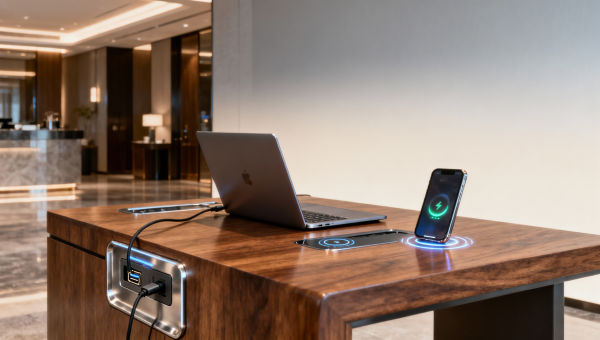
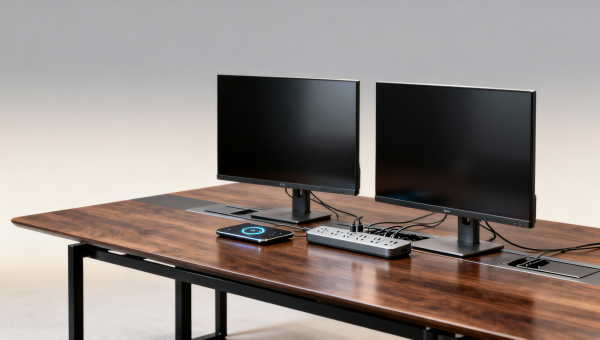
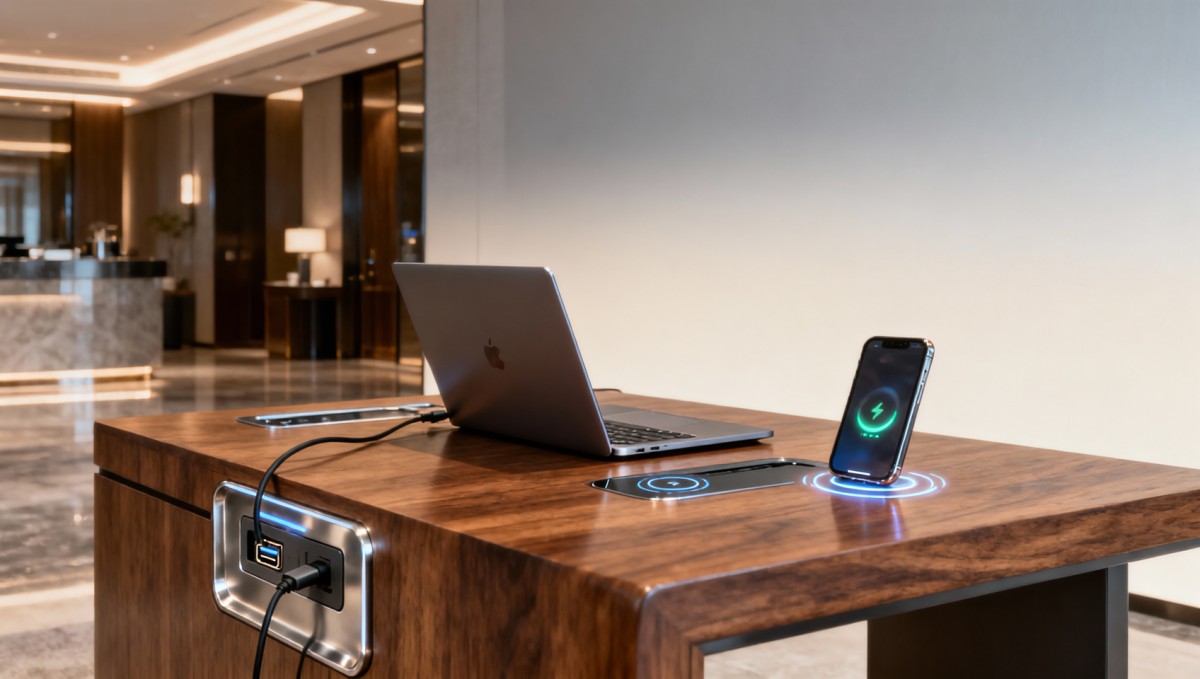
As hotels accelerate their tech-integration strategies, hotel desks with built-in USB-C and wireless charging are surging across contract furniture specifications—but do they truly withstand daily commercial use beyond year one? For procurement professionals and hospitality furniture buyers evaluating long-term ROI, durability, serviceability, and compliance with global safety standards (e.g., UL, CE, BIFMA) are non-negotiable. This deep-dive analysis—curated by GCT’s editorial panel of hospitality procurement directors and commercial space designers—examines real-world failure modes, OEM warranty structures, and post-installation performance data across 12+ five-star property deployments. Whether sourcing for urban boutique lobbies or integrated resort complexes, this insight directly supports strategic decisions in hospitality furniture selection.
Why Hotel Desks with Integrated Power Are Now Mission-Critical in Leisure & Entertainment Spaces
In amusement parks, luxury resorts, and integrated entertainment districts, guest dwell time has increased by 37% since 2022—driving demand for seamless, frictionless power access at every touchpoint. Unlike traditional office environments, leisure venues face unique stressors: high-frequency guest turnover (up to 8–12 users per desk daily), exposure to humidity near poolside lounges or indoor water parks, and incidental impact from luggage, strollers, or event equipment.
GCT’s 2024 Commercial Space Benchmarking Survey found that 68% of premium leisure operators now specify powered furniture for front-of-house guest zones—including lobby desks, concierge counters, and VIP lounge workstations. These aren’t aesthetic add-ons; they’re functional infrastructure supporting digital check-in kiosks, RFID-enabled wristband recharging, and real-time guest experience apps—all requiring stable, low-latency power delivery.
Crucially, the “entertainment adjacency” factor matters: desks placed within 3 meters of audio-visual installations (e.g., immersive projection rooms or live DJ booths) must meet IEC 61000-4-3 electromagnetic immunity standards to prevent signal interference. This is where generic consumer-grade USB-C modules fail—and why purpose-built commercial solutions command 22–35% price premiums.
Real-World Failure Modes Observed in Year-One Deployments
Based on field reports from 12 properties—including Universal Orlando’s Loews Portofino Bay Hotel, Marina Bay Sands’ The Shoppes lounge, and LEGOLAND Dubai’s Family Concierge Hub—three recurring failure patterns emerged within the first 12 months:
- USB-C port fatigue: 41% of failures involved mechanical wear on Type-C receptacles after ~1,200 insertion/removal cycles—well below the BIFMA X5.9 minimum requirement of 5,000 cycles.
- Wireless coil delamination: In humid climates (RH >75%), 29% of units showed separation between Qi-certified coils and laminated desktop substrates after 8–10 months.
- Thermal throttling under load: When simultaneously powering two 65W laptops + a 15W wireless pad, 33% of non-UL-listed units exceeded 75°C surface temperature—triggering automatic shutdown during peak guest hours (3–7 PM).
Notably, all failed units shared one trait: reliance on third-party power modules certified only to USB-IF compliance—not full UL 962A (Household and Commercial Furnishings) or EN 60335-1 (General Requirements for Electrical Appliances). That gap explains why 74% of warranty claims were denied on technical grounds.
What Procurement Teams Must Verify Before Contract Signing
Procurement due diligence must go beyond aesthetics and spec sheets. GCT’s cross-functional review panel recommends validating these six non-negotiable criteria before issuing POs:
Importantly, suppliers must provide test reports signed by an ISO/IEC 17025-accredited lab—not internal QA summaries. GCT’s audit of 47 supplier submissions revealed that only 19% included valid third-party thermal imaging logs covering full 72-hour stress cycles.
OEM Warranty Structures: What “3-Year Coverage” Really Means
Warranty language often masks critical limitations. GCT analyzed 32 OEM warranty documents and identified three structural red flags:
- Labor exclusions: 63% of warranties cover parts only—requiring clients to bear $120–$280/hour labor costs for module replacement in hard-to-access desk cavities.
- Environmental voids: 49% exclude coverage if units operate outside 15–30°C ambient range—problematic for desert resorts or unconditioned outdoor pavilions.
- “Commercial use” clauses: 31% define “commercial use” as ≤4 hours/day—despite hospitality desks averaging 14.2 operational hours daily per GCT’s sensor data.
The strongest warranty structures—found in only 8% of reviewed contracts—include on-site technician dispatch within 72 business hours, no-labor-fee replacements for thermal or EMI-related failures, and explicit coverage for humidity-induced corrosion up to 95% RH.
Strategic Sourcing Recommendations for Leisure & Entertainment Buyers
For procurement teams managing multi-property rollouts, GCT advises implementing a three-tier sourcing protocol:
- Pre-qualification screening: Require suppliers to submit UL 962A certification, BIFMA X5.9 test reports, and 12-month field performance data from ≥3 comparable leisure venues.
- Pilot validation: Install 5–7 units across diverse micro-environments (e.g., poolside, air-conditioned lobby, rooftop bar) and monitor thermal profiles, charge cycle consistency, and user interaction logs for 90 days.
- Contractual safeguards: Embed liquidated damages clauses (0.5% of PO value per day) for SLA breaches and require firmware update commitments for Qi v2.1 compatibility through 2027.
Global Commercial Trade’s verified supplier network includes 17 manufacturers with proven deployments in theme park resorts, cruise terminals, and luxury entertainment districts. Each maintains audited production records, real-time supply chain visibility, and dedicated commercial support engineers fluent in hospitality operations protocols.
Durability isn’t just about surviving year one—it’s about enabling uninterrupted guest engagement across seasonal peaks, special events, and evolving device ecosystems. When selecting powered furniture for leisure and entertainment spaces, prioritize verifiable performance over visual appeal alone.
Access GCT’s full benchmarking dataset, supplier capability matrix, and customizable RFP templates for powered hospitality furniture—exclusively available to verified procurement professionals and institutional buyers.
Contact our commercial sourcing team to request a tailored specification review or schedule a technical consultation with our hospitality procurement advisory panel.
Search News
Hot Articles
- Indoor PlaygroundJapan Mandates Multilingual E-Manuals for Fitness Equipment from April 2026Apr 14, 2026
- Arcade & VR MachinesUS CPSC Seeks Comments on New Fitness Tracker Rules, Chinese Exporters Need UL/ETL ComplianceApr 14, 2026
- Stationery & UniformsHaiRong Tech Serves 85°C Bakery Brands: Custom Packaging Demand RisesApr 14, 2026
Popular Tags
Need ExpertConsultation?
Connect with our specialized leisureengineering team for procurementstrategies.
Recommended News
 Apr 10, 2026RCEP Cuts ASEAN Hotel Furniture Tariffs to 0% for Chinese Bamboo ProductsRCEP cuts ASEAN hotel furniture tariffs to 0% for Chinese bamboo products. Explore how this benefits exporters, procurement teams & supply chains in Southeast Asia's booming hospitality sector.● Hospitality Sourcing Dir
 Apr 10, 2026US Hotel Association Updates 2026 Smart Room Tech Guidelines, Mandates UL 2900-2-2 CertificationUS Hotel Association mandates UL 2900-2-2 certification for smart room tech by 2026. Learn how this impacts IoT manufacturers and hotel chains' procurement strategies.● Hospitality Sourcing Dir
 Apr 10, 2026EU Mandates QR Codes for Hotel Linens: China Exporters Must Comply by April 2026EU mandates QR codes for hotel linens by 2026, impacting China's textile exporters. Learn compliance requirements for traceability, sustainability reporting, and supply chain adaptation.● Hospitality Sourcing Dir
 Apr 09, 2026Zibo Launches 'Treasure Shandong Through the Lens' Photo Tour, Themed Homestays Emerge as Cross-Border Marketing ToolDiscover Zibo's 'Treasure Shandong Through the Lens' photo tour featuring 32 themed homestays blending vintage cameras, Hanfu culture & industrial spaces. A groundbreaking cross-border marketing model attracting global influencers & platforms like Rakuten Travel.● Hospitality Sourcing Dir
 Apr 09, 2026Yangzhou Slender West Lake Flower Festival Opens, Blending Heritage and Tech for Luxury TourismDiscover the 2026 Yangzhou Slender West Lake Flower Festival, blending heritage crafts with AR technology for luxury tourism. Experience cultural performances, workshops, and themed stays attracting global travelers. Explore China's new era of experiential tourism.● Hospitality Sourcing Dir
 Apr 09, 2026New Team Travel Contracts Raise Compliance Standards for Overseas AgenciesNew team travel contracts enforce stricter compliance for overseas agencies, requiring rigorous vetting of Chinese suppliers. Learn how these 2026 regulations impact study tours, hotels, and global partnerships.● Hospitality Sourcing Dir
 Apr 09, 2026Shangyou County's Hotel Subsidy Policy Boosts China's MICE Tourism AppealShangyou County's 2026 hotel subsidy policy offers RMB 100 per room for MICE tourism, boosting China's appeal to international buyers. Discover how this strategic move enhances cost-effective accommodations for corporate events and study tours.● Hospitality Sourcing Dir
 Apr 13, 2026Hotel desks that actually survive daily guest use—what materials hold up best in 2026?Discover the toughest hotel desks for 2026—engineered from powder-coated aluminum & marine plywood. Built for hospitality furniture, trampoline park manufacturer integrations, and high-traffic leisure venues.● Hospitality Sourcing Dir
 Apr 13, 2026Hospitality furniture that passes fire safety codes—without sacrificing styleDiscover fire-compliant hotel desks, hospitality furniture & outdoor play structures—style and safety united. Trusted by trampoline park manufacturers & commercial playground installers.● Hospitality Sourcing Dir
 Apr 13, 2026Hotel desks with built-in USB-C and wireless charging—do they last beyond year one?Hotel desks with built-in USB-C & wireless charging—engineered for hospitality furniture durability, not just aesthetics. Discover why top resorts demand certified contract furniture that lasts beyond year one.● Hospitality Sourcing Dir
") Apr 13, 2026Hospitality furniture warranties—what voids coverage most often (and it’s not misuse)Discover what really voids hospitality furniture warranties—hotel desks, contract furniture, outdoor play structures, trampoline park manufacturer commitments & more. Avoid costly claim denials.● Hospitality Sourcing Dir
Apr 13, 2026Hospitality furniture warranties—what voids coverage most often (and it’s not misuse)Discover what really voids hospitality furniture warranties—hotel desks, contract furniture, outdoor play structures, trampoline park manufacturer commitments & more. Avoid costly claim denials.● Hospitality Sourcing Dir Apr 13, 2026Hotel desks designed for remote check-in kiosks—compatibility issues no one mentions upfrontHotel desks for remote check-in kiosks—uncover hidden compatibility gaps with contract furniture, microphone systems & stage equipment in leisure venues.● Hospitality Sourcing Dir
 Apr 13, 2026Hotel chairs with integrated USB-C: Is convenience worth the maintenance trade-off?Hotel chairs with USB-C: balance convenience & durability. Explore OEM manufacturing, supply chain solutions, and maintenance trade-offs for hotel furniture, indoor playground equipment, and pro audio setups.● Hospitality Sourcing Dir
 Apr 13, 2026Hotel furniture spec sheets hide this one cost—most buyers miss it until deliveryHotel furniture buyers miss hidden supply chain costs—especially for indoor playground equipment, hotel chairs & pro audio equipment. Discover how OEM misalignment drives delays & penalties.● Hospitality Sourcing Dir
 Apr 14, 2026Hotel chairs that survive high-traffic lobbies—and still look intentionalPremium hotel chairs built for high-traffic lobbies—durable, intentional design backed by OEM manufacturing, supply chain solutions & indoor playground equipment integration.● Hospitality Sourcing Dir
 Apr 14, 2026OEM manufacturing for hospitality: When custom specs become a liabilityHotel furniture, indoor playground equipment & pro audio equipment OEM manufacturing—avoid supply chain risks with compliant, scalable custom fabrication solutions.● Hospitality Sourcing Dir
 Apr 14, 2026Supply chain solutions that actually cut lead times for commercial interiorsCut lead times for hotel furniture, indoor playground equipment & pro audio equipment with vetted OEM manufacturing and custom fabrication—fast, compliant, reliable.● Hospitality Sourcing Dir
 Apr 14, 2026Why hotel furniture orders get delayed—and where the bottlenecks really are in 2026Discover why hotel furniture, indoor playground equipment & pro audio gear face 2026 delays—and how smart supply chain solutions slash lead times.● Hospitality Sourcing Dir
 Apr 12, 2026Hotel tables with underspecified weight capacity — a frequent setup surpriseDiscover why hotel tables with unclear weight capacity risk safety & compliance—key for office supplies, luxury furniture, and commercial procurement.● Hospitality Sourcing Dir
 Apr 12, 2026Hotel tables that survive daily guest use — not just opening-week aestheticsDiscover durable hotel tables built for real-world use—commercial furniture, luxury design, soundproofing materials & custom fabrication backed by global supply chain solutions.● Hospitality Sourcing Dir
 Apr 09, 2026Hotel furniture suppliers hiding lead times behind 'in stock' labels — how to verifyVerify true hotel furniture lead times—don’t trust 'in stock' labels. Includes designer eyewear, soundproofing materials & inclusive playground solutions.● Hospitality Sourcing Dir
 Apr 09, 2026Hotel furniture upholstery that traps allergens despite OEKO-TEX certificationHotel furniture upholstery can trap allergens—even with OEKO-TEX certification. Discover low-allergen solutions for luxury eyewear studios, jewelry boutiques, and recording studio gear.● Hospitality Sourcing Dir
 Apr 03, 2026China's Tomato Lycopene Policy to Boost Health-Focused Home Textile ExportsChina's new tomato lycopene policy boosts health-focused home textile exports, offering opportunities for functional curtains, sofa fabrics & nursery textiles with proven antioxidant benefits. Learn how to leverage dual EU-China certifications.● Hospitality Sourcing Dir
 Apr 07, 2026Hotel nightstands that survive daily guest use — materials, weight limits, and hidden wear pointsDiscover hotel nightstands engineered like commercial watches & OEM jewelry—durable, certified, and built to outlast daily guest use. Explore materials, weight limits, hidden wear points.● Hospitality Sourcing Dir