Myanmar Raises Import Duty on Arcade & VR Machines
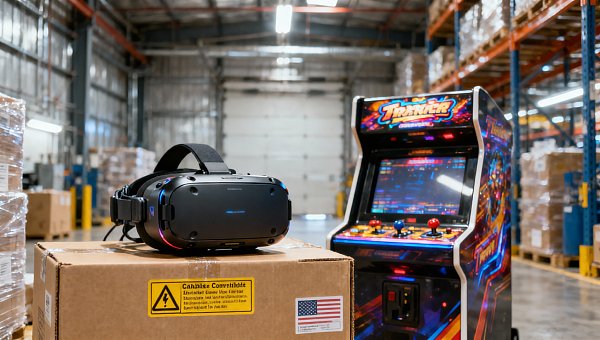
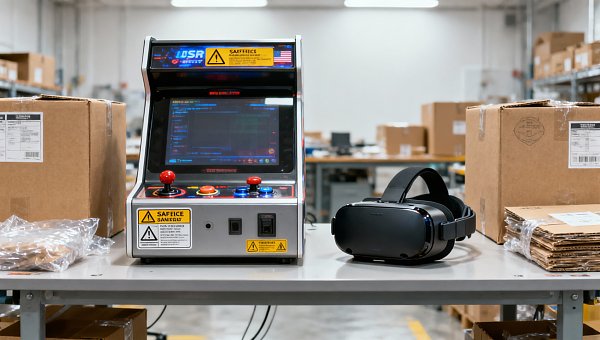
Myanmar’s Ministry of Commerce announced on June 11, 2026 that it will raise the import tariff on fully built Arcade & VR Machines from 18% to 28% starting July 1, while applying a preferential 5% rate to CKD imports and permitting local assembly in the Yangon Special Economic Zone. For manufacturers, regional distributors, importers, and supply-chain service providers, the development is worth close attention because it does not simply adjust a tariff line; it changes the practical market-entry route from finished-machine imports toward component-based delivery and in-country assembly.
A clear shift from finished units to CKD entry
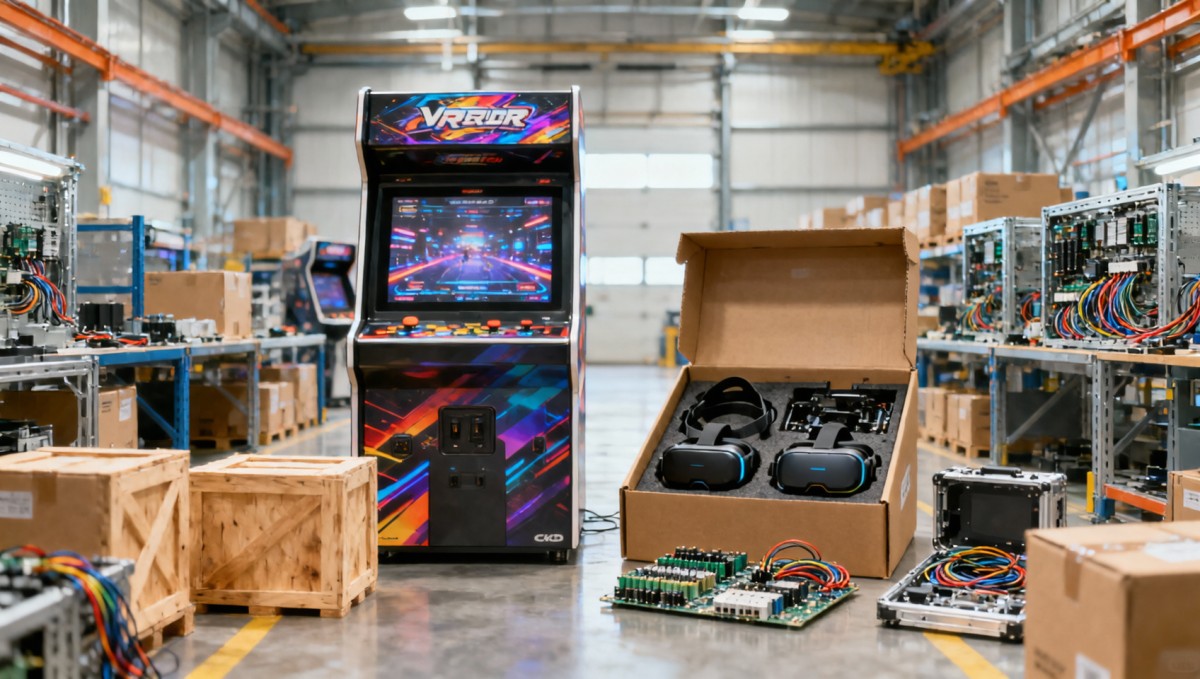
According to the information provided, the new rule applies to non-disassembled Arcade & VR Machines imported as complete units, with the tariff rising to 28% from the previous 18% effective July 1. The same information states that CKD imports will be subject to a 5% preferential tariff and that localized assembly is allowed within the Yangon Special Economic Zone. The stated policy intention is to promote localization in electronic manufacturing.
Where the pressure points may emerge across the chain
Finished-machine traders face a changed cost structure
From an industry perspective, companies that have relied on importing complete machines may be the first to feel the impact because the tariff increase directly affects the landed cost of undeconstructed units. The main business pressure is likely to appear in pricing, import planning, and the viability of existing sales models into Myanmar.
Regional distributors may need to redesign delivery models
Analysis shows that Southeast Asian distribution businesses are among the most exposed roles because the policy, as described, is expected to push the market toward a “China CKD + Myanmar assembly” model. For these players, the issue is not only tax treatment but also whether their operating model can support parts-based supply, coordination with local assembly, and revised channel responsibilities.
Manufacturers with modular products may gain practical flexibility
Observably, manufacturers capable of modular design could be better positioned if the market moves toward CKD-based entry. The relevant impact is likely to center on how products are split into components, how assembly processes are documented, and how efficiently technical handover can be completed for local assembly operations.
Service and supply-chain partners may see more execution complexity
For logistics, documentation, and delivery-support providers, the likely effect is operational rather than purely commercial. What deserves closer attention is whether shipments, parts lists, technical files, and assembly-related coordination can match the new compliance and fulfillment requirements implied by a CKD route.
What companies should watch before adjusting strategy
Distinguish policy direction from operational detail
Analysis shows that the headline signal is clear: Myanmar is favoring CKD imports and localized assembly over fully built machine imports. But companies still need to separate the policy direction from the detailed execution requirements that may affect actual shipment structure, classification, and on-the-ground assembly arrangements.
Review product architecture and documentation readiness
For manufacturers and brand owners, a practical priority is to assess whether existing Arcade & VR Machines can be supplied in true CKD form without undermining delivery efficiency or after-sales clarity. The information provided specifically points to structural opportunities for Chinese manufacturers with modular design capability and multilingual technical documentation output, making documentation readiness a real commercial factor rather than a secondary support task.
Recheck partner capability in Myanmar assembly scenarios
Companies evaluating the Myanmar market should pay attention to whether local assembly cooperation can be executed inside the Yangon Special Economic Zone under the new framework described in the announcement. In practice, this means giving closer scrutiny to partner coordination, assembly workflows, and communication processes linked to CKD delivery.
Prepare customer communication around route changes
Importers, distributors, and suppliers may also need to prepare for customer-side questions about lead times, product configuration, delivery stages, and compliance documents. Even if the commercial objective remains unchanged, the route from factory to market may look different once complete-machine imports become less favorable than CKD-based entry.
Why this looks more like a policy signal than a finished outcome
As an editorial observation, this development is more appropriate to understand as a strong policy signal with immediate commercial implications rather than as a fully settled market outcome. The confirmed facts already show a clear preference for localized assembly, but the extent of market restructuring will still depend on how distributors, manufacturers, and service providers translate that preference into workable operating models. That is why the industry should continue watching not just the tariff change itself, but also how quickly CKD-based cooperation becomes executable in real transactions.
How this news is best understood right now
At this stage, the news points to a meaningful change in market access logic for Arcade & VR Machines in Myanmar. The direct fact is a higher tariff on complete units and a lower-rate path for CKD imports with local assembly allowed in the Yangon Special Economic Zone. From an industry perspective, the more important takeaway is that the policy appears to reward supply chains that can shift from finished-machine export to component-based delivery and local integration. It is more appropriate to read this as an actionable near-term adjustment with longer-term significance, while still leaving room for continued observation of implementation details.
Basis of this article and what still needs verification
This article is generated based on the user-provided news title, event date, and event summary. For developments of this kind, commonly relevant source types may include official government notices, company disclosures, industry association updates, authoritative media reports, and standard-setting or regulatory documents. A specific official source link was not provided in the input, so the exact source text and any follow-up implementation details still require ongoing verification. What remains worth tracking is whether subsequent official wording further clarifies the treatment of complete units, CKD scope, and localized assembly execution in Myanmar.
Search News
Hot Articles
Popular Tags
Need ExpertConsultation?
Connect with our specialized leisureengineering team for procurementstrategies.
Recommended News
 Oct 14, 2026Choosing a Racing Simulator Cockpit for an FEC: Durability and Guest FitChoosing a racing simulator cockpit for FEC? Discover how to assess durability, guest fit, and maintenance to reduce downtime and select a cockpit built for busy venues.● Theme Park Strategist
 Sep 15, 2026How to Choose Coin-Operated Pool Tables for Bars, Hotels, and Arcade VenuesCoin operated pool tables for bars, hotels, and arcades: compare sizes, payment systems, durability, service access, and revenue potential.● Theme Park Strategist
 Sep 08, 2026What to Look for in a Flight Simulator Chair Manufacturer for Commercial VR CentersChoose a flight simulator chair manufacturer that delivers durable, safe, customizable seating for commercial VR centers. Explore key sourcing criteria now.● Theme Park Strategist
 Aug 25, 2026What to Evaluate Before Buying Commercial Self Service Photo Booths for VenuesCommercial self service photo booths for venues: learn how to evaluate durability, software stability, branding flexibility, support, and total ROI before you buy.● Theme Park Strategist
 Aug 23, 2026How to Evaluate Wholesale Vending Machines for Multi-Location Business DeploymentWholesale vending machines for multi-location deployment require more than low unit cost. Learn how to compare reliability, payments, telemetry, and supplier support to scale smarter.● Theme Park Strategist
 Aug 17, 2026U.S. CPSC Urges Bilingual Warnings for Arcade and VR MachinesU.S. CPSC urges bilingual safety warnings for Arcade & VR Machines—learn what exporters, importers, and distributors must do now to avoid delays and returns.● Theme Park Strategist
 Aug 16, 2026EU Enforces EN IEC 62368-1:2026 Certification for Arcade and VR MachinesEU Enforces EN IEC 62368-1:2026 certification for arcade and VR machines, reshaping EU market access, customs clearance, and compliance planning for exporters and distributors.● Theme Park Strategist
 Aug 13, 2026UFLPA’s new guidelines take effect: Exports of Arcade and VR equipment face full-link labor compliance requirementsUFLPA’s new guide takes effect: Arcade and VR machine exports to the U.S. now face full-chain labor compliance checks. Discover key risks and action steps.● Theme Park Strategist
 Aug 12, 2026EU PPWR takes effect, Arcade and VR packaging incorporate heavy metal and PFAS restrictionsEU PPWR now applies to Arcade and VR packaging, tightening heavy metal and PFAS compliance. Learn how exporters can avoid delays, fines, and customs risks.● Theme Park Strategist
 Aug 11, 2026CPSC Sets Bilingual Labels for Arcade and VR ImportsCPSC bilingual labels for arcade and VR imports become mandatory on October 1, 2026. Learn the new English-Spanish warning rules, customs risks, and key compliance steps now.● Theme Park Strategist
 Aug 10, 2026EU Rule Takes Effect for Arcade & VR Machine ClearanceArcade & VR Machine clearance in the EU now depends on EN IEC 62368-1:2026+A11:2026 compliance. Learn what changed, who is affected, and how to avoid customs delays.● Theme Park Strategist
 Aug 09, 2026CPSC Requires New Labels for Arcade and VR ImportsCPSC requires new labels for Arcade and VR imports starting Oct 1, 2026. Learn the multilingual warning rules, compliance risks, and key steps exporters and buyers must take now.● Theme Park Strategist
 Aug 08, 2026EU Entry Rule Tightens for Arcade & VR MachinesArcade & VR Machines entering the EU now face stricter CE compliance under EN IEC 62368-1:2026+A11:2026. Learn the new rule, risks, and what exporters must do now.● Theme Park Strategist
 Aug 07, 2026CPSC Notice Tightens U.S. Entry Rules for Arcade and VR MachinesCPSC Notice Tightens U.S. Entry Rules for Arcade and VR Machines: learn the new labeling, FCC, UN38.3, and compliance document requirements before October 1, 2026.● Theme Park Strategist
 Aug 06, 2026EU Rule Takes Effect for CE-UKCA Labels on Arcade & VR MachinesArcade & VR Machines face new CE-UKCA label and ECPD filing rules in the EU and UK. Learn what manufacturers, importers, and distributors must do now to avoid delays.● Theme Park Strategist
 Aug 05, 2026CPSC Recalls Arcade and VR Machines Over UL 62368-1CPSC recalls arcade and VR machines over UL 62368-1 non-compliance. Learn how this 2026 safety action may affect imports, distribution, customs clearance, and market access.● Theme Park Strategist
 Aug 02, 2026EU Sets New Certification Rule for Arcade and VR MachinesArcade and VR Machines face a new EU certification rule from Oct 1, 2026. Learn how EN IEC 62368-1:2026+A11:2026 affects CE marking, customs clearance, and market access.● Theme Park Strategist
 Aug 01, 2026CPSC Moves to Require Bilingual Warnings on Arcade and VR MachinesCPSC bilingual warnings for Arcade and VR Machines may reshape U.S. import compliance. Learn how English-Spanish labels affect packaging, customs risk, and shipment readiness.● Theme Park Strategist
 Jul 31, 2026EU Sets EN IEC 62368-1:2025 Rule for Arcade and VR MachinesEU Sets EN IEC 62368-1:2025 Rule for Arcade and VR Machines. Learn the new EU compliance deadlines, safety updates, and key actions for manufacturers, OEMs, and distributors.● Theme Park Strategist
 Jul 30, 2026CPSC Sets New Warning Label Rule for Arcade & VR MachinesCPSC sets a new warning label rule for Arcade & VR Machines effective August 15, 2026. Learn key compliance risks, multilingual label requirements, and shipment actions now.● Theme Park Strategist
 Jul 29, 2026EU Enforces New Safety Standard for Arcade and VR MachinesEU Enforces New Safety Standard for Arcade and VR Machines: learn how EN IEC 62368-1 affects CE compliance, customs clearance, and EU market access for exporters and buyers.● Theme Park Strategist
 Jul 28, 2026CPSC Sets ASTM F3472-26 Rule for Arcade & VR ImportsCPSC ASTM F3472-26 rule reshapes Arcade & VR imports to the U.S. Learn key compliance deadlines, certification risks, and what exporters, OEM/ODM suppliers, and buyers should do now.● Theme Park Strategist
 Jul 27, 2026EU Rule Takes Effect for Arcade & VR Machine CybersecurityEU Rule Takes Effect for Arcade & VR Machine Cybersecurity: learn how EN IEC 62443-3-3:2025 affects compliance, customs clearance, sales continuity, and supplier planning in the EU market.● Theme Park Strategist
 Jul 25, 2026CPSC Sets Bilingual Warning Rule for Arcade and VR ImportsCPSC bilingual warning rule for arcade and VR imports takes effect August 1, 2026. Learn how OEM/ODM exporters can avoid CBP delays, relabel shipments, and protect U.S. delivery timelines.● Theme Park Strategist