Myanmar Lifts Import Duty on Arcade & VR Machines to 28%
Myanmar’s latest tariff adjustment for Arcade & VR Machines takes effect on July 1, 2026, shifting the import environment for finished units while leaving a lower-tax route open for CKD/SKD parts brought in for local assembly. For importers, assemblers, distributors, and supply chain operators tied to this category, the change is worth close attention because it does not simply raise cost pressure; it also signals a clearer policy preference for local manufacturing-linked entry models.
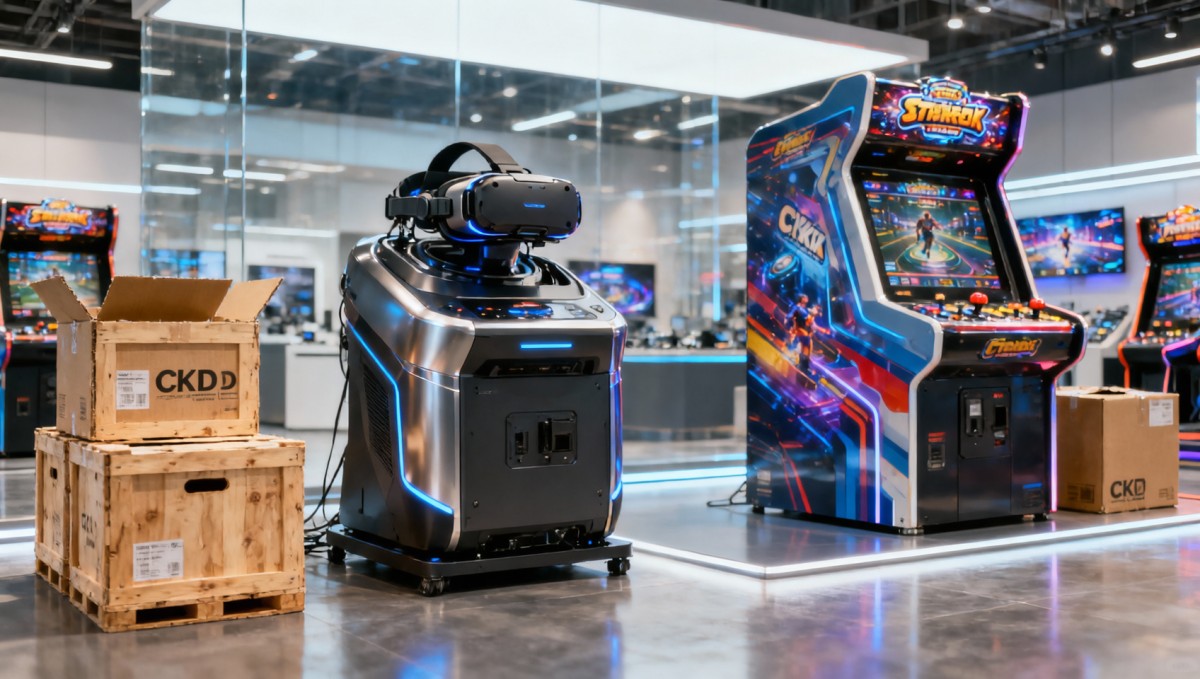
A clear split between finished imports and local assembly
According to an announcement by Myanmar’s Ministry of Finance on June 16, the import duty on complete Arcade & VR Machines will rise from 18% to 28% starting July 1, 2026.
At the same time, products imported as CKD or SKD parts and assembled locally will continue to qualify for a preferential 12% tariff rate.
The stated purpose of the adjustment is to encourage domestic manufacturing while still leaving importers with a cost-buffer pathway through local assembly.
Where the pressure and opportunities may appear
Finished-unit import businesses face a direct cost reset
From an industry perspective, companies that rely on importing complete machines are the most directly affected because the tariff increase applies immediately to their core import model. The main impact is likely to fall on landed cost calculations, product pricing, and order timing. What deserves closer attention is whether existing quotations, contract terms, and shipment plans still align with the new duty level after July 1, 2026.
Assembly-oriented operators gain a more viable entry route
Analysis shows that businesses able to use CKD or SKD structures may see a relatively clearer path into the Myanmar market under the 12% preferential rate. The practical impact is less about simple tax savings alone and more about whether firms can organize parts imports, local assembly, and compliance documentation in a workable way. For this group, the key issue is the operational readiness behind the assembly model rather than the tariff number by itself.
Distributors and downstream channel partners may need to reassess sourcing
Observably, distributors and channel-side operators connected to Arcade & VR Machines may need to review whether future supply should continue to come from complete imports or shift toward locally assembled products. The impact is likely to show up in sourcing decisions, delivery planning, and customer communication, especially where buyers are sensitive to lead time, final pricing, or product configuration.
Supply chain service providers should watch document and process requirements
For logistics, customs, and related service providers, the difference between complete-machine imports and CKD/SKD imports may become more commercially significant. What deserves closer attention is how product classification, supporting documents, and assembly-related processes are handled in actual transactions, since the commercial benefit of the lower tariff depends on correct execution rather than policy wording alone.
What companies should watch now
Monitor whether official wording is followed by further implementation detail
Analysis shows that the announced tariff structure is already clear on rates, but businesses should still watch for any additional official clarification on how CKD/SKD treatment is applied in practice. The policy signal and the day-to-day import process are not always the same thing, so follow-up interpretation remains important.
Review which product flows are exposed after July 1, 2026
Companies should identify which shipments, quotations, or pipeline orders involve complete machines and which could potentially move under a parts-plus-assembly structure. This matters because the tariff gap between 28% and 12% changes the commercial logic of market entry and delivery planning.
Check supplier readiness and transaction paperwork
For businesses considering CKD/SKD models, the immediate practical question is whether suppliers, local partners, and documentation processes are prepared to support that route. The lower rate may be attractive, but its business value depends on whether the full supply arrangement can actually be executed smoothly.
Prepare for customer and partner communication
Importers and distributors may also need to explain the change to buyers, partners, and internal commercial teams. What deserves closer attention is not only the tariff increase itself, but also how it may affect pricing discussions, delivery expectations, and product configuration choices in the near term.
Why this looks like more than a one-off rate change
Observably, this development is better understood as both an immediate tariff adjustment and a policy signal favoring local assembly-linked participation. Analysis shows that the government has not closed the market to imported products altogether; instead, it has created a sharper distinction between complete-unit imports and localized assembly routes. That makes this a concrete short-term rule change, but also a longer-term signal that market access may increasingly depend on how companies structure their supply chains.
At the same time, it is too early to treat the announcement alone as proof of a fully settled operating model for all businesses. The practical effect will still depend on how companies adapt their import structures and how implementation works in real transactions.
How this update is best understood at this stage
At this stage, the Myanmar tariff adjustment on Arcade & VR Machines is most appropriately read as a targeted change with immediate cost implications for finished imports and a clear incentive for CKD/SKD-based local assembly. For the industry, its significance lies less in headline tariff movement alone and more in the way it may reshape entry strategy, sourcing logic, and operational planning. A balanced view is to treat it as an actionable near-term change and a policy direction that still merits continued observation.
Basis of this article
This article is generated based on the user-provided news title, event date, and event summary concerning Myanmar’s tariff adjustment for Arcade & VR Machines. Information of this kind is typically cross-checked against official government notices, company disclosures, industry association updates, authoritative media reporting, and related trade or standards documents. A specific official source link was not provided in the input, so continued verification is still necessary. The next area to watch is whether any further official clarification appears on implementation details for CKD/SKD imports and local assembly treatment.
Search News
Hot Articles
- Arcade & VR MachinesHow to Choose Coin-Operated Pool Tables for Bars, Hotels, and Arcade VenuesSep 15, 2026
- Commercial KitchenHow Restaurants Can Choose Disposable Wooden Cutlery for Takeout and CateringSep 14, 2026
- Jewelry Packaging & DisplayHow U.S. Retailers Can Choose Jewelry Displays for Better Security and SalesSep 13, 2026
Popular Tags
Need ExpertConsultation?
Connect with our specialized leisureengineering team for procurementstrategies.
Recommended News
 Sep 15, 2026How to Choose Coin-Operated Pool Tables for Bars, Hotels, and Arcade VenuesCoin operated pool tables for bars, hotels, and arcades: compare sizes, payment systems, durability, service access, and revenue potential.● Theme Park Strategist
 Sep 08, 2026What to Look for in a Flight Simulator Chair Manufacturer for Commercial VR CentersChoose a flight simulator chair manufacturer that delivers durable, safe, customizable seating for commercial VR centers. Explore key sourcing criteria now.● Theme Park Strategist
 Aug 25, 2026What to Evaluate Before Buying Commercial Self Service Photo Booths for VenuesCommercial self service photo booths for venues: learn how to evaluate durability, software stability, branding flexibility, support, and total ROI before you buy.● Theme Park Strategist
 Aug 23, 2026How to Evaluate Wholesale Vending Machines for Multi-Location Business DeploymentWholesale vending machines for multi-location deployment require more than low unit cost. Learn how to compare reliability, payments, telemetry, and supplier support to scale smarter.● Theme Park Strategist
 Aug 17, 2026U.S. CPSC Urges Bilingual Warnings for Arcade and VR MachinesU.S. CPSC urges bilingual safety warnings for Arcade & VR Machines—learn what exporters, importers, and distributors must do now to avoid delays and returns.● Theme Park Strategist
 Aug 16, 2026EU Enforces EN IEC 62368-1:2026 Certification for Arcade and VR MachinesEU Enforces EN IEC 62368-1:2026 certification for arcade and VR machines, reshaping EU market access, customs clearance, and compliance planning for exporters and distributors.● Theme Park Strategist
 Aug 13, 2026UFLPA’s new guidelines take effect: Exports of Arcade and VR equipment face full-link labor compliance requirementsUFLPA’s new guide takes effect: Arcade and VR machine exports to the U.S. now face full-chain labor compliance checks. Discover key risks and action steps.● Theme Park Strategist
 Aug 12, 2026EU PPWR takes effect, Arcade and VR packaging incorporate heavy metal and PFAS restrictionsEU PPWR now applies to Arcade and VR packaging, tightening heavy metal and PFAS compliance. Learn how exporters can avoid delays, fines, and customs risks.● Theme Park Strategist
 Aug 11, 2026CPSC Sets Bilingual Labels for Arcade and VR ImportsCPSC bilingual labels for arcade and VR imports become mandatory on October 1, 2026. Learn the new English-Spanish warning rules, customs risks, and key compliance steps now.● Theme Park Strategist
 Aug 10, 2026EU Rule Takes Effect for Arcade & VR Machine ClearanceArcade & VR Machine clearance in the EU now depends on EN IEC 62368-1:2026+A11:2026 compliance. Learn what changed, who is affected, and how to avoid customs delays.● Theme Park Strategist
 Aug 09, 2026CPSC Requires New Labels for Arcade and VR ImportsCPSC requires new labels for Arcade and VR imports starting Oct 1, 2026. Learn the multilingual warning rules, compliance risks, and key steps exporters and buyers must take now.● Theme Park Strategist
 Aug 08, 2026EU Entry Rule Tightens for Arcade & VR MachinesArcade & VR Machines entering the EU now face stricter CE compliance under EN IEC 62368-1:2026+A11:2026. Learn the new rule, risks, and what exporters must do now.● Theme Park Strategist
 Aug 07, 2026CPSC Notice Tightens U.S. Entry Rules for Arcade and VR MachinesCPSC Notice Tightens U.S. Entry Rules for Arcade and VR Machines: learn the new labeling, FCC, UN38.3, and compliance document requirements before October 1, 2026.● Theme Park Strategist
 Aug 06, 2026EU Rule Takes Effect for CE-UKCA Labels on Arcade & VR MachinesArcade & VR Machines face new CE-UKCA label and ECPD filing rules in the EU and UK. Learn what manufacturers, importers, and distributors must do now to avoid delays.● Theme Park Strategist
 Aug 05, 2026CPSC Recalls Arcade and VR Machines Over UL 62368-1CPSC recalls arcade and VR machines over UL 62368-1 non-compliance. Learn how this 2026 safety action may affect imports, distribution, customs clearance, and market access.● Theme Park Strategist
 Aug 02, 2026EU Sets New Certification Rule for Arcade and VR MachinesArcade and VR Machines face a new EU certification rule from Oct 1, 2026. Learn how EN IEC 62368-1:2026+A11:2026 affects CE marking, customs clearance, and market access.● Theme Park Strategist
 Aug 01, 2026CPSC Moves to Require Bilingual Warnings on Arcade and VR MachinesCPSC bilingual warnings for Arcade and VR Machines may reshape U.S. import compliance. Learn how English-Spanish labels affect packaging, customs risk, and shipment readiness.● Theme Park Strategist
 Jul 31, 2026EU Sets EN IEC 62368-1:2025 Rule for Arcade and VR MachinesEU Sets EN IEC 62368-1:2025 Rule for Arcade and VR Machines. Learn the new EU compliance deadlines, safety updates, and key actions for manufacturers, OEMs, and distributors.● Theme Park Strategist
 Jul 30, 2026CPSC Sets New Warning Label Rule for Arcade & VR MachinesCPSC sets a new warning label rule for Arcade & VR Machines effective August 15, 2026. Learn key compliance risks, multilingual label requirements, and shipment actions now.● Theme Park Strategist
 Jul 29, 2026EU Enforces New Safety Standard for Arcade and VR MachinesEU Enforces New Safety Standard for Arcade and VR Machines: learn how EN IEC 62368-1 affects CE compliance, customs clearance, and EU market access for exporters and buyers.● Theme Park Strategist
 Jul 28, 2026CPSC Sets ASTM F3472-26 Rule for Arcade & VR ImportsCPSC ASTM F3472-26 rule reshapes Arcade & VR imports to the U.S. Learn key compliance deadlines, certification risks, and what exporters, OEM/ODM suppliers, and buyers should do now.● Theme Park Strategist
 Jul 27, 2026EU Rule Takes Effect for Arcade & VR Machine CybersecurityEU Rule Takes Effect for Arcade & VR Machine Cybersecurity: learn how EN IEC 62443-3-3:2025 affects compliance, customs clearance, sales continuity, and supplier planning in the EU market.● Theme Park Strategist
 Jul 25, 2026CPSC Sets Bilingual Warning Rule for Arcade and VR ImportsCPSC bilingual warning rule for arcade and VR imports takes effect August 1, 2026. Learn how OEM/ODM exporters can avoid CBP delays, relabel shipments, and protect U.S. delivery timelines.● Theme Park Strategist
 Jul 24, 2026EU Enforces New Safety Standard for Arcade and VR MachinesEU Enforces New Safety Standard for Arcade and VR Machines: learn how EN IEC 62368-1:2026+A11:2026 reshapes EU compliance, CE documentation, testing timelines, and export readiness.● Theme Park Strategist