EU PPWR Takes Effect in August: EPR Registration Required for Arcade & VR Machines
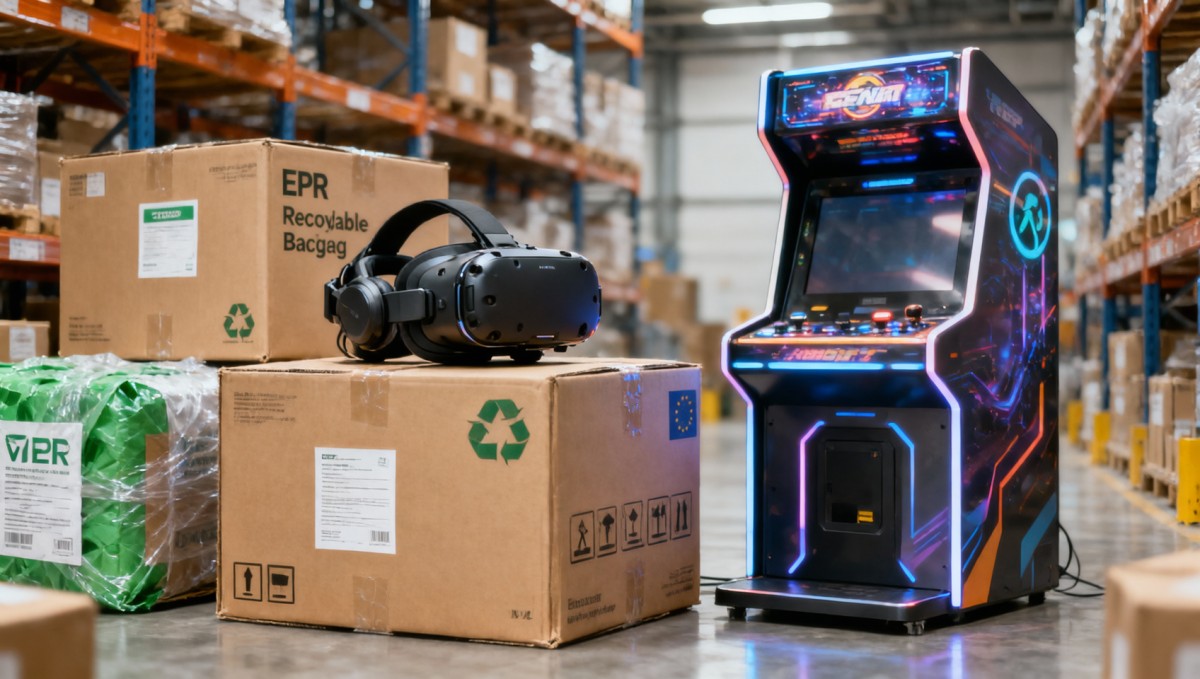
On August 17, 2026, the EU’s Packaging and Packaging Waste Regulation (PPWR) is set to take effect for Arcade & VR Machines sold into the EU market. Based on the disclosed information, affected products must complete Extended Producer Responsibility (EPR) registration and submit a recyclable design declaration. For companies involved in exports, platform sales, customs clearance, packaging compliance, and downstream delivery, this matters because non-registered products may be removed from platforms or blocked at customs, turning packaging compliance into a direct market-access issue.
What the August 17 PPWR Start Date Confirms
The confirmed information is clear on three points. First, the PPWR will formally take effect on August 17, 2026. Second, Arcade & VR Machines sold to the EU must complete registration with a Producer Responsibility Organization under EPR requirements. Third, those products must also provide a recyclable design declaration. The stated consequence for non-compliance is also explicit: products that are not registered may be delisted by platforms or prohibited from customs clearance.
Where the Immediate Pressure May Appear
Export and market-entry teams face a compliance gate
From an industry perspective, exporters and businesses directly placing Arcade & VR Machines into the EU market may be the first to feel the impact. The reason is straightforward: the disclosed requirement is tied not only to product placement but also to the ability to stay listed and pass customs. What deserves closer attention is whether internal compliance preparation is aligned with shipment timing and market-entry schedules.
Manufacturers may need to connect packaging design with documentation
Analysis shows that manufacturers are likely to be affected at the interface between packaging design and compliance paperwork. The requirement to submit a recyclable design declaration means the issue is not limited to registration alone. For production and packaging teams, the key point is whether existing packaging information can support the required declaration in a timely and consistent way.
Platforms, channels, and logistics partners may see execution risk
Observably, channel operators, platform sellers, and supply chain service providers may face risks linked to execution rather than policy interpretation alone. If non-registered products can be delisted or stopped at customs, then listing continuity, shipment release, and delivery planning all become sensitive points. The practical concern is less about broad market sentiment and more about whether documentation and registration status can be matched to actual transactions and cross-border flows.
What Companies Should Watch Now
Track the difference between confirmed requirements and operational details
The confirmed requirements in the available information are EPR registration and a recyclable design declaration. Analysis shows that companies should distinguish between these confirmed obligations and any later operational details that may emerge in official wording or implementation guidance. That distinction matters for planning documentation, workflows, and responsibilities.
Review which Arcade & VR Machine shipments are exposed first
What deserves closer attention is the subset of business most immediately exposed to the August 17, 2026 milestone. Companies should identify which products, orders, and EU-bound shipments may depend on completed registration and supporting declarations, especially where platform listing and customs release are commercially time-sensitive.
Check supplier, packaging, and document readiness together
Observably, this is not only a legal or policy matter. It also touches packaging-related records, supplier coordination, and submission readiness. Businesses may need to verify whether the parties responsible for packaging, compliance documents, and market access are working from the same timeline and document set.
Prepare customer and channel communication in advance
Analysis shows that customer-facing teams may need a clear communication approach if buyers, distributors, or platform counterparts ask about compliance status. Since the disclosed consequence includes delisting or customs restriction for non-registered products, communication readiness may become part of normal order and delivery management.
Why This Looks Like a Concrete Compliance Signal
As an editorial observation, this development is more appropriate to understand as a concrete compliance signal rather than a distant policy headline. The reason is that the available information already links the rule’s effective date to specific obligations and explicit business consequences. At the same time, it should not be overstated beyond the confirmed facts. The current signal is clear on market-access risk, while the broader implementation picture still requires continued verification through formal materials and operational guidance.
How the Industry May Best Read This Update
Based on the confirmed information, the practical significance of this update lies in how packaging compliance becomes directly connected to whether Arcade & VR Machines can remain listed and clear customs in the EU market. A neutral reading is that this is not merely a short-term procedural reminder, nor is it enough on its own to support sweeping conclusions. It is more appropriate to understand this as a defined compliance development with immediate operational relevance and a need for continued follow-up.
Basis of This Article and Ongoing Verification
This article is generated from the user-provided news title, event date, and event summary. For developments of this kind, relevant source types usually include official announcements, company statements, industry association updates, authoritative media reports, and standard or regulatory documents. No specific official source link was provided in the input, so the exact source documentation still needs ongoing verification. Follow-up attention should focus on any official wording, implementation guidance, and compliance details related to EPR registration and recyclable design declarations for Arcade & VR Machines entering the EU market.
Search News
Hot Articles
- Arcade & VR MachinesHow to Choose Coin-Operated Pool Tables for Bars, Hotels, and Arcade VenuesSep 15, 2026
- Commercial KitchenHow Restaurants Can Choose Disposable Wooden Cutlery for Takeout and CateringSep 14, 2026
- Jewelry Packaging & DisplayHow U.S. Retailers Can Choose Jewelry Displays for Better Security and SalesSep 13, 2026
Popular Tags
Need ExpertConsultation?
Connect with our specialized leisureengineering team for procurementstrategies.
Recommended News
 Sep 15, 2026How to Choose Coin-Operated Pool Tables for Bars, Hotels, and Arcade VenuesCoin operated pool tables for bars, hotels, and arcades: compare sizes, payment systems, durability, service access, and revenue potential.● Theme Park Strategist
 Sep 08, 2026What to Look for in a Flight Simulator Chair Manufacturer for Commercial VR CentersChoose a flight simulator chair manufacturer that delivers durable, safe, customizable seating for commercial VR centers. Explore key sourcing criteria now.● Theme Park Strategist
 Aug 25, 2026What to Evaluate Before Buying Commercial Self Service Photo Booths for VenuesCommercial self service photo booths for venues: learn how to evaluate durability, software stability, branding flexibility, support, and total ROI before you buy.● Theme Park Strategist
 Aug 23, 2026How to Evaluate Wholesale Vending Machines for Multi-Location Business DeploymentWholesale vending machines for multi-location deployment require more than low unit cost. Learn how to compare reliability, payments, telemetry, and supplier support to scale smarter.● Theme Park Strategist
 Aug 17, 2026U.S. CPSC Urges Bilingual Warnings for Arcade and VR MachinesU.S. CPSC urges bilingual safety warnings for Arcade & VR Machines—learn what exporters, importers, and distributors must do now to avoid delays and returns.● Theme Park Strategist
 Aug 16, 2026EU Enforces EN IEC 62368-1:2026 Certification for Arcade and VR MachinesEU Enforces EN IEC 62368-1:2026 certification for arcade and VR machines, reshaping EU market access, customs clearance, and compliance planning for exporters and distributors.● Theme Park Strategist
 Aug 13, 2026UFLPA’s new guidelines take effect: Exports of Arcade and VR equipment face full-link labor compliance requirementsUFLPA’s new guide takes effect: Arcade and VR machine exports to the U.S. now face full-chain labor compliance checks. Discover key risks and action steps.● Theme Park Strategist
 Aug 12, 2026EU PPWR takes effect, Arcade and VR packaging incorporate heavy metal and PFAS restrictionsEU PPWR now applies to Arcade and VR packaging, tightening heavy metal and PFAS compliance. Learn how exporters can avoid delays, fines, and customs risks.● Theme Park Strategist
 Aug 11, 2026CPSC Sets Bilingual Labels for Arcade and VR ImportsCPSC bilingual labels for arcade and VR imports become mandatory on October 1, 2026. Learn the new English-Spanish warning rules, customs risks, and key compliance steps now.● Theme Park Strategist
 Aug 10, 2026EU Rule Takes Effect for Arcade & VR Machine ClearanceArcade & VR Machine clearance in the EU now depends on EN IEC 62368-1:2026+A11:2026 compliance. Learn what changed, who is affected, and how to avoid customs delays.● Theme Park Strategist
 Aug 09, 2026CPSC Requires New Labels for Arcade and VR ImportsCPSC requires new labels for Arcade and VR imports starting Oct 1, 2026. Learn the multilingual warning rules, compliance risks, and key steps exporters and buyers must take now.● Theme Park Strategist
 Aug 08, 2026EU Entry Rule Tightens for Arcade & VR MachinesArcade & VR Machines entering the EU now face stricter CE compliance under EN IEC 62368-1:2026+A11:2026. Learn the new rule, risks, and what exporters must do now.● Theme Park Strategist
 Aug 07, 2026CPSC Notice Tightens U.S. Entry Rules for Arcade and VR MachinesCPSC Notice Tightens U.S. Entry Rules for Arcade and VR Machines: learn the new labeling, FCC, UN38.3, and compliance document requirements before October 1, 2026.● Theme Park Strategist
 Aug 06, 2026EU Rule Takes Effect for CE-UKCA Labels on Arcade & VR MachinesArcade & VR Machines face new CE-UKCA label and ECPD filing rules in the EU and UK. Learn what manufacturers, importers, and distributors must do now to avoid delays.● Theme Park Strategist
 Aug 05, 2026CPSC Recalls Arcade and VR Machines Over UL 62368-1CPSC recalls arcade and VR machines over UL 62368-1 non-compliance. Learn how this 2026 safety action may affect imports, distribution, customs clearance, and market access.● Theme Park Strategist
 Aug 02, 2026EU Sets New Certification Rule for Arcade and VR MachinesArcade and VR Machines face a new EU certification rule from Oct 1, 2026. Learn how EN IEC 62368-1:2026+A11:2026 affects CE marking, customs clearance, and market access.● Theme Park Strategist
 Aug 01, 2026CPSC Moves to Require Bilingual Warnings on Arcade and VR MachinesCPSC bilingual warnings for Arcade and VR Machines may reshape U.S. import compliance. Learn how English-Spanish labels affect packaging, customs risk, and shipment readiness.● Theme Park Strategist
 Jul 31, 2026EU Sets EN IEC 62368-1:2025 Rule for Arcade and VR MachinesEU Sets EN IEC 62368-1:2025 Rule for Arcade and VR Machines. Learn the new EU compliance deadlines, safety updates, and key actions for manufacturers, OEMs, and distributors.● Theme Park Strategist
 Jul 30, 2026CPSC Sets New Warning Label Rule for Arcade & VR MachinesCPSC sets a new warning label rule for Arcade & VR Machines effective August 15, 2026. Learn key compliance risks, multilingual label requirements, and shipment actions now.● Theme Park Strategist
 Jul 29, 2026EU Enforces New Safety Standard for Arcade and VR MachinesEU Enforces New Safety Standard for Arcade and VR Machines: learn how EN IEC 62368-1 affects CE compliance, customs clearance, and EU market access for exporters and buyers.● Theme Park Strategist
 Jul 28, 2026CPSC Sets ASTM F3472-26 Rule for Arcade & VR ImportsCPSC ASTM F3472-26 rule reshapes Arcade & VR imports to the U.S. Learn key compliance deadlines, certification risks, and what exporters, OEM/ODM suppliers, and buyers should do now.● Theme Park Strategist
 Jul 27, 2026EU Rule Takes Effect for Arcade & VR Machine CybersecurityEU Rule Takes Effect for Arcade & VR Machine Cybersecurity: learn how EN IEC 62443-3-3:2025 affects compliance, customs clearance, sales continuity, and supplier planning in the EU market.● Theme Park Strategist
 Jul 25, 2026CPSC Sets Bilingual Warning Rule for Arcade and VR ImportsCPSC bilingual warning rule for arcade and VR imports takes effect August 1, 2026. Learn how OEM/ODM exporters can avoid CBP delays, relabel shipments, and protect U.S. delivery timelines.● Theme Park Strategist
 Jul 24, 2026EU Enforces New Safety Standard for Arcade and VR MachinesEU Enforces New Safety Standard for Arcade and VR Machines: learn how EN IEC 62368-1:2026+A11:2026 reshapes EU compliance, CE documentation, testing timelines, and export readiness.● Theme Park Strategist