How Much Does Hotel Room Furniture Cost?
From budget renovations to luxury fit-outs, the cost of hotel room furniture depends on design standards, material quality, customization, and hospitality procurement strategy. For buyers comparing hotel sofas, casegoods, and full hotel room furniture packages, understanding supplier capabilities, lead times, and total lifecycle value is essential. This guide helps procurement teams and commercial decision-makers evaluate real pricing factors and source with greater confidence.
What drives hotel room furniture cost in commercial hospitality and leisure projects?
Hotel room furniture cost is rarely determined by one item alone. In commercial hospitality, leisure resorts, and mixed-use entertainment properties, the final budget usually reflects 4 core variables: furniture specification, quantity, customization depth, and project execution risk. A guestroom package for a midscale hotel may look simple on paper, but cost changes quickly when buyers add upholstered headboards, integrated lighting, fire-retardant fabrics, or moisture-resistant casegoods.
For sports and entertainment-linked properties such as destination resorts, golf hotels, waterpark hotels, ski lodges, and family leisure complexes, room furniture also needs to support heavier turnover and more demanding user behavior. That means procurement teams often evaluate durability cycles of 3–7 years for soft seating refresh, while casegoods may be expected to perform for 7–10 years under commercial use. Lower upfront pricing can become expensive if maintenance, replacements, or guest complaints rise too soon.
Another major factor is whether buyers source loose items or full hotel room furniture packages. Single-item buying may seem flexible, but package sourcing can reduce finish mismatch, simplify installation sequencing, and improve freight planning. In projects with 50–300 rooms, this difference can materially affect procurement efficiency, especially when opening dates are tied to seasonal travel or event-driven revenue windows.
At GCT, commercial buyers often compare not only unit price but also sourcing intelligence: factory category, OEM/ODM capability, packaging method, sampling cycle, and after-sales responsiveness. This is particularly important when dealers, distributors, and project evaluators need to balance brand image, room rate targets, and installation deadlines across multiple properties or regional markets.
The main furniture categories that shape budget
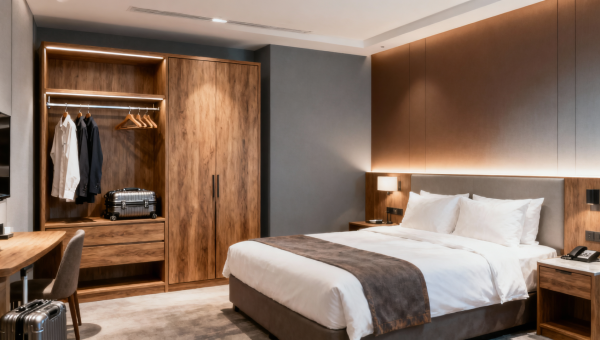
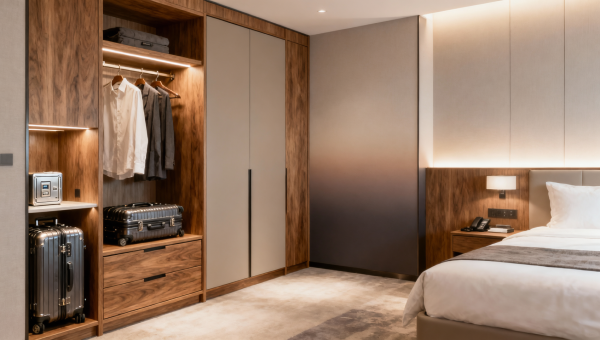
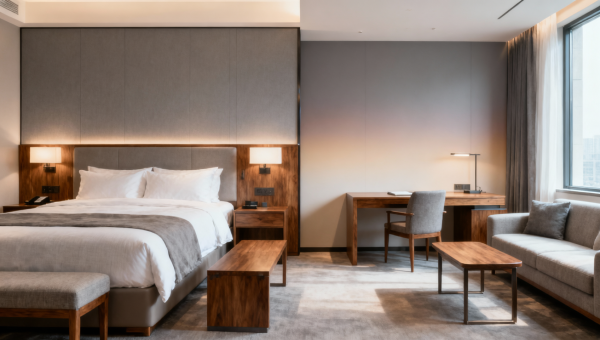
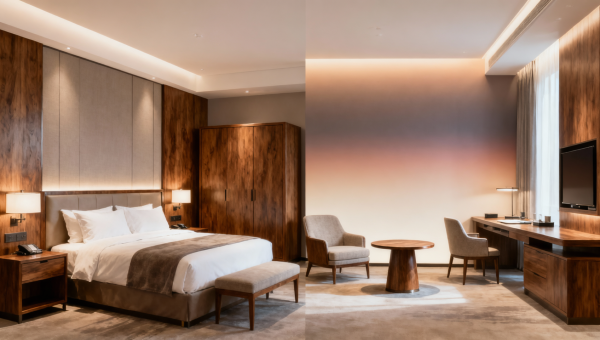
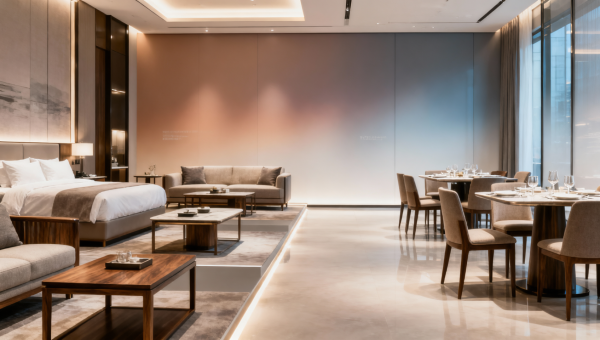
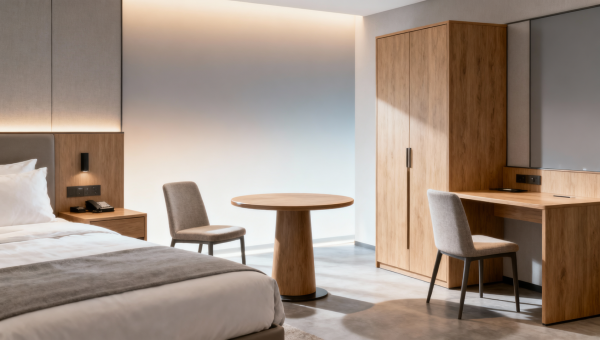
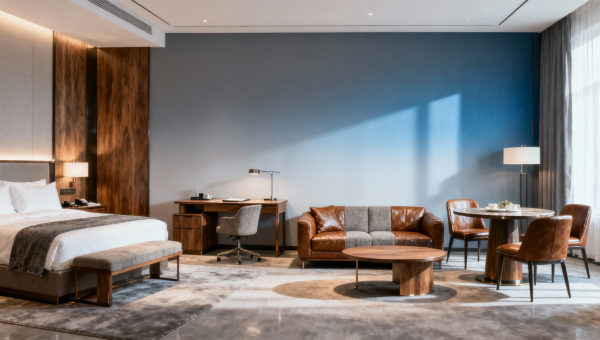
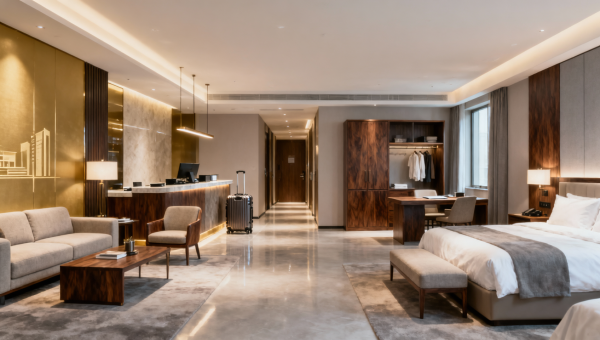
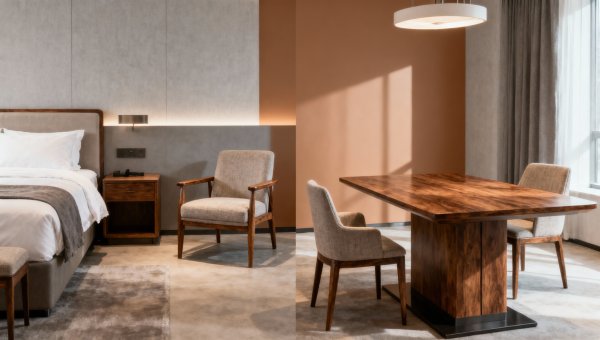
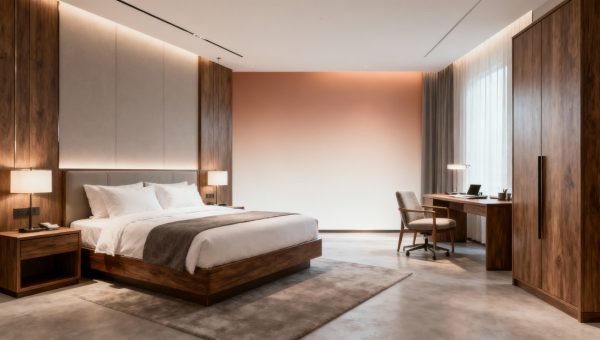
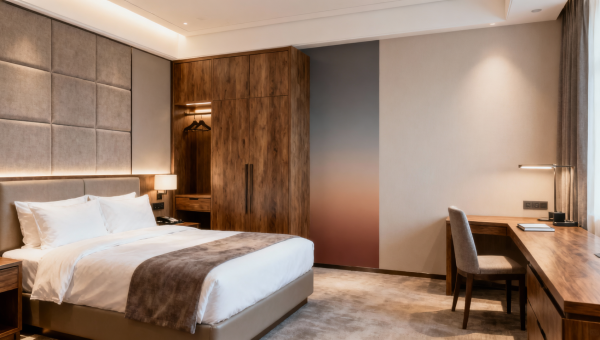
A standard hotel room furniture package commonly includes bed base, headboard, bedside tables, desk or media console, wardrobe or luggage bench, lounge chair, sofa or sleeper sofa in selected room types, and occasional tables. FF&E scope may expand further in suites or resort rooms with dining sets, balcony furniture, or family-use storage features.
- Casegoods usually account for a stable share of room package cost because they require engineered wood, veneer, laminate, edge treatment, and hardware consistency.
- Upholstered items such as hotel sofas and lounge chairs fluctuate more due to fabric grade, foam density, frame construction, and fire performance requirements.
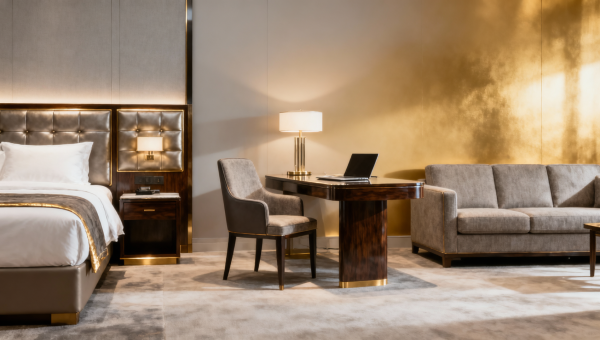
- Accent elements, integrated lighting, stone tops, and metal trims often push projects from standard commercial level into upscale or luxury pricing bands.
For procurement teams, the most useful question is not “What is the cheapest furniture?” but “Which specification level aligns with the property’s revenue model, guest profile, and replacement cycle?” That decision matters more than any isolated quote.
Typical hotel room furniture price ranges by segment
Because room counts, specifications, and geography vary, hotel room furniture cost is normally discussed in ranges rather than fixed numbers. The table below summarizes common commercial buying scenarios for guestroom furniture packages. These are planning-level ranges for sourcing comparison, not a final quotation, and they are most useful during budgeting, dealer discussions, and early-stage business evaluation.
These ranges become wider when projects include suites, branded residences, family entertainment resorts, or all-inclusive properties where sofas, bunk solutions, terrace furniture, or kid-friendly storage are added. In entertainment-heavy destinations, design themes can also increase customization cost because finishes, shapes, and upholstery patterns need tighter brand alignment.
Buyers should also distinguish between ex-factory pricing and landed project cost. Freight, import duties, installation, mock-up revisions, and site coordination can add meaningful budget pressure. In many cross-border projects, the delivered cost may rise by 15%–35% depending on destination, shipment mode, packaging method, and local installation conditions.
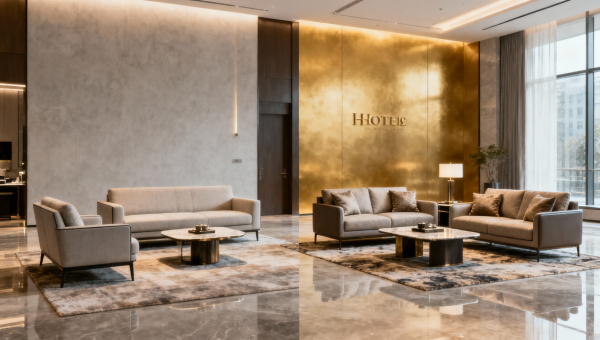
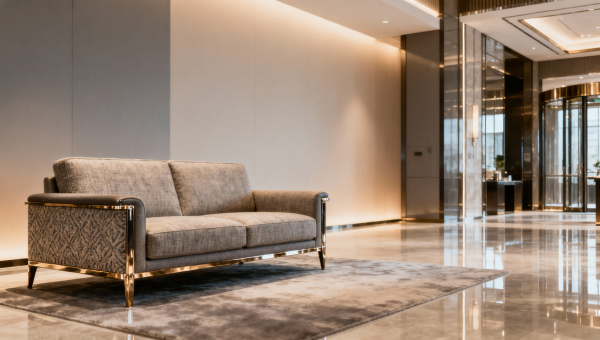
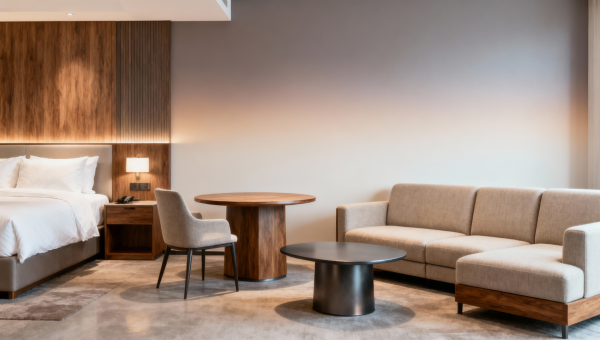
When comparing hotel sofas in particular, buyers often find a large spread between standard commercial models and hospitality-grade custom seating. The visible shape may look similar, but commercial foam, fire-resistant cover materials, reinforced joinery, and stain-resistant finishing all influence long-term value.
Why two suppliers can quote very different numbers
A lower quote may exclude prototype development, hardware upgrades, replacement stock, assembly support, or export-grade packing. A higher quote may include all of these. That is why procurement teams should compare quote structure line by line, not just total room package price.
For distributors and sourcing agents, quote normalization is critical. Before presenting options to end clients, confirm whether both suppliers priced the same finish schedule, same material thickness, same fabric test requirements, and same lead time assumptions. Otherwise, the comparison is not commercially valid.
How do materials, customization, and durability affect total lifecycle value?
Initial hotel room furniture cost is only one part of the equation. In hospitality and leisure settings, lifecycle value depends on how furniture performs through guest turnover, housekeeping routines, humidity variation, luggage impact, and occasional misuse. For a resort connected to sports facilities, beach activity, or family entertainment traffic, cleaning demands and wear levels are often higher than in a conventional business hotel.
Material selection is one of the biggest cost levers. Laminate over engineered panels usually offers budget control and easier consistency across volume orders. Veneer brings a more premium visual result but requires stronger process control. Solid wood accents can elevate brand perception, yet they add cost, weight, and in some climates additional movement risk if not engineered correctly. Upholstery choices also vary widely depending on abrasion resistance, stain performance, and cleanability.
Customization increases cost in at least 3 ways: design time, production complexity, and quality control burden. Curved parts, mixed materials, integrated charging modules, and custom metalwork each add labor and coordination. In a 100-room project, even a small increase per room can become a major budget shift. Still, selective customization often makes sense for flagship suites, themed leisure properties, or premium floors where room differentiation supports ADR positioning.
For commercial buyers, durability is best discussed through use scenarios rather than marketing claims. Ask how the supplier handles edge protection, drawer runner grade, joint reinforcement, leg stability, foam density range, and maintenance instructions. Those details affect replacement rates more than decorative appearance.
A practical comparison for sourcing teams
The following table helps compare common specification paths when evaluating hotel room furniture packages for different hospitality and entertainment property types.
This comparison shows why lifecycle planning matters. A lower-cost package may be correct for a 3-year repositioning plan, while a more robust package may make better financial sense for an owner targeting 7–10 years of operation before the next major refurbishment. The right answer depends on room rate strategy, occupancy expectations, and maintenance capability.
Three checks buyers should make before approving samples
- Confirm whether visual samples match mass-production construction, not just showroom appearance.
- Review cleaning and repair practicality, especially for upholstered hotel sofas and high-touch desk surfaces.
- Ask for tolerance, finish, and hardware consistency checks across repeated room sets, not only one prototype room.
This step is especially valuable when a project involves distributors or regional agents who must protect margin while reducing after-installation issues. A well-reviewed sample can prevent expensive field corrections later.
What should procurement teams compare before selecting a supplier?
Choosing a hotel furniture supplier goes far beyond asking for the lowest quotation. In real B2B procurement, buyers usually need to compare 5 key dimensions: manufacturing capability, customization support, quality control process, export execution, and communication reliability. These dimensions become even more important in leisure properties where opening schedules are linked to tourism seasons, sporting events, or holiday traffic.
Lead time is often underestimated. A standard project may require 2–4 weeks for shop drawings and sampling, 4–8 weeks for mass production depending on volume and complexity, and additional time for shipping and site coordination. If custom upholstery, metal detailing, or multi-country approvals are involved, the timeline can extend further. Procurement teams should validate milestone ownership at each stage.
Another practical issue is project fit. A supplier that handles 20-room boutique orders may not be the right partner for a 400-room resort rollout. Likewise, a factory focused on standard catalog furniture may struggle with themed leisure concepts or branded room programs requiring tailored finishes and mock-up iterations. Commercial evaluators should align factory profile with project scope from day one.
GCT supports this stage by helping buyers assess suppliers through sector-focused sourcing intelligence, not generic listings. For hospitality, leisure, and other experience-led environments, this means a clearer view of what matters in commercial execution: not only furniture design, but also consistency, compliance awareness, and supply chain dependability.
A supplier evaluation table for hotel room furniture sourcing
Use the matrix below when comparing hotel room furniture suppliers, hotel sofa manufacturers, or full-package project partners. It helps procurement teams create a more disciplined bidding review.
A structured evaluation matrix helps business assessment teams avoid the common mistake of treating all suppliers as interchangeable. In commercial hospitality, service process and execution discipline can be as important as the furniture itself.
A 4-step sourcing process that reduces surprises
- Define room standards by segment, target rate, and expected replacement cycle.
- Shortlist suppliers based on category fit, not broad furniture catalogs alone.
- Validate samples, finishes, packaging, and lead time assumptions before final negotiation.
- Align inspection, shipping, and installation responsibilities before mass production starts.
For dealers and project agents, this process also supports cleaner client communication and more accurate margin planning.
Which compliance and project risks are often missed?
In cross-border hotel furniture sourcing, some of the most expensive mistakes come from missing commercial details rather than visible design flaws. Procurement teams should review at least 6 risk areas: fire performance expectations, material suitability for climate, hardware longevity, packaging resistance, site access constraints, and installation sequencing. These do not always appear on the first quote, but they can significantly affect final cost.
Standards and compliance needs vary by market and project type. Buyers may need to discuss flame-retardant expectations for upholstery, emission-related material considerations, or hospitality-specific safety requirements depending on local code and client policy. The key is to define the required standard set early, because retrofitting specifications after sample approval often delays the project and raises purchasing cost.
Leisure and sports-linked hotels present extra challenges. Properties near pools, beaches, ski operations, or high-humidity recreation zones may need more moisture-resistant substrates, more durable edge sealing, and easier-clean upholstery. Family entertainment hotels may also prioritize rounded corners, stain management, and stronger luggage bench performance due to heavier group use.
Another overlooked issue is room installation conditions. Elevators, corridor turns, floor protection policies, and phased handover schedules affect whether furniture should be shipped assembled or knock-down. A cheaper assembled unit can become costly if site access is difficult and damage risk rises during movement.
Common misconceptions that distort budgeting
“The cheapest unit price gives the best project outcome”
Not always. If lower pricing brings shorter service life, finish inconsistency, or more installation damage, total ownership cost may increase within 12–24 months. This is especially relevant for hotel sofas, desk chairs, and luggage benches that absorb repeated impact.
“Custom furniture is always too expensive”
Selective customization can be efficient when it improves space use, strengthens branding, or reduces the need for multiple off-the-shelf items. The real issue is controlling where customization adds measurable value and where standardization should remain.
“Lead time starts after deposit only”
In practice, lead time also depends on drawing approval, finish sign-off, sample confirmation, and sometimes mock-up room acceptance. Delays in these steps can shift delivery by several weeks even if production capacity exists.
FAQ for buyers comparing hotel room furniture packages
How much does a hotel sofa usually cost within a guestroom package?
A hotel sofa can vary significantly based on size, frame design, upholstery grade, and whether it includes sleeper functionality. In broad commercial sourcing terms, standard hospitality sofas may sit in a few hundred dollars range, while custom or premium units can move much higher. Buyers should ask whether the quote includes fabric, fire-related requirements, packaging level, and replacement fabric options.
What is a reasonable lead time for hotel room furniture?
For many projects, a practical planning window is 6–12 weeks from technical confirmation to production completion, excluding shipping. Sampling may take 2–4 weeks depending on customization depth. Very large orders, themed resort programs, or mixed-material developments can require longer coordination. Always confirm whether the timeline includes approvals, not only factory production days.
Should buyers choose local sourcing or overseas manufacturing?
That depends on room count, customization level, target budget, freight conditions, and project schedule. Overseas sourcing may improve cost efficiency for medium to large volumes, while local sourcing can reduce transport complexity or support urgent replacement work. Many commercial buyers use a hybrid strategy: core room packages from one source, urgent replenishment or local special items from another.
What should distributors and agents pay attention to most?
Focus on quote clarity, repeat order capability, sample-to-production consistency, and communication speed. Margin protection often depends less on headline price and more on avoiding claims, delays, or specification disputes. For dealer channels, the best supplier is usually the one that supports reliable execution across repeated projects.
Why work with GCT when evaluating hotel furniture sourcing options?
Global Commercial Trade is built for commercial decision-makers who need more than a simple supplier list. In hospitality, leisure, and experience-driven projects, furniture buying is tied to design intent, operational durability, compliance awareness, and supply chain timing. GCT helps buyers, evaluators, and channel partners navigate those decisions with industry-focused sourcing intelligence across commercial environments.
For hotel room furniture procurement, that means clearer comparisons on factory capability, customization pathways, room package composition, and commercial fit. For sports and entertainment-linked properties, it also means paying attention to the realities of guest behavior, seasonal opening pressures, and long-term maintenance demands. These factors affect procurement outcomes just as much as product aesthetics.
If you are assessing hotel sofas, casegoods, or full guestroom furniture packages, GCT can support more focused discussions around specification confirmation, sourcing options, delivery cycles, sample planning, and quotation structure. This is useful for information researchers in the early comparison phase, procurement teams managing active tenders, business evaluators building investment cases, and distributors or agents preparing supplier shortlists.
Contact GCT to discuss practical project topics such as room package scope, material level selection, typical production timelines, custom design feasibility, packaging methods, compliance expectations, sample support, and RFQ preparation. A clearer sourcing brief usually leads to better quotations, fewer revisions, and more confident buying decisions.
Search News
Hot Articles
- Pro Stage AudioFIFA Adopts Chinese Mini-LED Displays for 2026 World Cup VAR SystemApr 24, 2026
- Outdoor RidesChina FA Warns Nanjing City Over Fan Conduct; ISO 20785 Compliance AcceleratesApr 24, 2026
- Pro Stage AudioFan Zhendong Visits Silicon Valley as MLTT Investor, AI Ping-Pong Tech Draws US InterestApr 24, 2026
Popular Tags
Need ExpertConsultation?
Connect with our specialized leisureengineering team for procurementstrategies.
Recommended News
 Apr 10, 2026RCEP Cuts ASEAN Hotel Furniture Tariffs to 0% for Chinese Bamboo ProductsRCEP cuts ASEAN hotel furniture tariffs to 0% for Chinese bamboo products. Explore how this benefits exporters, procurement teams & supply chains in Southeast Asia's booming hospitality sector.● Hospitality Sourcing Dir
 Apr 10, 2026US Hotel Association Updates 2026 Smart Room Tech Guidelines, Mandates UL 2900-2-2 CertificationUS Hotel Association mandates UL 2900-2-2 certification for smart room tech by 2026. Learn how this impacts IoT manufacturers and hotel chains' procurement strategies.● Hospitality Sourcing Dir
 Apr 10, 2026EU Mandates QR Codes for Hotel Linens: China Exporters Must Comply by April 2026EU mandates QR codes for hotel linens by 2026, impacting China's textile exporters. Learn compliance requirements for traceability, sustainability reporting, and supply chain adaptation.● Hospitality Sourcing Dir
 Apr 09, 2026Zibo Launches 'Treasure Shandong Through the Lens' Photo Tour, Themed Homestays Emerge as Cross-Border Marketing ToolDiscover Zibo's 'Treasure Shandong Through the Lens' photo tour featuring 32 themed homestays blending vintage cameras, Hanfu culture & industrial spaces. A groundbreaking cross-border marketing model attracting global influencers & platforms like Rakuten Travel.● Hospitality Sourcing Dir
 Apr 09, 2026Yangzhou Slender West Lake Flower Festival Opens, Blending Heritage and Tech for Luxury TourismDiscover the 2026 Yangzhou Slender West Lake Flower Festival, blending heritage crafts with AR technology for luxury tourism. Experience cultural performances, workshops, and themed stays attracting global travelers. Explore China's new era of experiential tourism.● Hospitality Sourcing Dir
 Apr 09, 2026New Team Travel Contracts Raise Compliance Standards for Overseas AgenciesNew team travel contracts enforce stricter compliance for overseas agencies, requiring rigorous vetting of Chinese suppliers. Learn how these 2026 regulations impact study tours, hotels, and global partnerships.● Hospitality Sourcing Dir
 Apr 09, 2026Shangyou County's Hotel Subsidy Policy Boosts China's MICE Tourism AppealShangyou County's 2026 hotel subsidy policy offers RMB 100 per room for MICE tourism, boosting China's appeal to international buyers. Discover how this strategic move enhances cost-effective accommodations for corporate events and study tours.● Hospitality Sourcing Dir
 Apr 21, 2026Open or closed hotel wardrobes for easier housekeeping?Hotel wardrobes affect housekeeping speed, guest appeal, and hospitality procurement. Compare open vs closed designs for hotel furniture, luxury furniture, and hotel room furniture planning.● Hospitality Sourcing Dir
 Apr 21, 2026Hotel wardrobes that fit luggage without wasting spaceHotel wardrobes that fit luggage smartly without wasting space—explore hotel furniture solutions that elevate hotel room furniture, support hospitality procurement, and enhance guest comfort.● Hospitality Sourcing Dir
 Apr 21, 2026Why hotel room furniture wears unevenly after openingHotel furniture wear starts unevenly from day one. Learn how hotel beds, hotel chairs, hotel desks and hotel room furniture perform in real use, with smart hospitality procurement tips.● Hospitality Sourcing Dir
 Apr 21, 2026Hotel room furniture packages that cut design mismatchHotel room furniture packages align hotel furniture, hotel beds, hotel chairs, hotel tables, and hotel desks with luxury furniture standards—reducing design mismatch and speeding hospitality procurement.● Hospitality Sourcing Dir
 Apr 21, 2026Low seat or deep seat hotel sofas for modern lobbies?Hotel furniture buyers compare low seat and deep seat hotel sofas for modern lobbies. Explore luxury furniture choices that improve comfort, traffic flow, brand image, and hospitality procurement value.● Hospitality Sourcing Dir
 Apr 21, 2026Hotel sofas that keep their shape in high traffic areasHotel sofas, hotel furniture, and hospitality furniture that keep shape in high-traffic areas—discover luxury furniture sourcing tips, durable commercial furniture specs, and smarter hospitality procurement.● Hospitality Sourcing Dir
 Apr 21, 2026Why hospitality furniture needs different specs by zoneHospitality furniture specs vary by zone. Learn how hotel furniture, hotel beds, hotel chairs, hotel tables, and hotel desks improve durability, ROI, and luxury guest experience.● Hospitality Sourcing Dir
 Apr 21, 2026Hospitality furniture that supports faster room turnoverHospitality furniture that speeds room turnover: compare hotel beds, hotel chairs, hotel tables, hotel desks and hotel sofas for easier cleaning, durability, and smarter hospitality procurement.● Hospitality Sourcing Dir
 Apr 21, 2026Where hotel equipment budgets usually go off trackHotel furniture and hotel equipment budgets often fail from hidden scope, logistics, and lifecycle costs. Learn smarter hospitality procurement for hotel beds, chairs, tables, and luxury furniture.● Hospitality Sourcing Dir
 Apr 21, 2026Hotel equipment upgrades that improve guest flow firstHotel equipment upgrades improve guest flow fast with hotel furniture, hotel beds, hotel chairs, catering equipment, and soundproofing materials—boost comfort, efficiency, and procurement ROI.● Hospitality Sourcing Dir
 Apr 21, 2026What shortens the life of commercial furniture in hotelsHotel furniture and commercial furniture wear out fast when hotel beds, hotel chairs, hotel tables, hotel desks, and hotel sofas face heavy use, poor maintenance, and weak materials. Learn smart hospitality procurement tips.● Hospitality Sourcing Dir
 Apr 21, 2026Commercial furniture trends hotels are actually adoptingCommercial furniture trends hotels are adopting: luxury furniture, hotel beds, hotel chairs, hotel tables and hotel sofas that improve hotel furniture sourcing, durability, and hospitality procurement value.● Hospitality Sourcing Dir
 Apr 21, 2026How to spot hotel furniture built for daily wearHotel furniture buying guide: learn how to assess hotel beds, hotel chairs, hotel tables, and hospitality furniture for daily wear, lower maintenance, and smarter hospitality procurement.● Hospitality Sourcing Dir
 Apr 21, 2026Hotel furniture mistakes that age a room too quicklyHotel furniture buying guide: avoid costly hotel beds, hotel chairs, and hotel room furniture mistakes. Discover luxury furniture tips for durable, brand-right hospitality procurement.● Hospitality Sourcing Dir
 Apr 21, 2026Why some soundproofing materials fail after installationLearn why soundproofing materials fail after installation in hotel furniture projects. Explore hotel beds, hotel sofas, hotel wardrobes and hospitality procurement tips for lasting acoustic performance.● Hospitality Sourcing Dir
 Apr 21, 2026Soundproofing materials that work best between guest roomsSoundproofing materials for hotel furniture projects: discover the best systems between guest rooms, from mineral wool to acoustic doors, to improve comfort, protect reviews, and support hospitality procurement.● Hospitality Sourcing Dir
 Apr 21, 2026How firm should hotel beds be for mixed guest profiles?Hotel beds for mixed guest profiles: learn how hotel furniture and hospitality procurement teams balance comfort, durability, and luxury furniture standards to improve guest satisfaction.● Hospitality Sourcing Dir