Hotel Room Furniture: What to Replace First
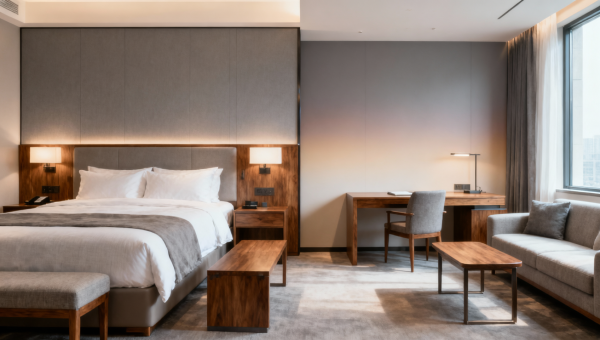
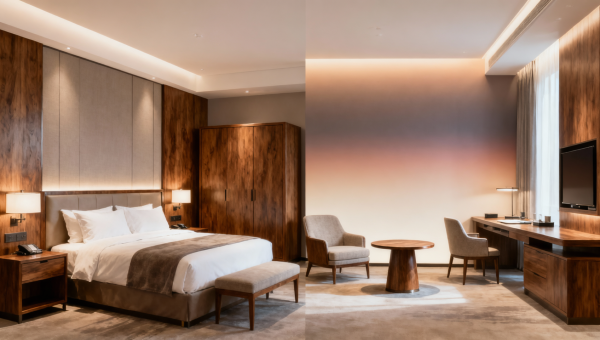
When budgets are tight, the best rule is simple: replace the hotel room furniture that guests touch, see, and judge first. In most properties, that means the bed and sleep system, upholstered seating, and the most visibly damaged casegoods before less noticeable items. For procurement teams, evaluators, and distributors, the priority is not replacing everything at once. It is identifying which items are hurting guest satisfaction, housekeeping efficiency, brand perception, and maintenance cost right now.
This guide explains what to replace first in a hotel room, how to rank furniture by business impact, and what commercial buyers should evaluate before committing budget.
What should hotels replace first when room furniture is aging?
If a hotel cannot complete a full room renovation, the first replacements should usually be:
- Mattresses and sleep-related components if comfort complaints are rising
- Hotel sofas, lounge chairs, and desk chairs if upholstery is stained, sagging, or structurally weak
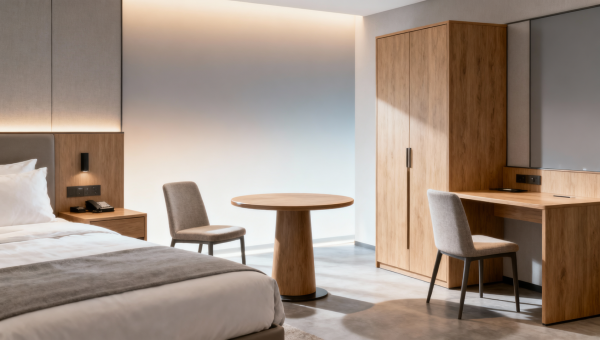
- High-visibility casegoods such as headboards, nightstands, desks, and TV units when finishes are chipped, swollen, or outdated
- FF&E items that create safety or housekeeping problems, including unstable tables, damaged edges, and hard-to-clean surfaces
The reason is practical. Guests may not notice every specification detail, but they immediately notice poor sleep, worn seating, and furniture that looks old or neglected. These issues affect review scores, repeat bookings, and rate perception faster than lower-visibility items do.
How to prioritize hotel room furniture replacement by guest impact and ROI
For commercial decision-makers, replacement priority should be based on four filters:
- Guest impact: Does this item directly affect comfort or online review sentiment?
- Visual impact: Does it make the room look dated, damaged, or inconsistent with the brand?
- Operational cost: Is maintenance, cleaning, or repair becoming too frequent?
- Risk exposure: Does it create safety, hygiene, or compliance concerns?
A simple priority model often looks like this:
- Tier 1: Beds, mattresses, sofas, chairs
- Tier 2: Headboards, nightstands, desks, luggage benches, media units
- Tier 3: Decorative or lower-contact items that do not strongly influence guest satisfaction
This approach helps procurement teams focus capital where it produces measurable commercial value instead of spreading budget too thinly across low-impact replacements.
Why the sleep system is often the first investment to make
In hospitality, sleep quality has a direct relationship with guest satisfaction. If a mattress is visibly compressed, uneven, noisy, or linked to recurring comfort complaints, it usually deserves the first line of replacement budget.
Even when other furniture looks dated, poor sleep tends to create stronger negative feedback than an older nightstand or desk. Buyers should assess:
- Complaint frequency related to sleep quality
- Mattress age and rotation history
- Visible sagging or edge breakdown
- Compatibility with brand positioning and room rate
- Housekeeping and hygiene performance
For midscale and upscale properties, upgrading the sleep system can also support ADR positioning more effectively than cosmetic-only changes. In many cases, the bed is the single most important piece of hotel room furniture from both a guest experience and revenue perspective.
When hotel sofas and upholstered seating should move up the list
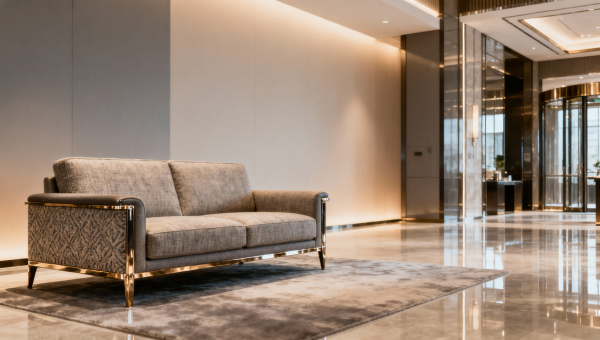
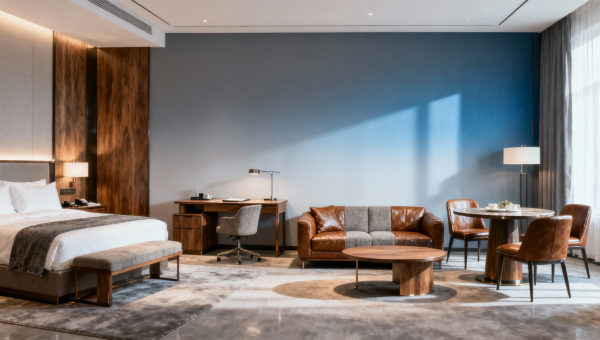
Hotel sofas, accent chairs, and desk chairs often age faster than operators expect. Upholstery absorbs stains, odors, and wear, while cushions lose shape and support. Guests may not always report this directly, but they see it immediately and interpret it as poor upkeep.
Replace upholstered furniture early when you see:
- Fabric discoloration, tearing, or seam failure
- Permanent seat compression
- Wobbling frames or loose arms
- Design styles that no longer fit the property image
- Cleaning labor increasing without acceptable visual results
For procurement professionals, upholstered seating is also a smart category to review because it affects appearance, comfort, and operational efficiency at the same time. A new commercial-grade sofa with better cleanability and durability can outperform repeated spot repairs and reupholstery attempts.
Which casegoods deserve replacement before a full renovation
Casegoods do not always need complete room-by-room replacement at the first sign of age. But some pieces should move forward when they visibly damage brand perception or function poorly. The most important casegoods to review first are:
- Nightstands: heavily used, highly visible, often damaged by moisture and guest handling
- Desks and worktables: important in business travel and mixed-use guest segments
- Headboards: central to the visual identity of the room
- TV panels and media consoles: visible focal points that can quickly date a room
- Luggage benches: high contact and often subject to structural wear
If surfaces are chipped, laminate is peeling, edges are broken, or finishes are swollen from moisture, the room can feel neglected even if the rest of the furniture is still usable. In these cases, selective replacement of the most visible casegoods can deliver a strong visual refresh without the cost of a full FF&E overhaul.
What procurement teams should evaluate beyond appearance
Appearance matters, but commercial buyers should not choose replacement priorities based on looks alone. A sound hospitality procurement decision should include:
- Lifecycle cost: purchase price plus maintenance, repair, and replacement frequency
- Material suitability: resistance to impact, staining, moisture, and cleaning chemicals
- Compliance: fire safety, regional standards, and hospitality-grade performance requirements
- Lead time and supply reliability: especially for multi-property rollouts
- OEM/ODM capability: ability to match brand standards and project-specific dimensions
- Ease of installation: important for minimizing room downtime
This matters especially in hospitality and leisure environments, where guest turnover is high and furniture must withstand constant use. A lower upfront price may not be the better value if the product fails early, increases housekeeping burden, or creates inconsistency across properties.
How to decide between repair, partial replacement, and full replacement
Not every worn item should be replaced immediately. Buyers should separate furniture into three action groups:
Repair when the structure is sound and the issue is minor, such as small finish touch-ups or hardware replacement.
Partial replacement when selected pieces are visibly hurting room quality, but the broader furniture package still aligns with brand and operating needs.
Full replacement when multiple categories are failing at once, design inconsistency is obvious, or repair costs are approaching replacement value.
A useful decision test is this: if the item creates repeated guest dissatisfaction, recurring labor cost, or a visible downgrade to brand image, replacement usually makes more sense than extending its life.
Red flags that indicate furniture replacement should not be delayed
Some signs suggest immediate action is needed:
- Guest reviews frequently mention comfort, cleanliness, or outdated rooms
- Maintenance tickets for the same furniture category keep repeating
- Housekeeping teams report cleaning inefficiency or impossible-to-remove stains
- Furniture instability creates safety concerns
- Room photos no longer support current pricing or brand positioning
- Replacement parts are difficult or uneconomical to source
For business evaluators and sourcing teams, these signals help justify capital allocation with operational evidence rather than subjective opinion.
A practical replacement sequence for budget-constrained hotels
For many properties, a realistic phased plan looks like this:
- Phase 1: mattresses, bed bases if needed, and the worst upholstered seating
- Phase 2: visible casegoods with the highest cosmetic damage, especially nightstands, desks, and headboards
- Phase 3: supporting furniture and decorative elements that improve overall room consistency
This phased strategy is especially useful for hotel groups, ownership teams, and distributors managing multiple SKUs, mixed room conditions, or staggered renovation cycles. It allows capital to be deployed where it improves perception and usability fastest, while still supporting long-term brand standards.
Conclusion
If you are deciding what hotel room furniture to replace first, start with the items that most directly affect guest comfort and visual trust: the sleep system, upholstered seating, and the most visible damaged casegoods. These categories usually deliver the clearest return through better reviews, stronger brand presentation, and lower operational friction.
For procurement professionals and commercial buyers, the smartest decision is rarely to replace everything at once. It is to prioritize furniture by guest impact, maintenance burden, and business value. In hospitality sourcing, the right first replacement is the one that solves the most noticeable problem with the strongest operational payoff.
Search News
Hot Articles
- Pro Stage AudioFIFA Adopts Chinese Mini-LED Displays for 2026 World Cup VAR SystemApr 24, 2026
- Outdoor RidesChina FA Warns Nanjing City Over Fan Conduct; ISO 20785 Compliance AcceleratesApr 24, 2026
- Pro Stage AudioFan Zhendong Visits Silicon Valley as MLTT Investor, AI Ping-Pong Tech Draws US InterestApr 24, 2026
Popular Tags
Need ExpertConsultation?
Connect with our specialized leisureengineering team for procurementstrategies.
Recommended News
 Apr 10, 2026RCEP Cuts ASEAN Hotel Furniture Tariffs to 0% for Chinese Bamboo ProductsRCEP cuts ASEAN hotel furniture tariffs to 0% for Chinese bamboo products. Explore how this benefits exporters, procurement teams & supply chains in Southeast Asia's booming hospitality sector.● Hospitality Sourcing Dir
 Apr 10, 2026US Hotel Association Updates 2026 Smart Room Tech Guidelines, Mandates UL 2900-2-2 CertificationUS Hotel Association mandates UL 2900-2-2 certification for smart room tech by 2026. Learn how this impacts IoT manufacturers and hotel chains' procurement strategies.● Hospitality Sourcing Dir
 Apr 10, 2026EU Mandates QR Codes for Hotel Linens: China Exporters Must Comply by April 2026EU mandates QR codes for hotel linens by 2026, impacting China's textile exporters. Learn compliance requirements for traceability, sustainability reporting, and supply chain adaptation.● Hospitality Sourcing Dir
 Apr 09, 2026Zibo Launches 'Treasure Shandong Through the Lens' Photo Tour, Themed Homestays Emerge as Cross-Border Marketing ToolDiscover Zibo's 'Treasure Shandong Through the Lens' photo tour featuring 32 themed homestays blending vintage cameras, Hanfu culture & industrial spaces. A groundbreaking cross-border marketing model attracting global influencers & platforms like Rakuten Travel.● Hospitality Sourcing Dir
 Apr 09, 2026Yangzhou Slender West Lake Flower Festival Opens, Blending Heritage and Tech for Luxury TourismDiscover the 2026 Yangzhou Slender West Lake Flower Festival, blending heritage crafts with AR technology for luxury tourism. Experience cultural performances, workshops, and themed stays attracting global travelers. Explore China's new era of experiential tourism.● Hospitality Sourcing Dir
 Apr 09, 2026New Team Travel Contracts Raise Compliance Standards for Overseas AgenciesNew team travel contracts enforce stricter compliance for overseas agencies, requiring rigorous vetting of Chinese suppliers. Learn how these 2026 regulations impact study tours, hotels, and global partnerships.● Hospitality Sourcing Dir
 Apr 09, 2026Shangyou County's Hotel Subsidy Policy Boosts China's MICE Tourism AppealShangyou County's 2026 hotel subsidy policy offers RMB 100 per room for MICE tourism, boosting China's appeal to international buyers. Discover how this strategic move enhances cost-effective accommodations for corporate events and study tours.● Hospitality Sourcing Dir
 Apr 21, 2026Open or closed hotel wardrobes for easier housekeeping?Hotel wardrobes affect housekeeping speed, guest appeal, and hospitality procurement. Compare open vs closed designs for hotel furniture, luxury furniture, and hotel room furniture planning.● Hospitality Sourcing Dir
 Apr 21, 2026Hotel wardrobes that fit luggage without wasting spaceHotel wardrobes that fit luggage smartly without wasting space—explore hotel furniture solutions that elevate hotel room furniture, support hospitality procurement, and enhance guest comfort.● Hospitality Sourcing Dir
 Apr 21, 2026Why hotel room furniture wears unevenly after openingHotel furniture wear starts unevenly from day one. Learn how hotel beds, hotel chairs, hotel desks and hotel room furniture perform in real use, with smart hospitality procurement tips.● Hospitality Sourcing Dir
 Apr 21, 2026Hotel room furniture packages that cut design mismatchHotel room furniture packages align hotel furniture, hotel beds, hotel chairs, hotel tables, and hotel desks with luxury furniture standards—reducing design mismatch and speeding hospitality procurement.● Hospitality Sourcing Dir
 Apr 21, 2026Low seat or deep seat hotel sofas for modern lobbies?Hotel furniture buyers compare low seat and deep seat hotel sofas for modern lobbies. Explore luxury furniture choices that improve comfort, traffic flow, brand image, and hospitality procurement value.● Hospitality Sourcing Dir
 Apr 21, 2026Hotel sofas that keep their shape in high traffic areasHotel sofas, hotel furniture, and hospitality furniture that keep shape in high-traffic areas—discover luxury furniture sourcing tips, durable commercial furniture specs, and smarter hospitality procurement.● Hospitality Sourcing Dir
 Apr 21, 2026Why hospitality furniture needs different specs by zoneHospitality furniture specs vary by zone. Learn how hotel furniture, hotel beds, hotel chairs, hotel tables, and hotel desks improve durability, ROI, and luxury guest experience.● Hospitality Sourcing Dir
 Apr 21, 2026Hospitality furniture that supports faster room turnoverHospitality furniture that speeds room turnover: compare hotel beds, hotel chairs, hotel tables, hotel desks and hotel sofas for easier cleaning, durability, and smarter hospitality procurement.● Hospitality Sourcing Dir
 Apr 21, 2026Where hotel equipment budgets usually go off trackHotel furniture and hotel equipment budgets often fail from hidden scope, logistics, and lifecycle costs. Learn smarter hospitality procurement for hotel beds, chairs, tables, and luxury furniture.● Hospitality Sourcing Dir
 Apr 21, 2026Hotel equipment upgrades that improve guest flow firstHotel equipment upgrades improve guest flow fast with hotel furniture, hotel beds, hotel chairs, catering equipment, and soundproofing materials—boost comfort, efficiency, and procurement ROI.● Hospitality Sourcing Dir
 Apr 21, 2026What shortens the life of commercial furniture in hotelsHotel furniture and commercial furniture wear out fast when hotel beds, hotel chairs, hotel tables, hotel desks, and hotel sofas face heavy use, poor maintenance, and weak materials. Learn smart hospitality procurement tips.● Hospitality Sourcing Dir
 Apr 21, 2026Commercial furniture trends hotels are actually adoptingCommercial furniture trends hotels are adopting: luxury furniture, hotel beds, hotel chairs, hotel tables and hotel sofas that improve hotel furniture sourcing, durability, and hospitality procurement value.● Hospitality Sourcing Dir
 Apr 21, 2026How to spot hotel furniture built for daily wearHotel furniture buying guide: learn how to assess hotel beds, hotel chairs, hotel tables, and hospitality furniture for daily wear, lower maintenance, and smarter hospitality procurement.● Hospitality Sourcing Dir
 Apr 21, 2026Hotel furniture mistakes that age a room too quicklyHotel furniture buying guide: avoid costly hotel beds, hotel chairs, and hotel room furniture mistakes. Discover luxury furniture tips for durable, brand-right hospitality procurement.● Hospitality Sourcing Dir
 Apr 21, 2026Why some soundproofing materials fail after installationLearn why soundproofing materials fail after installation in hotel furniture projects. Explore hotel beds, hotel sofas, hotel wardrobes and hospitality procurement tips for lasting acoustic performance.● Hospitality Sourcing Dir
 Apr 21, 2026Soundproofing materials that work best between guest roomsSoundproofing materials for hotel furniture projects: discover the best systems between guest rooms, from mineral wool to acoustic doors, to improve comfort, protect reviews, and support hospitality procurement.● Hospitality Sourcing Dir
 Apr 21, 2026How firm should hotel beds be for mixed guest profiles?Hotel beds for mixed guest profiles: learn how hotel furniture and hospitality procurement teams balance comfort, durability, and luxury furniture standards to improve guest satisfaction.● Hospitality Sourcing Dir