Zunyi Liquor League: Fengrongjiao Wins, AR+Digital Twin System Drives 130% Export Inquiry Growth
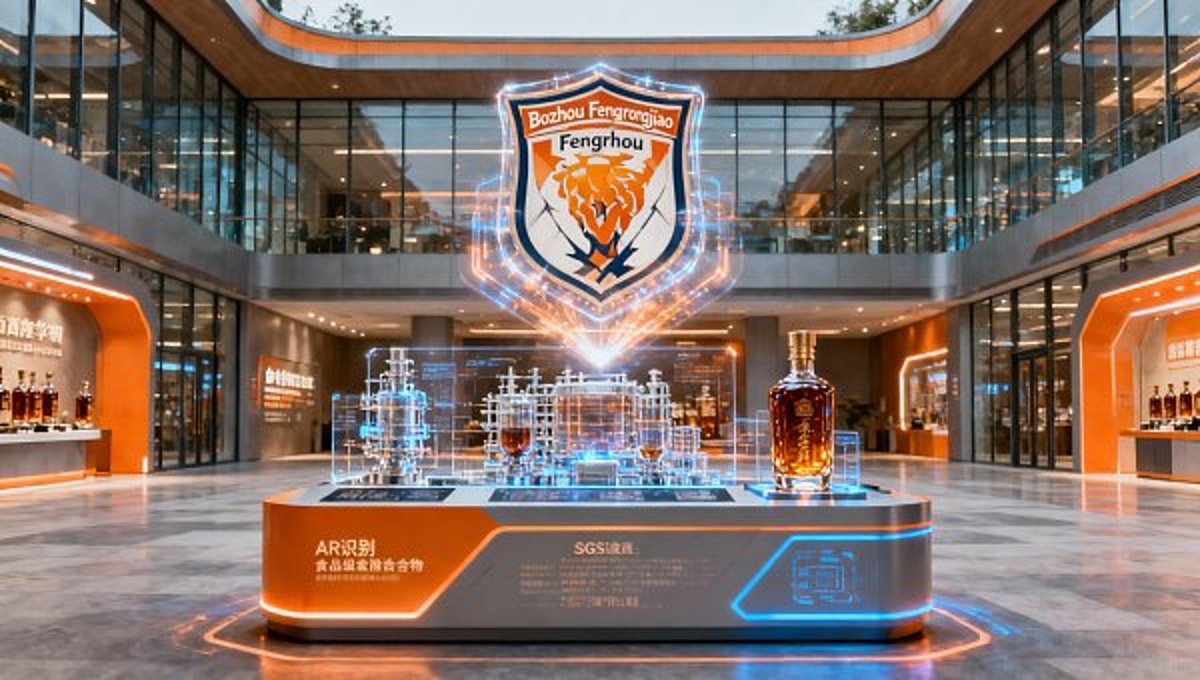
On May 2, 2026, during a match of the Zunyi Liquor Industry Football Super League, the Bozhou Fengrongjiao team defeated Huichuan Jiangjiu 4–0 — and simultaneously debuted a domestically developed commercial intelligent brewing culture interactive exhibition system. The event marks an early signal of cross-sector convergence between liquor cultural tourism, smart exhibition infrastructure, and export-oriented digital hardware solutions — drawing attention from trade, cultural tourism infrastructure, and food-grade tech manufacturing sectors.
Event Overview
On May 2, 2026, at the Zunyi Liquor Industry Football Super League match, Bozhou Fengrongjiao scored within 37 seconds of kickoff. Concurrently, the venue deployed a domestic ‘Sauce-Aroma Culture AR Jersey Recognition + Immersive Fermentation Pit Digital Twin’ exhibition system. Publicly confirmed outcomes include concentrated inquiry interest from liquor-themed cultural tourism complex buyers in Indonesia and Malaysia, with reported export-related inquiry volume up 130% year-on-year. Key technical concerns raised by prospective buyers included: compatibility with Islamic doctrine review APIs, offline multilingual audio-guide functionality, and SGS certification for food-grade materials used in physical display components.
Industries Affected
Direct Export Trading Enterprises
These firms face increased inbound demand for integrated hardware-software systems targeting culturally specific hospitality and tourism venues. Impact manifests as heightened technical pre-qualification requirements — especially around content governance (e.g., religious compliance APIs) and certification traceability (e.g., SGS food-grade validation), which go beyond standard CE or FCC scopes.
Cultural Tourism Infrastructure Developers
Operators of liquor-themed experiential complexes — particularly those expanding across Southeast Asia — are now evaluating turnkey digital twin + AR interpretation platforms as scalable visitor engagement tools. The inquiry surge reflects growing procurement intent for modular, localized, and regulatory-compliant exhibit systems rather than generic AV installations.
Smart Hardware Manufacturers (Food-Safe Grade)
Suppliers of physical kiosks, AR-enabled wearables, or sensor-integrated display units must now address dual compliance: functional interoperability (e.g., real-time AR jersey recognition) and material safety certification (e.g., SGS-certified non-toxic polymers). This elevates baseline R&D and testing requirements for export-bound product lines.
Digital Experience Integration Providers
Firms delivering end-to-end cultural exhibition software — including multilingual voice synthesis, offline caching, and third-party API gateways — are seeing demand shift toward embedded regulatory logic (e.g., automated halal-content filtering) rather than post-deployment customization.
What Relevant Enterprises or Practitioners Should Focus On
Monitor official certification pathways for food-grade digital hardware in ASEAN markets
SGS certification was explicitly cited as a procurement prerequisite. Current ASEAN national standards for interactive public-display hardware (especially those contacting food-serving environments) remain fragmented. Enterprises should track ongoing harmonization efforts under ASEAN MRA frameworks — not just final certifications.
Prioritize API-level integration readiness for religious and cultural compliance review
The repeated emphasis on Islamic doctrine review API compatibility signals that regional buyers expect plug-in governance modules — not manual content audits. Firms developing exhibition platforms should assess whether their architecture supports certified third-party compliance engines (e.g., Sharia-compliant content filters), rather than treating this as a one-off localization task.
Validate offline multilingual capability beyond language packs
“Offline multilingual guidance” refers to fully cached voice synthesis, map navigation, and contextual AR triggers — all operable without cloud dependency. This requires local storage optimization and edge-processing validation, distinct from standard app-based translation features. Testing should reflect actual venue connectivity constraints in Tier-2 ASEAN cities.
Prepare documentation alignment for dual-use export classification
Systems combining digital twin modeling, AR tracking, and fermentation process simulation may fall under emerging export control categories (e.g., dual-use AI-enabled industrial visualization tools). Companies preparing quotations should proactively verify Harmonized System (HS) code applicability and gather supporting technical narratives for customs declarations.
Editorial Observation / Industry Perspective
Observably, this event is less about a single football match and more about a visible inflection point: the commoditization of culturally embedded digital exhibition infrastructure. The 130% inquiry growth is not yet reflected in signed contracts or shipment data — it represents early-stage procurement scouting. Analysis shows that buyer focus has shifted from aesthetic presentation (e.g., lighting, video walls) to auditable, governable, and physically safe digital interaction layers. From an industry standpoint, this signals rising expectations for cross-domain compliance — where beverage culture, Islamic finance-aligned tourism standards, and food-safe electronics converge. It is currently best understood as a demand signal, not a market outcome — but one with clear implications for product development roadmaps and export documentation strategy.
This incident underscores how niche cultural industry events — when coupled with demonstrable technology deployment — can serve as low-cost, high-visibility validation touchpoints for B2B tech exporters. Its significance lies not in scale, but in specificity: it reveals precise, actionable technical and regulatory thresholds emerging in Southeast Asian liquor tourism infrastructure procurement.
Information Source: Public match report and concurrent exhibition system deployment announcement issued by Zunyi Liquor Industry Association, dated May 2, 2026. Note: Export inquiry volume (130%) and buyer origin (Indonesia, Malaysia) are self-reported figures; SGS certification status and API integration readiness remain subject to vendor confirmation and are under ongoing observation.
Search News
Hot Articles
- Pro Stage AudioPremier League Fan Screen Export: FCC/ISED Dual Testing DelayMay 03, 2026
- Indoor PlaygroundCBA Game Triggers SASO 5853 Acoustic Certification Demand for Smart Basketball FloorsMay 03, 2026
- Hotel Room AmenitiesAC Milan’s Smart Locker Room Procurement Triggers UNI 11743 Compliance ReviewMay 03, 2026
Popular Tags
Need ExpertConsultation?
Connect with our specialized leisureengineering team for procurementstrategies.
Recommended News
 May 03, 2026Zunyi Liquor League: Fengrongjiao Wins, AR+Digital Twin System Drives 130% Export Inquiry GrowthZunyi Liquor League sparks global interest: Fengrongjiao’s win + AR/digital twin system drives 130% export inquiry growth — key for liquor tourism, smart hardware & ASEAN compliance.● Hospitality Sourcing Dir
 Apr 25, 2026Discover the Best of the Silk Road: Top Xi'an Hot Tourism Routes for 2026● Hospitality Sourcing Dir
 Apr 22, 2026Peak of China: The Ultimate 7-Day Central Plains Heritage Odyssey 2026Plan a 7-day Henan heritage tour in 2026 with Luoyang, Shaolin Temple and Kaifeng highlights, plus visa-free transit and rail tips.● Hospitality Sourcing Dir