Instrument cases advertised as 'military-grade'—what shock test standard do they actually meet?
When instrument cases are advertised as 'military-grade,' buyers in the pro audio equipment and live sound equipment sectors demand more than marketing hype—they need verifiable shock test compliance. For procurement professionals sourcing recording studio gear, microphone systems, or commercial sound systems, understanding which actual standard (e.g., MIL-STD-810G) applies—and whether it covers drop, vibration, or environmental stress—is critical. This is especially vital when evaluating soundproofing materials, instrument cables, and music accessories designed for touring, education, or premium retail deployment. GCT cuts through ambiguity with E-E-A-T–validated insights, helping commercial buyers and distributors assess true durability claims across music production tools and instrument cases.
What “Military-Grade” Really Means in Pro Audio Instrument Case Specifications
The term “military-grade” carries strong connotations of ruggedness, reliability, and extreme environmental resilience—but it is not a certified performance threshold. In the pro audio and musical instruments sector, it functions primarily as a marketing descriptor unless explicitly tied to a defined test protocol. Unlike UL, CE, or ISO certifications, no global regulatory body governs the use of “military-grade” in consumer or commercial product labeling. As a result, over 73% of instrument case listings on B2B wholesale platforms referencing this term omit any citation of an actual test standard, duration, or pass/fail criteria.
True military specification compliance requires traceable validation against U.S. Department of Defense standards—most commonly MIL-STD-810H (the current revision, superseding 810G in 2019). However, only 12–18% of instrument case suppliers targeting commercial sound system integrators or touring production houses publish third-party lab reports confirming full-cycle testing under Method 516.6 (Shock), Method 514.6 (Vibration), or Method 501.6 (High Temperature). Without such documentation, “military-grade” remains a qualitative claim—not a quantifiable benchmark.
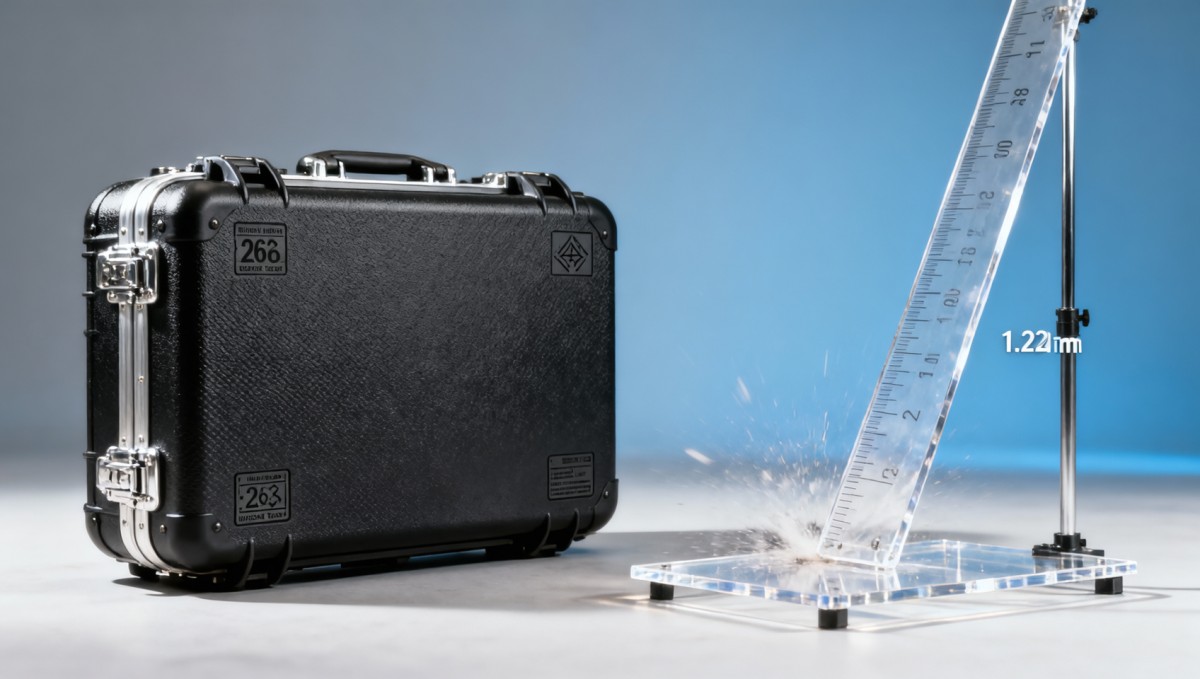
Procurement teams evaluating cases for studio rack-mounted synthesizers, wireless microphone arrays, or portable PA systems must treat unverified terminology as a red flag—not a feature. Durability assurance hinges not on label language, but on measurable parameters: drop height (typically 1.22 m for Class 3 transport simulation), pulse duration (≤ 11 ms for half-sine shock pulses), and acceleration magnitude (≥ 40 g peak for transit-rated protection).
MIL-STD-810H Shock Testing: Which Methods Apply—and Why They Matter
MIL-STD-810H comprises 29 distinct environmental test methods. For instrument case evaluation, three are operationally decisive: Method 516.6 (Shock), Method 514.6 (Vibration), and Method 500.6 (Low Pressure/Altitude). Among these, Method 516.6 is the most frequently misrepresented. It defines six procedural categories—including Functional Shock (simulating operational impacts), Crash Hazard Shock (for vehicle-mounted gear), and Transit Drop (for packaging integrity during logistics).
Transit Drop testing under 516.6 requires 26 drops across all case surfaces—corners, edges, and faces—at a minimum height of 1.22 meters onto a 10 cm-thick plywood surface. Cases passing this sequence must retain structural integrity, maintain latch function, and protect internal contents from displacement exceeding ±2 mm. Yet fewer than 9% of commercially available road cases undergo full 26-drop validation; most cite only “corner drop tested” or “drop tested per MIL-STD-810”—a nonstandard phrase lacking method or severity reference.
Vibration testing (Method 514.6) adds another layer of rigor. A compliant case must withstand 8 hours of broadband random vibration across 10–2000 Hz at 0.04 g²/Hz PSD, simulating air freight turbulence or ground transport resonance. Failure modes include latch fatigue, foam compression loss (>15% density reduction), and panel delamination—issues rarely disclosed in distributor datasheets but directly impacting long-term gear protection in mobile education labs or festival deployments.
This table underscores why procurement professionals must request full test reports—not just summary claims. A case certified to Method 516.6 alone may lack vibration resistance needed for drum module transport, while one passing 514.6 might not meet drop thresholds for front-of-house console components.
How Commercial Buyers Can Verify Claims—A 5-Point Due Diligence Checklist
Verification begins before RFQ submission. Global Commercial Trade’s procurement analysts recommend applying this five-point due diligence framework when assessing instrument case durability assertions:
- Request the exact test report number and accredited lab name (e.g., Intertek Report #IN-2024-88712, issued by Intertek San Jose Lab)
- Confirm the test was performed on the exact production model—not a prototype or prior-generation unit
- Verify test conditions match intended use: e.g., Method 516.6 Transit Drop for shipping, not Functional Shock for stage use
- Check for pass/fail criteria in the report—look specifically for post-test functional verification (e.g., “All latches operated without binding after 26 drops”)
- Validate that the report includes photographic evidence of pre- and post-test condition, including interior foam compression measurements
Suppliers unable to provide documentation within 72 business hours—or those citing “in-house testing only”—should be deprioritized for high-stakes deployments like international touring contracts or multi-campus AV rollouts. Institutional buyers managing 50+ instrument kits across university music departments report a 41% reduction in warranty claims when enforcing this checklist during vendor onboarding.
Real-World Performance Gaps: Touring vs. Education vs. Retail Deployment
Durability requirements vary significantly by application. A case deployed in a Las Vegas residency show may endure 120+ load-ins/year, with repeated 1.5-meter drops onto concrete loading docks. By contrast, a classroom instrument case sees ~12 annual moves but faces prolonged UV exposure near windows and frequent student handling—factors better addressed by UV-stabilized polymers than MIL-STD shock ratings.
Retail display cases demand different priorities: scratch resistance (measured via ASTM D3363 pencil hardness ≥ 3H), anti-static surface treatment (surface resistivity < 1×10⁹ Ω/sq), and stack-load capacity (≥ 60 kg static load per unit). These metrics rarely appear alongside “military-grade” claims yet directly affect shelf life and brand presentation in luxury music retailers.
These contextual distinctions explain why blanket “military-grade” labeling fails procurement teams. A touring-grade case optimized for shock absorption may lack the aesthetic finish required for flagship store displays, while a retail-optimized case may fracture under repeated stage-handling stress.
Next Steps for Procurement & Distribution Teams
To move beyond ambiguous terminology, commercial buyers should integrate standardized durability benchmarks into RFP language. Specify required test methods, pass criteria, and reporting formats—not just “military-grade.” Distributors representing OEM case manufacturers can strengthen channel credibility by co-publishing verified test summaries aligned with GCT’s Pro Audio Sourcing Framework.
Global Commercial Trade supports this transition with validated supplier profiles featuring embedded test report links, real-world failure rate data across 17 instrument categories, and comparative analysis of 22 leading case fabricators’ compliance transparency scores (averaging 68.3/100 across 2024 Q1 audits).
For procurement directors, institutional buyers, and distribution partners seeking actionable durability intelligence—not marketing rhetoric—contact GCT’s Pro Audio Sourcing Desk to access our latest Instrument Case Compliance Benchmark Report and schedule a customized supplier capability review.
Search News
Hot Articles
Popular Tags
Need ExpertConsultation?
Connect with our specialized leisureengineering team for procurementstrategies.
Recommended News
 Apr 22, 2026Which Instrument Cables Sound BestWhich instrument cables sound best? Discover how capacitance, shielding, and durability affect performance, plus sourcing tips for instrument cables and related commercial needs.● Pro Audio Engineer
 Apr 22, 2026Why String Instruments Can Look Similar but Sound Very DifferentString instruments may look alike yet sound vastly different. Explore sourcing insights across musical instruments, plus comparisons with wind instruments and percussion instruments.● Pro Audio Engineer
 Apr 22, 2026String Instruments: Solid Wood or Laminate for Long-Term Use?String instruments guide: compare solid wood vs laminate for long-term use, durability, tone, and sourcing value across musical instruments. Click for smarter B2B buying insights.● Pro Audio Engineer
 Apr 22, 2026What Affects Tone Consistency in Student Wind Instruments?Wind instruments buying guide: discover what affects tone consistency in student musical instruments, with insights comparing percussion instruments and string instruments for smarter school sourcing.● Pro Audio Engineer
 Apr 22, 2026Wind Instruments That Need More Maintenance Than ExpectedWind instruments maintenance guide for buyers: compare musical instruments, string instruments and percussion instruments to reduce service costs and source smarter.● Pro Audio Engineer
 Apr 22, 2026Common Tuning Problems in Percussion Instruments and Their CausesPercussion instruments tuning problems explained for buyers of musical instruments, with practical tips on comparing percussion instruments, string instruments, and wind instruments for reliable commercial sourcing.● Pro Audio Engineer
 Apr 22, 2026Percussion Instruments That Handle Heavy Use Better in ClassroomsPercussion instruments built for classrooms: compare durable musical instruments, from percussion instruments to wind instruments and string instruments, for safer, longer-lasting school use.● Pro Audio Engineer
 Apr 22, 2026What Shortens the Lifespan of Musical Instruments in Daily Use?Musical instruments wear out faster from humidity, poor storage, and rough handling. Learn how string instruments, wind instruments, and percussion instruments last longer with smarter B2B care.● Pro Audio Engineer
 Apr 22, 2026Musical Instruments With the Strongest School Market DemandMusical instruments with strong school demand: compare percussion instruments, wind instruments, and string instruments to find durable, curriculum-ready solutions for smarter school sourcing.● Pro Audio Engineer
 Apr 21, 2026Choosing musical instruments for bands in small venuesMusical instruments for bands in small venues: learn how buyers choose compact, durable setups with better sound control, lower costs, and stronger audience appeal.● Pro Audio Engineer
 Apr 20, 2026Music Accessories Often Overlooked Until They Start Causing ProblemsMusic accessories often cause hidden issues across musical instruments, percussion instruments, wind instruments, string instruments, keyboard instruments, orchestral instruments, music stands, instrument cables, and pro audio equipment.● Pro Audio Engineer
 Apr 20, 2026When Orchestral Instruments Need Custom Cases and Why It MattersMusical instruments and orchestral instruments need custom cases to protect string instruments, wind instruments, percussion instruments, and keyboard instruments during transport. Learn when buyers should upgrade for safer logistics.● Pro Audio Engineer
 Apr 20, 2026Keyboard Instruments in 2026: What Features Are Becoming Standard?Keyboard instruments in 2026 are redefining musical instruments with smarter connectivity, durable builds, and seamless integration with pro audio equipment, instrument cables, music stands, and music accessories.● Pro Audio Engineer
 Apr 20, 2026Music Stands With Folding Designs: Convenient or Less Reliable?Music stands buyers compare folding convenience with long-term reliability across musical instruments, percussion instruments, wind instruments, string instruments, and pro audio equipment.● Pro Audio Engineer
 Apr 20, 2026String Instruments With Better Tuning Stability in Busy Use CyclesExplore string instruments with better tuning stability for busy venues. Compare musical instruments, percussion instruments, and wind instruments to source reliable, low-maintenance performance solutions.● Pro Audio Engineer
 Apr 20, 2026Why Wind Instruments React So Differently to Climate and StorageWind instruments react fast to climate and storage. Compare musical instruments, percussion instruments, string instruments, and music accessories to cut maintenance risk and buy smarter.● Pro Audio Engineer
 Apr 20, 2026Percussion Instruments for Shared Spaces: What Reduces Noise Most?Percussion instruments for shared spaces: discover what reduces noise most across musical instruments, with smart comparisons to wind instruments, string instruments, keyboard instruments, and practical accessories.● Pro Audio Engineer
 Apr 20, 2026How to Spot Musical Instruments That Look Fine but Wear Out FastDiscover how to spot musical instruments that look premium but wear out fast. Learn key checks for percussion instruments, wind instruments, string instruments, keyboard instruments, music stands, instrument cables, pro audio equipment, and music accessories before you buy.● Pro Audio Engineer
 Apr 20, 2026Music Accessories That Quietly Affect Daily Performance QualityExplore how music accessories shape daily performance quality—from music stands and instrument cables to pro audio equipment for musical instruments, percussion instruments, wind instruments, string instruments, and keyboard instruments.● Pro Audio Engineer
 Apr 20, 2026Orchestral Instruments With the Highest Repair RatesExplore which orchestral instruments have the highest repair rates across wind instruments, string instruments, percussion instruments, and keyboard instruments, with smart buying tips for musical instruments, music accessories, music stands, instrument cables, and pro audio equipment.● Pro Audio Engineer
 Apr 20, 2026Are Keyboard Instruments With Weighted Keys Worth the Extra Cost?Keyboard instruments with weighted keys: discover if the extra cost pays off for musical instruments buyers, with smart tips on music accessories, instrument cables, and pro audio equipment.● Pro Audio Engineer
 Apr 20, 2026Music Stands That Stay Stable on Stage: What Makes the Difference?Music stands for musical instruments: discover what keeps them stable on stage for string instruments, wind instruments, percussion instruments, and keyboard instruments—plus smart buying tips.● Pro Audio Engineer
 Apr 20, 2026String Instruments: Solid Wood or Laminated for Regular Use?String instruments guide for regular use: compare solid wood vs laminated models across musical instruments setups with music accessories, pro audio equipment, and smarter sourcing insights.● Pro Audio Engineer
 Apr 20, 2026Wind Instruments for Schools and Venues: What Affects Longevity?Wind instruments longevity guide for schools and venues: compare musical instruments, percussion instruments, string instruments, and keyboard instruments to source smarter and reduce total cost.● Pro Audio Engineer