Musical Instruments With the Strongest School Market Demand
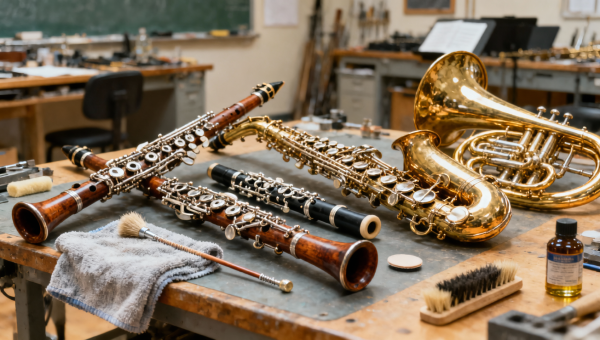
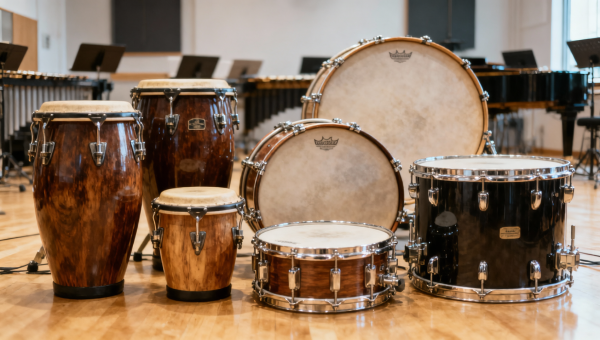
As schools expand music education budgets, demand for musical instruments is shifting toward durable, curriculum-ready solutions that balance quality, compliance, and long-term value. From percussion instruments and wind instruments to string instruments, buyers, distributors, and sourcing teams are closely tracking which categories deliver the strongest school market demand and the best commercial opportunities.
Which musical instruments are seeing the strongest school market demand?
In the school market, demand is not driven by trend alone. It is shaped by curriculum requirements, age suitability, replacement frequency, storage conditions, and the ability of instruments to survive daily institutional use. For procurement teams in the sports and entertainment sector, that means the strongest-selling categories are usually not the most exotic ones, but the instruments that support classroom instruction from elementary level through ensemble performance.
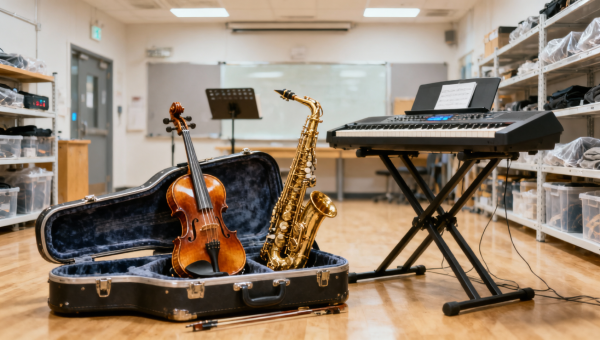
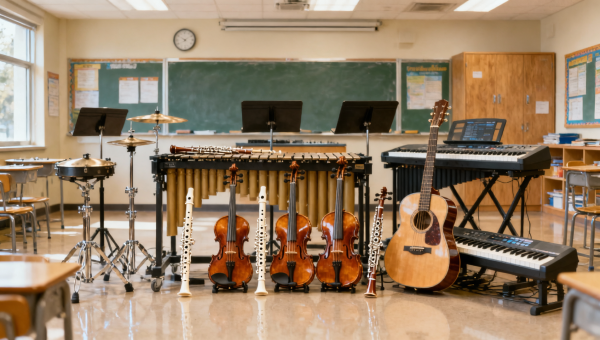
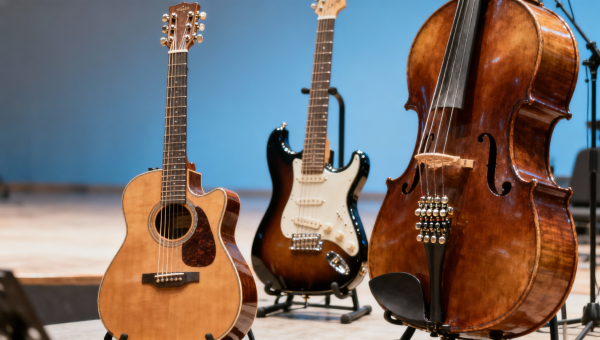
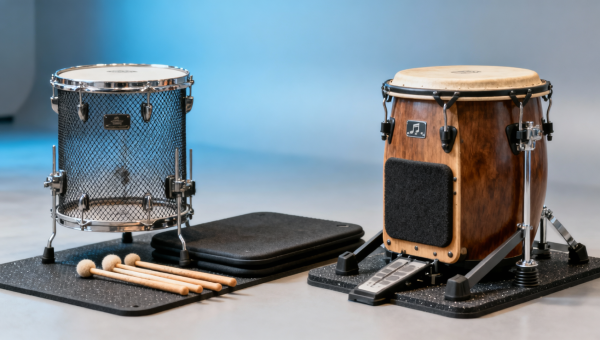
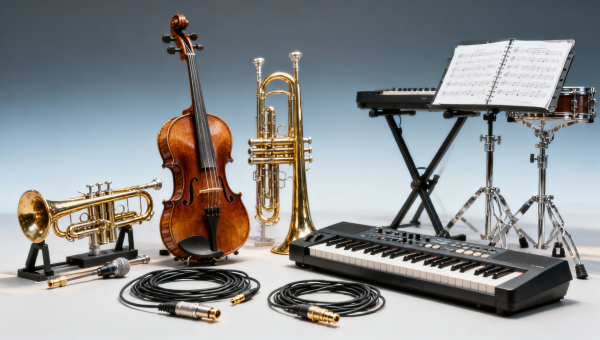
Across public schools, private campuses, training centers, and youth arts programs, 5 categories repeatedly dominate purchase lists: classroom percussion, recorders and entry-level wind instruments, student violins, acoustic guitars, and digital keyboards. These products align with common teaching structures, can be ordered in medium to large batches, and usually fit annual or semester-based budget cycles ranging from 1 term to 1 academic year.
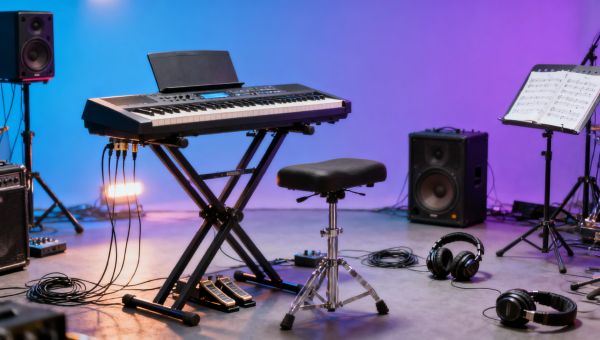
Buyers also favor instruments that are easy to standardize. A school music department may need 20–40 identical recorders, 10–25 snare practice pads, or 15–30 keyboards with matching stands and power specifications. Standardization simplifies training, repair, spare parts planning, and future reorder decisions. For distributors and agents, this creates repeatable demand rather than one-off project sales.
Another key factor is lifecycle cost. A school buyer rarely evaluates instrument price in isolation. They look at durability over 2–5 school years, maintenance frequency per semester, safe material selection, and whether the instrument is appropriate for beginners. In this environment, school market demand favors products that deliver stable educational outcomes and controlled ownership cost.
The table below summarizes the categories with the strongest school market demand and the procurement logic behind them.
For most B2B buyers, classroom percussion and digital keyboards often offer the broadest institutional demand, while violins and wind instruments become stronger in districts with structured ensemble programs. The most attractive commercial opportunity usually comes from combining high-volume basics with selected higher-value instruments that support recurring service and accessory sales.
Why demand remains resilient in school channels
School purchasing is more stable than many consumer channels because music education operates on scheduled timetables. Procurement often follows 3 recurring triggers: new academic year setup, damaged stock replacement, and program expansion. This pattern gives distributors more predictable reorder windows than trend-sensitive retail markets.
In addition, educational institutions prefer supplier continuity. Once a campus confirms acceptable quality, safe materials, and reliable delivery within 2–6 weeks, repeat procurement becomes easier. That is why a strong school market strategy depends not only on product range, but also on documentation, packaging consistency, and after-sales response.
How do school application scenarios change instrument demand?
Not every school buys for the same reason. A kindergarten music room, a middle-school band, and a university practice lab require different instrument mixes. Procurement professionals who understand the application scenario can avoid overspending on unsuitable specifications or underbuying for actual student load. In practical sourcing, application fit matters as much as price.
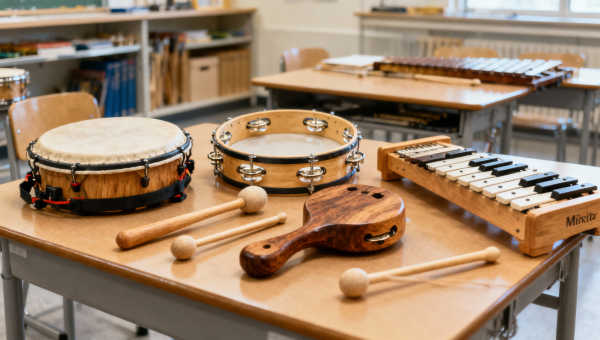
For early childhood and primary education, the strongest demand usually centers on percussion instruments, simple melodic instruments, and durable beginner tools. These instruments must tolerate frequent handling, fast setup, and shared use. Rounded edges, wipe-clean surfaces, and manageable weight are more important than advanced tonal complexity in this stage.
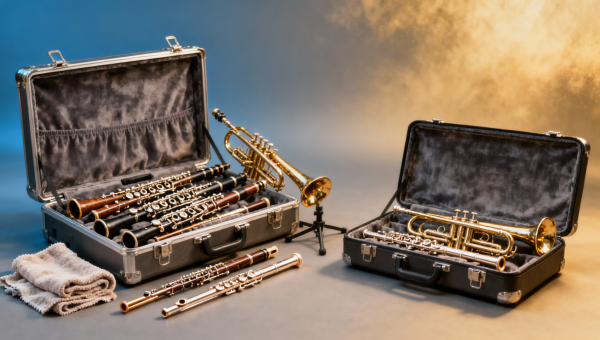
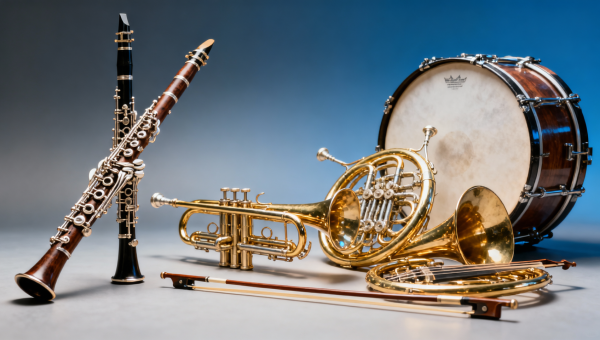
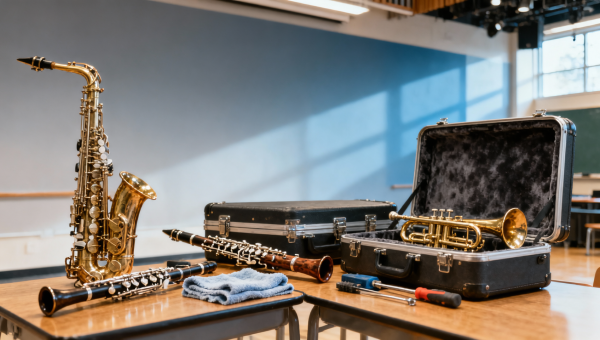
For middle and high school programs, demand shifts toward ensemble-ready instruments. Student brass, woodwinds, strings, and guitars gain importance because schools are building bands, orchestras, and contemporary music groups. Here, tuning stability, repairability, and accessory compatibility become central buying criteria over a 9–12 month teaching cycle.
Higher education and specialist arts institutions often add digital pianos, studio keyboards, drum kits, and selected pro-audio integration. Even when the volume is lower, the specification level is higher. Buyers in this segment need sourcing support that covers connectivity, classroom layout, power requirements, and replacement planning for multi-room deployment.
Scenario-based demand map
The following comparison helps buyers, distributors, and business evaluators align school market demand with real educational settings instead of relying on generic product popularity.
This scenario view shows why a school instrument catalog should not be flat. A distributor serving only one segment may miss cross-selling opportunities. By grouping instruments according to classroom, ensemble, and lab usage, suppliers can build stronger project proposals and increase reorder depth across the academic year.
Common scenario errors in school procurement
- Buying consumer-grade instruments for shared classroom use, which often leads to higher damage rates within 1–2 semesters.
- Ignoring storage and transport limits, especially for string instruments and full-size percussion equipment.
- Selecting advanced models for beginner cohorts, creating unnecessary training friction and budget waste.
- Failing to bundle stands, cases, cleaning kits, and spare parts during the initial quotation stage.
A well-designed school sourcing plan usually starts with 3 questions: who will use the instruments, how often they will be used each week, and whether the institution values low maintenance or higher performance growth. These questions help align demand with the correct product tier.
What should procurement teams compare before placing school instrument orders?
For school market demand, product popularity is only the first filter. The real commercial decision comes from comparing durability, serviceability, compliance, unit economics, and continuity of supply. Procurement officers and business evaluators often need to justify purchasing choices not only to teachers, but also to finance teams and administrators.
A practical comparison model uses 5 decision dimensions: educational suitability, structural durability, maintenance burden, logistics efficiency, and documentation readiness. Educational suitability covers whether students can use the instrument at the intended age and curriculum level. Structural durability focuses on body material, hardware stability, and resistance to daily transport. Maintenance burden includes cleaning, tuning, and repair intervals.
Logistics efficiency is especially important for importers and distributors. Instruments shipped in 10-unit, 20-unit, or mixed-SKU cartons affect warehousing and fulfillment differently. Documentation readiness includes labeling, user instructions, packing lists, and any material or product declarations often requested by institutional buyers during pre-approval.
The strongest school market suppliers make purchasing easier by presenting structured product data, accessory lists, and clear lead-time ranges such as 15–30 days for stocked models or 30–60 days for customized sets. This reduces internal approval friction and supports more confident tender responses.
Core evaluation checklist for B2B school buyers
- Confirm whether the instrument is designed for student use rather than short-life promotional or decorative use.
- Check if replacement parts, reeds, strings, mallets, sticks, or power adapters are easy to reorder within the same sourcing channel.
- Review packaging protection for domestic delivery or export handling, especially for instruments with sensitive necks, keys, or finishes.
- Ask for routine lead time, sample lead time, and peak-season production window before confirming project schedules.
- Verify whether user manuals, safety labels, and outer cartons are available in the language and format required by the destination market.
How student-grade and institution-grade products differ
Student-grade does not always mean low quality. In school procurement, the better product is often the one optimized for repetitive shared use, fast cleaning, and basic teaching outcomes. An institution-grade recorder or percussion set may outperform a lower-cost retail model simply because it is designed for 25 students using it every week across 30–40 teaching weeks.
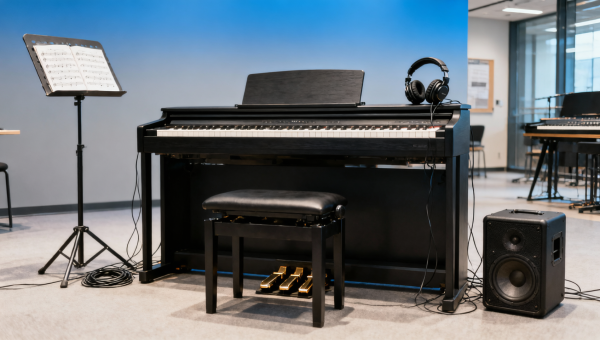
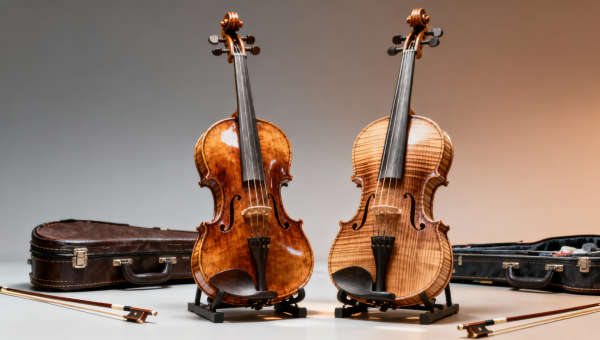
For keyboards, school buyers should compare touch response consistency, headphone output availability, power adaptor standards, and keybed durability. For violins, they should compare available sizes, case quality, bridge stability, and whether setup work is completed before shipment. These details directly affect classroom readiness and hidden labor cost after arrival.
How do compliance, safety, and delivery planning affect school market success?
School procurement is more sensitive to compliance than many retail transactions because products are used by minors, shared across groups, and stored in institutional environments. Even when specific regulations vary by destination market, buyers generally expect safe materials, traceable product information, and packaging suitable for educational use. Failure in these areas can delay approvals or block distribution deals.
Instruments for younger students often require extra attention to finishes, detachable parts, and edge treatment. Wind instruments and recorders may also require material declarations or hygiene-related information, especially when products are shared or stocked by schools. For electronic products such as digital keyboards, buyers normally review power compatibility, labeling, and operating instructions before rollout.
Delivery planning is equally important. Schools frequently work against opening dates, semester starts, or grant utilization windows. Missing a delivery slot by 2–3 weeks can mean postponing a program until the next term. That is why procurement teams should treat lead time, pre-shipment inspection, and documentation readiness as commercial risk controls, not back-office details.
For distributors, the safest approach is to build a 4-step school supply workflow: sample validation, compliance document review, production confirmation, and arrival inspection. This is especially useful when importing mixed orders that include percussion, wind instruments, strings, and digital units in the same project.
Common compliance and delivery checkpoints
The table below is not a legal checklist, but it reflects the operational points many institutional buyers review before approving school musical instruments.
When buyers treat these checkpoints as part of the sourcing decision, they reduce risk across approval, shipping, installation, and classroom deployment. In practice, compliance clarity often determines whether a supplier can scale from a pilot order to a long-term school distribution relationship.
Practical timing guidance for school projects
A realistic school instrument project often includes 7–14 days for sample review, 2–4 weeks for production of standard items, and additional time for freight and receiving. For mixed or customized orders, buyers should plan even earlier. This buffer is critical when a project includes private labeling, localized manuals, or custom accessory kits.
Importers and agents should also align delivery with school calendar constraints. A product arriving during holidays, exam periods, or campus renovation windows may create warehousing and acceptance challenges. Scheduling is therefore part of product success, not only a logistics function.
What are the best sourcing strategies for buyers, distributors, and commercial evaluators?
The most effective school market strategy is rarely based on a single instrument line. Strong performers build a layered offer: high-volume classroom instruments for steady turnover, ensemble instruments for margin improvement, and accessories or replacement parts for recurring revenue. This structure gives distributors a more resilient portfolio across budget cycles and school types.
For information researchers and procurement teams, the best sourcing strategy begins with segmentation. Separate the catalog into 3 tiers: entry classroom essentials, structured program instruments, and technology-enabled music lab products. Each tier should have its own price band, lead-time expectation, and accessory policy. This makes quoting faster and helps business evaluators compare suppliers on equivalent terms.
Commercial evaluators should also calculate total supply readiness rather than unit cost alone. A low-price instrument can become expensive if spare parts are unavailable, packaging causes damage, or documentation delays the order. In school musical instruments, hidden cost often appears in the first 6–12 months through breakage, teacher complaints, and resupply inefficiency.
This is where Global Commercial Trade adds value for B2B sourcing decisions. GCT connects buyers, distributors, and project developers with focused market intelligence across pro audio and musical instruments, while also understanding institutional procurement, commercial environments, and international sourcing risk. That combination is useful when the goal is not merely to buy products, but to build reliable school supply programs.
Recommended sourcing model for school musical instruments
- Define the target segment first: early education, general K-12 music, band and orchestra, or higher education labs.
- Build a shortlist using 4 core filters: durability, educational fit, compliance readiness, and lead time.
- Request sample or specification confirmation for high-risk items such as keyboards, violins, or keyed wind instruments.
- Bundle accessories, consumables, and storage solutions into the quotation to prevent fragmented follow-up procurement.
- Create a reorder plan for 6–12 months so replacement and expansion can happen without restarting supplier screening.
FAQ for school market buyers
Below are common questions raised by school buyers, distributors, and sourcing teams when evaluating musical instruments with strong school market demand.
How do I choose between percussion, wind instruments, strings, and keyboards for a school project?
Start with the teaching format. If the project is for broad classroom participation, percussion instruments and recorders usually provide the fastest deployment and lowest complexity. If the goal is formal ensemble training, strings and wind instruments become more relevant. If the school needs individual practice stations or music technology integration, digital keyboards are often the better fit. In most cases, a mixed procurement plan produces the strongest educational and commercial value.
What lead time should schools and distributors expect?
For standard products, buyers often plan around 2–4 weeks for production, plus shipping time depending on destination and transport mode. Sample confirmation may add another 7–14 days. Customized packaging, private label requests, or bundled accessory sets can extend the schedule. The safest approach is to work backward from the school term start date and leave buffer time for receiving inspection.
Which mistakes most often increase total school ownership cost?
Three mistakes are common: choosing by unit price only, ignoring consumables and spare parts, and buying products that do not match the actual age or skill level of students. These issues create repeat purchases, service calls, and classroom dissatisfaction. A better benchmark is cost across 1–3 academic years, not only the opening order amount.
Can distributors build recurring revenue from school musical instruments?
Yes, especially when they combine base instruments with cases, cleaning kits, reeds, strings, mallets, stands, and replacement parts. Schools also reorder for new cohorts, damaged stock, and program growth. A distributor with clear category planning and reliable delivery can turn school market demand into a repeat business channel rather than isolated sales.
Why work with GCT when evaluating school musical instrument opportunities?
School musical instrument sourcing sits at the intersection of education, entertainment, compliance, and international trade. Buyers do not simply need a supplier list. They need structured market insight, category comparison, and sourcing logic that reflects how institutions actually approve and use products. That is the role GCT is built to support.
Global Commercial Trade serves B2B buyers, distributors, and commercial evaluators who need reliable direction across pro audio and musical instruments as part of larger commercial experience markets. Whether the project involves a smart campus, a music lab, or a multi-school purchasing plan, GCT helps clarify what to source, how to compare it, and where operational risks usually appear.
If you are assessing musical instruments with the strongest school market demand, GCT can support the decision process around product selection, specification review, delivery timing, accessory bundling, and market-fit evaluation. This is especially useful for buyers balancing budget discipline with educational quality and long-term supply reliability.
Contact GCT to discuss practical school sourcing questions such as instrument category planning, student-grade versus institution-grade selection, sample support, estimated lead times, compliance documentation expectations, OEM or ODM opportunities, and quotation structure for bulk or mixed orders. For distributors and agents, GCT can also help frame stronger category strategies for entering or expanding in the school music market.
Search News
Hot Articles
Popular Tags
Need ExpertConsultation?
Connect with our specialized leisureengineering team for procurementstrategies.
Recommended News
 Apr 22, 2026Which Instrument Cables Sound BestWhich instrument cables sound best? Discover how capacitance, shielding, and durability affect performance, plus sourcing tips for instrument cables and related commercial needs.● Pro Audio Engineer
 Apr 22, 2026Why String Instruments Can Look Similar but Sound Very DifferentString instruments may look alike yet sound vastly different. Explore sourcing insights across musical instruments, plus comparisons with wind instruments and percussion instruments.● Pro Audio Engineer
 Apr 22, 2026String Instruments: Solid Wood or Laminate for Long-Term Use?String instruments guide: compare solid wood vs laminate for long-term use, durability, tone, and sourcing value across musical instruments. Click for smarter B2B buying insights.● Pro Audio Engineer
 Apr 22, 2026What Affects Tone Consistency in Student Wind Instruments?Wind instruments buying guide: discover what affects tone consistency in student musical instruments, with insights comparing percussion instruments and string instruments for smarter school sourcing.● Pro Audio Engineer
 Apr 22, 2026Wind Instruments That Need More Maintenance Than ExpectedWind instruments maintenance guide for buyers: compare musical instruments, string instruments and percussion instruments to reduce service costs and source smarter.● Pro Audio Engineer
 Apr 22, 2026Common Tuning Problems in Percussion Instruments and Their CausesPercussion instruments tuning problems explained for buyers of musical instruments, with practical tips on comparing percussion instruments, string instruments, and wind instruments for reliable commercial sourcing.● Pro Audio Engineer
 Apr 22, 2026Percussion Instruments That Handle Heavy Use Better in ClassroomsPercussion instruments built for classrooms: compare durable musical instruments, from percussion instruments to wind instruments and string instruments, for safer, longer-lasting school use.● Pro Audio Engineer
 Apr 22, 2026What Shortens the Lifespan of Musical Instruments in Daily Use?Musical instruments wear out faster from humidity, poor storage, and rough handling. Learn how string instruments, wind instruments, and percussion instruments last longer with smarter B2B care.● Pro Audio Engineer
 Apr 22, 2026Musical Instruments With the Strongest School Market DemandMusical instruments with strong school demand: compare percussion instruments, wind instruments, and string instruments to find durable, curriculum-ready solutions for smarter school sourcing.● Pro Audio Engineer
 Apr 21, 2026Choosing musical instruments for bands in small venuesMusical instruments for bands in small venues: learn how buyers choose compact, durable setups with better sound control, lower costs, and stronger audience appeal.● Pro Audio Engineer
 Apr 20, 2026Music Accessories Often Overlooked Until They Start Causing ProblemsMusic accessories often cause hidden issues across musical instruments, percussion instruments, wind instruments, string instruments, keyboard instruments, orchestral instruments, music stands, instrument cables, and pro audio equipment.● Pro Audio Engineer
 Apr 20, 2026When Orchestral Instruments Need Custom Cases and Why It MattersMusical instruments and orchestral instruments need custom cases to protect string instruments, wind instruments, percussion instruments, and keyboard instruments during transport. Learn when buyers should upgrade for safer logistics.● Pro Audio Engineer
 Apr 20, 2026Keyboard Instruments in 2026: What Features Are Becoming Standard?Keyboard instruments in 2026 are redefining musical instruments with smarter connectivity, durable builds, and seamless integration with pro audio equipment, instrument cables, music stands, and music accessories.● Pro Audio Engineer
 Apr 20, 2026Music Stands With Folding Designs: Convenient or Less Reliable?Music stands buyers compare folding convenience with long-term reliability across musical instruments, percussion instruments, wind instruments, string instruments, and pro audio equipment.● Pro Audio Engineer
 Apr 20, 2026String Instruments With Better Tuning Stability in Busy Use CyclesExplore string instruments with better tuning stability for busy venues. Compare musical instruments, percussion instruments, and wind instruments to source reliable, low-maintenance performance solutions.● Pro Audio Engineer
 Apr 20, 2026Why Wind Instruments React So Differently to Climate and StorageWind instruments react fast to climate and storage. Compare musical instruments, percussion instruments, string instruments, and music accessories to cut maintenance risk and buy smarter.● Pro Audio Engineer
 Apr 20, 2026Percussion Instruments for Shared Spaces: What Reduces Noise Most?Percussion instruments for shared spaces: discover what reduces noise most across musical instruments, with smart comparisons to wind instruments, string instruments, keyboard instruments, and practical accessories.● Pro Audio Engineer
 Apr 20, 2026How to Spot Musical Instruments That Look Fine but Wear Out FastDiscover how to spot musical instruments that look premium but wear out fast. Learn key checks for percussion instruments, wind instruments, string instruments, keyboard instruments, music stands, instrument cables, pro audio equipment, and music accessories before you buy.● Pro Audio Engineer
 Apr 20, 2026Music Accessories That Quietly Affect Daily Performance QualityExplore how music accessories shape daily performance quality—from music stands and instrument cables to pro audio equipment for musical instruments, percussion instruments, wind instruments, string instruments, and keyboard instruments.● Pro Audio Engineer
 Apr 20, 2026Orchestral Instruments With the Highest Repair RatesExplore which orchestral instruments have the highest repair rates across wind instruments, string instruments, percussion instruments, and keyboard instruments, with smart buying tips for musical instruments, music accessories, music stands, instrument cables, and pro audio equipment.● Pro Audio Engineer
 Apr 20, 2026Are Keyboard Instruments With Weighted Keys Worth the Extra Cost?Keyboard instruments with weighted keys: discover if the extra cost pays off for musical instruments buyers, with smart tips on music accessories, instrument cables, and pro audio equipment.● Pro Audio Engineer
 Apr 20, 2026Music Stands That Stay Stable on Stage: What Makes the Difference?Music stands for musical instruments: discover what keeps them stable on stage for string instruments, wind instruments, percussion instruments, and keyboard instruments—plus smart buying tips.● Pro Audio Engineer
 Apr 20, 2026String Instruments: Solid Wood or Laminated for Regular Use?String instruments guide for regular use: compare solid wood vs laminated models across musical instruments setups with music accessories, pro audio equipment, and smarter sourcing insights.● Pro Audio Engineer
 Apr 20, 2026Wind Instruments for Schools and Venues: What Affects Longevity?Wind instruments longevity guide for schools and venues: compare musical instruments, percussion instruments, string instruments, and keyboard instruments to source smarter and reduce total cost.● Pro Audio Engineer