EU Draft Regulation: Mandatory 'Metal Composition Traceability Statement' for All Imported Jewelry from Q4 2026
Introduction
On March 25, 2026, the European Commission released a draft of the Jewelry Sustainable Supply Chain Regulation (EU/2026/187), which will require all jewelry imported into the EU to include a Metal Composition Traceability Statement (MCS) in accompanying documents starting October 1, 2026. This regulation mandates traceability of gold, silver, and platinum group metals back to the smelter level, along with third-party verification. The rule will significantly impact Chinese OEMs supplying EU brands, prompting immediate due diligence on supplier compliance capabilities.
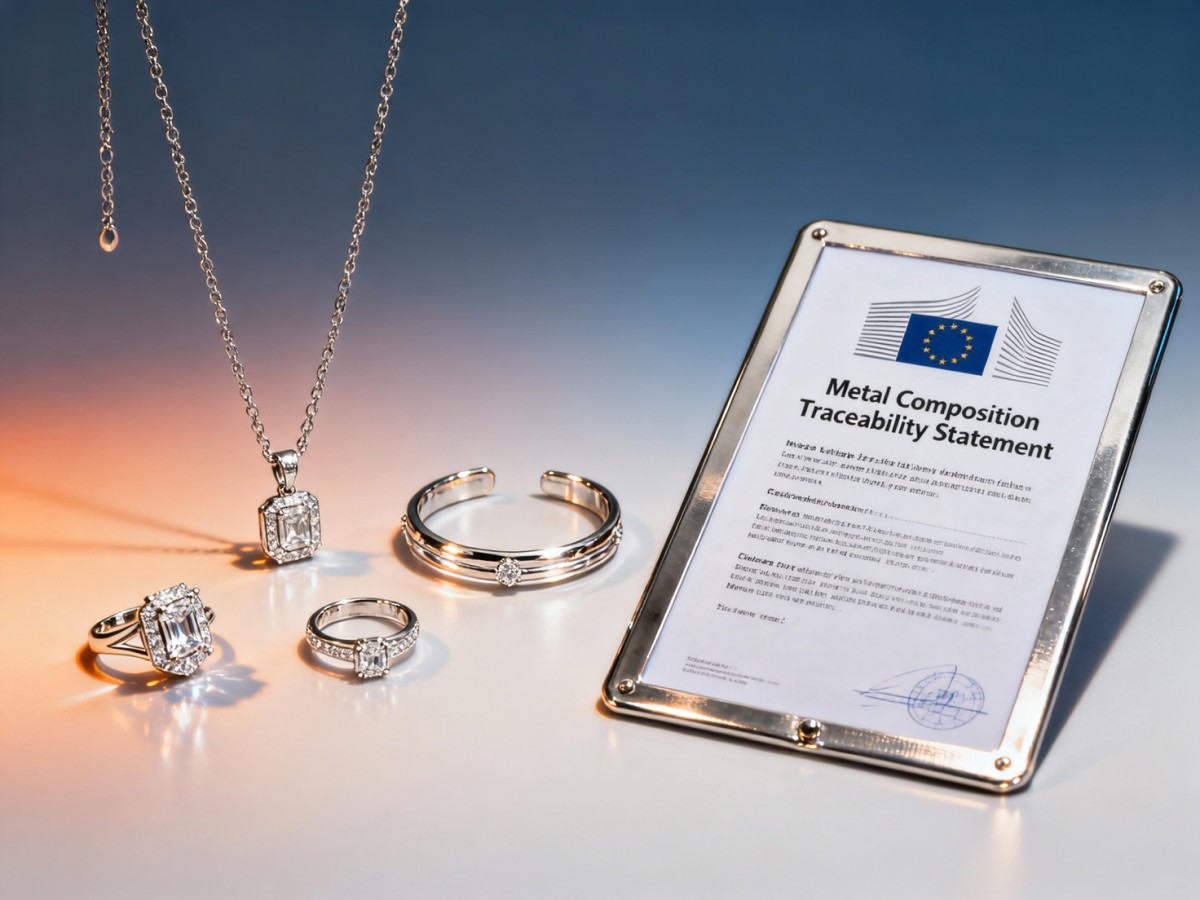
Event Overview
The draft regulation, published on March 25, 2026, introduces mandatory MCS documentation for jewelry imports into the EU. Key requirements include:
- Traceability of precious metals (gold, silver, platinum group) to smelter origin
- Independent third-party verification with unique identification numbers
- Implementation deadline: October 1, 2026
Impact on Sub-Sectors
1. OEM Manufacturers (China/EU Supply Chains)
Chinese jewelry manufacturers supplying EU brands will face immediate compliance pressure. Analysis shows that 60-70% of EU-bound jewelry production occurs in China, requiring factory-level audits and documentation restructuring.
2. Precious Metal Suppliers
Smelters and refiners must prepare for increased disclosure demands. From an industry perspective, LBMA-certified suppliers may gain preference due to existing traceability frameworks.
3. EU Importers & Brands
Brands must verify supplier MCS capabilities within 18 months. Current procurement contracts may require amendments to include traceability clauses.
4. Certification Bodies
Third-party verifiers will see growing demand for MCS validation services, particularly in China and other manufacturing hubs.
Key Action Points
1. Supplier Audits (Q2-Q3 2024)
Importers should initiate MCS capability assessments of Chinese suppliers immediately, focusing on smelter documentation retention practices.
2. Contractual Adjustments
Current agreements should incorporate MCS compliance timelines and liability terms before 2025 renewals.
3. Pilot Testing
Select high-volume product lines for traceability documentation trials by Q1 2025 to identify process gaps.
Industry Observation
This draft represents a strategic shift toward hard compliance in EU sustainability regulations. Unlike previous voluntary schemes, the MCS requirement carries legal enforcement. Observers note this may:
- Accelerate consolidation among suppliers with established traceability systems
- Increase production costs by 3-5% for complex supply chains
- Drive preferential sourcing toward certified responsible smelters
Conclusion
The EU's MCS mandate signals a new phase of enforceable supply chain transparency. While the 2026 deadline allows transition time, businesses should treat 2024 as the critical preparation window. The regulation's true impact will depend on final implementation guidelines expected in late 2024.
Source
European Commission Draft Regulation EU/2026/187 (March 25, 2026 publication)
Search News
Hot Articles
- Restaurant FurnitureFast-Casual Restaurant Interiors: Design Choices That Improve Speed and Guest FlowOct 04, 2026
- Outdoor RidesHow to Select Leisure Park Equipment for Safe, High-Throughput Visitor AreasOct 03, 2026
- Fashion & Gem JewelryDiamond Tester Wholesale: How to Vet Accuracy, Calibration, and MOQ Before OrderingOct 02, 2026
Popular Tags
Need ExpertConsultation?
Connect with our specialized leisureengineering team for procurementstrategies.
Recommended News
 Oct 02, 2026Diamond Tester Wholesale: How to Vet Accuracy, Calibration, and MOQ Before OrderingDiamond tester wholesale guide: verify accuracy, calibration records, supplier quality controls, and MOQ terms before ordering. Source reliable testers with confidence.● Luxury Retail Analyst
 Sep 09, 2026Wholesale Coral Earrings: How Buyers Can Assess Quality, Treatments, and Supply RiskCoral jewelry earrings wholesale guide for buyers: assess quality, treatments, secure settings, documentation, and supply risks before ordering.● Luxury Retail Analyst
 Sep 01, 2026How to Choose a Jewelry Laser Engraving Machine Manufacturer for Custom ProductionChoose a jewelry laser engraving machine manufacturer with proven sample testing, precision fixtures, workflow-ready software, and reliable support for custom production.● Luxury Retail Analyst
 Aug 27, 2026Evaluating Luxury Retail Accessories Suppliers: Quality, Lead Times, and Brand FitLuxury retail accessories supplier selection made clearer: assess quality, lead times, compliance, costs, and brand fit to protect premium launches and margins.● Luxury Retail Analyst
 Jul 29, 2026Fine Jewelry Price Guide: What Affects Cost and How to Judge Real ValueFine jewelry price guide for buyers: learn what drives cost in metals, gemstones, craftsmanship, certification, and branding so you can judge real value, reduce sourcing risk, and buy with confidence.● Luxury Retail Analyst
 Jul 14, 2026What to Ask an Enamel Jewelry Manufacturer Before Sampling and Mass ProductionEnamel jewelry manufacturer selection starts with the right questions. Learn what to ask about materials, color matching, MOQ, QC, compliance, and lead times before sampling and mass production.● Luxury Retail Analyst
 Jul 12, 2026Surgical Steel Belly Rings vs Titanium: Material Differences, Safety, and CostSurgical steel belly rings vs titanium: compare safety, nickel exposure, comfort, durability, and cost to choose the best option for sensitive skin or budget-friendly style.● Luxury Retail Analyst
 Jul 12, 2026Natural Coral Jewelry Guide: How to Identify Real Coral, Treatments, and QualityNatural coral jewelry guide covering how to identify real coral, spot treatments, assess quality, and buy with confidence. Learn the key signs before you choose.● Luxury Retail Analyst
 Jul 11, 2026Braided Leather Bracelets OEM: Material, Clasp, and MOQ Factors Before SamplingBraided leather bracelets OEM guide covering material grades, clasp options, and MOQ factors before sampling. Learn how to reduce sourcing risk, control cost, and choose the right supplier.● Luxury Retail Analyst
 Jul 09, 2026Jewelry Craftsmanship Gemstone Setting Methods Explained: Prong, Bezel, Pave, and MoreJewelry craftsmanship gemstone setting explained clearly: compare prong, bezel, pavé, channel, and more to choose secure, beautiful, and commercially smart jewelry designs.● Luxury Retail Analyst
 Jul 06, 2026Photo Locket Necklace Manufacturer Selection Guide: Materials, MOQ, and Custom OptionsPhoto locket necklace manufacturer selection guide covering materials, MOQ, custom options, compliance, and quality checks to help buyers source smarter and build stronger jewelry lines.● Luxury Retail Analyst
 Jul 05, 2026What to Check When Comparing a Sterling Silver Clasp ManufacturerChoosing a sterling silver clasp manufacturer? Learn what to check first: 925 silver claims, finish quality, testing, compliance, lead times, and hidden sourcing costs.● Luxury Retail Analyst
 Jul 02, 2026Jewelry Craftsmanship Techniques Explained: Casting, Stone Setting, Engraving, and PolishingJewelry craftsmanship techniques explained: discover how casting, stone setting, engraving, and polishing shape quality, durability, and sourcing confidence.● Luxury Retail Analyst
 Jul 01, 2026Lost Wax Casting Machines Explained: Types, Capacity, and Metal CompatibilityLost wax casting machines explained: compare types, real capacity, and metal compatibility to choose the right system for precision casting, higher quality, and smarter sourcing.● Luxury Retail Analyst
 Jun 29, 2026How to Evaluate a Luxury Accessories Online Store Before You BuyLuxury accessories online store buying guide: learn how to verify authenticity, compare policies, check reviews, and avoid costly mistakes before you place an order.● Luxury Retail Analyst
 Jun 22, 2026Matching Couple Rings: Popular Materials, Fit Differences, and How to ChooseMatching couple rings guide: compare popular materials, fit differences, comfort, durability, and resizing options to choose a stylish pair that truly lasts.● Luxury Retail Analyst
 Jun 19, 2026How to Build a Fashion Accessories Catalog That Improves Product Discovery and SalesFashion accessories catalog strategies that improve product discovery, filtering, and conversions. Learn how to structure pages, categories, and data to drive more qualified sales.● Luxury Retail Analyst
 Jun 19, 2026How to Choose Luxury Accessories for Women by Material, Style, and Price PointLuxury accessories for women: learn how to choose the right pieces by material, style, and price point for better value, timeless appeal, and smarter buying decisions.● Luxury Retail Analyst
 Jun 18, 2026Stainless Steel Rings Bulk: 304 vs 316L, Finishes, and Custom Order FactorsStainless steel rings bulk guide: compare 304 vs 316L, explore finish options, and learn key custom order factors to reduce sourcing risk and improve product value.● Luxury Retail Analyst
 Jun 18, 2026Body Piercing Jewelry Bulk Buying Guide: Materials, Sizes, and MOQ QuestionsBody piercing jewelry bulk buying guide covering safe materials, size checks, MOQ strategy, supplier screening, and compliance tips to reduce risk and source with confidence.● Luxury Retail Analyst
 Jun 18, 2026How to Evaluate a Luxury Jewelry Exporter for Quality, Compliance, and DeliveryLuxury jewelry exporter evaluation starts with more than design. Learn how to verify quality, compliance, and delivery control to source premium jewelry with less risk.● Luxury Retail Analyst
 Jun 17, 2026Iced Out Watches Wholesale: How to Compare MOQ, Stone Quality, and MarginsIced out watches wholesale guide: compare MOQ, stone quality, and real margins to choose reliable suppliers, reduce risk, and grow resale profits with smarter sourcing.● Luxury Retail Analyst
 Jun 15, 2026How to Evaluate an Amber Jewelry Manufacturer: Quality Grades, OEM Options, and Lead TimesAmber jewelry manufacturer selection starts with quality grades, OEM capability, and realistic lead times. Learn how to compare suppliers, reduce sourcing risk, and choose with confidence.● Luxury Retail Analyst
 Jun 14, 2026Stainless Steel Rings Bulk Buying Guide: Grades, Finishes, Sizes, and Supplier ChecksStainless steel rings bulk buying guide covering grades, finishes, sizing, and supplier checks to help you reduce returns, protect quality, and source with confidence.● Luxury Retail Analyst