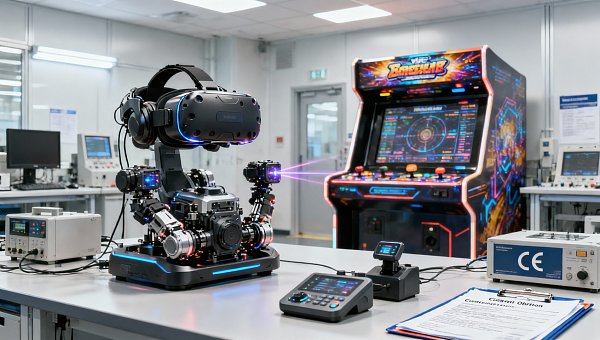
Guangzhou Fair Debuts Export Compliance Pack
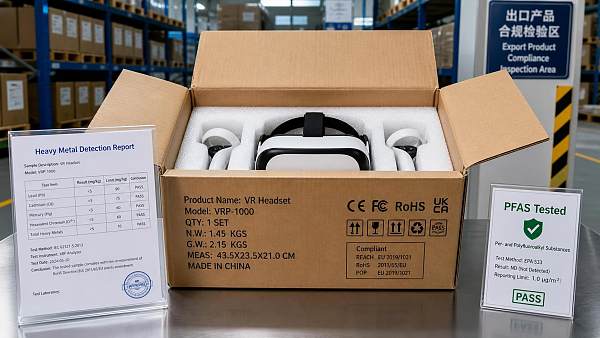
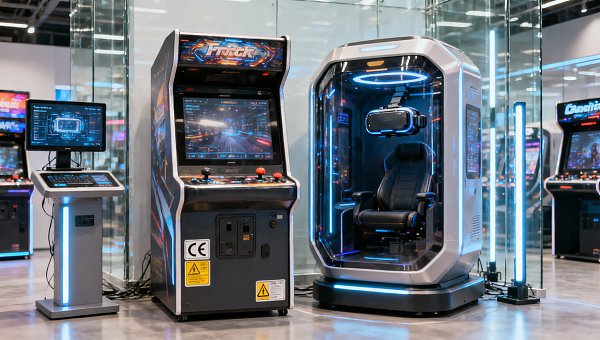
At the opening of the 2026 China (Guangzhou) Cross-Border E-Commerce Fair on June 16, a new compliance-focused service appeared in the Arcade & VR Machines section, bringing market-access requirements into the center of trade matchmaking. The package combines EU EPR registration, U.S. FCC and UL certification, Southeast Asian import customs guidance, and multilingual technical document templates, making this development relevant not only to exporters and buyers, but also to certification support providers, supply-chain service firms, and delivery teams that manage cross-border execution. What deserves closer attention is that compliance is being presented not as a separate back-office task, but as part of front-end transaction credibility.
What the fair formally introduced
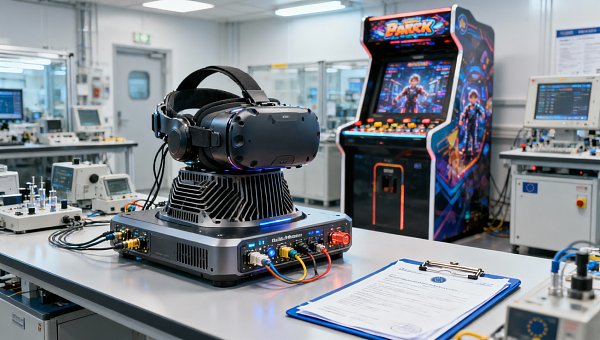
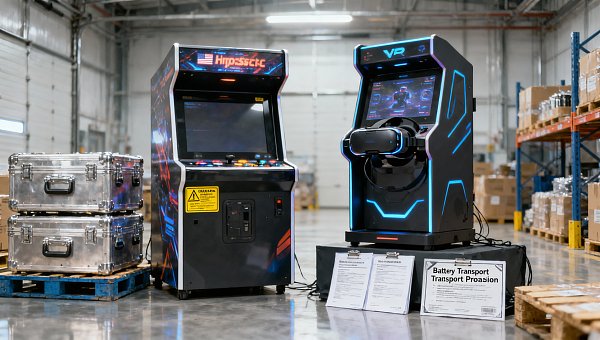
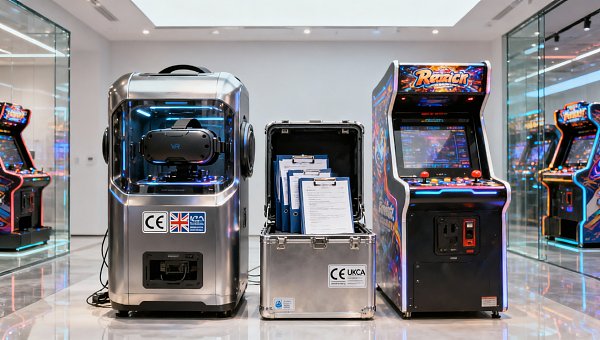
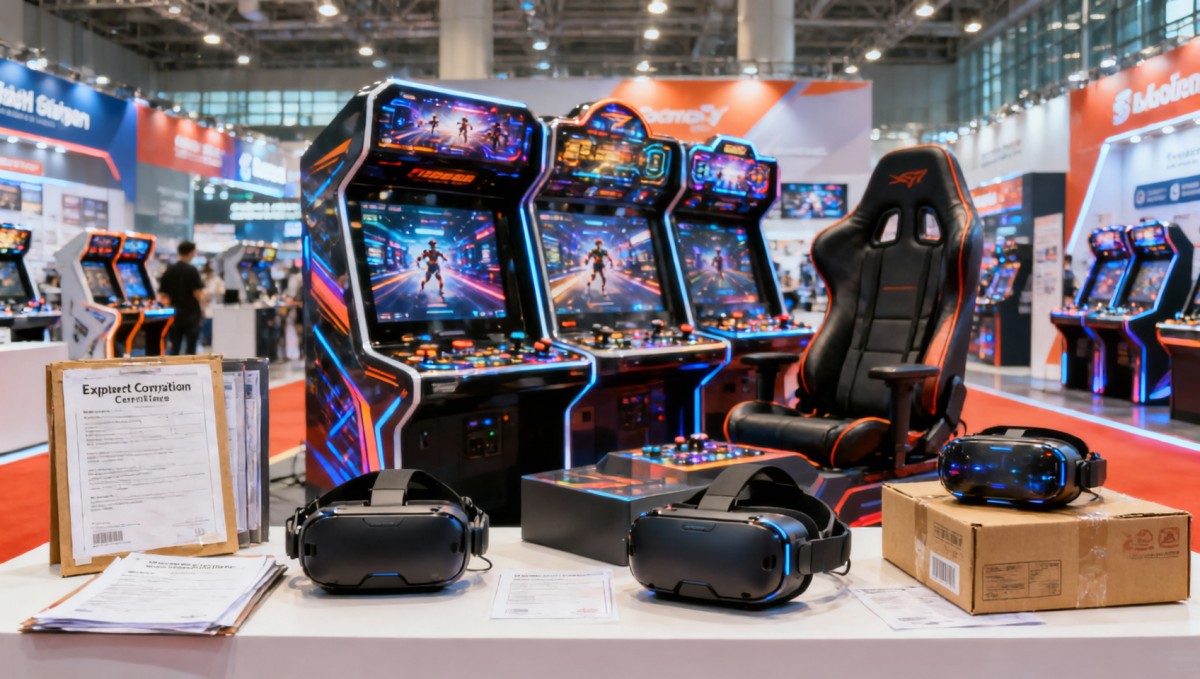
Confirmed information shows that the 2026 China (Guangzhou) Cross-Border E-Commerce Fair opened on June 16. In the Arcade & VR Machines section, the event for the first time set up an export compliance service package. According to the provided summary, the package integrates EU EPR registration, U.S. FCC and UL certification, Southeast Asian import customs clearance guidance, and multilingual technical documentation templates. The stated purpose is to address overseas buyers’ core concerns about product market-entry compliance, reduce importers’ trial-and-error costs in compliance, and improve the delivery credibility of Chinese suppliers.
Why this matters across the transaction chain
For suppliers, compliance moves closer to the sales conversation
Analysis shows that manufacturers and export-oriented sellers in Arcade & VR Machines may face a more direct need to align product access requirements with quotation, sampling, and delivery preparation. When compliance materials such as certification paths, registration support, customs guidance, and technical documents are placed alongside product display, suppliers may need to pay closer attention to whether their documentation readiness matches buyer expectations before shipment.
For overseas buyers, procurement risk screening starts earlier
From an industry perspective, buyers are likely to view this kind of service package as a practical tool for checking whether a supplier can support entry requirements in target markets. The main effect is not limited to certification itself; it may also affect supplier comparison, order confirmation, document review, and confidence in later delivery. What deserves closer attention is whether procurement decisions increasingly weigh compliance preparedness together with price and product specifications.
For service providers, execution support becomes more visible
Analysis shows that certification-related firms, documentation support teams, and customs or trade service participants may be drawn into earlier stages of export transactions. Their role may extend beyond reactive processing and move toward pre-delivery coordination, especially where technical files, import guidance, and market-entry documentation shape whether a transaction proceeds smoothly. This suggests that service responsiveness and document accuracy may become more important in supporting cross-border deals.
What companies should review now
Check whether compliance files are transaction-ready
Companies involved in Arcade & VR Machines exports should closely review whether existing product files, technical descriptions, and supporting materials can be used consistently across buyer communication, certification review, and customs-related document requests. The provided information does not confirm any unified execution standard, so this should be treated as a practical compliance checkpoint rather than a completed rule outcome.
Track how certification expectations are expressed in business practice
Observably, the inclusion of FCC, UL, and EU EPR in a fair-based service package signals that buyers may increasingly raise these issues earlier in discussions. Businesses should therefore watch for changes in document requests, product-access screening, and supplier qualification language in market-facing materials. This remains an execution signal, not a confirmed change in any specific legal text provided here.
Prepare for market-specific document differences
Because the package combines EU registration, U.S. certification, Southeast Asian customs guidance, and multilingual templates, exporters should pay attention to how document preparation may differ by destination market. Analysis shows that the immediate operational issue is less about expanding paperwork in general and more about avoiding mismatches between product information, compliance claims, and shipment documents.
Review delivery credibility as part of compliance performance
From an industry perspective, the summary’s emphasis on reducing importer trial-and-error costs and improving supplier delivery credibility suggests that compliance is increasingly linked to execution quality. Companies should therefore watch not only certifications and registrations, but also how quickly supporting files can be produced, updated, and matched to buyer and customs-facing needs during order fulfillment.
How this signal should be read
Analysis shows that this development is better understood as an execution-oriented market signal rather than as proof of a new standalone regulation. The fair’s decision to place a compliance service package inside a dedicated product section indicates that market-access requirements are becoming more visible in trade-facing environments. At the same time, it is still necessary to observe how such support translates into actual procurement standards, document review practices, and ongoing market feedback.
Observably, the value of this change lies in how it frames compliance: not as a post-order correction step, but as part of supplier credibility before or during deal formation. Whether this leads to broader standardization in buyer requirements, certification communication, or document expectations still requires continued observation.
A practical way to interpret the development
At this stage, it is more appropriate to understand the event as a concrete sign that compliance readiness is moving closer to the center of cross-border trade execution in Arcade & VR Machines. The confirmed facts do not establish new legal obligations by themselves, but they do indicate that registration, certification, customs guidance, and multilingual technical documentation are being treated as essential elements of transaction trust. For companies in this chain, the immediate implication is not to assume a settled rule change, but to prepare for stricter practical scrutiny in procurement and delivery processes.
Basis of this article and what still needs verification
This article is generated based on the user-provided news title, event date, and event summary. For developments of this kind, commonly relevant source types may include official event announcements, regulator releases, customs or trade authority information, industry association updates, standards documentation, and reporting by authoritative media. No specific official source link was provided in the input, so further verification is still needed. What remains important to monitor includes later rule interpretations, certification execution practices, changes in procurement or tender documentation, industry feedback, and how companies actually implement related compliance support in export transactions.
Search News
Hot Articles
- Outdoor RidesWhat Drives Animatronic Dinosaur Manufacturer Prices for Theme Park Projects?Sep 18, 2026
- Stationery & UniformsHow to Source Wholesale Packing Tape Without Compromising Carton Seal StrengthSep 17, 2026
- Smart Campus TechHow to Source Educational Furniture Worldwide for Safe, Flexible Learning SpacesSep 16, 2026
Popular Tags
Need ExpertConsultation?
Connect with our specialized leisureengineering team for procurementstrategies.
Recommended News
 Sep 15, 2026How to Choose Coin-Operated Pool Tables for Bars, Hotels, and Arcade VenuesCoin operated pool tables for bars, hotels, and arcades: compare sizes, payment systems, durability, service access, and revenue potential.● Theme Park Strategist
 Sep 08, 2026What to Look for in a Flight Simulator Chair Manufacturer for Commercial VR CentersChoose a flight simulator chair manufacturer that delivers durable, safe, customizable seating for commercial VR centers. Explore key sourcing criteria now.● Theme Park Strategist
 Aug 25, 2026What to Evaluate Before Buying Commercial Self Service Photo Booths for VenuesCommercial self service photo booths for venues: learn how to evaluate durability, software stability, branding flexibility, support, and total ROI before you buy.● Theme Park Strategist
 Aug 23, 2026How to Evaluate Wholesale Vending Machines for Multi-Location Business DeploymentWholesale vending machines for multi-location deployment require more than low unit cost. Learn how to compare reliability, payments, telemetry, and supplier support to scale smarter.● Theme Park Strategist
 Aug 17, 2026U.S. CPSC Urges Bilingual Warnings for Arcade and VR MachinesU.S. CPSC urges bilingual safety warnings for Arcade & VR Machines—learn what exporters, importers, and distributors must do now to avoid delays and returns.● Theme Park Strategist
 Aug 16, 2026EU Enforces EN IEC 62368-1:2026 Certification for Arcade and VR MachinesEU Enforces EN IEC 62368-1:2026 certification for arcade and VR machines, reshaping EU market access, customs clearance, and compliance planning for exporters and distributors.● Theme Park Strategist
 Aug 13, 2026UFLPA’s new guidelines take effect: Exports of Arcade and VR equipment face full-link labor compliance requirementsUFLPA’s new guide takes effect: Arcade and VR machine exports to the U.S. now face full-chain labor compliance checks. Discover key risks and action steps.● Theme Park Strategist
 Aug 12, 2026EU PPWR takes effect, Arcade and VR packaging incorporate heavy metal and PFAS restrictionsEU PPWR now applies to Arcade and VR packaging, tightening heavy metal and PFAS compliance. Learn how exporters can avoid delays, fines, and customs risks.● Theme Park Strategist
 Aug 11, 2026CPSC Sets Bilingual Labels for Arcade and VR ImportsCPSC bilingual labels for arcade and VR imports become mandatory on October 1, 2026. Learn the new English-Spanish warning rules, customs risks, and key compliance steps now.● Theme Park Strategist
 Aug 10, 2026EU Rule Takes Effect for Arcade & VR Machine ClearanceArcade & VR Machine clearance in the EU now depends on EN IEC 62368-1:2026+A11:2026 compliance. Learn what changed, who is affected, and how to avoid customs delays.● Theme Park Strategist
 Aug 09, 2026CPSC Requires New Labels for Arcade and VR ImportsCPSC requires new labels for Arcade and VR imports starting Oct 1, 2026. Learn the multilingual warning rules, compliance risks, and key steps exporters and buyers must take now.● Theme Park Strategist
 Aug 08, 2026EU Entry Rule Tightens for Arcade & VR MachinesArcade & VR Machines entering the EU now face stricter CE compliance under EN IEC 62368-1:2026+A11:2026. Learn the new rule, risks, and what exporters must do now.● Theme Park Strategist
 Aug 07, 2026CPSC Notice Tightens U.S. Entry Rules for Arcade and VR MachinesCPSC Notice Tightens U.S. Entry Rules for Arcade and VR Machines: learn the new labeling, FCC, UN38.3, and compliance document requirements before October 1, 2026.● Theme Park Strategist
 Aug 06, 2026EU Rule Takes Effect for CE-UKCA Labels on Arcade & VR MachinesArcade & VR Machines face new CE-UKCA label and ECPD filing rules in the EU and UK. Learn what manufacturers, importers, and distributors must do now to avoid delays.● Theme Park Strategist
 Aug 05, 2026CPSC Recalls Arcade and VR Machines Over UL 62368-1CPSC recalls arcade and VR machines over UL 62368-1 non-compliance. Learn how this 2026 safety action may affect imports, distribution, customs clearance, and market access.● Theme Park Strategist
 Aug 02, 2026EU Sets New Certification Rule for Arcade and VR MachinesArcade and VR Machines face a new EU certification rule from Oct 1, 2026. Learn how EN IEC 62368-1:2026+A11:2026 affects CE marking, customs clearance, and market access.● Theme Park Strategist
 Aug 01, 2026CPSC Moves to Require Bilingual Warnings on Arcade and VR MachinesCPSC bilingual warnings for Arcade and VR Machines may reshape U.S. import compliance. Learn how English-Spanish labels affect packaging, customs risk, and shipment readiness.● Theme Park Strategist
 Jul 31, 2026EU Sets EN IEC 62368-1:2025 Rule for Arcade and VR MachinesEU Sets EN IEC 62368-1:2025 Rule for Arcade and VR Machines. Learn the new EU compliance deadlines, safety updates, and key actions for manufacturers, OEMs, and distributors.● Theme Park Strategist
 Jul 30, 2026CPSC Sets New Warning Label Rule for Arcade & VR MachinesCPSC sets a new warning label rule for Arcade & VR Machines effective August 15, 2026. Learn key compliance risks, multilingual label requirements, and shipment actions now.● Theme Park Strategist
 Jul 29, 2026EU Enforces New Safety Standard for Arcade and VR MachinesEU Enforces New Safety Standard for Arcade and VR Machines: learn how EN IEC 62368-1 affects CE compliance, customs clearance, and EU market access for exporters and buyers.● Theme Park Strategist
 Jul 28, 2026CPSC Sets ASTM F3472-26 Rule for Arcade & VR ImportsCPSC ASTM F3472-26 rule reshapes Arcade & VR imports to the U.S. Learn key compliance deadlines, certification risks, and what exporters, OEM/ODM suppliers, and buyers should do now.● Theme Park Strategist
 Jul 27, 2026EU Rule Takes Effect for Arcade & VR Machine CybersecurityEU Rule Takes Effect for Arcade & VR Machine Cybersecurity: learn how EN IEC 62443-3-3:2025 affects compliance, customs clearance, sales continuity, and supplier planning in the EU market.● Theme Park Strategist
 Jul 25, 2026CPSC Sets Bilingual Warning Rule for Arcade and VR ImportsCPSC bilingual warning rule for arcade and VR imports takes effect August 1, 2026. Learn how OEM/ODM exporters can avoid CBP delays, relabel shipments, and protect U.S. delivery timelines.● Theme Park Strategist
 Jul 24, 2026EU Enforces New Safety Standard for Arcade and VR MachinesEU Enforces New Safety Standard for Arcade and VR Machines: learn how EN IEC 62368-1:2026+A11:2026 reshapes EU compliance, CE documentation, testing timelines, and export readiness.● Theme Park Strategist