How to Budget for Hotel Tables in 2026
Budgeting for hotel tables in 2026 is no longer a simple unit-price exercise. For procurement teams and commercial buyers, the real challenge is estimating total ownership cost across design requirements, material durability, guest traffic intensity, compliance standards, freight volatility, and replacement cycles. In practical terms, the best budget is the one that protects brand positioning and operating efficiency while minimizing hidden costs from damage, maintenance, delays, and poor supplier fit. This guide explains how to build a realistic hotel table budget, compare sourcing options, and make better purchasing decisions in a competitive hospitality market.
What Is the Real Search Intent Behind “How to Budget for Hotel Tables in 2026”?
Most readers searching this topic are not looking for a generic furniture price list. They want a reliable way to estimate procurement cost, compare supplier offers, and avoid underbudgeting or overpaying for hotel tables across guest rooms, restaurants, lounges, banquet areas, conference spaces, and outdoor hospitality environments.
For information researchers, procurement professionals, business evaluators, and distributors, the core intent usually includes four practical questions:
- How much should hotel tables realistically cost in 2026?
- What factors will drive prices up or down?
- How can buyers compare options beyond the quoted unit price?
- Which sourcing strategy delivers better long-term value and lower risk?
That means the most useful article is one that helps readers build a budget model, identify cost drivers, understand category differences, and evaluate supplier credibility.
Start with a Budget Framework, Not a Product Catalog
A common mistake in hotel furniture procurement is beginning with styles, finishes, or online pricing without first defining the operational role of each table type. In 2026, budget accuracy depends on assigning tables to actual usage scenarios before requesting quotations.
A practical framework should include:
- Application area: guest room, lobby, restaurant, café, bar, meeting room, banquet hall, poolside, rooftop, or outdoor terrace
- Traffic intensity: light, medium, or heavy commercial use
- Brand positioning: economy, midscale, upscale, luxury, or lifestyle hospitality
- Performance needs: scratch resistance, stain resistance, moisture tolerance, foldability, stackability, mobility, and maintenance ease
- Compliance requirements: fire safety, material standards, hospitality-grade durability, and local market regulations
- Lifecycle expectation: short refresh cycle, medium-term replacement, or long-term asset use
When teams skip this framework, they often receive inconsistent quotations that are difficult to compare. A low quoted price may reflect thinner material, weaker edge protection, lower finish quality, poor hardware, or limited warranty support.
What Cost Components Should Be Included in a 2026 Hotel Table Budget?
To budget accurately, buyers should calculate more than ex-factory or landed unit cost. The total budget for hotel tables should include direct, indirect, and risk-related expenses.
Key cost components include:
- Base product cost: tabletop material, frame construction, hardware, finish, and packaging
- Design customization: dimensions, edge profile, veneer match, brand colors, metal coating, stone-look surfaces, and custom bases
- Testing and compliance: performance testing, documentation, regional certifications, and safety labeling where needed
- Logistics: inland transport, container loading efficiency, ocean or air freight, insurance, duties, and customs handling
- Installation and site readiness: on-site assembly, floor protection, level adjustments, and coordination with opening schedules
- Contingency: extra quantity for damage, project changes, late-stage redesign, or replacement stock
- After-sales cost: spare parts, warranty claims, touch-up kits, and maintenance support
For many hotel projects, the hidden cost gap between a low-price table and a better commercial-grade option appears only after delivery. Damage rates, unstable construction, or difficult maintenance can quickly erase upfront savings.
Which Hotel Table Types Usually Require Different Budget Logic?
Not all hotel tables should be budgeted the same way. Different hospitality zones face different commercial pressures, and those pressures shape the right balance between price, durability, and design investment.
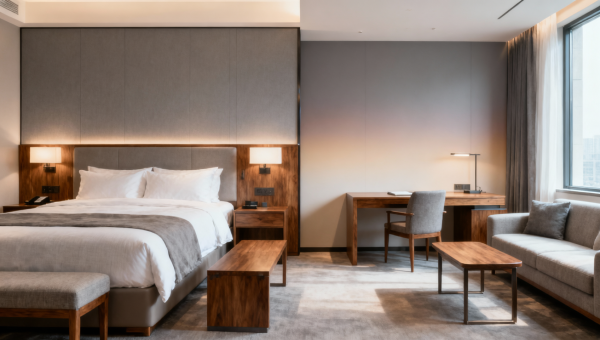
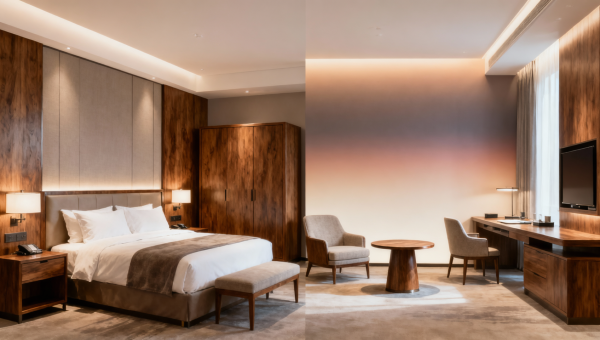
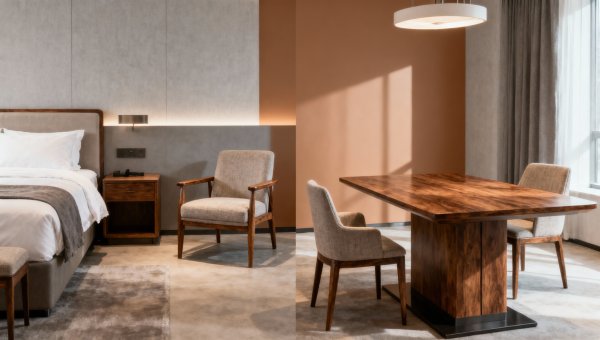
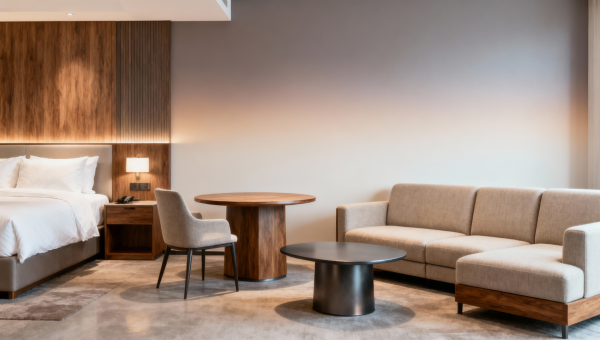
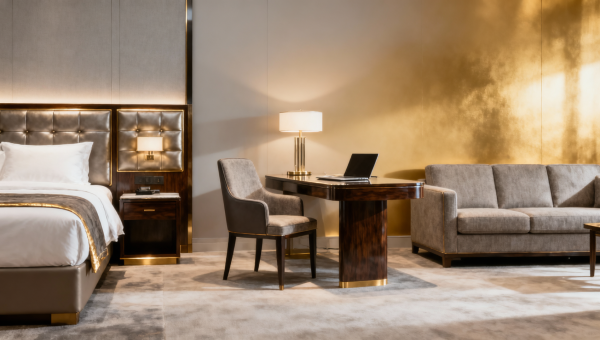
Guest room tables such as bedside tables, writing desks, coffee tables, and side tables are often design-sensitive because they affect in-room brand perception. Here, finish quality and visual consistency matter almost as much as durability.
Restaurant and café tables need strong resistance to impact, spills, heat, cleaning chemicals, and daily turnover. Budget decisions in this category should prioritize surface durability and base stability.
Banquet and event tables are operational assets. Procurement teams should focus on folding mechanisms, storage efficiency, weight, transport handling, and replacement flexibility.
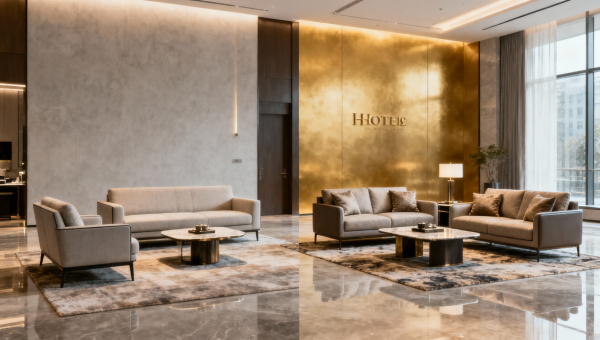
Lobby and lounge tables usually support the hotel’s visual identity. These tables may justify higher spending if they contribute to premium positioning, but they should still be evaluated for scratch resistance and maintenance practicality.
Outdoor hotel tables require budget allowance for UV stability, rust resistance, moisture performance, and seasonal wear. Underbudgeting here often leads to frequent replacement.
For this reason, smart budgeting often means spending selectively, not uniformly. High-visibility or heavy-use areas deserve stronger specifications, while low-impact zones may allow more cost control.
How Much Do Material Choices Affect Budget in 2026?
Material selection remains one of the biggest cost drivers in hotel tables, especially as hospitality buyers increasingly seek premium aesthetics with commercial-grade performance.
Common material categories include:
- Laminate or compact laminate: generally cost-efficient, durable, and practical for high-traffic use
- Solid wood: attractive and premium, but often higher in cost and more sensitive to humidity and finish wear
- Wood veneer over engineered core: a common balance between appearance and cost, though quality depends heavily on construction
- Metal: suitable for frames and industrial or modern aesthetics; coating quality affects lifespan
- Stone, sintered stone, or faux stone surfaces: premium appearance, often heavier and more logistics-sensitive
- Glass: visually light but can increase breakage risk and maintenance needs
- Resin, HPL, or outdoor composites: practical for exterior hospitality use where weather resistance is critical
In 2026, buyers should expect pricing to reflect not only raw materials but also labor intensity, finish sophistication, energy costs, packaging needs, and transport weight. A heavier tabletop with premium finish may appear reasonable on a factory quote but become significantly more expensive after shipping and installation are added.
How Should Procurement Teams Estimate Price Ranges Without Relying on Guesswork?
The most effective way to estimate hotel table costs is to build a tiered benchmark model. Instead of asking, “What is the price of a hotel table?” buyers should ask, “What is the likely price range for this specification, quantity, and project class?”
A workable benchmarking method includes:
- Define each table category by use case and dimensions.
- Set minimum performance specifications for materials, finish, and structure.
- Separate standard products from custom-made items.
- Request quotations from multiple qualified suppliers on the same specification basis.
- Compare ex-works, FOB, CIF, and landed cost scenarios.
- Add estimated replacement, maintenance, and freight-risk assumptions.
For example, a standard restaurant table for a midscale property and a custom veneer lounge table for a luxury hotel should never be benchmarked in the same way. Their budget logic, visual stakes, and lifecycle expectations are completely different.
Procurement teams that use a tiered model usually make better decisions because they can distinguish between fair pricing, premium pricing, and unjustified pricing.
What Supplier Factors Matter More Than the Lowest Quote?
In hotel equipment and commercial furniture sourcing, the cheapest supplier can become the most expensive procurement mistake. Budgeting should therefore include supplier assessment, not just product cost comparison.
Important supplier criteria include:
- Commercial hospitality experience: can the supplier handle hotel-grade requirements and project timelines?
- Customization capability: can they deliver matched finishes, dimensions, and design consistency at scale?
- Quality control systems: are inspection processes documented and repeatable?
- Compliance readiness: can they provide technical documents and performance evidence?
- Packaging quality: are tables protected for export and project-site handling?
- Lead time reliability: can they deliver within pre-opening deadlines?
- After-sales support: how are defects, shortages, and replacements managed?
For distributors and sourcing intermediaries, supplier consistency matters even more because repeated project performance affects long-term customer trust. A slightly higher supplier price may be justified if it reduces claims, delays, and reputation risk.
Where Do Buyers Most Commonly Underbudget?
Underbudgeting often comes from focusing on visible product cost while ignoring operational realities. In 2026, the most common budget gaps are likely to appear in the following areas:
- Freight and packaging: bulky or fragile table designs can sharply increase shipping cost
- Custom finish matching: sample rounds and production adjustments add time and money
- Small-quantity custom orders: low MOQs are not always available at efficient pricing
- Site-specific installation issues: elevators, access routes, and final assembly needs are often overlooked
- Replacement planning: no reserve stock means higher emergency reorder cost later
- Maintenance burden: attractive finishes that are difficult to clean or repair can raise ongoing cost
- Project delay exposure: late furniture delivery may affect room launch dates or F&B opening schedules
From a business evaluation perspective, the biggest budgeting error is treating tables as isolated purchase items rather than part of the full guest-experience and operating-cost system.
How Can Buyers Balance Design, Durability, and ROI?
The strongest hotel table budget is not the lowest budget. It is the budget that places spending where it creates measurable operational and brand value.
A useful ROI lens includes three questions:
- Will this table support the intended guest experience and property positioning?
- Will it survive the expected level of commercial use without frequent replacement?
- Will the long-term cost per year of service be lower than a cheaper alternative?
For luxury or design-led hotel projects, tables can contribute to visual identity, social-media appeal, and perceived room value. In such cases, design quality supports pricing power and brand differentiation. For high-turnover midscale hospitality operations, operational resilience may matter more than custom aesthetics.
The right decision is usually category-specific. Spend more where guests notice and where usage is intense. Standardize where visibility is low and replacement speed matters.
A Practical 2026 Budgeting Process for Hotel Tables
For teams that need an actionable workflow, the following process is often the most efficient:
- Create a table schedule: list every table type, quantity, size, location, and usage level.
- Group by specification tier: standard, enhanced commercial, premium design, or outdoor heavy-duty.
- Set target cost bands: define acceptable unit-cost ranges by category.
- Request matched quotations: ensure all suppliers quote against the same specifications.
- Evaluate total landed cost: not only factory price but also freight, duties, and installation implications.
- Score supplier risk: quality, lead time, compliance, packaging, and communication.
- Add contingency: include reserve budget for change orders, damages, and replacement stock.
- Review lifecycle economics: compare expected service life and maintenance burden.
This structured approach helps procurement managers, dealers, and commercial evaluators move from reactive price comparison to strategic sourcing.
Final Takeaway: What Makes a Hotel Table Budget “Good” in 2026?
A good hotel table budget in 2026 is realistic, category-specific, and aligned with both hospitality operations and brand goals. It accounts for more than purchase price. It includes material performance, logistics, compliance, supplier reliability, maintenance expectations, and replacement risk.
For procurement teams and commercial decision-makers, the smartest move is to budget by use case, compare suppliers on equal specifications, and evaluate long-term value rather than short-term savings alone. In the hotel equipment and commercial furniture market, strong budgeting is not about buying the cheapest tables. It is about sourcing the right tables at the right quality level, from the right supplier, with the lowest total risk to the business.
When that approach is followed, hotel table sourcing becomes a strategic investment in guest experience, operating efficiency, and commercial resilience.
Search News
Hot Articles
- Indoor PlaygroundFan Zhendong Visits Silicon Valley as MLTT Investor, AI Ping-Pong Tech Draws AttentionApr 23, 2026
- Stage Lighting & Truss2026 FIBA Women's World Cup Draw Opens Export Window for Arena Lighting & Timing SystemsApr 23, 2026
- Pro Stage AudioChina Upgrades Security Compliance for International Sports EventsApr 23, 2026
Popular Tags
Need ExpertConsultation?
Connect with our specialized leisureengineering team for procurementstrategies.
Recommended News
 Apr 10, 2026RCEP Cuts ASEAN Hotel Furniture Tariffs to 0% for Chinese Bamboo ProductsRCEP cuts ASEAN hotel furniture tariffs to 0% for Chinese bamboo products. Explore how this benefits exporters, procurement teams & supply chains in Southeast Asia's booming hospitality sector.● Hospitality Sourcing Dir
 Apr 10, 2026US Hotel Association Updates 2026 Smart Room Tech Guidelines, Mandates UL 2900-2-2 CertificationUS Hotel Association mandates UL 2900-2-2 certification for smart room tech by 2026. Learn how this impacts IoT manufacturers and hotel chains' procurement strategies.● Hospitality Sourcing Dir
 Apr 10, 2026EU Mandates QR Codes for Hotel Linens: China Exporters Must Comply by April 2026EU mandates QR codes for hotel linens by 2026, impacting China's textile exporters. Learn compliance requirements for traceability, sustainability reporting, and supply chain adaptation.● Hospitality Sourcing Dir
 Apr 09, 2026Zibo Launches 'Treasure Shandong Through the Lens' Photo Tour, Themed Homestays Emerge as Cross-Border Marketing ToolDiscover Zibo's 'Treasure Shandong Through the Lens' photo tour featuring 32 themed homestays blending vintage cameras, Hanfu culture & industrial spaces. A groundbreaking cross-border marketing model attracting global influencers & platforms like Rakuten Travel.● Hospitality Sourcing Dir
 Apr 09, 2026Yangzhou Slender West Lake Flower Festival Opens, Blending Heritage and Tech for Luxury TourismDiscover the 2026 Yangzhou Slender West Lake Flower Festival, blending heritage crafts with AR technology for luxury tourism. Experience cultural performances, workshops, and themed stays attracting global travelers. Explore China's new era of experiential tourism.● Hospitality Sourcing Dir
 Apr 09, 2026New Team Travel Contracts Raise Compliance Standards for Overseas AgenciesNew team travel contracts enforce stricter compliance for overseas agencies, requiring rigorous vetting of Chinese suppliers. Learn how these 2026 regulations impact study tours, hotels, and global partnerships.● Hospitality Sourcing Dir
 Apr 09, 2026Shangyou County's Hotel Subsidy Policy Boosts China's MICE Tourism AppealShangyou County's 2026 hotel subsidy policy offers RMB 100 per room for MICE tourism, boosting China's appeal to international buyers. Discover how this strategic move enhances cost-effective accommodations for corporate events and study tours.● Hospitality Sourcing Dir
 Apr 21, 2026Open or closed hotel wardrobes for easier housekeeping?Hotel wardrobes affect housekeeping speed, guest appeal, and hospitality procurement. Compare open vs closed designs for hotel furniture, luxury furniture, and hotel room furniture planning.● Hospitality Sourcing Dir
 Apr 21, 2026Hotel wardrobes that fit luggage without wasting spaceHotel wardrobes that fit luggage smartly without wasting space—explore hotel furniture solutions that elevate hotel room furniture, support hospitality procurement, and enhance guest comfort.● Hospitality Sourcing Dir
 Apr 21, 2026Why hotel room furniture wears unevenly after openingHotel furniture wear starts unevenly from day one. Learn how hotel beds, hotel chairs, hotel desks and hotel room furniture perform in real use, with smart hospitality procurement tips.● Hospitality Sourcing Dir
 Apr 21, 2026Hotel room furniture packages that cut design mismatchHotel room furniture packages align hotel furniture, hotel beds, hotel chairs, hotel tables, and hotel desks with luxury furniture standards—reducing design mismatch and speeding hospitality procurement.● Hospitality Sourcing Dir
 Apr 21, 2026Low seat or deep seat hotel sofas for modern lobbies?Hotel furniture buyers compare low seat and deep seat hotel sofas for modern lobbies. Explore luxury furniture choices that improve comfort, traffic flow, brand image, and hospitality procurement value.● Hospitality Sourcing Dir
 Apr 21, 2026Hotel sofas that keep their shape in high traffic areasHotel sofas, hotel furniture, and hospitality furniture that keep shape in high-traffic areas—discover luxury furniture sourcing tips, durable commercial furniture specs, and smarter hospitality procurement.● Hospitality Sourcing Dir
 Apr 21, 2026Why hospitality furniture needs different specs by zoneHospitality furniture specs vary by zone. Learn how hotel furniture, hotel beds, hotel chairs, hotel tables, and hotel desks improve durability, ROI, and luxury guest experience.● Hospitality Sourcing Dir
 Apr 21, 2026Hospitality furniture that supports faster room turnoverHospitality furniture that speeds room turnover: compare hotel beds, hotel chairs, hotel tables, hotel desks and hotel sofas for easier cleaning, durability, and smarter hospitality procurement.● Hospitality Sourcing Dir
 Apr 21, 2026Where hotel equipment budgets usually go off trackHotel furniture and hotel equipment budgets often fail from hidden scope, logistics, and lifecycle costs. Learn smarter hospitality procurement for hotel beds, chairs, tables, and luxury furniture.● Hospitality Sourcing Dir
 Apr 21, 2026Hotel equipment upgrades that improve guest flow firstHotel equipment upgrades improve guest flow fast with hotel furniture, hotel beds, hotel chairs, catering equipment, and soundproofing materials—boost comfort, efficiency, and procurement ROI.● Hospitality Sourcing Dir
 Apr 21, 2026What shortens the life of commercial furniture in hotelsHotel furniture and commercial furniture wear out fast when hotel beds, hotel chairs, hotel tables, hotel desks, and hotel sofas face heavy use, poor maintenance, and weak materials. Learn smart hospitality procurement tips.● Hospitality Sourcing Dir
 Apr 21, 2026Commercial furniture trends hotels are actually adoptingCommercial furniture trends hotels are adopting: luxury furniture, hotel beds, hotel chairs, hotel tables and hotel sofas that improve hotel furniture sourcing, durability, and hospitality procurement value.● Hospitality Sourcing Dir
 Apr 21, 2026How to spot hotel furniture built for daily wearHotel furniture buying guide: learn how to assess hotel beds, hotel chairs, hotel tables, and hospitality furniture for daily wear, lower maintenance, and smarter hospitality procurement.● Hospitality Sourcing Dir
 Apr 21, 2026Hotel furniture mistakes that age a room too quicklyHotel furniture buying guide: avoid costly hotel beds, hotel chairs, and hotel room furniture mistakes. Discover luxury furniture tips for durable, brand-right hospitality procurement.● Hospitality Sourcing Dir
 Apr 21, 2026Why some soundproofing materials fail after installationLearn why soundproofing materials fail after installation in hotel furniture projects. Explore hotel beds, hotel sofas, hotel wardrobes and hospitality procurement tips for lasting acoustic performance.● Hospitality Sourcing Dir
 Apr 21, 2026Soundproofing materials that work best between guest roomsSoundproofing materials for hotel furniture projects: discover the best systems between guest rooms, from mineral wool to acoustic doors, to improve comfort, protect reviews, and support hospitality procurement.● Hospitality Sourcing Dir
 Apr 21, 2026How firm should hotel beds be for mixed guest profiles?Hotel beds for mixed guest profiles: learn how hotel furniture and hospitality procurement teams balance comfort, durability, and luxury furniture standards to improve guest satisfaction.● Hospitality Sourcing Dir