Hotel Tables: Which Styles Fit Better?
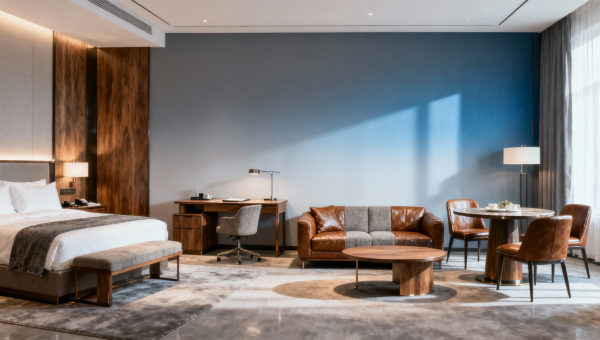
Choosing the right hotel tables is about more than looks—it affects guest flow, brand image, and long-term value across hospitality and entertainment spaces. From luxury dining areas to multi-use venues connected with hotel equipment and commercial furniture planning, the right table style can improve both function and experience. This guide explores which hotel tables fit better for different settings, helping buyers, distributors, and sourcing teams make smarter decisions.
For hotels operating in sports and entertainment environments, table selection is even more strategic. A resort bar near a pool deck, a stadium-linked hotel lounge, an esports venue café, or a family entertainment hotel restaurant all require different table formats, materials, and layouts. Buyers are not simply purchasing furniture; they are balancing durability, guest turnover, design identity, maintenance cost, and procurement risk over a 3–7 year operating horizon.
In B2B sourcing, the best hotel tables are the ones that fit a specific use case with measurable performance. That means looking at table height, top size, base stability, edge safety, indoor-outdoor adaptability, stacking efficiency, and replacement planning. For procurement teams, distributors, and commercial evaluators, a clear style framework reduces costly mismatches and improves project delivery.
Understanding Hotel Table Styles by Hospitality and Entertainment Use
Hotel tables generally fall into several functional categories: dining tables, cocktail tables, coffee tables, side tables, banquet tables, and multi-purpose folding tables. In sports and entertainment-related hotel properties, these categories often overlap. A lounge may need low coffee tables during daytime service, then convert part of the same area into a standing event zone with cocktail tables in the evening.
Style fit begins with space behavior. A luxury resort hosting live music 2–3 nights per week needs different tables than a business hotel attached to an arena with heavy pre-event crowds. Round tables support smoother circulation and social interaction, while rectangular tables usually maximize seat count and are easier to align in banquet or buffet layouts.
Height also matters. Standard dining tables are commonly around 720–760 mm high, while bar-height tables are often 1000–1100 mm. For mixed-use entertainment venues, using the wrong height creates guest discomfort and slows turnover. In high-volume outlets, even a 10–15 minute delay in resetting can affect capacity during peak periods.
Common style categories and where they work best
The table below shows how common hotel table styles match different hospitality and entertainment settings. This is useful for buyers comparing function, traffic flow, and maintenance implications before finalizing a sourcing list.
A clear conclusion emerges: no single style fits every hotel environment. Round tables are often better for premium social dining, rectangular formats fit structured service, and folding or cocktail tables perform best where events, game-day activity, or venue conversion happen frequently. Mixed-property buyers often benefit from a 60/30/10 mix across core dining, flexible event, and accent table categories.
Early selection questions for procurement teams
- How many seating turns are expected during peak windows such as match nights, concerts, or holiday resort events?
- Will the table stay in one position for 12 months, or move between 2–4 layouts each week?
- Does the venue prioritize seat density, premium appearance, or fast reset time?
- Is the table intended for indoor use only, or must it tolerate humidity, UV exposure, and poolside cleaning chemicals?
How to Match Table Shape, Size, and Base Design to Guest Flow
When evaluating which hotel tables fit better, the most common sourcing mistake is focusing on tabletop appearance before circulation planning. In sports and entertainment hospitality, traffic spikes are often concentrated within 30–90 minutes before or after events. If table footprints interrupt service paths, staff movement slows and guest experience deteriorates quickly.
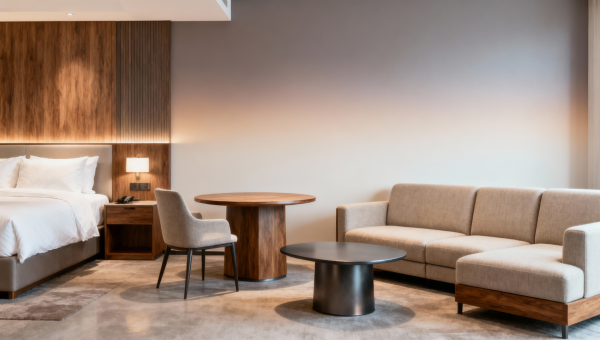
Round tables typically reduce collision risk because they eliminate hard corners. They are especially useful in family entertainment hotels, lounge cafés, and live-performance venues where children, bags, or groups move unpredictably. A standard 900–1200 mm round top usually seats 4–6 guests comfortably, depending on chair dimensions and service style.
Rectangular tables provide stronger planning control. Common commercial sizes such as 700 × 700 mm, 1200 × 800 mm, or 1600 × 900 mm allow more consistent spacing across dining rows. In hotel restaurants connected to sports complexes or large leisure facilities, this can improve seat planning and support clearer evacuation or cleaning routes.
Base design affects stability more than many buyers expect
The base is not a secondary detail. In high-use settings, pedestal bases help reduce chair conflict and improve legroom, while four-leg bases can offer better balance on uneven surfaces. However, slim decorative bases sometimes underperform in busy bar or entertainment zones where guests lean, stand, or place heavy items on one edge.
The comparison below helps procurement teams balance seat comfort, cleaning access, and stability when specifying hotel tables for active hospitality spaces.
As a rule, buyers should leave circulation lanes of at least 900–1200 mm in high-traffic hospitality settings. If service trolleys, event equipment, or stroller movement is common, wider clearance is usually justified. In sports-adjacent hotels, guest surges are less forgiving than in standard dining environments, so circulation planning should be treated as a commercial performance issue, not only a design choice.
Practical layout priorities
- Start with traffic mapping, not furniture catalog browsing.
- Fix aisle widths before deciding table count.
- Match chair dimensions to under-table clearance.
- Test sample stability with asymmetric loading, not just visual inspection.
Materials, Durability, and Maintenance in High-Use Leisure Environments
The right hotel table material depends on where and how it will be used. In sports and entertainment properties, exposure conditions can vary sharply within the same project. An indoor VIP dining room may prioritize veneer or stone-look finishes, while a poolside snack bar needs moisture resistance, stain tolerance, and easy wipe-down performance multiple times per day.
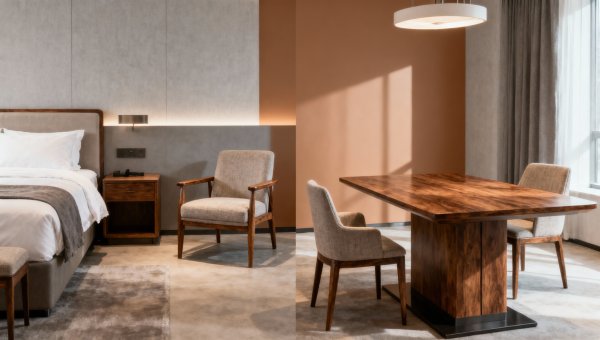
Wood veneer tables support warm branding and premium appearance, but they may need more careful maintenance in venues with frequent spills, temperature fluctuation, or rough luggage contact. Laminate, compact board, powder-coated metal, and treated solid surfaces are often easier to manage in casual or high-turnover settings where cleaning frequency can reach 4–8 cycles per day.
Outdoor or semi-outdoor hotel tables near water features, leisure parks, or terrace sports bars should be evaluated for UV resistance, corrosion exposure, and edge sealing. Even minor swelling, finish peeling, or base rust can create visual inconsistency across a property within 12–18 months if the wrong specification is selected.
What buyers should compare beyond appearance
For commercial use, durability should be measured in terms of touchpoints and maintenance burden, not only initial finish quality. A table that looks refined at delivery but requires monthly repair attention may cost more over 36 months than a slightly simpler option with better wear resistance.
- Check whether the edge profile resists chipping in luggage-heavy or family-oriented leisure settings.
- Confirm whether the top can tolerate alcohol, acidic drinks, sunscreen residue, and chlorine-adjacent cleaning routines.
- Review whether the base hardware can be tightened or replaced without removing the entire top.
- Ask about spare part support over at least 2–3 years for matching components and finish continuity.
Maintenance planning by material type
The table below summarizes common material directions for hotel tables used in active hospitality and entertainment settings. It is especially useful when buyers must balance design expectations with operational practicality.
For many projects, the better fit is not the most luxurious material but the one that preserves brand standards while reducing downtime and replacement frequency. A leisure-focused property with heavy weekend use may gain more value from easy-care commercial surfaces than from delicate premium finishes that age unevenly under operational pressure.
Procurement Criteria: Cost, Lead Time, Customization, and Supply Risk
From a sourcing perspective, choosing hotel tables means balancing visible cost with hidden operational impact. A lower unit price can become expensive if the table arrives with inconsistent finish, unstable joints, or limited spare support. For hotels in entertainment destinations, replacement urgency is often higher because damaged furniture is immediately visible in guest-generated content and event photography.
Typical lead times vary by complexity. Standard commercial tables may ship in 3–6 weeks, while custom veneer, mixed-material, or branded-top projects can extend to 8–12 weeks or more. Procurement teams should also allow time for sampling, finish approval, packaging review, and installation sequencing, especially when tables are part of a larger hotel opening or refurbishment schedule.
MOQ and consolidation matter for distributors and regional buyers. Some suppliers are efficient for 50–100 units of standard formats, while others are better suited for project-based custom orders with multiple top sizes and finish combinations. Matching supplier strength to order profile reduces delays, rework, and freight inefficiency.
A practical evaluation checklist for commercial buyers
- Request load-bearing guidance for typical use, including edge pressure and uneven force scenarios.
- Ask whether replacement tops and bases can be ordered separately within 24–36 months.
- Review packaging protection for stone-look, veneer, and powder-coated parts, especially for export transit.
- Confirm whether the supplier can support mixed orders for restaurant, lounge, and event zones in one project cycle.
- Check finish consistency controls if your project requires 20, 50, or 200 identical tables across multiple spaces.
Commercial decision matrix
The matrix below helps business evaluators compare hotel table suppliers or product lines in a more structured way, especially for sports and entertainment hospitality projects with multiple usage conditions.
The strongest sourcing outcome usually comes from comparing total commercial fit rather than simple unit cost. For example, a table with a 7% higher purchase price may still be the better choice if it reduces maintenance calls, shortens installation time, or allows replacement components without a full refit.
Common Mistakes, Selection Trends, and Final Buying Guidance
One common mistake is copying a residential or boutique café look into a high-volume hotel environment. What photographs well in a small setting may fail under daily commercial pressure. Thin edges, unstable designer bases, and delicate finishes often struggle in properties that host tournaments, live events, children’s activities, or heavy weekend traffic.
Another mistake is standardizing every area with one table style. A hotel connected to leisure and entertainment functions rarely operates as a single-use environment. Breakfast service, afternoon café traffic, private events, and sports-night bar activity create 4 different performance demands. A segmented table strategy typically produces better returns than a one-style-fits-all purchase.
Current buying trends show increasing demand for modularity, indoor-outdoor flexibility, and finishes that balance premium appearance with lower upkeep. Buyers are also prioritizing tables that support faster venue turnover, easier storage, and visual consistency across mixed-use spaces. This is especially relevant for hospitality operators who need to convert from dining to event mode within 30–60 minutes.
FAQ for buyers, distributors, and project teams
How do I know whether round or rectangular hotel tables fit better?
Choose round tables when guest interaction, softer traffic flow, and premium social dining matter most. Choose rectangular tables when seat density, alignment, and layout predictability are more important. If the venue handles large event waves, rectangular tables often support more efficient planning, while round tables work better in relaxed or upscale leisure environments.
What table material is best for sports and entertainment hotel spaces?
There is no universal best material. Laminate and compact surfaces are often practical for high-frequency use, while veneer works better in controlled premium spaces. Outdoor or semi-outdoor zones should prioritize corrosion resistance, sealed edges, and easy-clean performance. The right choice depends on cleaning frequency, exposure conditions, and brand positioning.
How long does a commercial hotel table project usually take?
A standard project may require 3–6 weeks for common specifications, while customized orders often take 8–12 weeks. Add time for samples, finish approval, and logistics if the project includes multiple hospitality zones or cross-border sourcing. Planning early is critical when openings, seasonal peaks, or event calendars cannot move.
Which indicators should procurement teams prioritize?
Focus on 4 areas: operational fit, durability, supplier responsiveness, and replacement support. A visually attractive table is not enough if it slows service, chips easily, or cannot be matched later. In B2B hotel projects, long-term consistency is often more valuable than short-term price savings.
Selecting hotel tables is ultimately a business decision shaped by guest behavior, space function, maintenance planning, and sourcing discipline. The best-fit styles are those that support the rhythm of each hospitality setting, whether that means elegant round dining tables for resort restaurants, durable rectangular units for high-volume service, or flexible cocktail and folding formats for event-driven spaces.
For buyers, distributors, and commercial evaluators, a structured comparison of style, size, material, and supply capability reduces risk and improves project outcomes. If you are planning a hotel, leisure venue, or entertainment-linked hospitality project, now is the right time to review your table strategy in detail. Contact GCT to get tailored sourcing support, compare fit-for-purpose options, and explore more commercial furniture and hotel equipment solutions.
Search News
Hot Articles
- Indoor PlaygroundFan Zhendong Visits Silicon Valley as MLTT Investor, AI Ping-Pong Tech Draws AttentionApr 23, 2026
- Stage Lighting & Truss2026 FIBA Women's World Cup Draw Opens Export Window for Arena Lighting & Timing SystemsApr 23, 2026
- Pro Stage AudioChina Upgrades Security Compliance for International Sports EventsApr 23, 2026
Popular Tags
Need ExpertConsultation?
Connect with our specialized leisureengineering team for procurementstrategies.
Recommended News
 Apr 10, 2026RCEP Cuts ASEAN Hotel Furniture Tariffs to 0% for Chinese Bamboo ProductsRCEP cuts ASEAN hotel furniture tariffs to 0% for Chinese bamboo products. Explore how this benefits exporters, procurement teams & supply chains in Southeast Asia's booming hospitality sector.● Hospitality Sourcing Dir
 Apr 10, 2026US Hotel Association Updates 2026 Smart Room Tech Guidelines, Mandates UL 2900-2-2 CertificationUS Hotel Association mandates UL 2900-2-2 certification for smart room tech by 2026. Learn how this impacts IoT manufacturers and hotel chains' procurement strategies.● Hospitality Sourcing Dir
 Apr 10, 2026EU Mandates QR Codes for Hotel Linens: China Exporters Must Comply by April 2026EU mandates QR codes for hotel linens by 2026, impacting China's textile exporters. Learn compliance requirements for traceability, sustainability reporting, and supply chain adaptation.● Hospitality Sourcing Dir
 Apr 09, 2026Zibo Launches 'Treasure Shandong Through the Lens' Photo Tour, Themed Homestays Emerge as Cross-Border Marketing ToolDiscover Zibo's 'Treasure Shandong Through the Lens' photo tour featuring 32 themed homestays blending vintage cameras, Hanfu culture & industrial spaces. A groundbreaking cross-border marketing model attracting global influencers & platforms like Rakuten Travel.● Hospitality Sourcing Dir
 Apr 09, 2026Yangzhou Slender West Lake Flower Festival Opens, Blending Heritage and Tech for Luxury TourismDiscover the 2026 Yangzhou Slender West Lake Flower Festival, blending heritage crafts with AR technology for luxury tourism. Experience cultural performances, workshops, and themed stays attracting global travelers. Explore China's new era of experiential tourism.● Hospitality Sourcing Dir
 Apr 09, 2026New Team Travel Contracts Raise Compliance Standards for Overseas AgenciesNew team travel contracts enforce stricter compliance for overseas agencies, requiring rigorous vetting of Chinese suppliers. Learn how these 2026 regulations impact study tours, hotels, and global partnerships.● Hospitality Sourcing Dir
 Apr 09, 2026Shangyou County's Hotel Subsidy Policy Boosts China's MICE Tourism AppealShangyou County's 2026 hotel subsidy policy offers RMB 100 per room for MICE tourism, boosting China's appeal to international buyers. Discover how this strategic move enhances cost-effective accommodations for corporate events and study tours.● Hospitality Sourcing Dir
 Apr 21, 2026Open or closed hotel wardrobes for easier housekeeping?Hotel wardrobes affect housekeeping speed, guest appeal, and hospitality procurement. Compare open vs closed designs for hotel furniture, luxury furniture, and hotel room furniture planning.● Hospitality Sourcing Dir
 Apr 21, 2026Hotel wardrobes that fit luggage without wasting spaceHotel wardrobes that fit luggage smartly without wasting space—explore hotel furniture solutions that elevate hotel room furniture, support hospitality procurement, and enhance guest comfort.● Hospitality Sourcing Dir
 Apr 21, 2026Why hotel room furniture wears unevenly after openingHotel furniture wear starts unevenly from day one. Learn how hotel beds, hotel chairs, hotel desks and hotel room furniture perform in real use, with smart hospitality procurement tips.● Hospitality Sourcing Dir
 Apr 21, 2026Hotel room furniture packages that cut design mismatchHotel room furniture packages align hotel furniture, hotel beds, hotel chairs, hotel tables, and hotel desks with luxury furniture standards—reducing design mismatch and speeding hospitality procurement.● Hospitality Sourcing Dir
 Apr 21, 2026Low seat or deep seat hotel sofas for modern lobbies?Hotel furniture buyers compare low seat and deep seat hotel sofas for modern lobbies. Explore luxury furniture choices that improve comfort, traffic flow, brand image, and hospitality procurement value.● Hospitality Sourcing Dir
 Apr 21, 2026Hotel sofas that keep their shape in high traffic areasHotel sofas, hotel furniture, and hospitality furniture that keep shape in high-traffic areas—discover luxury furniture sourcing tips, durable commercial furniture specs, and smarter hospitality procurement.● Hospitality Sourcing Dir
 Apr 21, 2026Why hospitality furniture needs different specs by zoneHospitality furniture specs vary by zone. Learn how hotel furniture, hotel beds, hotel chairs, hotel tables, and hotel desks improve durability, ROI, and luxury guest experience.● Hospitality Sourcing Dir
 Apr 21, 2026Hospitality furniture that supports faster room turnoverHospitality furniture that speeds room turnover: compare hotel beds, hotel chairs, hotel tables, hotel desks and hotel sofas for easier cleaning, durability, and smarter hospitality procurement.● Hospitality Sourcing Dir
 Apr 21, 2026Where hotel equipment budgets usually go off trackHotel furniture and hotel equipment budgets often fail from hidden scope, logistics, and lifecycle costs. Learn smarter hospitality procurement for hotel beds, chairs, tables, and luxury furniture.● Hospitality Sourcing Dir
 Apr 21, 2026Hotel equipment upgrades that improve guest flow firstHotel equipment upgrades improve guest flow fast with hotel furniture, hotel beds, hotel chairs, catering equipment, and soundproofing materials—boost comfort, efficiency, and procurement ROI.● Hospitality Sourcing Dir
 Apr 21, 2026What shortens the life of commercial furniture in hotelsHotel furniture and commercial furniture wear out fast when hotel beds, hotel chairs, hotel tables, hotel desks, and hotel sofas face heavy use, poor maintenance, and weak materials. Learn smart hospitality procurement tips.● Hospitality Sourcing Dir
 Apr 21, 2026Commercial furniture trends hotels are actually adoptingCommercial furniture trends hotels are adopting: luxury furniture, hotel beds, hotel chairs, hotel tables and hotel sofas that improve hotel furniture sourcing, durability, and hospitality procurement value.● Hospitality Sourcing Dir
 Apr 21, 2026How to spot hotel furniture built for daily wearHotel furniture buying guide: learn how to assess hotel beds, hotel chairs, hotel tables, and hospitality furniture for daily wear, lower maintenance, and smarter hospitality procurement.● Hospitality Sourcing Dir
 Apr 21, 2026Hotel furniture mistakes that age a room too quicklyHotel furniture buying guide: avoid costly hotel beds, hotel chairs, and hotel room furniture mistakes. Discover luxury furniture tips for durable, brand-right hospitality procurement.● Hospitality Sourcing Dir
 Apr 21, 2026Why some soundproofing materials fail after installationLearn why soundproofing materials fail after installation in hotel furniture projects. Explore hotel beds, hotel sofas, hotel wardrobes and hospitality procurement tips for lasting acoustic performance.● Hospitality Sourcing Dir
 Apr 21, 2026Soundproofing materials that work best between guest roomsSoundproofing materials for hotel furniture projects: discover the best systems between guest rooms, from mineral wool to acoustic doors, to improve comfort, protect reviews, and support hospitality procurement.● Hospitality Sourcing Dir
 Apr 21, 2026How firm should hotel beds be for mixed guest profiles?Hotel beds for mixed guest profiles: learn how hotel furniture and hospitality procurement teams balance comfort, durability, and luxury furniture standards to improve guest satisfaction.● Hospitality Sourcing Dir