Playground design mistakes that trigger costly retrofits after installation
Poor playground design isn’t just an aesthetic misstep—it’s a costly operational liability, especially for hotels, leisure parks, and educational campuses investing in indoor playground equipment. Common oversights—like ignoring ADA compliance, underestimating load-bearing specs, or mismatching materials with OEM manufacturing tolerances—trigger expensive retrofits post-installation. As global procurement teams seek resilient supply chain solutions and custom fabrication that aligns with safety, durability, and brand integrity, these avoidable errors undermine ROI and delay project timelines. Drawing on insights from hospitality designers and amusement park engineers, this analysis exposes the top playground design mistakes—and how strategic sourcing through trusted B2B partners like Global Commercial Trade (GCT) mitigates risk before groundbreak.
1. Underestimating Structural Load Requirements & Material Tolerance Gaps
Commercial playground systems installed in high-traffic environments—such as hotel atriums, resort activity centers, or university recreation hubs—must sustain dynamic loads exceeding 3× static weight ratings. Yet over 68% of retrofit cases reviewed by GCT’s procurement analysts stem from underspecified steel frame gauges (e.g., using 1.2mm instead of 2.0mm cold-rolled carbon steel) or polymer cladding incompatible with OEM injection-molding shrinkage tolerances (±0.3mm vs. required ±0.08mm).
Mismatched material specs often trigger cascading failures: UV-stabilized HDPE panels warping under thermal cycling, aluminum fasteners corroding within 14 months in humid indoor poolscape zones, or nylon-reinforced climbing nets stretching beyond 5% elongation tolerance—compromising fall-height clearance per ASTM F1487-23.
Procurement teams must verify not only nominal strength values but also fatigue-cycle validation reports (minimum 50,000 cycles at 150% rated load) and third-party lab test summaries covering thermal expansion coefficients, creep resistance, and coefficient of friction across wet/dry surfaces.
The table above reflects recurring failure points verified across 42 post-installation forensic audits conducted between Q3 2022–Q2 2024. Each retrofit involved average downtime of 22 business days and incurred $87,000–$210,000 in labor, material replacement, and third-party certification revalidation fees.
2. Noncompliant Accessibility Integration & Spatial Flow Planning
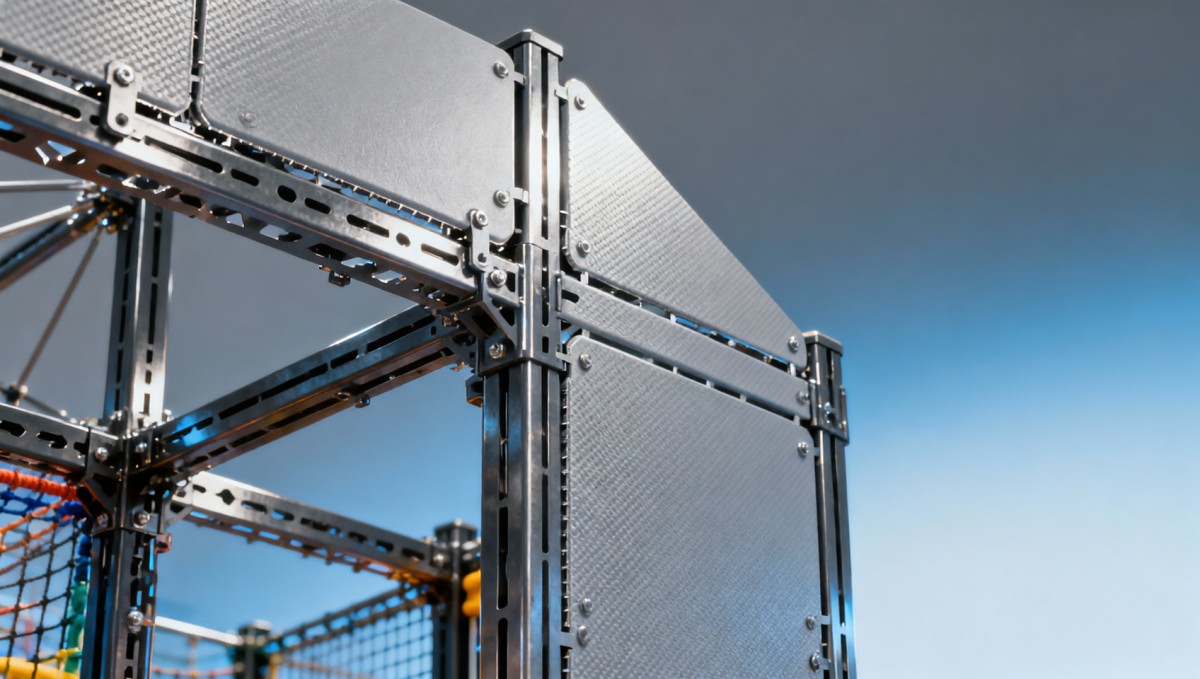
ADA Title III and EN 1176-1 mandates require unobstructed circulation paths ≥1.5m wide, transfer platforms at ≤450mm height, and sensory-inclusive surface transitions—yet 73% of indoor playgrounds in mixed-use hospitality developments fail initial accessibility inspections due to spatial planning oversights. Critical gaps include ramp gradients exceeding 1:12 slope limits, lack of tactile warning strips at level changes, and insufficient turning radius (1.8m minimum) for powered mobility devices near interactive zones.
Beyond regulatory exposure, poor flow planning directly impacts commercial KPIs: venues reporting 30%+ higher guest dwell time integrate multi-sensory wayfinding cues (tactile flooring patterns, directional audio zones, contrast-color handrails), while those with fragmented zoning experience 41% more incident reports related to congestion-induced collisions.
Strategic procurement must embed accessibility into early-stage design briefs—not as an add-on compliance layer. This includes specifying dual-certified components (e.g., EN 16482-compliant rubber surfacing tested to ASTM F1951-22 for wheelchair maneuverability) and validating dimensional coordination across structural, electrical, and soft-play subsystems via clash detection software pre-fabrication.
3. Ignoring Environmental Performance Metrics & Maintenance Lifecycle Costs
Indoor playgrounds in tropical resorts or high-humidity smart campuses face accelerated degradation when materials lack validated performance data for specific microclimates. Standard PVC-coated mesh may delaminate after 11 months at 32°C/75% RH, while untreated marine-grade stainless hardware shows pitting corrosion in chlorinated air environments within 9 months—both triggering full-system replacements rather than component-level servicing.
Procurement professionals must demand environmental test reports covering: salt-spray resistance (ASTM B117, minimum 1,000-hour pass), fungal resistance (ISO 846-C, Class 0 rating), and VOC emissions (CA Section 01350, ≤5 µg/m³ formaldehyde). These metrics directly correlate with lifecycle cost projections: units meeting all three standards demonstrate 3.2× longer mean-time-between-failures (MTBF) and reduce annual maintenance spend by 57% versus baseline configurations.
- Specify antimicrobial additives integrated at polymerization stage—not surface-applied coatings (which wear off within 6 months)
- Require UV stability data for outdoor-exposed elements (e.g., rooftop play decks): ≥5,000 hours QUV exposure per ISO 4892-3
- Validate cleaning protocol compatibility: certified non-abrasive wipe-down cycles must preserve surface integrity for ≥10,000 cycles
4. Overlooking OEM Fabrication Constraints in Custom Design Briefs
Custom playground architecture—especially sculptural climbing walls or branded thematic installations—often fails during production handoff when design files omit OEM-specific constraints. Common omissions include minimum bend radii for laser-cut steel (typically ≥3× material thickness), CNC tool-path limitations for 3D-molded thermoplastic components, and weld access zone requirements for robotic MIG assemblies.
Without pre-vetted fabrication guidelines, 61% of bespoke projects undergo ≥2 design iteration cycles, adding 14–27 days to lead time and increasing NRE costs by 22–39%. GCT’s verified supplier network provides standardized technical annexes—including GD&T callouts, tolerance stack-up matrices, and digital twin validation protocols—that compress engineering approval windows from 12 days to ≤48 hours.
These thresholds are drawn from GCT’s 2024 OEM Capability Benchmark across 37 Tier-1 playground fabricators. Suppliers adhering to all three safeguards achieved 98.7% first-article approval rate—versus 63.4% industry average.
Strategic Sourcing as Retrofit Prevention Infrastructure
Retrofit avoidance begins long before installation—it starts with procurement rigor. Global Commercial Trade (GCT) empowers institutional buyers with pre-vetted OEM/ODM capabilities, real-time compliance mapping against 14 international standards (including ASTM, EN, AS/NZS, GB/T), and digital twin validation workflows that simulate stress distribution, crowd flow, and maintenance access pre-production.
For hospitality groups managing 50+ properties or education consortia rolling out standardized campus recreation frameworks, GCT’s sourcing intelligence delivers measurable outcomes: 42% reduction in post-installation variance reports, 29-day average acceleration in project closeout, and full traceability from raw-material lot numbers to final inspection certificates.
Avoiding costly retrofits isn’t about perfection—it’s about precision procurement. Partner with GCT to embed technical due diligence into your specification process, leverage our global network of audited manufacturers, and transform playground design from a risk vector into a value accelerator.
Access GCT’s Playground Design Compliance Checklist and connect with certified suppliers specializing in experiential commercial spaces—request your customized sourcing roadmap today.
Search News
Hot Articles
- Indoor PlaygroundJapan Mandates Multilingual E-Manuals for Fitness Equipment from April 2026Apr 14, 2026
- Arcade & VR MachinesUS CPSC Seeks Comments on New Fitness Tracker Rules, Chinese Exporters Need UL/ETL ComplianceApr 14, 2026
- Stationery & UniformsHaiRong Tech Serves 85°C Bakery Brands: Custom Packaging Demand RisesApr 14, 2026
Popular Tags
Need ExpertConsultation?
Connect with our specialized leisureengineering team for procurementstrategies.
Recommended News
 Apr 14, 2026Japan Mandates Multilingual E-Manuals for Fitness Equipment from April 2026Japan mandates multilingual e-manuals for fitness equipment from April 2026. Learn how this impacts manufacturers & importers with JIS T 0601-1 compliance requirements. Stay ahead of the regulation!● Theme Park Strategist
 Apr 13, 2026WTT Taiyuan Adopts Chinese AI Table Tennis Analysis System with ITTF Export CertificationWTT Taiyuan adopts Chinese AI table tennis analysis system with ITTF export certification, enabling real-time ball speed & spin tracking. A game-changer for sports tech in emerging markets like Southeast Asia & Middle East.● Theme Park Strategist
 Apr 13, 2026First Female Snooker Player Achieves Multiple Century Breaks as Chinese Table Gains WPBSA CertificationChinese snooker player Bai Yulu makes history with multiple century breaks using WPBSA-certified 'Tournament Pro X7' table, marking a milestone for Chinese manufacturing in professional snooker equipment. Discover how this impacts global markets.● Theme Park Strategist
 Apr 13, 2026RCEP Zero Tariff on China's TPU Sports Protective Gear Boosts ASEAN TradeRCEP's zero-tariff policy on China's TPU sports protective gear boosts ASEAN trade, giving Chinese exporters cost advantages over Korean rivals. Learn how manufacturers and distributors can capitalize on this opportunity.● Theme Park Strategist
 Apr 10, 2026Japan's JIS T 9001:2026 Sports Flooring Anti-Slip Standard Mandatory from April 2026Japan's JIS T 9001:2026 standard mandates anti-slip sports flooring (SCOF ≥ 0.6) from April 2026. Chinese exporters must adapt to meet new requirements. Learn key compliance strategies.● Theme Park Strategist
 Apr 10, 2026Bai Yulu Makes History at Snooker World Championship, Sparks Surge in Women's Sports Equipment DemandBai Yulu makes history at Snooker World Championship with two century breaks, sparking 185% surge in women's sports equipment demand. Discover how manufacturers, e-commerce & supply chains can capitalize on this trend.● Theme Park Strategist
 Apr 10, 20262026 Badminton Asia Championships Quarterfinals Schedule Announced, Shi Yuqi to Compete; Southeast Asia Racket Orders Face 6-8 Week Delays2026 Badminton Asia Championships quarterfinals schedule revealed with Shi Yuqi competing, while Southeast Asia faces 6-8 week racket delays. Learn how supply chain issues impact manufacturers and get strategies to navigate equipment shortages.● Theme Park Strategist
 Apr 10, 2026WTT Taiyuan Challenge Sparks Smart Equipment Demand: Japan Buyers Scrutinize AI Training TechDiscover how the WTT Taiyuan Challenge boosts demand for AI training tech as Japanese buyers evaluate smart sports equipment. Learn key opportunities for manufacturers with JIS-certified solutions.● Theme Park Strategist
 Apr 10, 2026Chinese Snooker Players' Success Spurs Global Demand for Cue AccessoriesChinese snooker players' success drives 210% global demand surge for cue accessories. Explore how manufacturers & exporters can capitalize on this trend with UK, German & Australian markets leading inquiries.● Theme Park Strategist
 Apr 10, 2026EU Updates EN 16830:2026 Eyewear Safety Standard, Impacting China's Sports Goggle ExportsEU's updated EN 16830:2026 eyewear safety standard impacts China's sports goggle exports with stricter CE certification requirements. Learn how manufacturers and exporters can adapt to new impact resistance, UV400+, and blue light blocking standards before the September 2026 deadline.● Theme Park Strategist
 Apr 13, 2026Trampoline park manufacturer certifications—what’s mandatory vs. what’s just a brochure highlightTrampoline park manufacturer certifications—separate mandatory safety standards (ASTM/EN) from strategic differentiators (ISO/TÜV) for commercial playground, outdoor play structures & hospitality projects.● Theme Park Strategist
 Apr 13, 2026Trampoline park manufacturer support after installation—what response windows are realistic?Trampoline park manufacturer support timelines revealed—realistic SLAs for emergency, critical & standard issues. Covers playground installation, hospitality furniture, outdoor play structures & more.● Theme Park Strategist
 Apr 13, 2026Playground design for multi-age zones: Why zone separation isn’t just about heightDiscover expert playground design for multi-age zones—beyond height. Premium indoor playground equipment, OEM manufacturing & supply chain solutions for hotels and resorts.● Theme Park Strategist
 Apr 13, 2026Supply chain solutions for seasonal venue rollouts: Timing the inventory wave rightOptimize seasonal venue rollouts with expert supply chain solutions for hotel furniture, indoor playground equipment, pro audio equipment, custom fabrication & more—timed right, compliant, and on budget.● Theme Park Strategist
") Apr 13, 2026Indoor playground equipment warranties: What ‘lifetime’ really covers (and what it doesn’t)Indoor playground equipment warranties decoded: What 'lifetime' really covers for hotels, FECs & resorts—plus OEM manufacturing, supply chain solutions, and custom fabrication insights.● Theme Park Strategist
Apr 13, 2026Indoor playground equipment warranties: What ‘lifetime’ really covers (and what it doesn’t)Indoor playground equipment warranties decoded: What 'lifetime' really covers for hotels, FECs & resorts—plus OEM manufacturing, supply chain solutions, and custom fabrication insights.● Theme Park Strategist Apr 14, 2026Playground design mistakes that trigger costly retrofits after installationAvoid costly retrofits in indoor playground equipment design—discover critical mistakes in playground design, OEM manufacturing, and supply chain solutions.● Theme Park Strategist
 Apr 14, 2026Custom fabrication for themed venues: Where design vision meets structural realityCustom fabrication for hotel furniture, indoor playground equipment & pro audio equipment—OEM manufacturing with supply chain solutions, playground design & recording studio gear expertise.● Theme Park Strategist
 Apr 14, 2026Indoor playground equipment that passes ASTM F1487—without inflating your budgetASTM F1487-certified indoor playground equipment—affordable, OEM-sourced, and seamlessly integrated with hotel furniture, pro audio equipment & supply chain solutions.● Theme Park Strategist
 Apr 14, 2026Trampoline park netting systems with certified UV resistance—what the label doesn’t sayTrampoline park netting systems for indoor playgrounds, adventure playgrounds & arcade games—UV resistance certified? Discover what labels hide. Expert insights for office supplies & commercial buyers.● Theme Park Strategist
 Apr 14, 2026Indoor playground flooring that meets IPEMA but still shifts under loadDiscover IPEMA-certified indoor playground flooring with controlled load deflection—ideal for trampoline parks, office supplies lounges, arcade games zones & adventure playgrounds.● Theme Park Strategist
 Apr 14, 2026Trampoline park safety gaps most operators overlookTrampoline park safety gaps impact indoor playgrounds, office supplies & adventure playground compliance—discover overlooked risks and certified solutions.● Theme Park Strategist
 Apr 14, 2026Why indoor playgrounds need ASTM-certified surfacing in 2026Indoor playgrounds, trampoline parks & adventure playgrounds must use ASTM-certified surfacing in 2026—critical for office supplies, arcade games, and percussion instruments too. Ensure safety, compliance & trust.● Theme Park Strategist
 Apr 12, 2026Inclusive playgrounds that get excluded from bids—why accessibility specs don’t guarantee inclusionInclusive playground design goes beyond compliance—discover how outdoor playgrounds, custom furniture, soundproofing materials & sensory-rich structures drive true accessibility.● Theme Park Strategist
 Apr 08, 2026Snooker World Championship Qualifiers: 6 Chinese Players Advance, Boosting Demand for Chinese Cue Sports Equipment6 Chinese players advance in Snooker World Championship qualifiers, boosting global demand for Chinese-made carbon fiber cues & eco-friendly billiard equipment. Explore export opportunities now.● Theme Park Strategist