EU Updates EN 16830:2026 Eyewear Safety Standards, Impacting Chinese Exporters
EU Updates EN 16830:2026 Eyewear Safety Standards, Impacting Chinese Exporters
Introduction
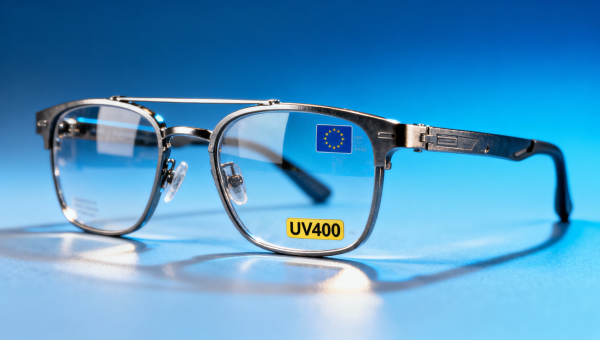
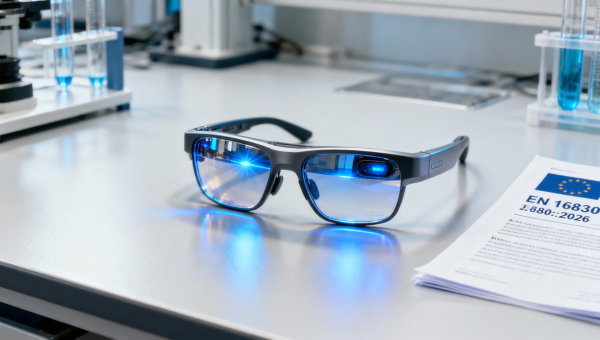
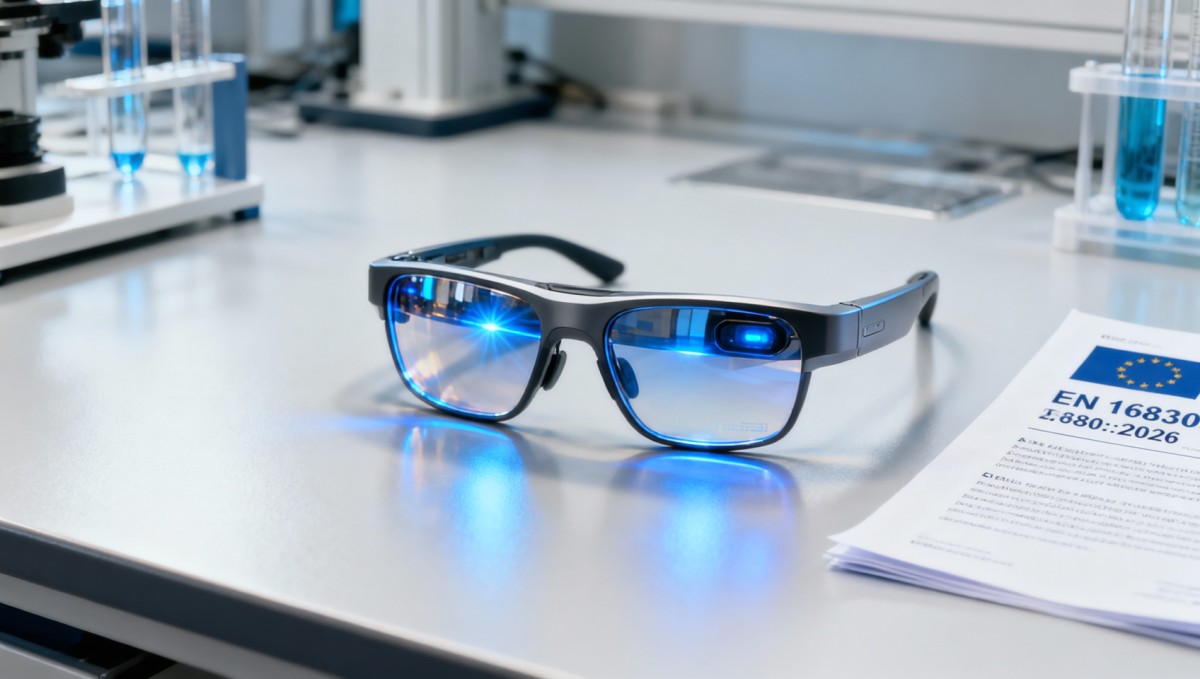
On March 28, 2026, the European Union officially released the updated EN 16830:2026 standard for optical safety of eyewear, introducing new requirements for blue light radiation limits in smart glasses, dynamic impact resistance testing for lenses, and privacy labeling for AI voice interaction. As China is the largest source of eyewear imports for the EU, this update will directly impact Chinese exporters, who must complete testing and certification within six months to avoid customs clearance issues. The eyewear manufacturing, smart technology, and supply chain sectors should closely monitor these changes.
Event Overview
The EU's EN 16830:2026 standard, effective from March 28, 2026, introduces three key updates:
- Blue light radiation limits for smart glasses
- Dynamic impact resistance testing for lenses
- Privacy labeling requirements for AI voice interaction features
Non-compliant products will be barred from EU customs clearance. Several testing agencies in Shenzhen and Wenzhou have already opened expedited EU Notified Body (NB) joint certification channels.
Impact on Sub-Sectors
Direct Export Enterprises
Chinese eyewear exporters to the EU will face immediate compliance challenges. Products lacking certification under the new standard will be rejected at customs, potentially disrupting supply chains and sales cycles.
Smart Eyewear Manufacturers
Companies producing smart glasses with AI voice interaction must now address both optical safety and privacy labeling requirements, adding complexity to product development and compliance processes.
Supply Chain Service Providers
Testing and certification service providers will see increased demand, particularly those offering expedited EU NB joint certification services in key manufacturing hubs like Shenzhen and Wenzhou.
Key Focus Areas and Recommended Actions
Prioritize Certification for High-Volume Products
Exporters should immediately identify their top-selling products in EU markets and initiate certification processes through available expedited channels.
Review Smart Eyewear Technical Specifications
Manufacturers of smart glasses should conduct technical audits to ensure compliance with both blue light radiation limits and AI privacy labeling requirements.
Monitor Implementation Timelines
While the standard is already published, companies should watch for any transitional arrangements or enforcement clarifications from EU authorities.
Editor's Perspective
From an industry viewpoint, this update signals the EU's increasing focus on both traditional optical safety and emerging technology-related concerns in eyewear. The inclusion of AI privacy requirements particularly reflects growing regulatory attention on smart wearable devices. While the immediate impact is on customs clearance, the longer-term effect may drive product redesigns and more rigorous testing protocols across the industry.
Conclusion
The EN 16830:2026 update represents a significant regulatory shift for eyewear exports to the EU, particularly affecting Chinese manufacturers and exporters. While the six-month compliance window provides some breathing room, companies should treat this as an urgent operational priority rather than a distant regulatory change. The standard's emphasis on smart eyewear features suggests future regulations may continue to converge traditional product safety with digital technology considerations.
Source Information
Primary source: Official EU standard publication EN 16830:2026
Additional context: Reports from testing agencies in Shenzhen and Wenzhou
Ongoing monitoring: Implementation guidelines from EU authorities expected in coming months
Search News
Hot Articles
Popular Tags
Need ExpertConsultation?
Connect with our specialized leisureengineering team for procurementstrategies.
Recommended News
 Apr 14, 2026China's Berens Shines as Sole Domestic Brand at Watches & Wonders Geneva 2026China's Berens makes history as the only domestic brand at Watches & Wonders Geneva 2026, showcasing COSC-certified tourbillon movements and EU compliance. Discover how this milestone signals China's rising luxury watchmaking capabilities.● Luxury Retail Analyst
 Apr 13, 2026Watches & Wonders Geneva 2026: Audemars Piguet Returns, Behrens Makes History as First Chinese BrandWatches & Wonders Geneva 2026 marks Audemars Piguet's return and historic debut of Chinese brand Behrens. Discover how this event reshapes luxury watch sourcing with China's rising high-end watchmaking capabilities.● Luxury Retail Analyst
 Apr 13, 2026US CPSC Launches Review of New Fitness Tracker Regulations, Chinese Exporters Required to Submit UL/ETL ComplianceUS CPSC's new fitness tracker regulations require Chinese exporters to submit UL/ETL compliance. Learn how this impacts wearable device OEMs, logistics, and component suppliers. Stay ahead with key action items for 2026 compliance.● Luxury Retail Analyst
 Apr 11, 2026Watches & Wonders Geneva 2026: Audemars Piguet Returns, 10 New Brands Join, Behrens as Sole Chinese ExhibitorWatches & Wonders Geneva 2026 marks a historic event with Audemars Piguet's return & 10 new brands including China's Behrens. Discover luxury watch industry shifts & new opportunities in this groundbreaking exhibition.● Luxury Retail Analyst
 Apr 11, 2026EU EN 16830:2026 Eyewear Standard Mandatory from April 2026, Chinese Exporters Need Certification Within 6 MonthsEU EN 16830:2026 eyewear standard becomes mandatory April 2026. Chinese exporters must update CE certification within 6 months. Learn critical compliance steps for UV protection, impact resistance & labeling requirements to avoid market removal.● Luxury Retail Analyst
 Apr 16, 2026Supply chain solutions for watch components: Why dual-sourcing isn’t automatic—even with same specSupply chain solutions for watch components & designer eyewear: Why dual-sourcing fails without validation—OEM manufacturing, custom fabrication, and compliance risks revealed.● Luxury Retail Analyst
 Apr 16, 2026Smartwatch OEM partners who handle firmware updates—and why that changes your support liabilityDiscover smartwatch OEM partners with true firmware stewardship—critical for designer eyewear, hotel furniture integrations, and pro audio equipment sync. Reduce support liability now.● Luxury Retail Analyst
 Apr 16, 2026OEM manufacturing for watches: When 'custom' means longer lead times, not just logo changesOEM manufacturing for watches demands precision—not just logos. Discover how custom fabrication impacts lead times across designer eyewear, hotel furniture & supply chain solutions.● Luxury Retail Analyst
 Apr 16, 2026Luxury timepieces with service networks outside major citiesLuxury timepieces with certified service networks in Tier-2+ cities—backed by calibration, warranty & parts support. Also: custom jewelry, luxury accessories, orchestral instruments, park benches, music stands & more.● Luxury Retail Analyst
 Apr 15, 2026Luxury timepieces built for daily wear — not just displayLuxury timepieces engineered for daily wear—precision, durability & style. Also explore custom jewelry, luxury accessories, orchestral instruments, DJ equipment, music stands, park benches, outdoor playgrounds & more.● Luxury Retail Analyst
 Apr 10, 2026Designer eyewear frames labeled 'acetate' may contain only 37% bio-acetate — and no one discloses itDiscover supply chain solutions for designer eyewear, OEM jewelry & ODM watches — verify true bio-acetate content, not just labels. Premium accessories, commercial procurement made transparent.● Luxury Retail Analyst
 Apr 10, 2026ODM watches with interchangeable straps: Who controls the tolerances — designer or factory?ODM watches with interchangeable straps demand precision tolerance control. Discover how top-tier supply chain solutions, OEM manufacturing, and designer eyewear partnerships ensure premium accessories quality and commercial watch reliability.● Luxury Retail Analyst
 Apr 10, 2026Supply chain solutions for watches often ignore regional after-sales logisticssupply chain solutions for commercial watch, OEM jewelry & designer eyewear—unlock regional after-sales logistics resilience with GCT’s E-E-A-T–validated benchmarks.● Luxury Retail Analyst
 Apr 10, 2026Designer eyewear production runs under 500 units: Is MOQ negotiation still realistic?Explore realistic MOQ negotiation for designer eyewear under 500 units—backed by agile OEM manufacturing, supply chain solutions, and premium accessories expertise.● Luxury Retail Analyst
 Apr 11, 2026OEM manufacturing for eyewear: Where do tooling revisions actually begin?OEM manufacturing for eyewear starts where tooling revisions begin—early design validation, compliance mapping & pilot diagnostics. Discover supply chain solutions, designer eyewear, ODM watches & OEM jewelry excellence.● Luxury Retail Analyst
 Apr 11, 2026Commercial watch procurement often overlooks service lifecycle costsDiscover integrated supply chain solutions for commercial watch, OEM jewelry & ODM watches—reduce TCO with premium accessories, designer eyewear & more.● Luxury Retail Analyst
 Apr 11, 2026ODM watches with full compliance tracking — rare or just under-marketed?ODM watches with full compliance tracking—discover premium accessories, OEM jewelry & designer eyewear suppliers verified for commercial procurement, supply chain solutions, and traceability.● Luxury Retail Analyst
 Apr 11, 2026Designer eyewear brands: When 'custom' really means 'compromised fit'Discover how supply chain solutions & OEM manufacturing impact designer eyewear fit—plus ODM watches, OEM jewelry & premium accessories sourcing.● Luxury Retail Analyst
 Apr 07, 2026EU Updates EN 16830:2026 Eyewear Safety Standards, Impacting Chinese ExportersEU's new EN 16830:2026 eyewear safety standards impact Chinese exporters with blue light limits, impact resistance tests & AI privacy labels. Learn how to comply and maintain EU market access.● Luxury Retail Analyst
 Apr 07, 2026US New Tariffs on Optical Lenses: Impact on Chinese ExportersExplore how US new tariffs on optical lenses impact Chinese exporters, with key insights on compliance strategies for high-index resin and photochromic lenses. Essential reading for eyewear manufacturers and supply chain professionals.● Luxury Retail Analyst
 Apr 07, 2026AR Glasses Under $500: Chinese Brands Enter Global MarketsDiscover affordable AR glasses under $500 from Chinese brands like RayNeo and INMO now in global markets. Explore how this price shift impacts retail, enterprise solutions, and distribution networks in 2024.● Luxury Retail Analyst
 Apr 07, 2026XREAL Aims for HK IPO as Global AR Glasses Leader with 24.8% Market Share by 2025XREAL, the global AR glasses leader with 24.8% projected market share by 2025, files for HK IPO. Discover how this impacts distributors, suppliers & logistics providers in the growing AR hardware sector.● Luxury Retail Analyst
 Apr 07, 2026Commercial watches built for field service teams — battery life, shock resistance, and legibility under glareCommercial watch built for playground contractor, hotel nightstands & park drinking fountains teams—3-year battery, MIL-STD shock resistance, glare-proof legibility.● Luxury Retail Analyst
 Apr 02, 2026China's Eyewear Export Logistics Under Pressure: US West Coast Route Space Shortage Extends Lead Times to 65–75 DaysChina's eyewear exports face 65–75 day delays due to US West Coast route shortages. Learn how exporters and buyers can adapt to extended lead times and protect supply chains in 2026.● Luxury Retail Analyst