AR Glasses Under $500: Chinese Brands Enter Global Markets
Introduction
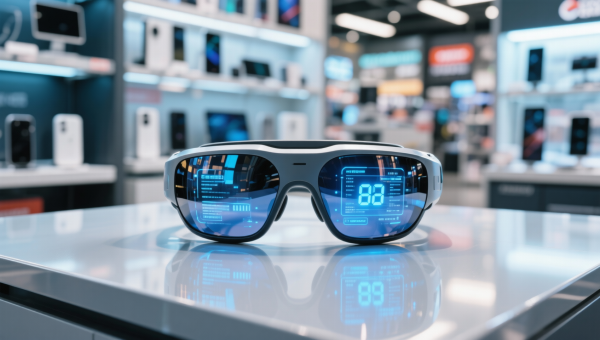
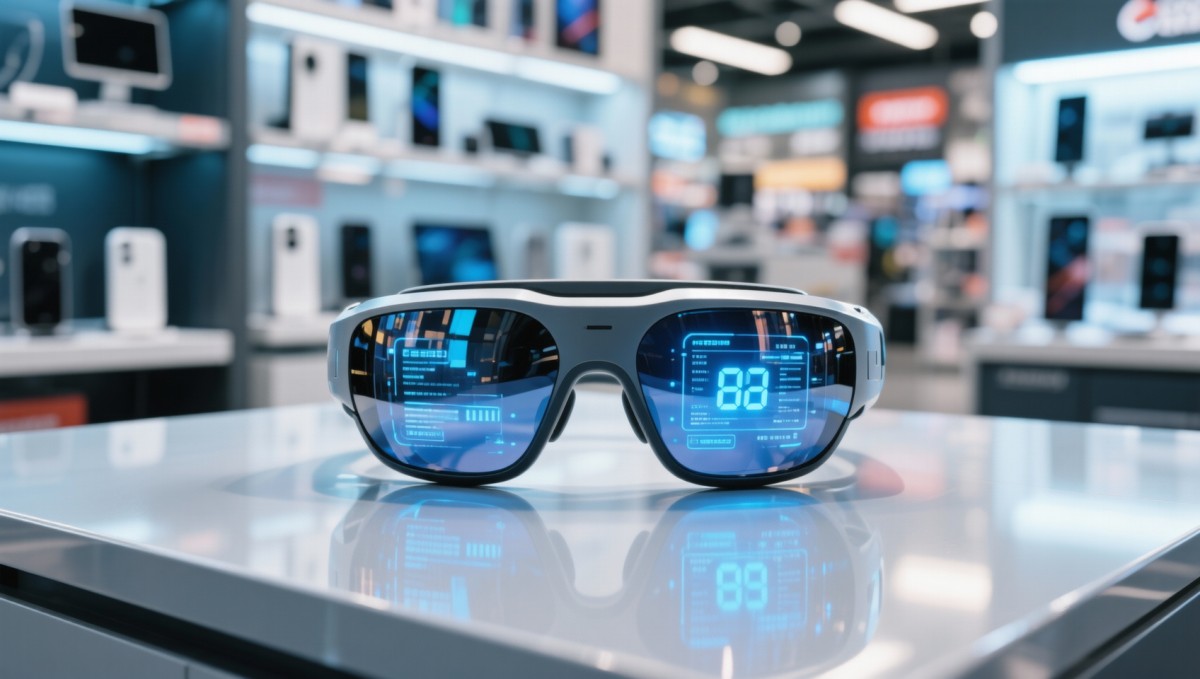
Chinese AR glasses brands like RayNeo (TCL) and INMO (Skyworth) have broken the $500 price barrier, with products now available in major Western retail chains including Best Buy and MediaMarkt. This pricing shift, occurring in early 2024, significantly lowers the entry barrier for distributors and could reshape the consumer AR landscape. The consumer electronics, AR solution providers, and retail distribution sectors should monitor this development closely as it accelerates B2B2C adoption.
Event Overview
Key facts: 1) Multiple China-origin AR glasses brands have achieved sub-$500 price points (approximately 3000 RMB) for consumer-grade devices; 2) These products focus on lightweight applications like media consumption and remote collaboration; 3) Distribution is expanding through established Western electronics retailers; 4) The price reduction primarily benefits small-to-medium distributors through lower inventory costs.
Impact on Key Sectors
Consumer Electronics Retail
The sub-$500 pricing transforms AR glasses from niche demo products to viable shelf inventory. Retail buyers now face lower financial risk when testing AR categories, potentially triggering broader category expansion in 2024-2025.
AR Solution Providers
System integrators developing workplace AR solutions gain access to affordable hardware that meets basic enterprise needs (e.g., remote assistance, digital manuals), though high-end industrial applications remain dominated by pricier alternatives.
Distribution Networks
Regional distributors and VARs (Value-Added Resellers) in secondary markets can now build AR product lines without large upfront inventory investments, particularly benefiting education and SMB-focused channels.
Strategic Considerations
Monitor Channel Strategies
Track how major retailers merchandise these products - whether as standalone tech or bundled with compatible devices (e.g., smartphones, laptops). This indicates market education priorities.
Evaluate Use Case Fit
The current generation suits specific scenarios: indoor media consumption (120-inch virtual screen claims), basic telepresence, and digital signage applications - but lacks advanced features like SLAM or 3D object recognition.
Assess Ecosystem Development
Watch for software partnerships (especially with video conferencing tools and streaming platforms) that could enhance the value proposition beyond hardware specs.
Prepare for Price War Spillover
Component suppliers should anticipate pricing pressure on displays and optical modules as volume production scales, potentially affecting mid-range VR headset economics.
Industry Perspective
Analysis suggests this represents more than a pricing milestone - it signals Chinese AR manufacturers' strategic pivot toward volume-driven global distribution. Unlike previous attempts that relied on direct e-commerce, partnering with established retailers provides crucial offline exposure. However, the technology remains transitional; current devices use birdbath optics rather than waveguides, indicating room for future iterations. The real test will be sustained sell-through rates after initial novelty purchases.
Conclusion
This pricing breakthrough makes AR more accessible but doesn't yet solve fundamental adoption barriers like compelling daily use cases. Industry players should view it as an infrastructure development - lowering the cost of market education while creating new opportunities for content and service providers to build atop more widely available hardware.
Sources
1. Retail distribution reports from Best Buy and MediaMarkt (Q1 2024)
2. Product pricing data from RayNeo and INMO official channels
3. Channel checks with regional distributors (ongoing monitoring required for sell-through data)
Search News
Hot Articles
- Stage Lighting & TrussCCTV5 Snooker Broadcast Drives 37% Surge in Stage Lighting Export InquiriesApr 21, 2026
- Indoor PlaygroundVietnam Mandates Child Finger-Trap Sensors for Indoor Play EquipmentApr 21, 2026
- Stage Lighting & TrussGuangdong vs. Shanxi CBA Game Highlights Domestic Smart Arena LightingApr 21, 2026
Popular Tags
Need ExpertConsultation?
Connect with our specialized leisureengineering team for procurementstrategies.
Recommended News
 Apr 14, 2026China's Berens Shines as Sole Domestic Brand at Watches & Wonders Geneva 2026China's Berens makes history as the only domestic brand at Watches & Wonders Geneva 2026, showcasing COSC-certified tourbillon movements and EU compliance. Discover how this milestone signals China's rising luxury watchmaking capabilities.● Luxury Retail Analyst
 Apr 13, 2026Watches & Wonders Geneva 2026: Audemars Piguet Returns, Behrens Makes History as First Chinese BrandWatches & Wonders Geneva 2026 marks Audemars Piguet's return and historic debut of Chinese brand Behrens. Discover how this event reshapes luxury watch sourcing with China's rising high-end watchmaking capabilities.● Luxury Retail Analyst
 Apr 13, 2026US CPSC Launches Review of New Fitness Tracker Regulations, Chinese Exporters Required to Submit UL/ETL ComplianceUS CPSC's new fitness tracker regulations require Chinese exporters to submit UL/ETL compliance. Learn how this impacts wearable device OEMs, logistics, and component suppliers. Stay ahead with key action items for 2026 compliance.● Luxury Retail Analyst
 Apr 11, 2026Watches & Wonders Geneva 2026: Audemars Piguet Returns, 10 New Brands Join, Behrens as Sole Chinese ExhibitorWatches & Wonders Geneva 2026 marks a historic event with Audemars Piguet's return & 10 new brands including China's Behrens. Discover luxury watch industry shifts & new opportunities in this groundbreaking exhibition.● Luxury Retail Analyst
 Apr 11, 2026EU EN 16830:2026 Eyewear Standard Mandatory from April 2026, Chinese Exporters Need Certification Within 6 MonthsEU EN 16830:2026 eyewear standard becomes mandatory April 2026. Chinese exporters must update CE certification within 6 months. Learn critical compliance steps for UV protection, impact resistance & labeling requirements to avoid market removal.● Luxury Retail Analyst
 Apr 16, 2026Supply chain solutions for watch components: Why dual-sourcing isn’t automatic—even with same specSupply chain solutions for watch components & designer eyewear: Why dual-sourcing fails without validation—OEM manufacturing, custom fabrication, and compliance risks revealed.● Luxury Retail Analyst
 Apr 16, 2026Smartwatch OEM partners who handle firmware updates—and why that changes your support liabilityDiscover smartwatch OEM partners with true firmware stewardship—critical for designer eyewear, hotel furniture integrations, and pro audio equipment sync. Reduce support liability now.● Luxury Retail Analyst
 Apr 16, 2026OEM manufacturing for watches: When 'custom' means longer lead times, not just logo changesOEM manufacturing for watches demands precision—not just logos. Discover how custom fabrication impacts lead times across designer eyewear, hotel furniture & supply chain solutions.● Luxury Retail Analyst
 Apr 16, 2026Luxury timepieces with service networks outside major citiesLuxury timepieces with certified service networks in Tier-2+ cities—backed by calibration, warranty & parts support. Also: custom jewelry, luxury accessories, orchestral instruments, park benches, music stands & more.● Luxury Retail Analyst
 Apr 15, 2026Luxury timepieces built for daily wear — not just displayLuxury timepieces engineered for daily wear—precision, durability & style. Also explore custom jewelry, luxury accessories, orchestral instruments, DJ equipment, music stands, park benches, outdoor playgrounds & more.● Luxury Retail Analyst
 Apr 10, 2026Designer eyewear frames labeled 'acetate' may contain only 37% bio-acetate — and no one discloses itDiscover supply chain solutions for designer eyewear, OEM jewelry & ODM watches — verify true bio-acetate content, not just labels. Premium accessories, commercial procurement made transparent.● Luxury Retail Analyst
 Apr 10, 2026ODM watches with interchangeable straps: Who controls the tolerances — designer or factory?ODM watches with interchangeable straps demand precision tolerance control. Discover how top-tier supply chain solutions, OEM manufacturing, and designer eyewear partnerships ensure premium accessories quality and commercial watch reliability.● Luxury Retail Analyst
 Apr 10, 2026Supply chain solutions for watches often ignore regional after-sales logisticssupply chain solutions for commercial watch, OEM jewelry & designer eyewear—unlock regional after-sales logistics resilience with GCT’s E-E-A-T–validated benchmarks.● Luxury Retail Analyst
 Apr 10, 2026Designer eyewear production runs under 500 units: Is MOQ negotiation still realistic?Explore realistic MOQ negotiation for designer eyewear under 500 units—backed by agile OEM manufacturing, supply chain solutions, and premium accessories expertise.● Luxury Retail Analyst
 Apr 11, 2026OEM manufacturing for eyewear: Where do tooling revisions actually begin?OEM manufacturing for eyewear starts where tooling revisions begin—early design validation, compliance mapping & pilot diagnostics. Discover supply chain solutions, designer eyewear, ODM watches & OEM jewelry excellence.● Luxury Retail Analyst
 Apr 11, 2026Commercial watch procurement often overlooks service lifecycle costsDiscover integrated supply chain solutions for commercial watch, OEM jewelry & ODM watches—reduce TCO with premium accessories, designer eyewear & more.● Luxury Retail Analyst
 Apr 11, 2026ODM watches with full compliance tracking — rare or just under-marketed?ODM watches with full compliance tracking—discover premium accessories, OEM jewelry & designer eyewear suppliers verified for commercial procurement, supply chain solutions, and traceability.● Luxury Retail Analyst
 Apr 11, 2026Designer eyewear brands: When 'custom' really means 'compromised fit'Discover how supply chain solutions & OEM manufacturing impact designer eyewear fit—plus ODM watches, OEM jewelry & premium accessories sourcing.● Luxury Retail Analyst
 Apr 07, 2026EU Updates EN 16830:2026 Eyewear Safety Standards, Impacting Chinese ExportersEU's new EN 16830:2026 eyewear safety standards impact Chinese exporters with blue light limits, impact resistance tests & AI privacy labels. Learn how to comply and maintain EU market access.● Luxury Retail Analyst
 Apr 07, 2026US New Tariffs on Optical Lenses: Impact on Chinese ExportersExplore how US new tariffs on optical lenses impact Chinese exporters, with key insights on compliance strategies for high-index resin and photochromic lenses. Essential reading for eyewear manufacturers and supply chain professionals.● Luxury Retail Analyst
 Apr 07, 2026AR Glasses Under $500: Chinese Brands Enter Global MarketsDiscover affordable AR glasses under $500 from Chinese brands like RayNeo and INMO now in global markets. Explore how this price shift impacts retail, enterprise solutions, and distribution networks in 2024.● Luxury Retail Analyst
 Apr 07, 2026XREAL Aims for HK IPO as Global AR Glasses Leader with 24.8% Market Share by 2025XREAL, the global AR glasses leader with 24.8% projected market share by 2025, files for HK IPO. Discover how this impacts distributors, suppliers & logistics providers in the growing AR hardware sector.● Luxury Retail Analyst
 Apr 07, 2026Commercial watches built for field service teams — battery life, shock resistance, and legibility under glareCommercial watch built for playground contractor, hotel nightstands & park drinking fountains teams—3-year battery, MIL-STD shock resistance, glare-proof legibility.● Luxury Retail Analyst
 Apr 02, 2026China's Eyewear Export Logistics Under Pressure: US West Coast Route Space Shortage Extends Lead Times to 65–75 DaysChina's eyewear exports face 65–75 day delays due to US West Coast route shortages. Learn how exporters and buyers can adapt to extended lead times and protect supply chains in 2026.● Luxury Retail Analyst