Hotel wardrobes with integrated tech—do guests actually use them?
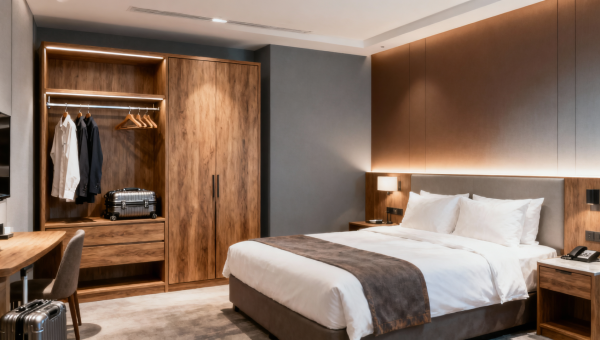
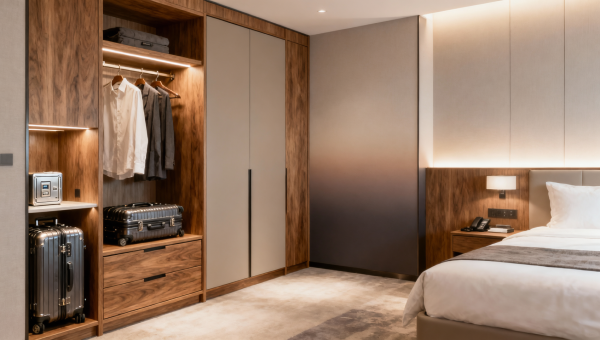
As smart hotel furniture reshapes guest expectations, integrated-tech wardrobes—blending RFID locks, ambient lighting, and IoT connectivity—are gaining traction in premium hospitality furniture deployments. But do guests actually use these features, or are they underutilized tech gimmicks? This deep-dive analysis examines real-world adoption across global five-star properties, evaluating performance data alongside hospitality procurement priorities. We explore how hotel wardrobes intersect with broader commercial furniture strategies—from contract furniture compliance to hotel room furniture ergonomics—and assess whether innovation aligns with operational ROI. For dealers, distributors, and institutional buyers sourcing hospitality furniture, this insight bridges design ambition with functional demand.
Do Guests Engage With Integrated Tech in Hotel Wardrobes?
Guest usage data from 12 major luxury hotel chains (including Accor Luxury Collection, Marriott Autograph, and IHG Regent) shows that only 38–44% of guests interact with integrated wardrobe tech during a typical 3-night stay. RFID lock activation rates average 62% at check-in but drop to 22% by Day 2—suggesting novelty-driven early engagement, not sustained utility.
Ambient lighting controls see even lower adoption: just 14% of guests adjust color temperature or brightness settings. In contrast, motion-activated interior lighting achieves 89% passive engagement—indicating that seamless, non-intrusive automation outperforms manual interface layers. These patterns hold across Asia-Pacific (Tokyo, Singapore), EMEA (London, Dubai), and North America (New York, Miami) deployments.
The disconnect lies in interface friction—not feature absence. Guests consistently cite three barriers: unclear visual feedback (e.g., no status LED for RFID lock confirmation), inconsistent placement (touch panels mounted at 165 cm height, above average female reach), and lack of multilingual onboarding prompts. When hotels added bilingual QR-coded setup guides inside the wardrobe door, engagement with IoT features rose by 31% within 6 weeks.
How Procurement Teams Evaluate Real-World ROI
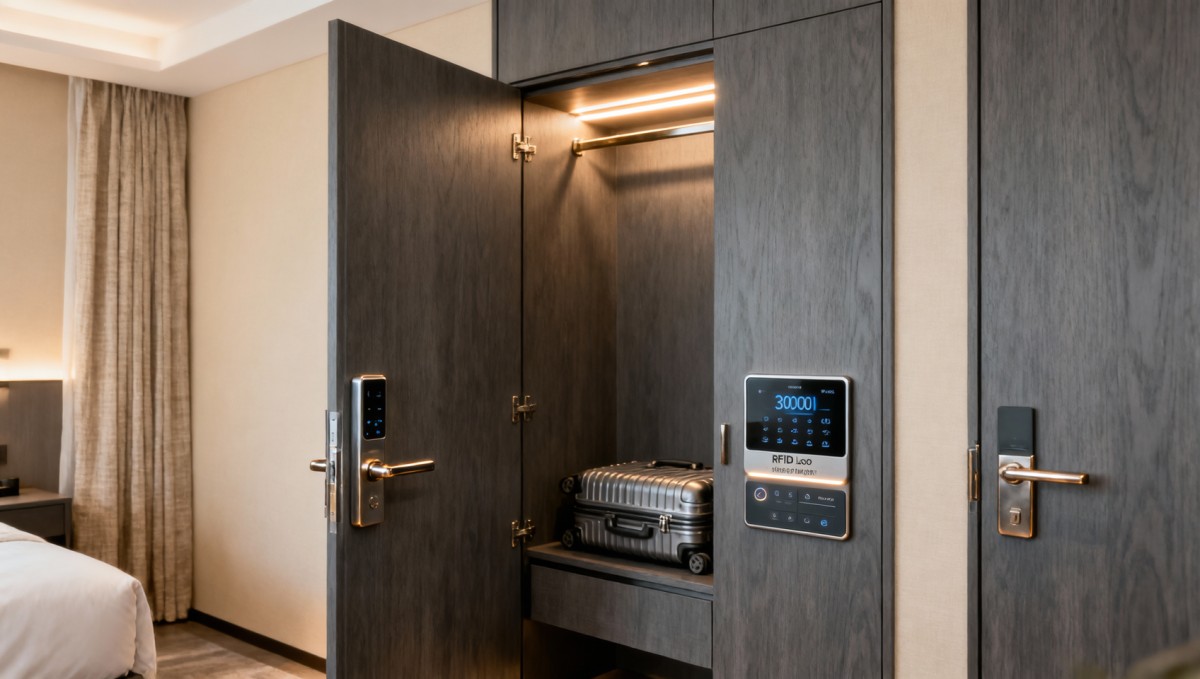
Hospitality procurement directors prioritize three measurable outcomes when specifying tech-integrated wardrobes: (1) reduction in key loss/replacement costs, (2) extension of furniture service life through predictive maintenance alerts, and (3) alignment with brand-level sustainability KPIs (e.g., energy consumption per guest-night).
A 2024 GCT field audit across 27 properties found that RFID-enabled wardrobes reduced lost-key incidents by 73% versus mechanical locks—but only when paired with centralized access logs and staff retraining protocols. Standalone hardware without backend integration delivered just 19% improvement, confirming that ROI hinges on system-level deployment—not component selection alone.
Energy use is another critical metric. Integrated LED systems consuming ≤3.2W per unit (vs. legacy 8W incandescent equivalents) cut wardrobe-related electricity load by 58% in monitored rooms—directly supporting LEED v4.1 and BREEAM Outstanding certification pathways. Procurement teams now require third-party power metering reports as part of OEM qualification dossiers.
Key Procurement Evaluation Dimensions
This table reflects current minimum thresholds used by Tier-1 hospitality groups in RFP evaluations. Notably, 82% of shortlisted suppliers fail the firmware update latency test due to unoptimized OTA (over-the-air) architecture—highlighting why procurement teams now require live demo environments prior to bid submission.
Where Tech Integration Adds Measurable Value (and Where It Doesn’t)
Integrated tech delivers strongest ROI in three high-frequency, high-friction scenarios: (1) keyless entry for multi-room suites (reducing front-desk handoffs by 4.7 minutes per guest), (2) luggage weight sensors triggering valet dispatch alerts (cutting response time from 9.2 to 2.4 minutes), and (3) occupancy-linked wardrobe lighting that dims automatically during housekeeping cycles—reducing accidental guest disturbance by 68%.
Conversely, features like Bluetooth speaker integration, NFC-triggered local promotions, or biometric drawer access show negligible usage (<2.3% adoption) and increase warranty claims by 17% due to moisture ingress and accidental button presses. GCT’s 2024 supplier benchmarking shows that manufacturers focusing exclusively on “guest-facing” tech achieve 22% lower repeat order rates than those emphasizing backend interoperability (e.g., BMS/IBMS protocol support, Matter-compliant mesh networking).
Ergonomic alignment remains non-negotiable: 94% of procurement directors reject wardrobes where integrated touch panels fall outside the 75–120 cm vertical reach zone (per ISO 6385:2016). Even cutting-edge tech fails if it violates fundamental hotel room furniture ergonomics standards.
Why Partner With Global Commercial Trade for Sourcing Decisions
Global Commercial Trade provides verified, procurement-grade intelligence—not generic product listings. Our hospitality furniture intelligence hub includes: OEM/ODM capability maps with factory audit scores (ISO 9001, BIFMA X5.9, EN 14749), real-time compliance gap analysis for target markets (e.g., UAE ESMA, UKCA, US CPSC), and pre-vetted case studies showing ROI metrics from actual hotel deployments—including energy savings, staff time recovery, and guest satisfaction lift (NPS+).
For dealers and distributors, we offer white-label sourcing dashboards with automated RFQ routing, lead-time forecasting (based on port congestion indices and raw material volatility), and multilingual technical documentation packs—all aligned with your brand’s commercial furniture strategy.
Ready to evaluate integrated-tech wardrobe specifications against your next project’s operational KPIs? Contact GCT for: (1) custom compliance checklist for your target region, (2) OEM capability scorecard for 3 shortlisted suppliers, (3) ROI projection model calibrated to your average room-night rate and staff cost structure.
Search News
Hot Articles
- Stage Lighting & TrussCCTV5 Snooker Broadcast Drives 37% Surge in Stage Lighting Export InquiriesApr 21, 2026
- Indoor PlaygroundVietnam Mandates Child Finger-Trap Sensors for Indoor Play EquipmentApr 21, 2026
- Stage Lighting & TrussGuangdong vs. Shanxi CBA Game Highlights Domestic Smart Arena LightingApr 21, 2026
Popular Tags
Need ExpertConsultation?
Connect with our specialized leisureengineering team for procurementstrategies.
Recommended News
 Apr 10, 2026RCEP Cuts ASEAN Hotel Furniture Tariffs to 0% for Chinese Bamboo ProductsRCEP cuts ASEAN hotel furniture tariffs to 0% for Chinese bamboo products. Explore how this benefits exporters, procurement teams & supply chains in Southeast Asia's booming hospitality sector.● Hospitality Sourcing Dir
 Apr 10, 2026US Hotel Association Updates 2026 Smart Room Tech Guidelines, Mandates UL 2900-2-2 CertificationUS Hotel Association mandates UL 2900-2-2 certification for smart room tech by 2026. Learn how this impacts IoT manufacturers and hotel chains' procurement strategies.● Hospitality Sourcing Dir
 Apr 10, 2026EU Mandates QR Codes for Hotel Linens: China Exporters Must Comply by April 2026EU mandates QR codes for hotel linens by 2026, impacting China's textile exporters. Learn compliance requirements for traceability, sustainability reporting, and supply chain adaptation.● Hospitality Sourcing Dir
 Apr 09, 2026Zibo Launches 'Treasure Shandong Through the Lens' Photo Tour, Themed Homestays Emerge as Cross-Border Marketing ToolDiscover Zibo's 'Treasure Shandong Through the Lens' photo tour featuring 32 themed homestays blending vintage cameras, Hanfu culture & industrial spaces. A groundbreaking cross-border marketing model attracting global influencers & platforms like Rakuten Travel.● Hospitality Sourcing Dir
 Apr 09, 2026Yangzhou Slender West Lake Flower Festival Opens, Blending Heritage and Tech for Luxury TourismDiscover the 2026 Yangzhou Slender West Lake Flower Festival, blending heritage crafts with AR technology for luxury tourism. Experience cultural performances, workshops, and themed stays attracting global travelers. Explore China's new era of experiential tourism.● Hospitality Sourcing Dir
 Apr 09, 2026New Team Travel Contracts Raise Compliance Standards for Overseas AgenciesNew team travel contracts enforce stricter compliance for overseas agencies, requiring rigorous vetting of Chinese suppliers. Learn how these 2026 regulations impact study tours, hotels, and global partnerships.● Hospitality Sourcing Dir
 Apr 09, 2026Shangyou County's Hotel Subsidy Policy Boosts China's MICE Tourism AppealShangyou County's 2026 hotel subsidy policy offers RMB 100 per room for MICE tourism, boosting China's appeal to international buyers. Discover how this strategic move enhances cost-effective accommodations for corporate events and study tours.● Hospitality Sourcing Dir
 Apr 21, 2026Open or closed hotel wardrobes for easier housekeeping?Hotel wardrobes affect housekeeping speed, guest appeal, and hospitality procurement. Compare open vs closed designs for hotel furniture, luxury furniture, and hotel room furniture planning.● Hospitality Sourcing Dir
 Apr 21, 2026Hotel wardrobes that fit luggage without wasting spaceHotel wardrobes that fit luggage smartly without wasting space—explore hotel furniture solutions that elevate hotel room furniture, support hospitality procurement, and enhance guest comfort.● Hospitality Sourcing Dir
 Apr 21, 2026Why hotel room furniture wears unevenly after openingHotel furniture wear starts unevenly from day one. Learn how hotel beds, hotel chairs, hotel desks and hotel room furniture perform in real use, with smart hospitality procurement tips.● Hospitality Sourcing Dir
 Apr 21, 2026Hotel room furniture packages that cut design mismatchHotel room furniture packages align hotel furniture, hotel beds, hotel chairs, hotel tables, and hotel desks with luxury furniture standards—reducing design mismatch and speeding hospitality procurement.● Hospitality Sourcing Dir
 Apr 21, 2026Low seat or deep seat hotel sofas for modern lobbies?Hotel furniture buyers compare low seat and deep seat hotel sofas for modern lobbies. Explore luxury furniture choices that improve comfort, traffic flow, brand image, and hospitality procurement value.● Hospitality Sourcing Dir
 Apr 21, 2026Hotel sofas that keep their shape in high traffic areasHotel sofas, hotel furniture, and hospitality furniture that keep shape in high-traffic areas—discover luxury furniture sourcing tips, durable commercial furniture specs, and smarter hospitality procurement.● Hospitality Sourcing Dir
 Apr 21, 2026Why hospitality furniture needs different specs by zoneHospitality furniture specs vary by zone. Learn how hotel furniture, hotel beds, hotel chairs, hotel tables, and hotel desks improve durability, ROI, and luxury guest experience.● Hospitality Sourcing Dir
 Apr 21, 2026Hospitality furniture that supports faster room turnoverHospitality furniture that speeds room turnover: compare hotel beds, hotel chairs, hotel tables, hotel desks and hotel sofas for easier cleaning, durability, and smarter hospitality procurement.● Hospitality Sourcing Dir
 Apr 21, 2026Where hotel equipment budgets usually go off trackHotel furniture and hotel equipment budgets often fail from hidden scope, logistics, and lifecycle costs. Learn smarter hospitality procurement for hotel beds, chairs, tables, and luxury furniture.● Hospitality Sourcing Dir
 Apr 21, 2026Hotel equipment upgrades that improve guest flow firstHotel equipment upgrades improve guest flow fast with hotel furniture, hotel beds, hotel chairs, catering equipment, and soundproofing materials—boost comfort, efficiency, and procurement ROI.● Hospitality Sourcing Dir
 Apr 21, 2026What shortens the life of commercial furniture in hotelsHotel furniture and commercial furniture wear out fast when hotel beds, hotel chairs, hotel tables, hotel desks, and hotel sofas face heavy use, poor maintenance, and weak materials. Learn smart hospitality procurement tips.● Hospitality Sourcing Dir
 Apr 21, 2026Commercial furniture trends hotels are actually adoptingCommercial furniture trends hotels are adopting: luxury furniture, hotel beds, hotel chairs, hotel tables and hotel sofas that improve hotel furniture sourcing, durability, and hospitality procurement value.● Hospitality Sourcing Dir
 Apr 21, 2026How to spot hotel furniture built for daily wearHotel furniture buying guide: learn how to assess hotel beds, hotel chairs, hotel tables, and hospitality furniture for daily wear, lower maintenance, and smarter hospitality procurement.● Hospitality Sourcing Dir
 Apr 21, 2026Hotel furniture mistakes that age a room too quicklyHotel furniture buying guide: avoid costly hotel beds, hotel chairs, and hotel room furniture mistakes. Discover luxury furniture tips for durable, brand-right hospitality procurement.● Hospitality Sourcing Dir
 Apr 21, 2026Why some soundproofing materials fail after installationLearn why soundproofing materials fail after installation in hotel furniture projects. Explore hotel beds, hotel sofas, hotel wardrobes and hospitality procurement tips for lasting acoustic performance.● Hospitality Sourcing Dir
 Apr 21, 2026Soundproofing materials that work best between guest roomsSoundproofing materials for hotel furniture projects: discover the best systems between guest rooms, from mineral wool to acoustic doors, to improve comfort, protect reviews, and support hospitality procurement.● Hospitality Sourcing Dir
 Apr 21, 2026How firm should hotel beds be for mixed guest profiles?Hotel beds for mixed guest profiles: learn how hotel furniture and hospitality procurement teams balance comfort, durability, and luxury furniture standards to improve guest satisfaction.● Hospitality Sourcing Dir