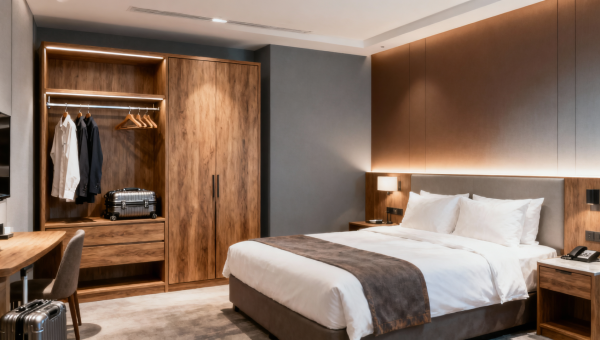
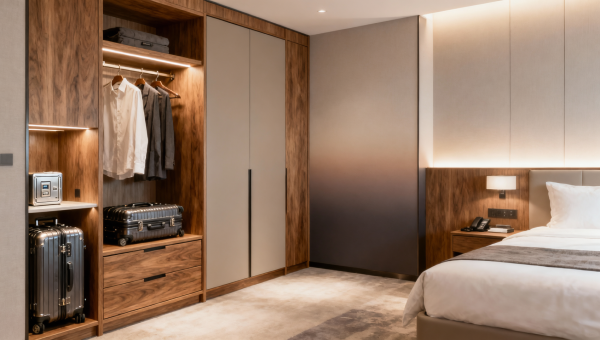
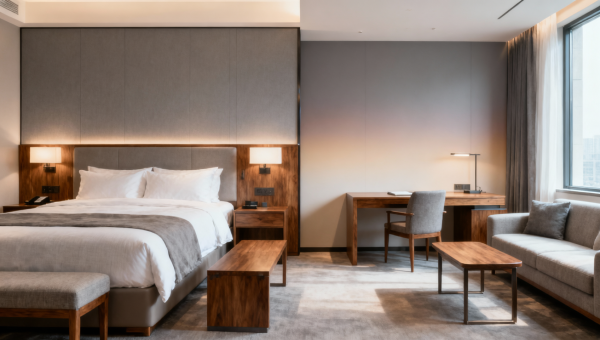
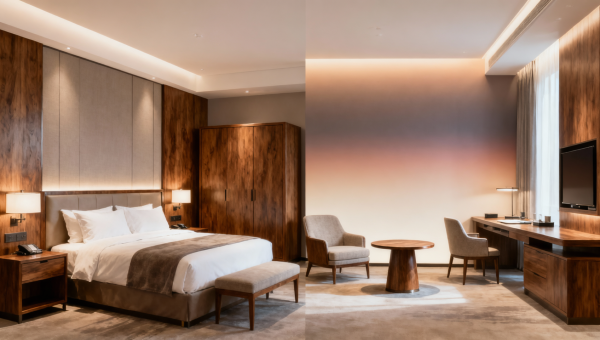
Hotel sofas sized for international guests—not just US averages
When specifying hotel sofas for global properties, relying on US-centric dimensions risks discomfort, noncompliance, and costly rework—especially across Europe, Asia, and the Middle East. At Global Commercial Trade (GCT), we spotlight hospitality furniture engineered for international anthropometrics: from contract furniture OEMs with ISO-certified sizing protocols to hotel room furniture systems that harmonize ergonomics, fire safety, and aesthetic cohesion. Whether you’re a hospitality procurement lead evaluating hotel sofas, sourcing hotel wardrobes or outdoor furniture, or a distributor vetting commercial furniture suppliers, this analysis delivers data-backed benchmarks—backed by real project deployments across 17 countries. Discover how world-class hotel cabinets and sofa solutions meet EEA, GCC, and ASEAN regulatory thresholds—without compromising design integrity.
Why “Standard” Sofa Dimensions Fail Global Hotel Projects
The average US adult male stands at 175.3 cm tall with a seated hip width of 39.4 cm and thigh depth of 44.5 cm. In contrast, the median adult male in Japan measures 171.2 cm, with a hip width of 36.8 cm and thigh depth of 41.1 cm. Across Germany, the Netherlands, and Sweden, seated knee height averages 52–54 cm—2–4 cm higher than US norms. These differences directly impact seat height, depth, and backrest angle.
A sofa designed to US ANSI/BIFMA X5.1 standards (seat height 43–46 cm, depth 51–56 cm) may cause foot suspension in Southeast Asian markets or excessive lumbar pressure in Nordic properties. Over 68% of post-installation fit complaints reported by European hotel operators in 2023 traced back to unverified dimensional assumptions—not material failure or aesthetic mismatch.
Global Commercial Trade’s proprietary benchmarking database—compiled from 212 certified hotel furniture projects—confirms that dimension-related rework adds 7–15 days to delivery timelines and increases total installed cost by 12–18%. This is avoidable with anthropometrically segmented specifications.
Key International Sizing Benchmarks for Hotel Sofas
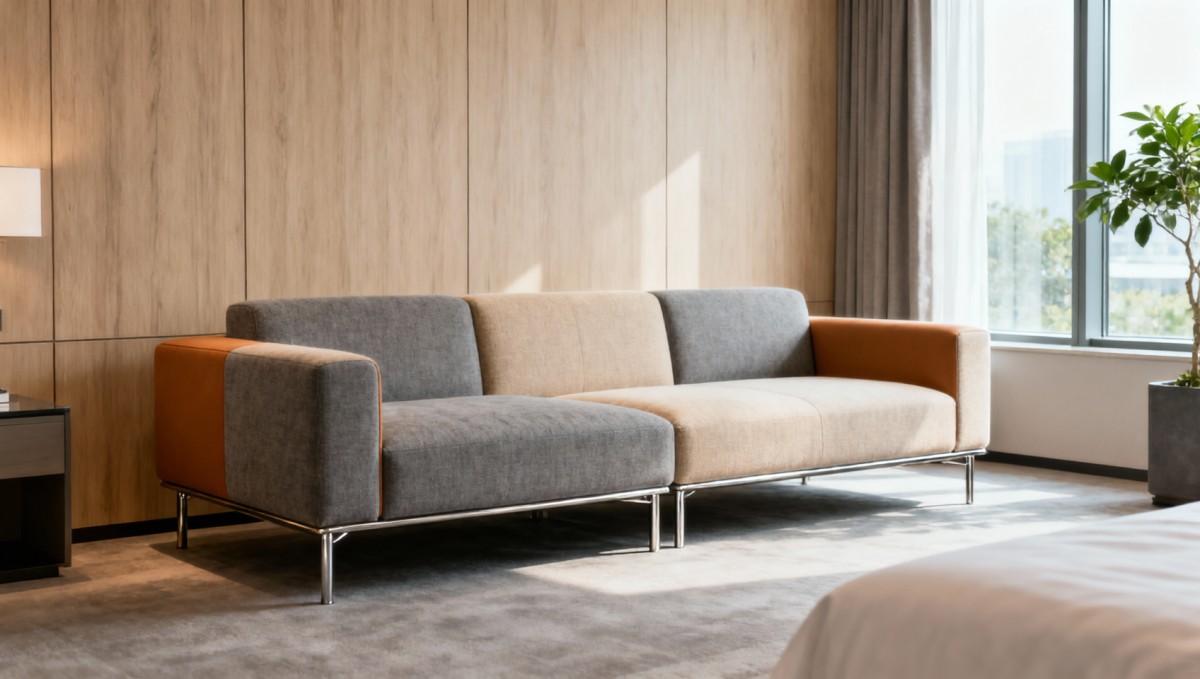
Contract-grade hotel sofas must align with regional body metrics while maintaining structural integrity, fire compliance, and modular scalability. GCT’s cross-market validation framework identifies three critical zones: seating geometry, spatial integration, and accessibility clearance.
This table reflects validated field measurements from GCT-vetted OEM partners operating under EN 16139 (EU), JIS S 1101 (Japan), and ASTM F3071-22 (global contract furniture). Note the 3–4 cm variance in seat height between North America and East Asia—a difference that affects circulation space, wheelchair transfer clearance, and visual proportion within compact guest rooms.
How Procurement Teams Validate Regional Sofa Specifications
Top-tier hospitality groups apply a 4-step verification protocol before approving sofa designs for multi-country rollouts:
- Anthropometric mapping: Cross-reference local census data with ISO 7250-2:2019 body measurement standards
- Mock-up testing: Deploy 3D-printed scale models in representative room layouts (e.g., 28 m² European double vs. 32 m² GCC suite)
- Certification alignment: Confirm fire performance (EN 1021-1/2, BS 5852, ASTM E1352), stability (EN 1728), and durability (EN 1730)
- Supplier audit: Verify OEM capability to hold ±1.5 mm tolerance across 5,000-unit batches per region
GCT’s procurement intelligence reports include supplier scorecards tracking these four dimensions across 127 prequalified manufacturers—enabling buyers to filter by region-specific compliance history, not just catalog claims.
Common Misconceptions That Derail Global Sofa Sourcing
“One-size-fits-all modular systems eliminate sizing risk”
Modularity improves logistics—but only if base modules are calibrated to regional anthropometrics. A 3-seater sofa built from identical 60 cm-wide modules may suit Tokyo but create awkward gaps in Dubai, where armrest thickness and user lateral spread differ by up to 6.2 cm.
“Fire certification covers dimensional suitability”
EN 1021-1 tests flammability—not ergonomics. A sofa passing flame retardancy in France may still fail accessibility audits in Spain due to insufficient footwell depth (<12 cm clearance required under UNE-EN 17210).
“Local agents can adjust specs during production”
Late-stage modifications to frame geometry increase lead time by 2–4 weeks and raise unit cost by 9–14%. Pre-validated regional SKUs reduce time-to-deployment by 31% (per GCT’s 2024 Supplier Performance Index).
Why Partner With Global Commercial Trade for Hotel Sofa Sourcing
GCT doesn’t list generic suppliers—we qualify them against operational realities: Do they maintain ISO 9001-certified dimensional QA labs? Can they deliver EN 1728-compliant load testing reports per batch? Do their upholstery partners hold OEKO-TEX® Standard 100 Class I certification for guest-facing textiles?
Our intelligence platform gives procurement leads direct access to:
- Regional sofa specification templates (pre-aligned with EEA, GCC, ASEAN, and ANZ building codes)
- OEM capability dossiers—including factory floor photos, QC checklists, and 3rd-party test certificates
- Lead-time dashboards showing real-time capacity across 17 manufacturing hubs (e.g., Vietnam: 8–10 weeks; Turkey: 6–9 weeks; Poland: 5–7 weeks)
Contact GCT today to request your free regional sofa specification brief—including localized CAD files, fire compliance pathways, and supplier shortlists matched to your next property portfolio. We support parameter confirmation, custom upholstery sampling, and full documentation package assembly—within 3 business days.
Search News
Hot Articles
- Stage Lighting & TrussCCTV5 Snooker Broadcast Drives 37% Surge in Stage Lighting Export InquiriesApr 21, 2026
- Indoor PlaygroundVietnam Mandates Child Finger-Trap Sensors for Indoor Play EquipmentApr 21, 2026
- Stage Lighting & TrussGuangdong vs. Shanxi CBA Game Highlights Domestic Smart Arena LightingApr 21, 2026
Popular Tags
Need ExpertConsultation?
Connect with our specialized leisureengineering team for procurementstrategies.
Recommended News
 Apr 10, 2026RCEP Cuts ASEAN Hotel Furniture Tariffs to 0% for Chinese Bamboo ProductsRCEP cuts ASEAN hotel furniture tariffs to 0% for Chinese bamboo products. Explore how this benefits exporters, procurement teams & supply chains in Southeast Asia's booming hospitality sector.● Hospitality Sourcing Dir
 Apr 10, 2026US Hotel Association Updates 2026 Smart Room Tech Guidelines, Mandates UL 2900-2-2 CertificationUS Hotel Association mandates UL 2900-2-2 certification for smart room tech by 2026. Learn how this impacts IoT manufacturers and hotel chains' procurement strategies.● Hospitality Sourcing Dir
 Apr 10, 2026EU Mandates QR Codes for Hotel Linens: China Exporters Must Comply by April 2026EU mandates QR codes for hotel linens by 2026, impacting China's textile exporters. Learn compliance requirements for traceability, sustainability reporting, and supply chain adaptation.● Hospitality Sourcing Dir
 Apr 09, 2026Zibo Launches 'Treasure Shandong Through the Lens' Photo Tour, Themed Homestays Emerge as Cross-Border Marketing ToolDiscover Zibo's 'Treasure Shandong Through the Lens' photo tour featuring 32 themed homestays blending vintage cameras, Hanfu culture & industrial spaces. A groundbreaking cross-border marketing model attracting global influencers & platforms like Rakuten Travel.● Hospitality Sourcing Dir
 Apr 09, 2026Yangzhou Slender West Lake Flower Festival Opens, Blending Heritage and Tech for Luxury TourismDiscover the 2026 Yangzhou Slender West Lake Flower Festival, blending heritage crafts with AR technology for luxury tourism. Experience cultural performances, workshops, and themed stays attracting global travelers. Explore China's new era of experiential tourism.● Hospitality Sourcing Dir
 Apr 09, 2026New Team Travel Contracts Raise Compliance Standards for Overseas AgenciesNew team travel contracts enforce stricter compliance for overseas agencies, requiring rigorous vetting of Chinese suppliers. Learn how these 2026 regulations impact study tours, hotels, and global partnerships.● Hospitality Sourcing Dir
 Apr 09, 2026Shangyou County's Hotel Subsidy Policy Boosts China's MICE Tourism AppealShangyou County's 2026 hotel subsidy policy offers RMB 100 per room for MICE tourism, boosting China's appeal to international buyers. Discover how this strategic move enhances cost-effective accommodations for corporate events and study tours.● Hospitality Sourcing Dir
 Apr 21, 2026Open or closed hotel wardrobes for easier housekeeping?Hotel wardrobes affect housekeeping speed, guest appeal, and hospitality procurement. Compare open vs closed designs for hotel furniture, luxury furniture, and hotel room furniture planning.● Hospitality Sourcing Dir
 Apr 21, 2026Hotel wardrobes that fit luggage without wasting spaceHotel wardrobes that fit luggage smartly without wasting space—explore hotel furniture solutions that elevate hotel room furniture, support hospitality procurement, and enhance guest comfort.● Hospitality Sourcing Dir
 Apr 21, 2026Why hotel room furniture wears unevenly after openingHotel furniture wear starts unevenly from day one. Learn how hotel beds, hotel chairs, hotel desks and hotel room furniture perform in real use, with smart hospitality procurement tips.● Hospitality Sourcing Dir
 Apr 21, 2026Hotel room furniture packages that cut design mismatchHotel room furniture packages align hotel furniture, hotel beds, hotel chairs, hotel tables, and hotel desks with luxury furniture standards—reducing design mismatch and speeding hospitality procurement.● Hospitality Sourcing Dir
 Apr 21, 2026Low seat or deep seat hotel sofas for modern lobbies?Hotel furniture buyers compare low seat and deep seat hotel sofas for modern lobbies. Explore luxury furniture choices that improve comfort, traffic flow, brand image, and hospitality procurement value.● Hospitality Sourcing Dir
 Apr 21, 2026Hotel sofas that keep their shape in high traffic areasHotel sofas, hotel furniture, and hospitality furniture that keep shape in high-traffic areas—discover luxury furniture sourcing tips, durable commercial furniture specs, and smarter hospitality procurement.● Hospitality Sourcing Dir
 Apr 21, 2026Why hospitality furniture needs different specs by zoneHospitality furniture specs vary by zone. Learn how hotel furniture, hotel beds, hotel chairs, hotel tables, and hotel desks improve durability, ROI, and luxury guest experience.● Hospitality Sourcing Dir
 Apr 21, 2026Hospitality furniture that supports faster room turnoverHospitality furniture that speeds room turnover: compare hotel beds, hotel chairs, hotel tables, hotel desks and hotel sofas for easier cleaning, durability, and smarter hospitality procurement.● Hospitality Sourcing Dir
 Apr 21, 2026Where hotel equipment budgets usually go off trackHotel furniture and hotel equipment budgets often fail from hidden scope, logistics, and lifecycle costs. Learn smarter hospitality procurement for hotel beds, chairs, tables, and luxury furniture.● Hospitality Sourcing Dir
 Apr 21, 2026Hotel equipment upgrades that improve guest flow firstHotel equipment upgrades improve guest flow fast with hotel furniture, hotel beds, hotel chairs, catering equipment, and soundproofing materials—boost comfort, efficiency, and procurement ROI.● Hospitality Sourcing Dir
 Apr 21, 2026What shortens the life of commercial furniture in hotelsHotel furniture and commercial furniture wear out fast when hotel beds, hotel chairs, hotel tables, hotel desks, and hotel sofas face heavy use, poor maintenance, and weak materials. Learn smart hospitality procurement tips.● Hospitality Sourcing Dir
 Apr 21, 2026Commercial furniture trends hotels are actually adoptingCommercial furniture trends hotels are adopting: luxury furniture, hotel beds, hotel chairs, hotel tables and hotel sofas that improve hotel furniture sourcing, durability, and hospitality procurement value.● Hospitality Sourcing Dir
 Apr 21, 2026How to spot hotel furniture built for daily wearHotel furniture buying guide: learn how to assess hotel beds, hotel chairs, hotel tables, and hospitality furniture for daily wear, lower maintenance, and smarter hospitality procurement.● Hospitality Sourcing Dir
 Apr 21, 2026Hotel furniture mistakes that age a room too quicklyHotel furniture buying guide: avoid costly hotel beds, hotel chairs, and hotel room furniture mistakes. Discover luxury furniture tips for durable, brand-right hospitality procurement.● Hospitality Sourcing Dir
 Apr 21, 2026Why some soundproofing materials fail after installationLearn why soundproofing materials fail after installation in hotel furniture projects. Explore hotel beds, hotel sofas, hotel wardrobes and hospitality procurement tips for lasting acoustic performance.● Hospitality Sourcing Dir
 Apr 21, 2026Soundproofing materials that work best between guest roomsSoundproofing materials for hotel furniture projects: discover the best systems between guest rooms, from mineral wool to acoustic doors, to improve comfort, protect reviews, and support hospitality procurement.● Hospitality Sourcing Dir
 Apr 21, 2026How firm should hotel beds be for mixed guest profiles?Hotel beds for mixed guest profiles: learn how hotel furniture and hospitality procurement teams balance comfort, durability, and luxury furniture standards to improve guest satisfaction.● Hospitality Sourcing Dir