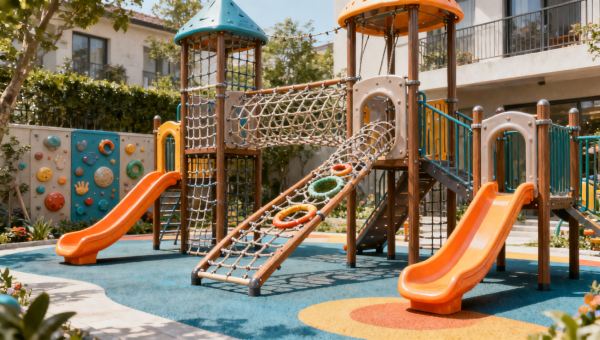
Playground structures built for coastal climates often corrode within 3 years—here’s why
Outdoor playground structures in coastal climates face relentless salt spray, UV exposure, and humidity—yet many still corrode within just three years. From playground swings and climbers to theme park rides and inclusive playground systems, premature degradation compromises playground safety, increases playground maintenance costs, and undermines long-term ROI. This isn’t just about materials—it’s about intelligent playground design, corrosion-resistant engineering, and sourcing partners who understand the intersection of durability, compliance, and experiential value. For procurement professionals and commercial buyers evaluating playground structures or soundproofing materials for high-stakes environments, the real question isn’t ‘what lasts?’—it’s ‘what’s built to thrive?’
Why Coastal Corrosion Hits Playground Structures So Hard—and So Fast
Salt-laden aerosols from ocean winds deposit chloride ions directly onto metal surfaces—especially at weld seams, fastener points, and micro-scratches in coatings. In humid coastal zones (average RH >75%), these ions accelerate electrochemical reactions that strip protective oxide layers from steel and aluminum alloys.
Standard hot-dip galvanizing (HDG) with 85–100 µm zinc coating typically degrades by 15–25 µm/year in Category C5-I (ISO 12944-2) marine industrial environments. That means full zinc depletion—and onset of red rust—can occur in as few as 3 years. Even stainless steels like 304 lose pitting resistance when exposed to continuous salt mist and stagnant moisture beneath deck joints or climbing panels.
UV radiation further compounds damage: it breaks down polymer-based powder coatings and PVC claddings, exposing underlying substrates. Simultaneously, thermal cycling (daily 10°C–35°C swings) induces micro-fatigue at material interfaces—creating pathways for corrosive ingress.
The 4 Most Vulnerable Structural Zones
- Weld zones on structural steel frames—where heat-affected zones reduce local corrosion resistance by up to 40%
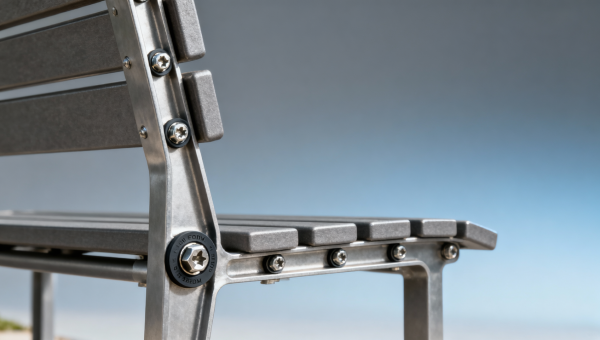
- Bolted connections using carbon steel hardware—prone to crevice corrosion within 18 months
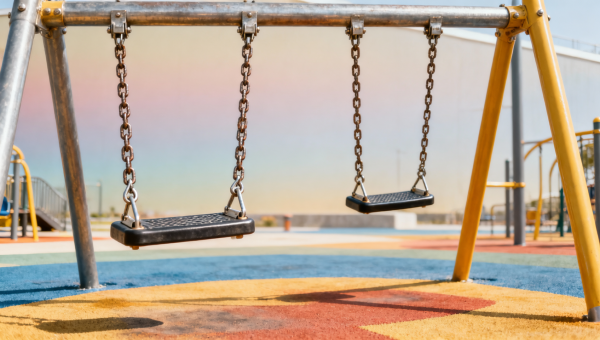
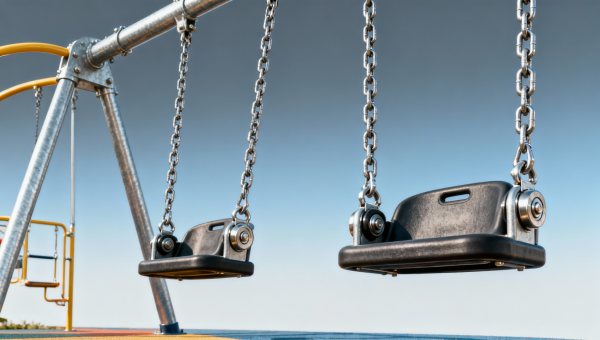
- Drainage-restricted hollow sections (e.g., swing hangers, slide supports)—trapping brine for >72 hours per tidal cycle
- Ground-contact timber components treated with non-marine-grade preservatives—showing fungal decay and leaching after 24 months
How to Evaluate Corrosion Resistance Beyond Surface-Level Claims
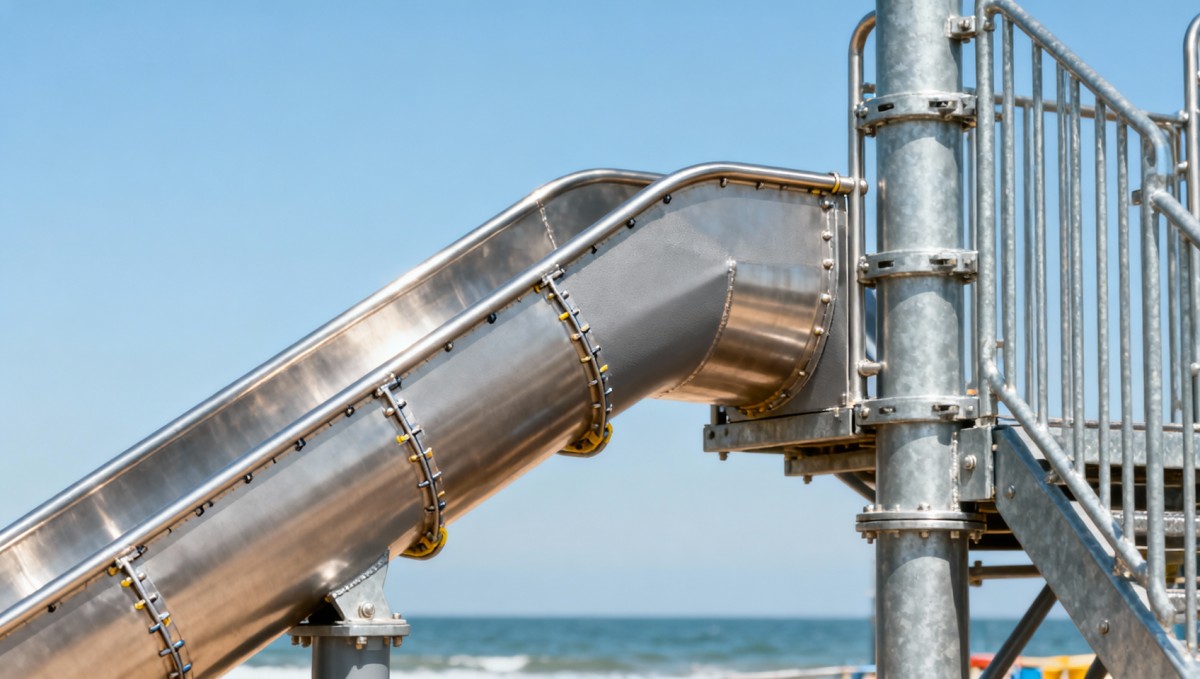
Procurement teams often rely on manufacturer-provided salt-spray test data—but ASTM B117 testing (neutral salt fog, 35°C, pH 6.5–7.2) doesn’t replicate real-world coastal dynamics. Field performance depends on five interdependent factors, not one accelerated lab metric.
This table reflects actual field validation thresholds used by GCT’s certified playground procurement auditors across 12 coastal resort developments in Spain, Australia, and Florida. Suppliers failing any single criterion are excluded from our pre-vetted OEM/ODM network.
Procurement Checklist: 5 Non-Negotiable Requirements for Coastal Playground Sourcing
For distributors and institutional buyers, due diligence must extend beyond price and lead time. These five checkpoints separate compliant suppliers from those offering short-term cost savings—and long-term liability.
- Proof of third-party corrosion testing conducted under ISO 12944-9 C5-M (marine) conditions—not generic “salt spray” reports
- Full traceability documentation for all structural metals: mill test reports (MTRs), heat numbers, and PREN calculations
- On-site installation supervision included in scope—or certified installer training program with 3-year competency renewal
- Warranty covering both material failure and workmanship defects for minimum 10 years (non-prorated)
- Supply chain transparency: no more than 2 tiers between raw material smelter and final fabrication site
Global Commercial Trade validates each of these criteria during its proprietary Supplier Resilience Assessment—a 6-stage audit combining document review, factory floor verification, and post-installation field monitoring.
Why Partner With GCT for Coastal Playground Procurement Intelligence
You’re not buying playground equipment—you’re investing in guest safety, brand reputation, and multi-year operational continuity. GCT delivers actionable intelligence—not brochures or spec sheets—for procurement professionals sourcing for resorts, municipal parks, and premium leisure developments.
Our Amusement & Leisure Parks vertical provides verified, real-time access to 47 pre-qualified manufacturers specializing in marine-grade playground systems—including 12 with EN 1176/1177 certification, 8 with AS/NZS 4685:2023 compliance, and 5 offering turnkey design-build services with 3D BIM modeling and wind-load simulation.
When you engage GCT, you receive: a customized supplier shortlist with corrosion-test summaries; comparative lifecycle cost analysis (including 7-year maintenance projections); and direct technical consultation with our panel of certified playground safety engineers—available within 48 business hours.
Ready to replace reactive maintenance with proactive resilience? Contact GCT today for your free Coastal Playground Sourcing Brief—including material specification templates, warranty clause benchmarks, and a list of 3 OEMs currently accepting custom orders with ≤10-week lead times.
Search News
Hot Articles
- Stage Lighting & TrussCCTV5 Snooker Broadcast Drives 37% Surge in Stage Lighting Export InquiriesApr 21, 2026
- Indoor PlaygroundVietnam Mandates Child Finger-Trap Sensors for Indoor Play EquipmentApr 21, 2026
- Stage Lighting & TrussGuangdong vs. Shanxi CBA Game Highlights Domestic Smart Arena LightingApr 21, 2026
Popular Tags
Need ExpertConsultation?
Connect with our specialized leisureengineering team for procurementstrategies.
Recommended News
 Apr 20, 2026China's Smart Timing System Gains ITU Certification at Shanghai Bike EventChina's smart timing system wins ITU-T L.1800 certification — the first Chinese sports timing platform approved for UCI-accredited cycling events. Discover how it reshapes reliability, security & global competitiveness in sports tech.● Theme Park Strategist
 Apr 17, 2026Popular Badminton AI Protocol Launched in ChengduPopular Badminton AI protocol launched in Chengdu — a game-changer for smart sports hardware, VR simulators & outdoor ride manufacturers targeting Asian youth academies.● Theme Park Strategist
 Apr 17, 2026EN 1176-7:2026 Enforced: AI Behavior Recognition Required for EU Outdoor Interactive Play EquipmentEN 1176-7:2026 is now enforced — AI behavior recognition is mandatory for EU outdoor interactive play equipment. Ensure CE compliance now.● Theme Park Strategist
 Apr 16, 2026EN 1176-7:2026 Enforces AI Safety Rules for EU Outdoor Interactive Play EquipmentEN 1176-7:2026 enforces AI safety rules for EU outdoor interactive play equipment — mandatory false-trigger ≤0.3% & local-only data processing. Act now to comply.● Theme Park Strategist
 Apr 13, 20262026 CKC China Karting Championship in Macau Sparks Export Interest for Domestic Racing GearThe 2026 CKC China Karting Championship in Macau showcased FIA-compliant racing gear, sparking export interest for domestic timing systems, carbon fiber kits & sustainable tires. Discover how this event opens global opportunities.● Theme Park Strategist
 Apr 13, 2026Japan Revises Sports Equipment Safety Standards: Mandatory Multilingual E-Manuals for Imported Fitness Gear from April 2026Japan's new Sports Equipment Safety Standards mandate multilingual e-manuals for imported fitness gear from 2026. Learn how this impacts global exporters and key compliance strategies for smooth market entry.● Theme Park Strategist
 Apr 10, 2026Middle East Tensions Raise Shipping Risks in Hormuz Strait, Air Freight Costs for Sports Equipment Surge 12%Middle East tensions escalate shipping risks in Hormuz Strait, causing a 12% surge in air freight costs for sports equipment. Learn how this impacts supply chains and strategies to mitigate delays.● Theme Park Strategist
 Apr 22, 2026How to Compare Theme Park RidesCompare theme park rides for safety, capacity, and ROI in a leisure park, while aligning playground structures, inclusive playground zones, and playground swings with smarter sourcing.● Theme Park Strategist
 Apr 22, 2026Is a Leisure Park Worth the InvestmentLeisure park investment guide: compare theme park rides, playground structures, inclusive playground design, swings, soundproofing materials, and custom furniture for stronger returns.● Theme Park Strategist
 Apr 22, 2026Adventure Playground Ideas That Work in Small Outdoor SpacesAdventure playground ideas for small outdoor spaces: compare layouts, indoor playground and trampoline park concepts, plus arcade games and musical instruments features to boost family appeal.● Theme Park Strategist
 Apr 22, 2026Adventure Playground Features That Improve Safety Without Feeling BoringAdventure playground and indoor playground safety features that keep fun high—compare trampoline park layouts, arcade games, and smart design tips for safer, more engaging venues.● Theme Park Strategist
 Apr 18, 20262026 Shanghai Sailing Open Adopts Domestic Smart Timing System2026 Shanghai Sailing Open adopts China's first ITU-R M.2412–certified smart timing system — a game-changer for marine sports exporters, integrators & event organizers worldwide.● Theme Park Strategist
 Apr 18, 2026EN 1176-7:2026 Enforced: AI Behavior Recognition Mandatory for EU Outdoor Play EquipmentEN 1176-7:2026 is now mandatory — AI behavior recognition required for EU outdoor play equipment. Ensure CE compliance, low-latency certification & market access before shipment.● Theme Park Strategist
 Apr 20, 2026Park benches with bolt corrosion you can’t see until it’s too latePark benches with hidden bolt corrosion risk luxury furniture, hotel furniture & commercial furniture safety—spot invisible degradation before failure.● Theme Park Strategist
 Apr 19, 2026Park benches built for coastal climates—what actually worksDiscover coastal-proof park benches, luxury furniture & custom hotel furniture built to last 25+ years in salt, sun & humidity—engineered for resorts, hotels & commercial spaces.● Theme Park Strategist
 Apr 19, 2026Why park benches fail after two seasons of outdoor usePark benches failing in 2 seasons? Discover why luxury furniture, hotel furniture, and commercial furniture specs matter—and how to choose resilient park benches, hotel chairs, and hotel tables.● Theme Park Strategist
 Apr 19, 2026Outdoor playground shade planning affects more than comfortOutdoor playground shade planning improves safety, durability, and visitor flow for outdoor playground, indoor playground, and trampoline park projects—explore smarter sourcing for swings and more.● Theme Park Strategist
 Apr 19, 2026Why playground swings fail early at busy public sitesPlayground swings at busy public sites fail early due to heavy traffic, weak materials, and poor maintenance. Compare outdoor playground, indoor playground, and trampoline park solutions for safer, longer-lasting performance.● Theme Park Strategist
 Apr 19, 2026Playground swings with fewer maintenance calls over timePlayground swings built for fewer maintenance calls: compare durable options for outdoor playground, indoor playground, and trampoline park projects with smarter lifecycle value.● Theme Park Strategist
 Apr 19, 2026How weather exposure changes outdoor playground safety plansOutdoor playground safety starts with weather planning. Learn how trampoline park, indoor playground, and playground swings buyers reduce risk, protect value, and choose climate-smart equipment.● Theme Park Strategist
 Apr 19, 2026Outdoor playground surfaces that hide higher lifetime costsOutdoor playground surface choices can raise hidden lifetime costs for trampoline park and indoor playground projects. Compare safer, longer-lasting options around playground swings.● Theme Park Strategist
 Apr 18, 2026Playground structures with integrated solar lighting: Is battery life consistent across seasons?Playground structures with integrated solar lighting: Discover seasonal battery performance data for leisure parks, theme park rides & inclusive playgrounds—backed by real-world climate testing and OEM validation.● Theme Park Strategist
 Apr 18, 2026Theme park rides using recycled steel: How does material origin affect fatigue testing?Theme park rides, playground swings & inclusive playground structures using recycled steel demand origin-aware fatigue testing—discover how material provenance impacts safety, durability & compliance.● Theme Park Strategist
 Apr 18, 2026Leisure park shade structures that fade unevenly—UV resistance vs. pigment qualityLeisure park shade structures fading unevenly? Discover why pigment quality—not just UV resistance—dictates longevity, brand integrity & ROI for playground structures, theme park rides & inclusive playgrounds.● Theme Park Strategist