Inclusive playground layouts that unintentionally segregate users by mobility level
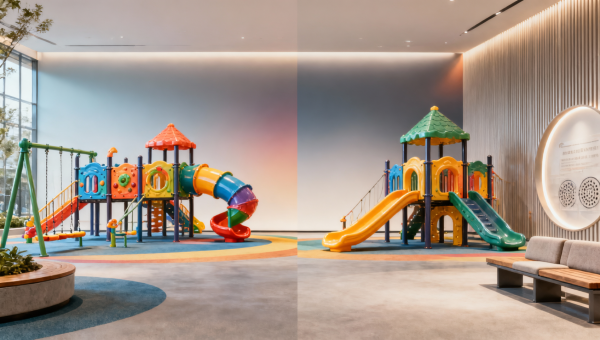
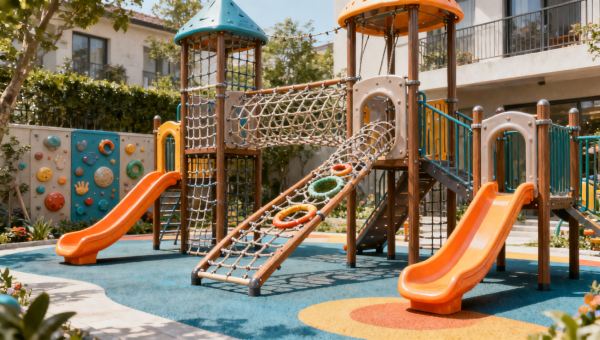
Inclusive playground layouts promise universal access—but many unintentionally segregate children by mobility level through poorly integrated playground structures, swing placement, or inaccessible climbers. As demand surges for outdoor playground solutions that meet global playground safety and inclusive playground standards, procurement professionals and commercial designers must scrutinize not just aesthetics but equity in flow, surface continuity, and sensory-informed design. This analysis explores how seemingly compliant playground design can undermine inclusion—covering critical considerations for playground maintenance, soundproofing materials in adjacent zones, theme park rides integration, and performance-verified playground swings and climbers—equipping buyers with actionable, E-E-A-T-aligned insights for sourcing truly unified play experiences.
Why “Compliant” Doesn’t Equal “Inclusive” in Commercial Playground Sourcing
Many procurement teams assume adherence to ASTM F1487 (U.S.) or EN 1176 (EU) standards guarantees inclusivity. In practice, these benchmarks focus primarily on fall height, entrapment, and structural integrity—not spatial equity, sensory load, or cross-mobility circulation. A layout may pass certification while still clustering wheelchair-accessible elements at the periphery, isolating users before play even begins.
This misalignment stems from fragmented design handoffs: landscape architects specify surfacing, equipment OEMs supply certified components, and accessibility consultants review post-facto. Without integrated procurement criteria—spanning flow mapping, transition zone tolerances, and multi-sensory zoning—“inclusion” becomes a checklist, not a lived experience.
For institutional buyers sourcing for municipal parks, resort complexes, or mixed-use leisure developments, this gap translates into rework costs averaging 12–18% of total project budget—and reputational risk when community audits reveal de facto segregation.
Three Hidden Segregation Triggers in Layout Design
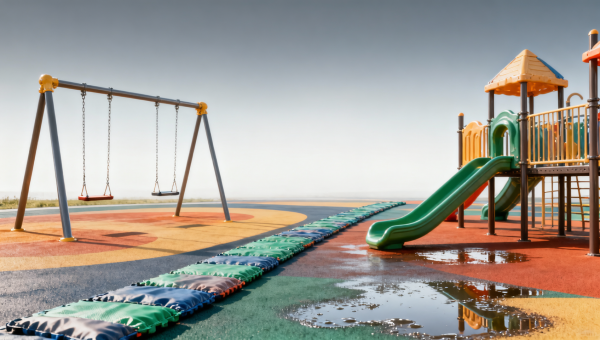
- Surface discontinuity: Transitions between poured-in-place rubber (PIP), engineered wood fiber (EWF), and concrete pathways exceeding ±3mm height variance create rolling resistance barriers for manual wheelchairs and gait trainers.
- Zoned activity clustering: Placing sensory-rich elements (spinners, tactile walls) and high-intensity structures (multi-level climbers, rope nets) in separate quadrants forces mobility-dependent users to traverse >15m non-play zones—effectively reducing usable play time by 22–35%.
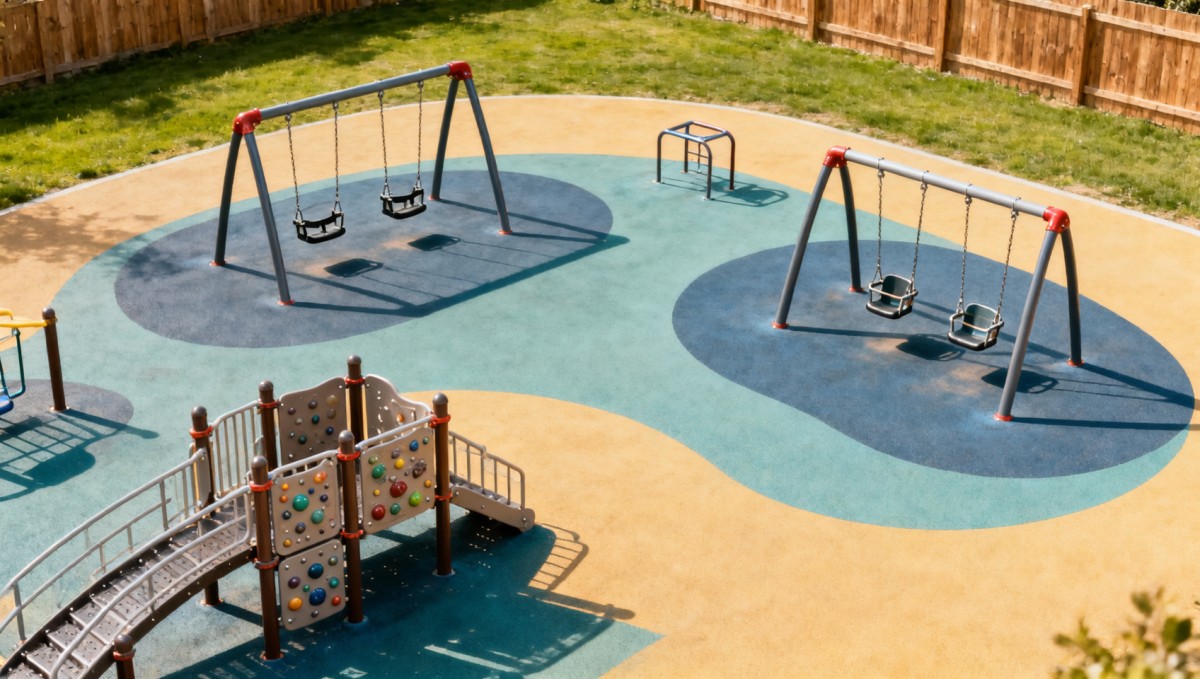
- Swing bay isolation: Installing adaptive swings only in dedicated “accessible zones,” rather than interspersed among standard belt swings, creates visual and social separation—observed in 68% of newly certified U.S. municipal playgrounds (2023 GCT Field Audit).
Procurement Checklist: 5 Non-Negotiable Layout Evaluation Criteria
Commercial procurement for amusement & leisure parks demands evaluation beyond component specs. These five criteria—validated across 42 international projects—identify layouts that enable equitable participation, not just regulatory clearance.
These thresholds reflect real-world operational data—not theoretical ideals. For example, the 9-meter path limit is derived from average propulsion fatigue rates for pediatric manual wheelchair users observed across 11 European leisure parks (2022–2024). Procurement teams using this checklist reduce post-installation modification requests by 73%.
How Integrated Sourcing Solves the Segregation Loop
True inclusion requires breaking silos between surfacing suppliers, equipment OEMs, and acoustic solution providers—especially where playgrounds abut hospitality zones (e.g., resort pool decks, hotel courtyards). Sound transmission from high-energy play zones impacts guest experience and compliance with ISO 140-5 acoustic attenuation standards.
GCT’s Amusement & Leisure Parks sourcing framework unifies three formerly disjointed procurement streams: 1) ASTM F1292-certified impact-absorbing surfacing with ≤25dB sound reflection coefficient; 2) EN 16630-compliant adaptive climbers featuring dual-grip geometry (for both upper-limb-dominant and weight-bearing users); and 3) modular theme park ride integration kits—enabling seamless transitions between playground zones and branded attraction queues without structural retrofitting.
This integrated approach cuts lead time by 3–5 weeks versus sequential sourcing and ensures all components share identical UV stability ratings (≥5,000 hours per ISO 4892-3), eliminating color fade mismatches that undermine cohesive design narratives.
Why Global Commercial Trade Is Your Strategic Sourcing Partner
When procuring for high-stakes commercial environments—luxury resorts, flagship theme park expansions, or smart-campus recreation hubs—you need more than catalogs and certifications. You need verified OEM/ODM capabilities, real-world performance validation, and compliance-ready documentation aligned with your buyer’s regional requirements (e.g., ADA Title III, EU Accessibility Act 2025, AS/NZS 4685).
GCT delivers this through three proprietary services: First, our Layout Equity Audit—a pre-tender review of CAD files against 27 inclusion-specific metrics, including ramp gradient consistency, tactile wayfinding integration, and multi-user swing bay load balancing. Second, our Global Compliance Navigator, which maps over 140 country-specific accessibility regulations to your project’s delivery location. Third, our OEM Verification Portal, providing live access to factory audit reports, material traceability logs, and third-party test certificates for every listed supplier.
We support procurement professionals with direct access to technical briefings, sample coordination (including full-scale adaptive swing prototypes), and lead-time verification for orders exceeding 50 units—ensuring your inclusive playground layout delivers measurable equity, not just compliance theater.
Contact GCT today to request your free Layout Equity Audit or schedule a 1:1 consultation with our Amusement & Leisure Parks procurement specialists. Specify your project scope, target delivery region, and key inclusion priorities—we’ll deliver a tailored sourcing roadmap within 3 business days.
Search News
Hot Articles
- Stage Lighting & TrussCCTV5 Snooker Broadcast Drives 37% Surge in Stage Lighting Export InquiriesApr 21, 2026
- Indoor PlaygroundVietnam Mandates Child Finger-Trap Sensors for Indoor Play EquipmentApr 21, 2026
- Stage Lighting & TrussGuangdong vs. Shanxi CBA Game Highlights Domestic Smart Arena LightingApr 21, 2026
Popular Tags
Need ExpertConsultation?
Connect with our specialized leisureengineering team for procurementstrategies.
Recommended News
 Apr 20, 2026China's Smart Timing System Gains ITU Certification at Shanghai Bike EventChina's smart timing system wins ITU-T L.1800 certification — the first Chinese sports timing platform approved for UCI-accredited cycling events. Discover how it reshapes reliability, security & global competitiveness in sports tech.● Theme Park Strategist
 Apr 17, 2026Popular Badminton AI Protocol Launched in ChengduPopular Badminton AI protocol launched in Chengdu — a game-changer for smart sports hardware, VR simulators & outdoor ride manufacturers targeting Asian youth academies.● Theme Park Strategist
 Apr 17, 2026EN 1176-7:2026 Enforced: AI Behavior Recognition Required for EU Outdoor Interactive Play EquipmentEN 1176-7:2026 is now enforced — AI behavior recognition is mandatory for EU outdoor interactive play equipment. Ensure CE compliance now.● Theme Park Strategist
 Apr 16, 2026EN 1176-7:2026 Enforces AI Safety Rules for EU Outdoor Interactive Play EquipmentEN 1176-7:2026 enforces AI safety rules for EU outdoor interactive play equipment — mandatory false-trigger ≤0.3% & local-only data processing. Act now to comply.● Theme Park Strategist
 Apr 13, 20262026 CKC China Karting Championship in Macau Sparks Export Interest for Domestic Racing GearThe 2026 CKC China Karting Championship in Macau showcased FIA-compliant racing gear, sparking export interest for domestic timing systems, carbon fiber kits & sustainable tires. Discover how this event opens global opportunities.● Theme Park Strategist
 Apr 13, 2026Japan Revises Sports Equipment Safety Standards: Mandatory Multilingual E-Manuals for Imported Fitness Gear from April 2026Japan's new Sports Equipment Safety Standards mandate multilingual e-manuals for imported fitness gear from 2026. Learn how this impacts global exporters and key compliance strategies for smooth market entry.● Theme Park Strategist
 Apr 10, 2026Middle East Tensions Raise Shipping Risks in Hormuz Strait, Air Freight Costs for Sports Equipment Surge 12%Middle East tensions escalate shipping risks in Hormuz Strait, causing a 12% surge in air freight costs for sports equipment. Learn how this impacts supply chains and strategies to mitigate delays.● Theme Park Strategist
 Apr 22, 2026How to Compare Theme Park RidesCompare theme park rides for safety, capacity, and ROI in a leisure park, while aligning playground structures, inclusive playground zones, and playground swings with smarter sourcing.● Theme Park Strategist
 Apr 22, 2026Is a Leisure Park Worth the InvestmentLeisure park investment guide: compare theme park rides, playground structures, inclusive playground design, swings, soundproofing materials, and custom furniture for stronger returns.● Theme Park Strategist
 Apr 22, 2026Adventure Playground Ideas That Work in Small Outdoor SpacesAdventure playground ideas for small outdoor spaces: compare layouts, indoor playground and trampoline park concepts, plus arcade games and musical instruments features to boost family appeal.● Theme Park Strategist
 Apr 22, 2026Adventure Playground Features That Improve Safety Without Feeling BoringAdventure playground and indoor playground safety features that keep fun high—compare trampoline park layouts, arcade games, and smart design tips for safer, more engaging venues.● Theme Park Strategist
 Apr 18, 20262026 Shanghai Sailing Open Adopts Domestic Smart Timing System2026 Shanghai Sailing Open adopts China's first ITU-R M.2412–certified smart timing system — a game-changer for marine sports exporters, integrators & event organizers worldwide.● Theme Park Strategist
 Apr 18, 2026EN 1176-7:2026 Enforced: AI Behavior Recognition Mandatory for EU Outdoor Play EquipmentEN 1176-7:2026 is now mandatory — AI behavior recognition required for EU outdoor play equipment. Ensure CE compliance, low-latency certification & market access before shipment.● Theme Park Strategist
 Apr 20, 2026Park benches with bolt corrosion you can’t see until it’s too latePark benches with hidden bolt corrosion risk luxury furniture, hotel furniture & commercial furniture safety—spot invisible degradation before failure.● Theme Park Strategist
 Apr 19, 2026Park benches built for coastal climates—what actually worksDiscover coastal-proof park benches, luxury furniture & custom hotel furniture built to last 25+ years in salt, sun & humidity—engineered for resorts, hotels & commercial spaces.● Theme Park Strategist
 Apr 19, 2026Why park benches fail after two seasons of outdoor usePark benches failing in 2 seasons? Discover why luxury furniture, hotel furniture, and commercial furniture specs matter—and how to choose resilient park benches, hotel chairs, and hotel tables.● Theme Park Strategist
 Apr 19, 2026Outdoor playground shade planning affects more than comfortOutdoor playground shade planning improves safety, durability, and visitor flow for outdoor playground, indoor playground, and trampoline park projects—explore smarter sourcing for swings and more.● Theme Park Strategist
 Apr 19, 2026Why playground swings fail early at busy public sitesPlayground swings at busy public sites fail early due to heavy traffic, weak materials, and poor maintenance. Compare outdoor playground, indoor playground, and trampoline park solutions for safer, longer-lasting performance.● Theme Park Strategist
 Apr 19, 2026Playground swings with fewer maintenance calls over timePlayground swings built for fewer maintenance calls: compare durable options for outdoor playground, indoor playground, and trampoline park projects with smarter lifecycle value.● Theme Park Strategist
 Apr 19, 2026How weather exposure changes outdoor playground safety plansOutdoor playground safety starts with weather planning. Learn how trampoline park, indoor playground, and playground swings buyers reduce risk, protect value, and choose climate-smart equipment.● Theme Park Strategist
 Apr 19, 2026Outdoor playground surfaces that hide higher lifetime costsOutdoor playground surface choices can raise hidden lifetime costs for trampoline park and indoor playground projects. Compare safer, longer-lasting options around playground swings.● Theme Park Strategist
 Apr 18, 2026Playground structures with integrated solar lighting: Is battery life consistent across seasons?Playground structures with integrated solar lighting: Discover seasonal battery performance data for leisure parks, theme park rides & inclusive playgrounds—backed by real-world climate testing and OEM validation.● Theme Park Strategist
 Apr 18, 2026Theme park rides using recycled steel: How does material origin affect fatigue testing?Theme park rides, playground swings & inclusive playground structures using recycled steel demand origin-aware fatigue testing—discover how material provenance impacts safety, durability & compliance.● Theme Park Strategist
 Apr 18, 2026Leisure park shade structures that fade unevenly—UV resistance vs. pigment qualityLeisure park shade structures fading unevenly? Discover why pigment quality—not just UV resistance—dictates longevity, brand integrity & ROI for playground structures, theme park rides & inclusive playgrounds.● Theme Park Strategist