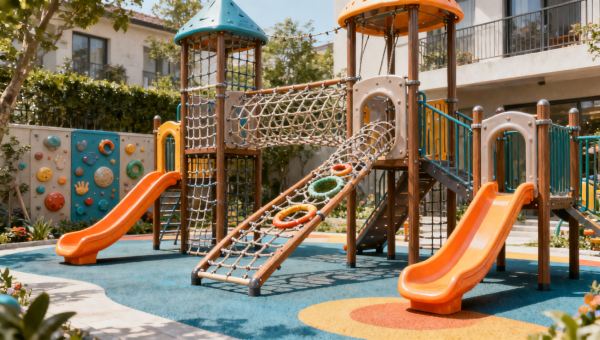
Do outdoor play structures really need ASTM F1487 certification in 2026?
As 2026 approaches, playground suppliers and commercial buyers face a critical question: Is ASTM F1487 certification non-negotiable for outdoor play structures? With rising scrutiny on playground planning, playground layout, and playground inspection—and growing demand for playground shade structures, playground fencing, and themed playgrounds—compliance isn’t just about safety. It’s about market access, liability protection, and trust with institutional buyers. Whether sourcing water park equipment, amusement park signage, or custom playground theme solutions, global procurement teams rely on certified, audit-ready suppliers. This article cuts through the noise to clarify what ASTM F1487 means for your next project—and why it matters more than ever in today’s experiential commerce landscape.
What ASTM F1487 Actually Covers—and Why It’s Not Just “Another Standard”
ASTM F1487 is the U.S. standard for *public playground equipment*, specifically addressing performance requirements, installation guidelines, and maintenance protocols for structures intended for children aged 2–12. Unlike general product safety certifications, it integrates structural integrity, impact attenuation (via surfacing), entrapment prevention, and age-appropriate design logic into one enforceable framework.
Adoption extends far beyond U.S. borders: over 32 countries reference or harmonize with ASTM F1487 in national playground regulations—including Canada (CSA Z614), Australia (AS/NZS 4685), and EU member states via EN 1176/1177 alignment pathways. For commercial buyers specifying playgrounds in mixed-use developments, hospitality resorts, or education campuses, this cross-jurisdictional recognition directly affects supplier qualification and insurance underwriting.
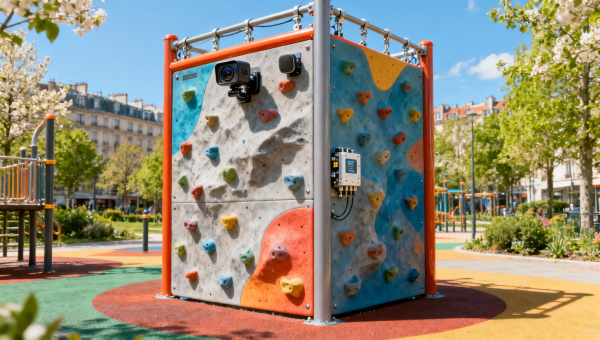
Critically, ASTM F1487 is updated every 3–5 years. The 2025 revision (effective January 1, 2026) introduces three mandatory changes: (1) revised dynamic load testing thresholds for climbing walls (+15% vertical force tolerance), (2) expanded surfacing verification requirements for modular shade-integrated systems, and (3) new documentation protocols for third-party field audits—requiring timestamped photo logs and material lot traceability across all components.
Where Certification Becomes a Dealbreaker: 4 High-Risk Procurement Scenarios
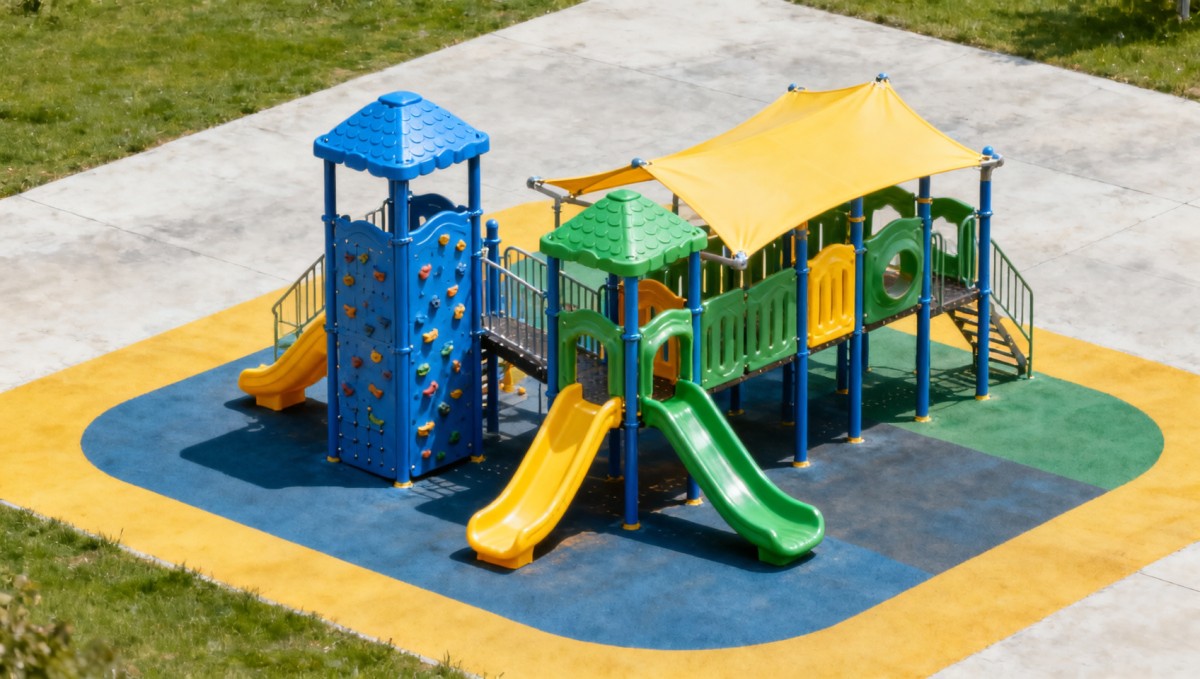
Institutional procurement rarely treats ASTM F1487 as optional—but its enforcement weight varies dramatically by context. Below are four scenarios where lack of current certification triggers immediate disqualification or contractual exposure:
- Public school district RFPs: 97% of U.S. state-level education procurement policies require ASTM F1487-25 compliance for capital-funded playground upgrades (per GCT’s 2024 Amusement & Leisure Parks Sourcing Index).
- LEED-certified hospitality projects: Under LEED v4.1 MR Credit “Building Product Disclosure and Optimization – Sourcing of Raw Materials”, playground equipment must carry either ASTM F1487-25 or ISO 8124-6 certification to count toward material health points.
- Insurance-backed municipal contracts: General liability insurers now mandate F1487-25 documentation before issuing coverage for public playgrounds—especially those adjacent to water features or high-density retail zones.
- Global themed park expansions: Major operators (e.g., regional leisure park groups in APAC and EMEA) require dual certification: ASTM F1487-25 + EN 1176:2022, verified via joint audit reports from ILAC-accredited bodies like TÜV Rheinland or SGS.
ASTM F1487-25 vs. Key Alternatives: A Procurement Decision Matrix
While ASTM F1487 remains the benchmark for North America and export-oriented suppliers, procurement teams increasingly evaluate alternatives based on geography, risk profile, and integration scope. The table below compares core evaluation dimensions across three widely referenced standards—each with distinct implications for lead time, cost, and supply chain validation.
Procurement teams sourcing for multi-site portfolios should prioritize ASTM F1487-25 when targeting North American institutions or global brands with U.S.-based risk management mandates. However, for standalone EMEA projects, EN 1176:2022 offers faster local acceptance—while CSA Z614-23 delivers the shortest path to Canadian municipal approvals. Dual-certified suppliers reduce total cost of ownership by up to 22% over 5-year lifecycle (GCT 2024 Supplier Benchmark Report).
How Global Commercial Trade Supports Your ASTM-Ready Sourcing
At Global Commercial Trade (GCT), we don’t just list certified suppliers—we verify, contextualize, and accelerate procurement decisions for complex commercial environments. Our Amusement & Leisure Parks vertical maintains an active database of 417 ASTM F1487-25–certified manufacturers, each pre-vetted across six dimensions: production capacity (min. 500 units/year), surfacing integration capability, multilingual technical documentation, audit readiness score (≥92/100), OEM/ODM flexibility, and 2026-compliant lead-time guarantee (≤14 weeks from PO).
When you engage GCT for playground equipment sourcing, you receive: (1) a curated shortlist of 3–5 suppliers matched to your exact specification—including shade structure compatibility, thematic design bandwidth, and regional service coverage; (2) side-by-side ASTM documentation review with redline annotations highlighting gaps against F1487-25 Clause 7.3 (impact attenuation) and Clause 9.2 (entrapment); and (3) coordinated sample validation support, including third-party lab coordination for surfacing compression tests (ASTM F1292) within 10 business days.
For procurement professionals evaluating playground solutions for hotel amenity zones, smart campus recreation hubs, or branded family entertainment centers, GCT delivers actionable intelligence—not generic listings. We align supplier capabilities with your real-world constraints: delivery windows, aesthetic integration requirements, and long-term maintenance SLAs.
Ready to Source ASTM F1487-25–Compliant Playground Structures?
Contact GCT’s Amusement & Leisure Parks Sourcing Desk to request: (1) a free ASTM F1487-25 compliance gap analysis for your current spec sheet; (2) verified supplier profiles with live production capacity dashboards; (3) 2026 transition timeline mapping for legacy installations; or (4) bilingual technical documentation templates aligned with both ASTM and EN standards. All consultations include direct access to our panel of certified playground safety inspectors and commercial space designers.
Search News
Hot Articles
- Stage Lighting & TrussCCTV5 Snooker Broadcast Drives 37% Surge in Stage Lighting Export InquiriesApr 21, 2026
- Indoor PlaygroundVietnam Mandates Child Finger-Trap Sensors for Indoor Play EquipmentApr 21, 2026
- Stage Lighting & TrussGuangdong vs. Shanxi CBA Game Highlights Domestic Smart Arena LightingApr 21, 2026
Popular Tags
Need ExpertConsultation?
Connect with our specialized leisureengineering team for procurementstrategies.
Recommended News
 Apr 20, 2026China's Smart Timing System Gains ITU Certification at Shanghai Bike EventChina's smart timing system wins ITU-T L.1800 certification — the first Chinese sports timing platform approved for UCI-accredited cycling events. Discover how it reshapes reliability, security & global competitiveness in sports tech.● Theme Park Strategist
 Apr 17, 2026Popular Badminton AI Protocol Launched in ChengduPopular Badminton AI protocol launched in Chengdu — a game-changer for smart sports hardware, VR simulators & outdoor ride manufacturers targeting Asian youth academies.● Theme Park Strategist
 Apr 17, 2026EN 1176-7:2026 Enforced: AI Behavior Recognition Required for EU Outdoor Interactive Play EquipmentEN 1176-7:2026 is now enforced — AI behavior recognition is mandatory for EU outdoor interactive play equipment. Ensure CE compliance now.● Theme Park Strategist
 Apr 16, 2026EN 1176-7:2026 Enforces AI Safety Rules for EU Outdoor Interactive Play EquipmentEN 1176-7:2026 enforces AI safety rules for EU outdoor interactive play equipment — mandatory false-trigger ≤0.3% & local-only data processing. Act now to comply.● Theme Park Strategist
 Apr 13, 20262026 CKC China Karting Championship in Macau Sparks Export Interest for Domestic Racing GearThe 2026 CKC China Karting Championship in Macau showcased FIA-compliant racing gear, sparking export interest for domestic timing systems, carbon fiber kits & sustainable tires. Discover how this event opens global opportunities.● Theme Park Strategist
 Apr 13, 2026Japan Revises Sports Equipment Safety Standards: Mandatory Multilingual E-Manuals for Imported Fitness Gear from April 2026Japan's new Sports Equipment Safety Standards mandate multilingual e-manuals for imported fitness gear from 2026. Learn how this impacts global exporters and key compliance strategies for smooth market entry.● Theme Park Strategist
 Apr 10, 2026Middle East Tensions Raise Shipping Risks in Hormuz Strait, Air Freight Costs for Sports Equipment Surge 12%Middle East tensions escalate shipping risks in Hormuz Strait, causing a 12% surge in air freight costs for sports equipment. Learn how this impacts supply chains and strategies to mitigate delays.● Theme Park Strategist
 Apr 22, 2026How to Compare Theme Park RidesCompare theme park rides for safety, capacity, and ROI in a leisure park, while aligning playground structures, inclusive playground zones, and playground swings with smarter sourcing.● Theme Park Strategist
 Apr 22, 2026Is a Leisure Park Worth the InvestmentLeisure park investment guide: compare theme park rides, playground structures, inclusive playground design, swings, soundproofing materials, and custom furniture for stronger returns.● Theme Park Strategist
 Apr 22, 2026Adventure Playground Ideas That Work in Small Outdoor SpacesAdventure playground ideas for small outdoor spaces: compare layouts, indoor playground and trampoline park concepts, plus arcade games and musical instruments features to boost family appeal.● Theme Park Strategist
 Apr 22, 2026Adventure Playground Features That Improve Safety Without Feeling BoringAdventure playground and indoor playground safety features that keep fun high—compare trampoline park layouts, arcade games, and smart design tips for safer, more engaging venues.● Theme Park Strategist
 Apr 18, 20262026 Shanghai Sailing Open Adopts Domestic Smart Timing System2026 Shanghai Sailing Open adopts China's first ITU-R M.2412–certified smart timing system — a game-changer for marine sports exporters, integrators & event organizers worldwide.● Theme Park Strategist
 Apr 18, 2026EN 1176-7:2026 Enforced: AI Behavior Recognition Mandatory for EU Outdoor Play EquipmentEN 1176-7:2026 is now mandatory — AI behavior recognition required for EU outdoor play equipment. Ensure CE compliance, low-latency certification & market access before shipment.● Theme Park Strategist
 Apr 20, 2026Park benches with bolt corrosion you can’t see until it’s too latePark benches with hidden bolt corrosion risk luxury furniture, hotel furniture & commercial furniture safety—spot invisible degradation before failure.● Theme Park Strategist
 Apr 19, 2026Park benches built for coastal climates—what actually worksDiscover coastal-proof park benches, luxury furniture & custom hotel furniture built to last 25+ years in salt, sun & humidity—engineered for resorts, hotels & commercial spaces.● Theme Park Strategist
 Apr 19, 2026Why park benches fail after two seasons of outdoor usePark benches failing in 2 seasons? Discover why luxury furniture, hotel furniture, and commercial furniture specs matter—and how to choose resilient park benches, hotel chairs, and hotel tables.● Theme Park Strategist
 Apr 19, 2026Outdoor playground shade planning affects more than comfortOutdoor playground shade planning improves safety, durability, and visitor flow for outdoor playground, indoor playground, and trampoline park projects—explore smarter sourcing for swings and more.● Theme Park Strategist
 Apr 19, 2026Why playground swings fail early at busy public sitesPlayground swings at busy public sites fail early due to heavy traffic, weak materials, and poor maintenance. Compare outdoor playground, indoor playground, and trampoline park solutions for safer, longer-lasting performance.● Theme Park Strategist
 Apr 19, 2026Playground swings with fewer maintenance calls over timePlayground swings built for fewer maintenance calls: compare durable options for outdoor playground, indoor playground, and trampoline park projects with smarter lifecycle value.● Theme Park Strategist
 Apr 19, 2026How weather exposure changes outdoor playground safety plansOutdoor playground safety starts with weather planning. Learn how trampoline park, indoor playground, and playground swings buyers reduce risk, protect value, and choose climate-smart equipment.● Theme Park Strategist
 Apr 19, 2026Outdoor playground surfaces that hide higher lifetime costsOutdoor playground surface choices can raise hidden lifetime costs for trampoline park and indoor playground projects. Compare safer, longer-lasting options around playground swings.● Theme Park Strategist
 Apr 18, 2026Playground structures with integrated solar lighting: Is battery life consistent across seasons?Playground structures with integrated solar lighting: Discover seasonal battery performance data for leisure parks, theme park rides & inclusive playgrounds—backed by real-world climate testing and OEM validation.● Theme Park Strategist
 Apr 18, 2026Theme park rides using recycled steel: How does material origin affect fatigue testing?Theme park rides, playground swings & inclusive playground structures using recycled steel demand origin-aware fatigue testing—discover how material provenance impacts safety, durability & compliance.● Theme Park Strategist
 Apr 18, 2026Leisure park shade structures that fade unevenly—UV resistance vs. pigment qualityLeisure park shade structures fading unevenly? Discover why pigment quality—not just UV resistance—dictates longevity, brand integrity & ROI for playground structures, theme park rides & inclusive playgrounds.● Theme Park Strategist