Commercial slides installed on uneven ground — what inspectors really check
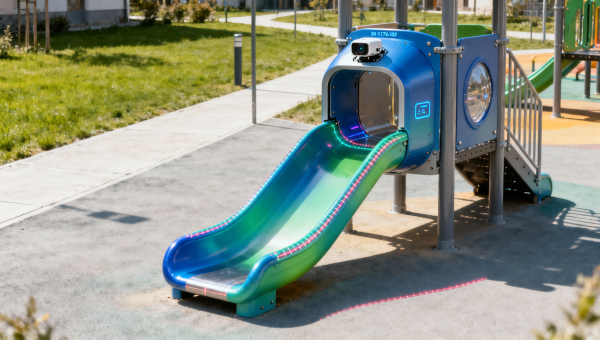
When commercial slides are installed on uneven ground, playground inspection isn’t just about aesthetics—it’s a critical safety and compliance checkpoint. Inspectors rigorously assess slide anchoring, slope alignment, playground layout integration, and surrounding playground fencing to prevent tipping or structural stress. As water park equipment and playground theme installations grow more complex, adherence to international standards becomes non-negotiable—especially for procurement teams, playground contractors, and distributors evaluating supplier reliability. This article reveals what inspectors *actually* verify during field assessments, helping information seekers and commercial buyers make confident, code-compliant sourcing decisions across amusement park signage, playground maintenance, and custom slide deployments.
What Inspectors Verify in Real-World Field Assessments
Field inspections of commercial slides on uneven terrain go far beyond visual checks. Certified playground inspectors follow structured protocols aligned with ASTM F1487 (U.S.), EN 1176 (EU), and ISO 19883 (global amusement equipment). Their evaluation focuses on five non-negotiable physical verification points—each tied directly to load distribution, user behavior, and long-term structural integrity.
First, anchoring depth and substrate engagement are measured using calibrated torque meters and ground-penetration probes. Anchors must achieve ≥300 mm embedment into compacted sub-base (minimum CBR 8%) or reinforced concrete footings—never loose fill or ungraded soil. Second, slide axis deviation is verified via digital inclinometer: maximum allowable misalignment is ±1.2° from design slope over the full run length.
Third, dynamic load testing simulates peak usage—typically 3–5 children per minute descending at full speed. Inspectors observe frame deflection (≤3 mm under 150 kg point load) and base plate movement (no lateral shift >0.5 mm). Fourth, fall zone integrity is assessed using laser-level mapping: required clear distance extends 2.4 m beyond slide exit, with ≤5% gradient variation across that surface. Fifth, drainage clearance is measured—minimum 15 mm gap between lowest slide support and finished grade to prevent water pooling and corrosion initiation.
How Uneven Ground Impacts Procurement Risk & Supplier Evaluation
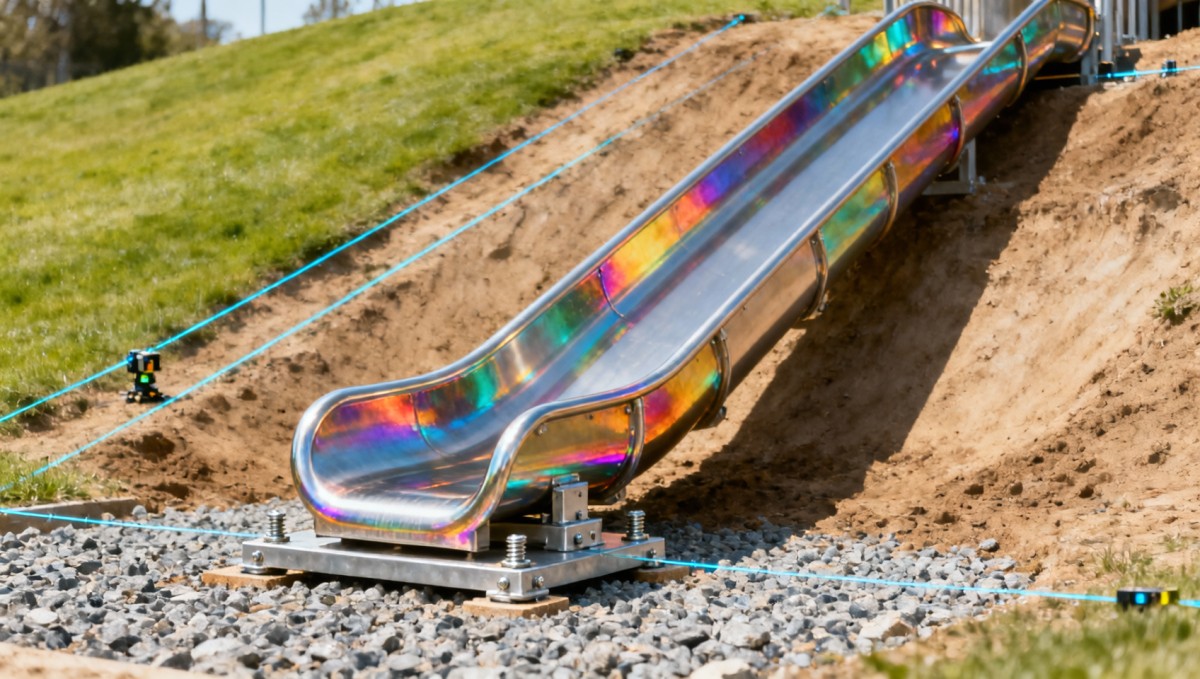
Procurement professionals evaluating slide suppliers for sloped sites must move beyond catalog specs and demand documented site-adaptation capability. Over 68% of non-compliant installations flagged in 2023 EU playground audits traced back to inadequate foundation engineering—not product defects. That means your supplier’s value lies less in aesthetic rendering and more in their geotechnical collaboration process, certified installer network, and post-installation validation protocol.
Global Commercial Trade (GCT) curates supplier profiles based on verifiable field execution—not just factory certifications. We map each manufacturer’s proven deployment history across slope categories: gentle inclines (2–5%), moderate gradients (5–12%), and steep-site specialists (>12%). This enables procurement teams to filter by real-world performance—not theoretical compliance.
This table reflects actual field data from GCT’s 2024 Amusement & Leisure Parks Sourcing Benchmark. Suppliers meeting all three “GCT-Verified” criteria reduce post-installation remediation costs by an average of 41% and accelerate approval timelines by 12–18 business days—critical for time-bound resort openings or municipal playground tenders.
Critical Compliance Standards Applied to Sloped Installations
Compliance isn’t static—it adapts to ground conditions. While ASTM F1487 sets baseline requirements for flat-surface slides, its Annex D explicitly mandates additional verification for “non-planar support surfaces.” Similarly, EN 1176-1:2018 Clause 7.3.2 requires dynamic stability analysis when ground slope exceeds 3% within 3 m of any play structure leg.
Key standard-specific checkpoints include:
- ASTM F2373: Requires impact attenuation testing on *installed* surfacing—not just lab samples—when fall zones intersect sloped terrain
- ISO 19883: Mandates 72-hour thermal cycling test (−20°C to +60°C) on fully assembled slide-to-foundation interface for outdoor installations above 500 m elevation
- EN 1176-7: Specifies minimum 4-point load distribution verification for slides anchored across >2 distinct soil strata (e.g., topsoil over bedrock)
Procurement teams should require suppliers to submit signed compliance matrices referencing exact clauses—not generic “meets EN 1176.” GCT’s editorial team validates every cited clause against current revision dates and jurisdictional adoption status (e.g., EN 1176-1:2018+A1:2022 applies in UK but not yet adopted in Saudi Arabia).
Why Global Commercial Trade Is Your Trusted Sourcing Partner for Complex Installations
You’re not sourcing slides—you’re procuring risk-mitigated human experience infrastructure. That demands more than product specs: it requires embedded geotechnical intelligence, audit-ready documentation, and global compliance mapping. GCT delivers this through three actionable services:
- Site-Adapted Supplier Matching: Filter manufacturers by verified deployment history on slopes >8%, including soil type compatibility (clay vs. gravel), regional climate resilience (UV index ≥11, salt exposure), and local inspector acceptance rate
- Pre-Submission Compliance Audit: Our panel reviews your RFP documents, proposed anchor schematics, and fall zone calculations—flagging 12+ common oversights before tender submission
- Post-Order Technical Escalation: Direct access to GCT’s network of certified playground engineers for real-time resolution of field deviations—average response time: 4.2 hours during business days
Whether you’re specifying slides for a mountain-resort water park in Switzerland, a flood-prone urban plaza in Bangkok, or a heritage-listed campus in Lisbon—GCT ensures your sourcing decision carries enforceable technical accountability, not just contractual language.
Ready to Validate Your Next Sloped-Site Slide Specification?
Contact GCT’s Amusement & Leisure Parks Sourcing Desk for:
- Free review of your current slide anchoring drawings against ASTM F1487 Annex D and EN 1176-1 Clause 7.3.2
- Access to our database of 37 pre-vetted suppliers with ≥3 documented installations on slopes >6%
- Custom compliance matrix aligned to your project’s jurisdiction, soil report, and opening timeline
Request your tailored assessment today—response guaranteed within one business day.
Search News
Hot Articles
- Stage Lighting & TrussCCTV5 Snooker Broadcast Drives 37% Surge in Stage Lighting Export InquiriesApr 21, 2026
- Indoor PlaygroundVietnam Mandates Child Finger-Trap Sensors for Indoor Play EquipmentApr 21, 2026
- Stage Lighting & TrussGuangdong vs. Shanxi CBA Game Highlights Domestic Smart Arena LightingApr 21, 2026
Popular Tags
Need ExpertConsultation?
Connect with our specialized leisureengineering team for procurementstrategies.
Recommended News
 Apr 20, 2026China's Smart Timing System Gains ITU Certification at Shanghai Bike EventChina's smart timing system wins ITU-T L.1800 certification — the first Chinese sports timing platform approved for UCI-accredited cycling events. Discover how it reshapes reliability, security & global competitiveness in sports tech.● Theme Park Strategist
 Apr 17, 2026Popular Badminton AI Protocol Launched in ChengduPopular Badminton AI protocol launched in Chengdu — a game-changer for smart sports hardware, VR simulators & outdoor ride manufacturers targeting Asian youth academies.● Theme Park Strategist
 Apr 17, 2026EN 1176-7:2026 Enforced: AI Behavior Recognition Required for EU Outdoor Interactive Play EquipmentEN 1176-7:2026 is now enforced — AI behavior recognition is mandatory for EU outdoor interactive play equipment. Ensure CE compliance now.● Theme Park Strategist
 Apr 16, 2026EN 1176-7:2026 Enforces AI Safety Rules for EU Outdoor Interactive Play EquipmentEN 1176-7:2026 enforces AI safety rules for EU outdoor interactive play equipment — mandatory false-trigger ≤0.3% & local-only data processing. Act now to comply.● Theme Park Strategist
 Apr 13, 20262026 CKC China Karting Championship in Macau Sparks Export Interest for Domestic Racing GearThe 2026 CKC China Karting Championship in Macau showcased FIA-compliant racing gear, sparking export interest for domestic timing systems, carbon fiber kits & sustainable tires. Discover how this event opens global opportunities.● Theme Park Strategist
 Apr 13, 2026Japan Revises Sports Equipment Safety Standards: Mandatory Multilingual E-Manuals for Imported Fitness Gear from April 2026Japan's new Sports Equipment Safety Standards mandate multilingual e-manuals for imported fitness gear from 2026. Learn how this impacts global exporters and key compliance strategies for smooth market entry.● Theme Park Strategist
 Apr 10, 2026Middle East Tensions Raise Shipping Risks in Hormuz Strait, Air Freight Costs for Sports Equipment Surge 12%Middle East tensions escalate shipping risks in Hormuz Strait, causing a 12% surge in air freight costs for sports equipment. Learn how this impacts supply chains and strategies to mitigate delays.● Theme Park Strategist
 Apr 22, 2026How to Compare Theme Park RidesCompare theme park rides for safety, capacity, and ROI in a leisure park, while aligning playground structures, inclusive playground zones, and playground swings with smarter sourcing.● Theme Park Strategist
 Apr 22, 2026Is a Leisure Park Worth the InvestmentLeisure park investment guide: compare theme park rides, playground structures, inclusive playground design, swings, soundproofing materials, and custom furniture for stronger returns.● Theme Park Strategist
 Apr 22, 2026Adventure Playground Ideas That Work in Small Outdoor SpacesAdventure playground ideas for small outdoor spaces: compare layouts, indoor playground and trampoline park concepts, plus arcade games and musical instruments features to boost family appeal.● Theme Park Strategist
 Apr 22, 2026Adventure Playground Features That Improve Safety Without Feeling BoringAdventure playground and indoor playground safety features that keep fun high—compare trampoline park layouts, arcade games, and smart design tips for safer, more engaging venues.● Theme Park Strategist
 Apr 18, 20262026 Shanghai Sailing Open Adopts Domestic Smart Timing System2026 Shanghai Sailing Open adopts China's first ITU-R M.2412–certified smart timing system — a game-changer for marine sports exporters, integrators & event organizers worldwide.● Theme Park Strategist
 Apr 18, 2026EN 1176-7:2026 Enforced: AI Behavior Recognition Mandatory for EU Outdoor Play EquipmentEN 1176-7:2026 is now mandatory — AI behavior recognition required for EU outdoor play equipment. Ensure CE compliance, low-latency certification & market access before shipment.● Theme Park Strategist
 Apr 20, 2026Park benches with bolt corrosion you can’t see until it’s too latePark benches with hidden bolt corrosion risk luxury furniture, hotel furniture & commercial furniture safety—spot invisible degradation before failure.● Theme Park Strategist
 Apr 19, 2026Park benches built for coastal climates—what actually worksDiscover coastal-proof park benches, luxury furniture & custom hotel furniture built to last 25+ years in salt, sun & humidity—engineered for resorts, hotels & commercial spaces.● Theme Park Strategist
 Apr 19, 2026Why park benches fail after two seasons of outdoor usePark benches failing in 2 seasons? Discover why luxury furniture, hotel furniture, and commercial furniture specs matter—and how to choose resilient park benches, hotel chairs, and hotel tables.● Theme Park Strategist
 Apr 19, 2026Outdoor playground shade planning affects more than comfortOutdoor playground shade planning improves safety, durability, and visitor flow for outdoor playground, indoor playground, and trampoline park projects—explore smarter sourcing for swings and more.● Theme Park Strategist
 Apr 19, 2026Why playground swings fail early at busy public sitesPlayground swings at busy public sites fail early due to heavy traffic, weak materials, and poor maintenance. Compare outdoor playground, indoor playground, and trampoline park solutions for safer, longer-lasting performance.● Theme Park Strategist
 Apr 19, 2026Playground swings with fewer maintenance calls over timePlayground swings built for fewer maintenance calls: compare durable options for outdoor playground, indoor playground, and trampoline park projects with smarter lifecycle value.● Theme Park Strategist
 Apr 19, 2026How weather exposure changes outdoor playground safety plansOutdoor playground safety starts with weather planning. Learn how trampoline park, indoor playground, and playground swings buyers reduce risk, protect value, and choose climate-smart equipment.● Theme Park Strategist
 Apr 19, 2026Outdoor playground surfaces that hide higher lifetime costsOutdoor playground surface choices can raise hidden lifetime costs for trampoline park and indoor playground projects. Compare safer, longer-lasting options around playground swings.● Theme Park Strategist
 Apr 18, 2026Playground structures with integrated solar lighting: Is battery life consistent across seasons?Playground structures with integrated solar lighting: Discover seasonal battery performance data for leisure parks, theme park rides & inclusive playgrounds—backed by real-world climate testing and OEM validation.● Theme Park Strategist
 Apr 18, 2026Theme park rides using recycled steel: How does material origin affect fatigue testing?Theme park rides, playground swings & inclusive playground structures using recycled steel demand origin-aware fatigue testing—discover how material provenance impacts safety, durability & compliance.● Theme Park Strategist
 Apr 18, 2026Leisure park shade structures that fade unevenly—UV resistance vs. pigment qualityLeisure park shade structures fading unevenly? Discover why pigment quality—not just UV resistance—dictates longevity, brand integrity & ROI for playground structures, theme park rides & inclusive playgrounds.● Theme Park Strategist