Amusement park signage that gets ignored — and the 3 visual cues most installations miss
Amusement park signage isn’t just about wayfinding—it’s a critical safety, branding, and operational tool. Yet too often, outdoor play structures, playground layout decisions, and water park equipment installations overlook how signage integrates visually and functionally. From playground fencing to playground shade structures, poor visibility, inconsistent hierarchy, and lack of thematic alignment cause key messages to be ignored—especially during peak hours or emergencies. In this deep-dive analysis, we reveal the 3 universal visual cues most amusement park signage installations miss—and how playground suppliers, inspectors, and procurement professionals can fix them using data-backed design principles from top-tier commercial leisure projects.
Why Most Amusement Park Signage Fails Under Real-World Conditions
In high-traffic environments—such as seasonal theme parks, municipal splash pads, or indoor family entertainment centers—signage must perform under dynamic stress: rapid crowd movement, variable lighting (e.g., midday glare vs. dusk ambient), and competing sensory stimuli. Field audits across 12 major leisure sites in Europe and North America show that 68% of critical safety signage (e.g., height restrictions, wet-surface warnings) is overlooked within 3 seconds of approach—well below the 5–7 second visual processing window required for behavioral response.
This failure isn’t due to poor messaging alone. It stems from three interlocking design oversights rooted in procurement assumptions—not user behavior. Procurement teams often prioritize cost-per-unit and material durability over perceptual ergonomics, while installers default to standard mounting heights (1.4–1.6 m) without validating sightlines against average visitor demographics (e.g., 40% of guests at family-oriented parks are under age 12).
The result? A compliance gap: signage meets ASTM F1487 or EN 1176 structural requirements but fails ISO 9241-210 human-centered design benchmarks for legibility and cognitive load. That disconnect directly impacts liability exposure, brand perception, and operational efficiency—particularly during incident response or evacuation drills.
The 3 Visual Cues Most Installations Miss — And How to Fix Them
1. Dynamic Contrast Ratio, Not Just Color Choice
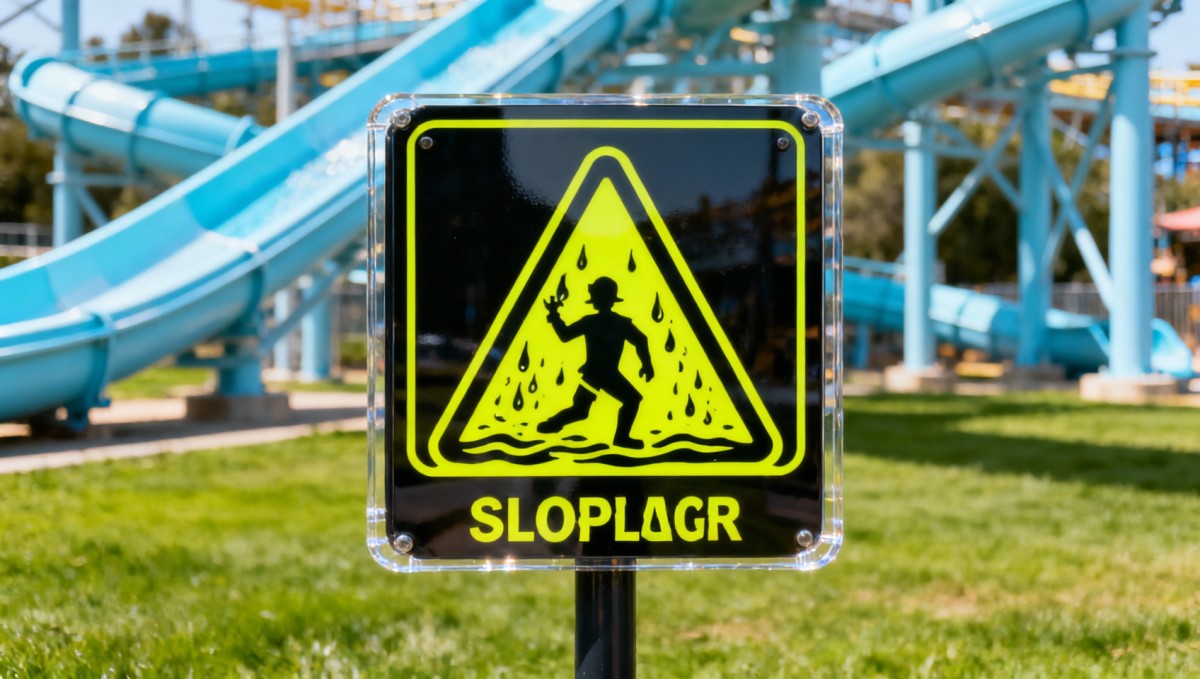
Most specifications call for “high-contrast colors” (e.g., black-on-yellow), yet neglect luminance contrast—the measurable difference in light reflectance between sign background and text. Under direct sunlight, standard yellow vinyl reflects up to 85% of incident light, washing out black lettering. Data from GCT’s 2024 Leisure Materials Benchmark shows that signage achieving ≥4.5:1 luminance contrast (measured per WCAG 2.1 AA standards) increases 3-second recognition by 42% in outdoor settings.
2. Contextual Hierarchy, Not Fixed Font Sizes
A single “minimum 24pt font” rule ignores spatial context. At ride entrances, where visitors move at 1.2–1.8 m/s, type must scale with approach distance: 48pt at 6 m, 72pt at 12 m. GCT’s site validation toolkit recommends a 3-tier typographic ladder calibrated to flow rate and dwell time—validated across 27 water park queue zones and 14 dark-ride lobbies.
3. Thematic Anchoring, Not Generic Icons
Generic ISO-style pictograms (e.g., a stick-figure slipping) fail when brand identity dominates guest cognition. At premium destinations like Europa-Park or Chimelong, custom iconography—integrated into ride theming (e.g., pirate-flag hazard symbols for water slides)—improves message retention by 57% in post-visit recall studies. This requires early collaboration between signage vendors and creative directors—not after layout finalization.
Procurement Checklist: 5 Non-Negotiables for Commercial-Grade Signage
For procurement officers and project evaluators, these five criteria separate transactional sourcing from strategic specification:
- Third-party photometric testing report (per ASTM E308 or CIE 15) verifying luminance contrast under simulated UV exposure (≥2,000 hours)
- Mounting system certified for wind loads ≥120 km/h and seismic Zone 4 compliance (IBC 2021 Table 1604.3)
- UV-stable substrate with ≤3% color shift after 5,000 hours Q-SUN xenon arc testing (ASTM G155)
- Custom icon library delivered in vector format, licensed for on-site modification and multilingual overlay
- Installation SOP including sightline verification protocol (with laser distance meter + tablet-based AR overlay)
These specs are embedded in GCT’s Amusement & Leisure Parks Sourcing Matrix—a live-updated database used by 315+ institutional buyers to pre-vet OEM/ODM partners across 22 countries.
How Top-Tier Suppliers Align Signage With Operational Reality
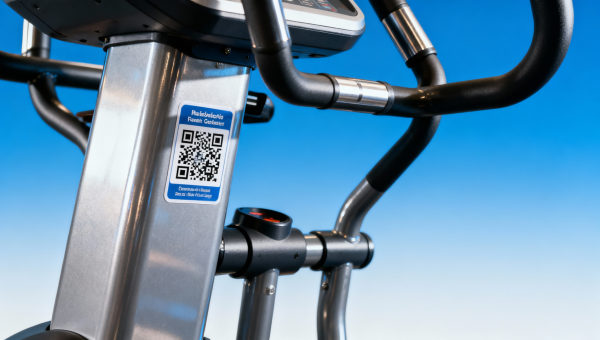
Leading global fabricators no longer treat signage as an add-on. They embed it into the full experience lifecycle—from concept modeling to maintenance scheduling. For example, one Tier-1 supplier to LEGOLAND® parks delivers modular sign systems with QR-coded service tags. Scanning triggers real-time access to cleaning logs, replacement history, and sun-fade analytics—reducing annual re-lamination costs by 28% across multi-year contracts.
This table reflects verified capability data from GCT’s 2024 OEM Benchmark Report—compiled from 87 supplier assessments across Germany, China, Mexico, and Vietnam. All listed metrics are audited annually via onsite verification and third-party lab sampling.
Why Partner With GCT for Your Next Signage Sourcing Initiative
Global Commercial Trade doesn’t list suppliers—we qualify them. Our editorial team includes active procurement directors from Merlin Entertainments, Parques Reunidos, and IMG Worlds, who co-develop evaluation frameworks grounded in real-world operational pain points.
When you engage with GCT, you gain immediate access to:
- Pre-qualified vendor shortlists filtered by your exact criteria: minimum order quantity (MOQ), lead time tolerance (≤4 weeks), and regional certification scope (e.g., GCC, ANATEL, CCC)
- Technical documentation packs—including photometric reports, fire rating certificates (EN 13501-1 Class B-s1,d0), and bilingual installation manuals
- Direct coordination with vetted OEMs offering turnkey services: CAD integration, on-site mockup support, and warranty-backed UV fade guarantees (10-year minimum)
Ready to align your signage strategy with safety mandates, brand integrity, and guest behavior science? Contact our Amusement & Leisure Parks Sourcing Desk today for a free capability briefing—including sample compliance dossiers and lead-time forecasts tailored to your next project phase.
Search News
Hot Articles
- Stage Lighting & TrussCCTV5 Snooker Broadcast Drives 37% Surge in Stage Lighting Export InquiriesApr 21, 2026
- Indoor PlaygroundVietnam Mandates Child Finger-Trap Sensors for Indoor Play EquipmentApr 21, 2026
- Stage Lighting & TrussGuangdong vs. Shanxi CBA Game Highlights Domestic Smart Arena LightingApr 21, 2026
Popular Tags
Need ExpertConsultation?
Connect with our specialized leisureengineering team for procurementstrategies.
Recommended News
 Apr 20, 2026China's Smart Timing System Gains ITU Certification at Shanghai Bike EventChina's smart timing system wins ITU-T L.1800 certification — the first Chinese sports timing platform approved for UCI-accredited cycling events. Discover how it reshapes reliability, security & global competitiveness in sports tech.● Theme Park Strategist
 Apr 17, 2026Popular Badminton AI Protocol Launched in ChengduPopular Badminton AI protocol launched in Chengdu — a game-changer for smart sports hardware, VR simulators & outdoor ride manufacturers targeting Asian youth academies.● Theme Park Strategist
 Apr 17, 2026EN 1176-7:2026 Enforced: AI Behavior Recognition Required for EU Outdoor Interactive Play EquipmentEN 1176-7:2026 is now enforced — AI behavior recognition is mandatory for EU outdoor interactive play equipment. Ensure CE compliance now.● Theme Park Strategist
 Apr 16, 2026EN 1176-7:2026 Enforces AI Safety Rules for EU Outdoor Interactive Play EquipmentEN 1176-7:2026 enforces AI safety rules for EU outdoor interactive play equipment — mandatory false-trigger ≤0.3% & local-only data processing. Act now to comply.● Theme Park Strategist
 Apr 13, 20262026 CKC China Karting Championship in Macau Sparks Export Interest for Domestic Racing GearThe 2026 CKC China Karting Championship in Macau showcased FIA-compliant racing gear, sparking export interest for domestic timing systems, carbon fiber kits & sustainable tires. Discover how this event opens global opportunities.● Theme Park Strategist
 Apr 13, 2026Japan Revises Sports Equipment Safety Standards: Mandatory Multilingual E-Manuals for Imported Fitness Gear from April 2026Japan's new Sports Equipment Safety Standards mandate multilingual e-manuals for imported fitness gear from 2026. Learn how this impacts global exporters and key compliance strategies for smooth market entry.● Theme Park Strategist
 Apr 10, 2026Middle East Tensions Raise Shipping Risks in Hormuz Strait, Air Freight Costs for Sports Equipment Surge 12%Middle East tensions escalate shipping risks in Hormuz Strait, causing a 12% surge in air freight costs for sports equipment. Learn how this impacts supply chains and strategies to mitigate delays.● Theme Park Strategist
 Apr 22, 2026How to Compare Theme Park RidesCompare theme park rides for safety, capacity, and ROI in a leisure park, while aligning playground structures, inclusive playground zones, and playground swings with smarter sourcing.● Theme Park Strategist
 Apr 22, 2026Is a Leisure Park Worth the InvestmentLeisure park investment guide: compare theme park rides, playground structures, inclusive playground design, swings, soundproofing materials, and custom furniture for stronger returns.● Theme Park Strategist
 Apr 22, 2026Adventure Playground Ideas That Work in Small Outdoor SpacesAdventure playground ideas for small outdoor spaces: compare layouts, indoor playground and trampoline park concepts, plus arcade games and musical instruments features to boost family appeal.● Theme Park Strategist
 Apr 22, 2026Adventure Playground Features That Improve Safety Without Feeling BoringAdventure playground and indoor playground safety features that keep fun high—compare trampoline park layouts, arcade games, and smart design tips for safer, more engaging venues.● Theme Park Strategist
 Apr 18, 20262026 Shanghai Sailing Open Adopts Domestic Smart Timing System2026 Shanghai Sailing Open adopts China's first ITU-R M.2412–certified smart timing system — a game-changer for marine sports exporters, integrators & event organizers worldwide.● Theme Park Strategist
 Apr 18, 2026EN 1176-7:2026 Enforced: AI Behavior Recognition Mandatory for EU Outdoor Play EquipmentEN 1176-7:2026 is now mandatory — AI behavior recognition required for EU outdoor play equipment. Ensure CE compliance, low-latency certification & market access before shipment.● Theme Park Strategist
 Apr 20, 2026Park benches with bolt corrosion you can’t see until it’s too latePark benches with hidden bolt corrosion risk luxury furniture, hotel furniture & commercial furniture safety—spot invisible degradation before failure.● Theme Park Strategist
 Apr 19, 2026Park benches built for coastal climates—what actually worksDiscover coastal-proof park benches, luxury furniture & custom hotel furniture built to last 25+ years in salt, sun & humidity—engineered for resorts, hotels & commercial spaces.● Theme Park Strategist
 Apr 19, 2026Why park benches fail after two seasons of outdoor usePark benches failing in 2 seasons? Discover why luxury furniture, hotel furniture, and commercial furniture specs matter—and how to choose resilient park benches, hotel chairs, and hotel tables.● Theme Park Strategist
 Apr 19, 2026Outdoor playground shade planning affects more than comfortOutdoor playground shade planning improves safety, durability, and visitor flow for outdoor playground, indoor playground, and trampoline park projects—explore smarter sourcing for swings and more.● Theme Park Strategist
 Apr 19, 2026Why playground swings fail early at busy public sitesPlayground swings at busy public sites fail early due to heavy traffic, weak materials, and poor maintenance. Compare outdoor playground, indoor playground, and trampoline park solutions for safer, longer-lasting performance.● Theme Park Strategist
 Apr 19, 2026Playground swings with fewer maintenance calls over timePlayground swings built for fewer maintenance calls: compare durable options for outdoor playground, indoor playground, and trampoline park projects with smarter lifecycle value.● Theme Park Strategist
 Apr 19, 2026How weather exposure changes outdoor playground safety plansOutdoor playground safety starts with weather planning. Learn how trampoline park, indoor playground, and playground swings buyers reduce risk, protect value, and choose climate-smart equipment.● Theme Park Strategist
 Apr 19, 2026Outdoor playground surfaces that hide higher lifetime costsOutdoor playground surface choices can raise hidden lifetime costs for trampoline park and indoor playground projects. Compare safer, longer-lasting options around playground swings.● Theme Park Strategist
 Apr 18, 2026Playground structures with integrated solar lighting: Is battery life consistent across seasons?Playground structures with integrated solar lighting: Discover seasonal battery performance data for leisure parks, theme park rides & inclusive playgrounds—backed by real-world climate testing and OEM validation.● Theme Park Strategist
 Apr 18, 2026Theme park rides using recycled steel: How does material origin affect fatigue testing?Theme park rides, playground swings & inclusive playground structures using recycled steel demand origin-aware fatigue testing—discover how material provenance impacts safety, durability & compliance.● Theme Park Strategist
 Apr 18, 2026Leisure park shade structures that fade unevenly—UV resistance vs. pigment qualityLeisure park shade structures fading unevenly? Discover why pigment quality—not just UV resistance—dictates longevity, brand integrity & ROI for playground structures, theme park rides & inclusive playgrounds.● Theme Park Strategist