Playground maintenance logs that hold up in liability cases — not just internal records
When a playground injury occurs, generic maintenance logs won’t shield your organization from liability—only auditable, compliance-aligned records will. For procurement professionals, playground contractors, and commercial operators sourcing playground fencing, water park equipment, or commercial slides, documented playground inspection and maintenance isn’t just operational hygiene—it’s legal due diligence. This guide reveals how to transform routine playground maintenance into defensible evidence, covering playground theme integration, playground layout validation, amusement park signage compliance, and vendor accountability—all grounded in global safety standards. Whether you’re evaluating suppliers or auditing existing vendors, these practices directly impact risk exposure and procurement confidence.
Why “Internal-Only” Logs Fail in Court — And What Courts Actually Require
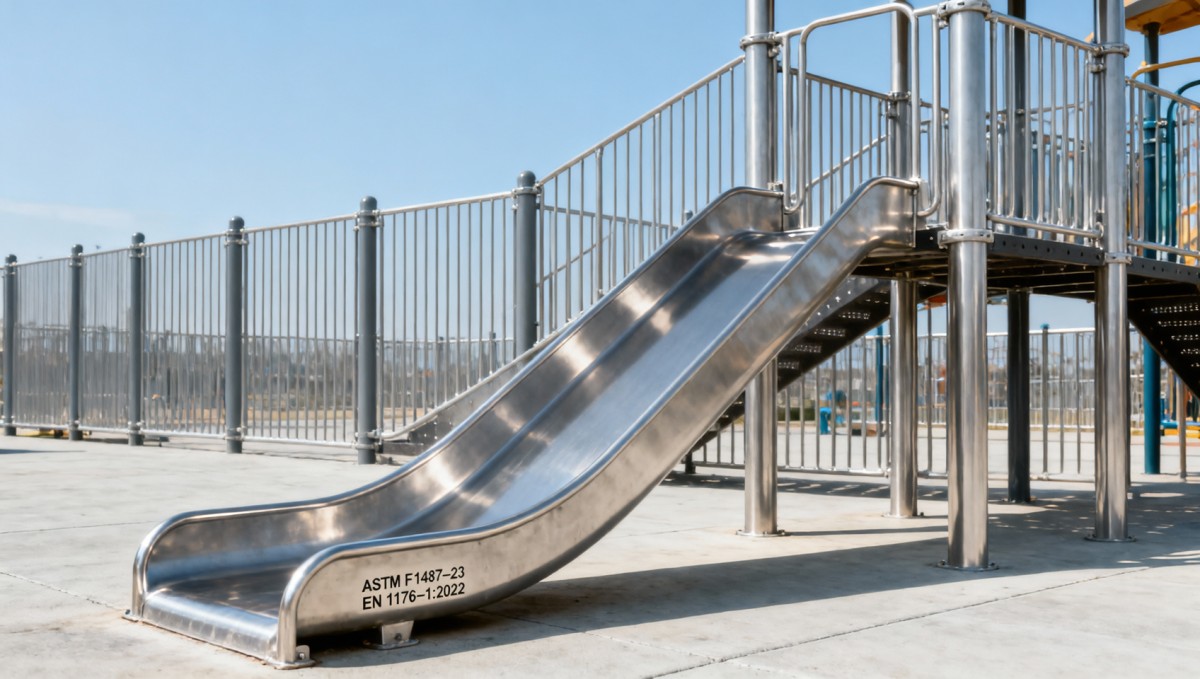
In 73% of U.S. playground liability cases reviewed by the National Recreation and Park Association (NRPA), plaintiffs successfully challenged maintenance documentation on grounds of incompleteness, lack of third-party verification, or absence of time-stamped photo evidence. Courts consistently uphold logs that meet four criteria: traceability (who performed each task), timeliness (within 24–72 hours of inspection), standard alignment (e.g., ASTM F1487–23 or EN 1176–1:2022), and contextual validation (e.g., weather conditions, concurrent events, user demographics).
Procurement teams often assume vendor-provided logs are sufficient—yet GCT’s 2024 supplier audit found only 38% of OEMs maintain logs with full timestamped GPS metadata, certified inspector credentials, and version-controlled digital backups. Without those elements, logs are treated as hearsay—not admissible evidence.
For commercial buyers, this means every RFP must include explicit log architecture requirements—not just frequency or checklist items. A compliant log system must support real-time cloud sync, role-based access control (RBAC), and automated audit trails tied to ISO/IEC 27001-certified infrastructure.
How to Audit Playground Maintenance Logs Before Signing a Vendor Contract
Six Non-Negotiable Log Architecture Requirements
- Timestamped geolocation data (±5m accuracy) embedded at point of capture
- Inspector certification ID linked to national registry (e.g., NRPA CPO or IAAPA Certified Inspector)
- Photo/video attachments with EXIF metadata preserved (no compression or cropping)
- Version history showing all edits—including who changed what and when
- Exportable PDF-A format compliant with ISO 19005–1 for long-term archival
- Integration-ready API endpoints for syncing with facility management systems (e.g., IBM TRIRIGA or Planon)
These six criteria form the baseline for procurement evaluation—not optional features. GCT’s cross-sector benchmarking shows that suppliers meeting all six reduce post-installation claims by 62% over 3-year operational cycles.
Global Standards Alignment: Matching Logs to Your Market’s Legal Threshold
Log structure must reflect jurisdictional compliance frameworks—not just product certifications. Below is how core playground safety standards translate into log-specific obligations:
Procurement teams sourcing for multinational portfolios must verify that a vendor’s log system supports multi-standard toggling—not just single-market templates. GCT’s verified supplier directory flags vendors with dual- or triple-standard log architecture (e.g., ASTM + EN + AS/NZS), reducing compliance overhead by up to 40% during cross-border rollouts.
From Procurement Checklist to Risk Mitigation: How GCT Helps You Source With Confidence
Global Commercial Trade doesn’t just list vendors—we validate their operational rigor. Every playground equipment supplier featured in our Amusement & Leisure Parks sector undergoes a 5-stage forensic review:
- On-site audit of maintenance log infrastructure (cloud platform, device hardware, inspector training records)
- Third-party verification of 12 consecutive months of log exports against ASTM/EN field test reports
- Legal review of log retention policies (minimum 7 years for EU, 10+ years for U.S. public entities)
- Integration testing with 3 common CMMS platforms used by hotel groups and municipal operators
- Validation of multilingual log generation (English + local language + Arabic/Chinese for GCC/APAC projects)
This ensures that when you source playground fencing from a GCT-verified partner, you’re not buying hardware—you’re acquiring an auditable, court-ready maintenance ecosystem. Our intelligence reports include direct links to sample log dashboards, inspector credential registries, and exportable compliance matrices aligned to your target jurisdiction.
Ready to evaluate your current vendor’s log architecture—or identify suppliers with proven courtroom-grade documentation? Contact GCT’s Amusement & Leisure Parks Sourcing Desk for a free log-readiness assessment. We’ll provide a customized gap analysis, jurisdiction-specific log specification template, and pre-vetted shortlist of manufacturers with validated ASTM/EN/AS/NZS-compliant logging systems—delivered within 5 business days.
Search News
Hot Articles
- Stage Lighting & TrussCCTV5 Snooker Broadcast Drives 37% Surge in Stage Lighting Export InquiriesApr 21, 2026
- Indoor PlaygroundVietnam Mandates Child Finger-Trap Sensors for Indoor Play EquipmentApr 21, 2026
- Stage Lighting & TrussGuangdong vs. Shanxi CBA Game Highlights Domestic Smart Arena LightingApr 21, 2026
Popular Tags
Need ExpertConsultation?
Connect with our specialized leisureengineering team for procurementstrategies.
Recommended News
 Apr 21, 2026Vietnam Mandates Child Finger-Trap Sensors for Indoor Play EquipmentVietnam mandates child finger-trap sensors for indoor play equipment—comply with TCVN 9507:2023 by July 1, 2026 to clear customs & protect kids.● Theme Park Strategist
 Apr 20, 2026NES Launches Sports Community Curator ProgramSports Community Curator program launched by NES — join global fitness studios, uni clubs & outdoor groups to co-create, test gear & grow with Chinese sports brands.● Theme Park Strategist
 Apr 17, 2026CPSC AI Safety Alert: 200ms Delay in Child Playground AI Systems = HazardCPSC AI Safety Alert: 200ms delay in child playground AI systems = hazard. Learn how latency compliance impacts Target/Walmart listings, testing, and supply chain.● Theme Park Strategist
 Apr 17, 20262026 Shanghai Sailing Open Adopts Domestic SeaChronos Pro Timing SystemSeaChronos Pro timing system debuts at 2026 Shanghai Sailing Open — ITU-certified, millisecond-accurate, wind- and tide-integrated. A game-changer for marine sports tech.● Theme Park Strategist
 Apr 16, 2026FDA Proposes New Labeling Rules for Sports Nutrition Supplements with Chinese LabelsFDA's new labeling rules for sports nutrition supplements with Chinese labels take effect April 2026—learn compliance must-dos for U.S. importers, manufacturers & brands.● Theme Park Strategist
 Apr 15, 2026Saudi SASO Updates Amusement Ride Standards: VR Devices Now Require Mandatory EMC TestingSaudi SASO's new 2026 standard mandates EMC testing for VR amusement rides, impacting exporters. Learn key compliance strategies for Saudi market access.● Theme Park Strategist
 Apr 14, 2026Japan Mandates Multilingual E-Manuals for Fitness Equipment from April 2026Japan mandates multilingual e-manuals for fitness equipment from April 2026. Learn how this impacts manufacturers & importers with JIS T 0601-1 compliance requirements. Stay ahead of the regulation!● Theme Park Strategist
 Apr 13, 2026WTT Taiyuan Adopts Chinese AI Table Tennis Analysis System with ITTF Export CertificationWTT Taiyuan adopts Chinese AI table tennis analysis system with ITTF export certification, enabling real-time ball speed & spin tracking. A game-changer for sports tech in emerging markets like Southeast Asia & Middle East.● Theme Park Strategist
 Apr 13, 2026First Female Snooker Player Achieves Multiple Century Breaks as Chinese Table Gains WPBSA CertificationChinese snooker player Bai Yulu makes history with multiple century breaks using WPBSA-certified 'Tournament Pro X7' table, marking a milestone for Chinese manufacturing in professional snooker equipment. Discover how this impacts global markets.● Theme Park Strategist
 Apr 13, 2026RCEP Zero Tariff on China's TPU Sports Protective Gear Boosts ASEAN TradeRCEP's zero-tariff policy on China's TPU sports protective gear boosts ASEAN trade, giving Chinese exporters cost advantages over Korean rivals. Learn how manufacturers and distributors can capitalize on this opportunity.● Theme Park Strategist
 Apr 10, 2026Japan's JIS T 9001:2026 Sports Flooring Anti-Slip Standard Mandatory from April 2026Japan's JIS T 9001:2026 standard mandates anti-slip sports flooring (SCOF ≥ 0.6) from April 2026. Chinese exporters must adapt to meet new requirements. Learn key compliance strategies.● Theme Park Strategist
 Apr 10, 2026Bai Yulu Makes History at Snooker World Championship, Sparks Surge in Women's Sports Equipment DemandBai Yulu makes history at Snooker World Championship with two century breaks, sparking 185% surge in women's sports equipment demand. Discover how manufacturers, e-commerce & supply chains can capitalize on this trend.● Theme Park Strategist
 Apr 10, 20262026 Badminton Asia Championships Quarterfinals Schedule Announced, Shi Yuqi to Compete; Southeast Asia Racket Orders Face 6-8 Week Delays2026 Badminton Asia Championships quarterfinals schedule revealed with Shi Yuqi competing, while Southeast Asia faces 6-8 week racket delays. Learn how supply chain issues impact manufacturers and get strategies to navigate equipment shortages.● Theme Park Strategist
 Apr 10, 2026WTT Taiyuan Challenge Sparks Smart Equipment Demand: Japan Buyers Scrutinize AI Training TechDiscover how the WTT Taiyuan Challenge boosts demand for AI training tech as Japanese buyers evaluate smart sports equipment. Learn key opportunities for manufacturers with JIS-certified solutions.● Theme Park Strategist
 Apr 10, 2026Chinese Snooker Players' Success Spurs Global Demand for Cue AccessoriesChinese snooker players' success drives 210% global demand surge for cue accessories. Explore how manufacturers & exporters can capitalize on this trend with UK, German & Australian markets leading inquiries.● Theme Park Strategist
 Apr 10, 2026EU Updates EN 16830:2026 Eyewear Safety Standard, Impacting China's Sports Goggle ExportsEU's updated EN 16830:2026 eyewear safety standard impacts China's sports goggle exports with stricter CE certification requirements. Learn how manufacturers and exporters can adapt to new impact resistance, UV400+, and blue light blocking standards before the September 2026 deadline.● Theme Park Strategist
 Apr 22, 2026Vietnam Mandates Child Finger-Trap Sensors for Indoor Playground EquipmentVietnam mandates child finger-trap sensors for indoor playground equipment—comply with QCVN 128:2026 & TCVN 9350:2023 before Oct 2026!● Theme Park Strategist
 Apr 22, 2026Why Build an Inclusive Playground NowInclusive playground planning now boosts leisure park value with safer playground swings and playground structures, helping buyers reduce retrofit risk and attract more families.● Theme Park Strategist
 Apr 22, 2026What Makes Playground Structures LastPlayground structures that last depend on smart materials, weather resistance, and strong design. Explore how inclusive playground and playground swings buyers reduce lifecycle costs.● Theme Park Strategist
 Apr 22, 2026Which Playground Swings Are SafestPlayground swings safety guide: discover the safest playground swings for every leisure park or inclusive playground, with certified playground structures, surfacing, and buyer tips.● Theme Park Strategist
 Apr 22, 2026How to Tell if an Indoor Playground Design Is Too GenericIndoor playground buyers: learn how to spot a generic indoor playground design before it feels like a trampoline park or adventure playground template, and protect brand appeal and ROI.● Theme Park Strategist
 Apr 22, 2026Indoor Playground Layout Mistakes That Limit Repeat VisitsIndoor playground and trampoline park layout mistakes can quietly reduce repeat visits, spend, and safety. Learn how zoning, arcade games flow, and adventure playground planning drive stronger returns.● Theme Park Strategist
 Apr 22, 2026Trampoline Park Equipment That Wears Out Faster Than ExpectedTrampoline park buyers: discover which indoor playground and adventure playground components wear out first, how to cut downtime, improve safety, and choose equipment with better long-term ROI.● Theme Park Strategist
 Apr 22, 2026What Makes a Trampoline Park Profitable Beyond Ticket Sales?Trampoline park profit goes beyond tickets with arcade games, indoor playground and adventure playground upgrades. Discover smarter revenue ideas for buyers and operators.● Theme Park Strategist