Myanmar Lifts Import Duty on Arcade & VR Machines to 28%
Effective July 1, 2026, Myanmar’s new tariff treatment for Arcade & VR Machines introduces a clear trade rule change: fully built imported units face a higher most-favored-nation duty, while CKD/SKD shipments assembled locally continue to receive a lower rate. For exporters, buyers, local assembly partners, and supply-chain service providers, this is not just a tax adjustment but a practical shift in market entry conditions, pricing structure, delivery planning, and compliance review.
A tariff change that distinguishes finished units from local assembly
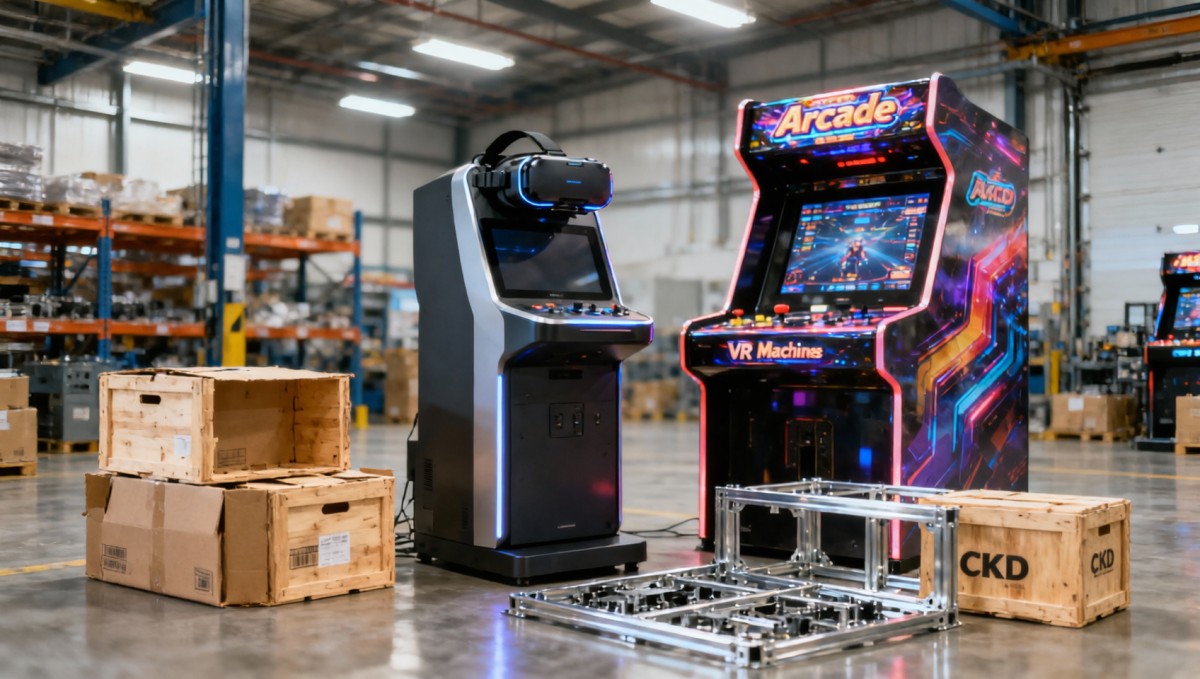
According to a notice issued by Myanmar’s Ministry of Commerce on June 15, 2026, a 28% most-favored-nation import duty applies from July 1 to imported Arcade & VR Machines in fully built form, up from the previous 15% rate. The same notice indicates that equipment imported in CKD/SKD form and completed through local assembly in Myanmar continues to benefit from a 10% preferential rate. The policy direction described in the event summary is to promote localization in the electronic entertainment manufacturing segment while pushing Chinese suppliers to adjust their export model.
Where the pressure now shifts across the business chain
Export models face a direct cost and structure review
From an industry perspective, companies exporting complete machines are the first group likely to feel the impact, because the tariff gap changes the landed-cost logic of the same product entering Myanmar under different shipment structures. What deserves closer attention is whether exporters can still support customer pricing, contract performance, and delivery commitments under a finished-unit model, or whether they need to examine CKD/SKD-based supply arrangements more closely.
Buyers and distributors may need to revisit sourcing terms
Importers, distributors, and procurement teams are also affected because the rule change can alter supplier comparison criteria. The key issue is no longer only equipment price, but also whether a shipment is classified and delivered as a complete unit or as a kit intended for local assembly. In practice, this means buyers need to pay closer attention to product configuration, customs documents, packing structure, and contract terms tied to delivery format.
Local assembly links become more relevant to market access
Observably, the lower rate for CKD/SKD imports increases the practical importance of local assembly arrangements in Myanmar. This does not automatically mean every supplier can switch smoothly, but it does mean assembly capability, local completion processes, and coordination between component supply and on-site build-out may become more important parts of market access planning.
Logistics and after-sales planning may become more document-sensitive
Supply-chain service providers and after-sales operators may also need to adjust, because shipment form affects documentation, handling, and delivery sequence. Where a business moves toward CKD/SKD, closer control may be needed over parts lists, technical documents, assembly instructions, and traceability records so that import, assembly, and downstream service remain aligned.
Practical points companies should watch now
Check how shipment form is defined in trade documents
Analysis shows that one immediate priority is document consistency. Companies should closely review how products are described in invoices, packing lists, declarations, and technical materials, especially where the commercial model may shift from fully built equipment to CKD/SKD supply. This is not a confirmed enforcement outcome, but it is a reasonable compliance focus under the new tariff split.
Reassess procurement and delivery plans against the July 1 change
Because the change takes effect on July 1, 2026, businesses with active quotations, purchase planning, or shipments around that date should pay attention to how the new duty treatment may affect pricing, contract execution, and delivery timing. Where existing business assumptions were built around the prior 15% rate for complete machines, those assumptions may need to be reviewed.
Follow any further official wording on CKD/SKD application
What deserves closer attention is the practical interpretation of CKD/SKD treatment in execution. The event summary confirms the lower 10% rate remains available for local assembly imports, but it does not provide detailed implementation language. Companies should therefore continue monitoring whether further official clarification affects classification, supporting materials, or the conditions tied to local assembly.
Prepare for closer alignment between commercial, technical, and service teams
If exporters move toward an assembly-based route, commercial teams, technical documentation teams, and after-sales teams may need tighter coordination. The reason is straightforward: a change in export model can influence not only tariff treatment, but also installation readiness, spare-parts planning, service response, and quality traceability after delivery.
Why this looks like an execution signal, not just a headline
Analysis shows this development is better understood as an already effective market-access adjustment rather than a general policy discussion, because a specific duty increase and a differentiated treatment path have been set with a clear effective date. At the same time, it is not yet a complete picture of market practice. Observably, the industry still needs to watch how the rule is applied in documentation review, shipment classification, procurement files, and local execution. That makes this both a landed change and a rule dynamic that still requires follow-up observation.
How the market is likely to read this change for now
At this stage, it is more appropriate to understand the Myanmar measure as a concrete trade and industrial policy signal: complete imported Arcade & VR Machines face a higher entry cost, while local assembly routes gain clearer policy support. For industry participants, the main takeaway is not to overstate the outcome, but to recognize that export structure, compliance preparation, sourcing design, and delivery organization may now matter as much as product competitiveness itself.
Basis of this article and what still needs verification
This article is generated based on the user-provided news title, event date, and event summary. For developments of this kind, commonly relevant source categories may include official notices, regulator releases, customs or trade authority updates, industry association materials, standards-related documents, and reporting by authoritative media. A specific official source link was not provided in the input, so the underlying notice and any later implementing language still need ongoing verification. Further observation should focus on policy detail, practical interpretation of CKD/SKD treatment, procurement document changes, market feedback, and how companies execute under the new tariff framework.
Search News
Hot Articles
- Commercial KitchenHow Restaurants Can Choose Disposable Wooden Cutlery for Takeout and CateringSep 14, 2026
- Jewelry Packaging & DisplayHow U.S. Retailers Can Choose Jewelry Displays for Better Security and SalesSep 13, 2026
- Commercial KitchenHow to Size a Restaurant Walk-In Cooler for Peak Inventory and Kitchen LayoutSep 12, 2026
Popular Tags
Need ExpertConsultation?
Connect with our specialized leisureengineering team for procurementstrategies.
Recommended News
 Sep 08, 2026What to Look for in a Flight Simulator Chair Manufacturer for Commercial VR CentersChoose a flight simulator chair manufacturer that delivers durable, safe, customizable seating for commercial VR centers. Explore key sourcing criteria now.● Theme Park Strategist
 Aug 25, 2026What to Evaluate Before Buying Commercial Self Service Photo Booths for VenuesCommercial self service photo booths for venues: learn how to evaluate durability, software stability, branding flexibility, support, and total ROI before you buy.● Theme Park Strategist
 Aug 23, 2026How to Evaluate Wholesale Vending Machines for Multi-Location Business DeploymentWholesale vending machines for multi-location deployment require more than low unit cost. Learn how to compare reliability, payments, telemetry, and supplier support to scale smarter.● Theme Park Strategist
 Aug 17, 2026U.S. CPSC Urges Bilingual Warnings for Arcade and VR MachinesU.S. CPSC urges bilingual safety warnings for Arcade & VR Machines—learn what exporters, importers, and distributors must do now to avoid delays and returns.● Theme Park Strategist
 Aug 16, 2026EU Enforces EN IEC 62368-1:2026 Certification for Arcade and VR MachinesEU Enforces EN IEC 62368-1:2026 certification for arcade and VR machines, reshaping EU market access, customs clearance, and compliance planning for exporters and distributors.● Theme Park Strategist
 Aug 13, 2026UFLPA’s new guidelines take effect: Exports of Arcade and VR equipment face full-link labor compliance requirementsUFLPA’s new guide takes effect: Arcade and VR machine exports to the U.S. now face full-chain labor compliance checks. Discover key risks and action steps.● Theme Park Strategist
 Aug 12, 2026EU PPWR takes effect, Arcade and VR packaging incorporate heavy metal and PFAS restrictionsEU PPWR now applies to Arcade and VR packaging, tightening heavy metal and PFAS compliance. Learn how exporters can avoid delays, fines, and customs risks.● Theme Park Strategist
 Aug 11, 2026CPSC Sets Bilingual Labels for Arcade and VR ImportsCPSC bilingual labels for arcade and VR imports become mandatory on October 1, 2026. Learn the new English-Spanish warning rules, customs risks, and key compliance steps now.● Theme Park Strategist
 Aug 10, 2026EU Rule Takes Effect for Arcade & VR Machine ClearanceArcade & VR Machine clearance in the EU now depends on EN IEC 62368-1:2026+A11:2026 compliance. Learn what changed, who is affected, and how to avoid customs delays.● Theme Park Strategist
 Aug 09, 2026CPSC Requires New Labels for Arcade and VR ImportsCPSC requires new labels for Arcade and VR imports starting Oct 1, 2026. Learn the multilingual warning rules, compliance risks, and key steps exporters and buyers must take now.● Theme Park Strategist
 Aug 08, 2026EU Entry Rule Tightens for Arcade & VR MachinesArcade & VR Machines entering the EU now face stricter CE compliance under EN IEC 62368-1:2026+A11:2026. Learn the new rule, risks, and what exporters must do now.● Theme Park Strategist
 Aug 07, 2026CPSC Notice Tightens U.S. Entry Rules for Arcade and VR MachinesCPSC Notice Tightens U.S. Entry Rules for Arcade and VR Machines: learn the new labeling, FCC, UN38.3, and compliance document requirements before October 1, 2026.● Theme Park Strategist
 Aug 06, 2026EU Rule Takes Effect for CE-UKCA Labels on Arcade & VR MachinesArcade & VR Machines face new CE-UKCA label and ECPD filing rules in the EU and UK. Learn what manufacturers, importers, and distributors must do now to avoid delays.● Theme Park Strategist
 Aug 05, 2026CPSC Recalls Arcade and VR Machines Over UL 62368-1CPSC recalls arcade and VR machines over UL 62368-1 non-compliance. Learn how this 2026 safety action may affect imports, distribution, customs clearance, and market access.● Theme Park Strategist
 Aug 02, 2026EU Sets New Certification Rule for Arcade and VR MachinesArcade and VR Machines face a new EU certification rule from Oct 1, 2026. Learn how EN IEC 62368-1:2026+A11:2026 affects CE marking, customs clearance, and market access.● Theme Park Strategist
 Aug 01, 2026CPSC Moves to Require Bilingual Warnings on Arcade and VR MachinesCPSC bilingual warnings for Arcade and VR Machines may reshape U.S. import compliance. Learn how English-Spanish labels affect packaging, customs risk, and shipment readiness.● Theme Park Strategist
 Jul 31, 2026EU Sets EN IEC 62368-1:2025 Rule for Arcade and VR MachinesEU Sets EN IEC 62368-1:2025 Rule for Arcade and VR Machines. Learn the new EU compliance deadlines, safety updates, and key actions for manufacturers, OEMs, and distributors.● Theme Park Strategist
 Jul 30, 2026CPSC Sets New Warning Label Rule for Arcade & VR MachinesCPSC sets a new warning label rule for Arcade & VR Machines effective August 15, 2026. Learn key compliance risks, multilingual label requirements, and shipment actions now.● Theme Park Strategist
 Jul 29, 2026EU Enforces New Safety Standard for Arcade and VR MachinesEU Enforces New Safety Standard for Arcade and VR Machines: learn how EN IEC 62368-1 affects CE compliance, customs clearance, and EU market access for exporters and buyers.● Theme Park Strategist
 Jul 28, 2026CPSC Sets ASTM F3472-26 Rule for Arcade & VR ImportsCPSC ASTM F3472-26 rule reshapes Arcade & VR imports to the U.S. Learn key compliance deadlines, certification risks, and what exporters, OEM/ODM suppliers, and buyers should do now.● Theme Park Strategist
 Jul 27, 2026EU Rule Takes Effect for Arcade & VR Machine CybersecurityEU Rule Takes Effect for Arcade & VR Machine Cybersecurity: learn how EN IEC 62443-3-3:2025 affects compliance, customs clearance, sales continuity, and supplier planning in the EU market.● Theme Park Strategist
 Jul 25, 2026CPSC Sets Bilingual Warning Rule for Arcade and VR ImportsCPSC bilingual warning rule for arcade and VR imports takes effect August 1, 2026. Learn how OEM/ODM exporters can avoid CBP delays, relabel shipments, and protect U.S. delivery timelines.● Theme Park Strategist
 Jul 24, 2026EU Enforces New Safety Standard for Arcade and VR MachinesEU Enforces New Safety Standard for Arcade and VR Machines: learn how EN IEC 62368-1:2026+A11:2026 reshapes EU compliance, CE documentation, testing timelines, and export readiness.● Theme Park Strategist
 Jul 23, 2026CPSC Sets New Warning-Label Rule for Arcade and VR MachinesCPSC Sets New Warning-Label Rule for Arcade and VR Machines: learn how the 2026 label mandate and ASTM F3458-26 updates may affect compliance, shipments, and U.S. market access.● Theme Park Strategist