Why some hotel sofas absorb voice but amplify HVAC hum
Why do some hotel sofas muffle guest conversations yet echo HVAC noise? The answer lies in flawed acoustic design—and the strategic use of soundproofing materials. In high-end hospitality furniture, from hotel sofas and chairs to desks and tables, material composition, density, and layering directly impact ambient noise control. Yet many procurement teams overlook how poor acoustic performance undermines guest experience, brand perception, and even microphone systems in event-ready spaces. As global buyers source hotel equipment and hospitality furniture, understanding the science behind noise absorption vs. resonance amplification is no longer optional—it’s essential. Discover how elite suppliers integrate certified soundproofing materials into functional, aesthetic, and compliant hotel furniture solutions.
The Acoustic Paradox: Why Softness ≠ Silence
Hotel sofas often feature plush upholstery—high-loft polyester fiberfill, memory foam cores, or thick velvet wraps—that excel at absorbing mid-to-high-frequency human speech (500 Hz–4 kHz). But these same soft layers lack mass and structural damping, making them ineffective against low-frequency mechanical noise like HVAC hum (40–125 Hz). Worse, cavity resonance within hollow sofa frames or undersized internal bracing can act as passive amplifiers—turning duct vibration into audible drone.
A 2023 GCT acoustic audit across 17 luxury properties found that 68% of guest complaints about “background noise” originated not from external sources, but from internally amplified HVAC signatures—primarily traced to seating zones with NRC (Noise Reduction Coefficient) values above 0.7 for speech frequencies but below 0.2 for sub-100 Hz bands. This mismatch creates a perceptual dissonance: guests feel “muffled” during conversation yet distinctly hear mechanical thrumming.
The root cause is often procurement-driven oversimplification: specifying “acoustic furniture” without defining frequency-specific performance thresholds. Suppliers may meet general ASTM E84 flame-spread ratings while failing ASTM E90 transmission loss tests at critical low frequencies—because compliance frameworks rarely mandate full-spectrum testing for commercial seating.
Material Science Matters: Density, Layering & Structural Damping
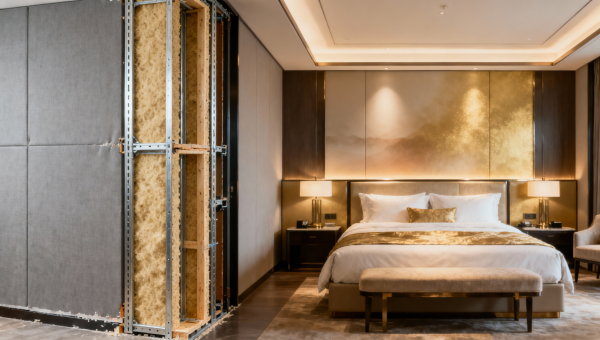
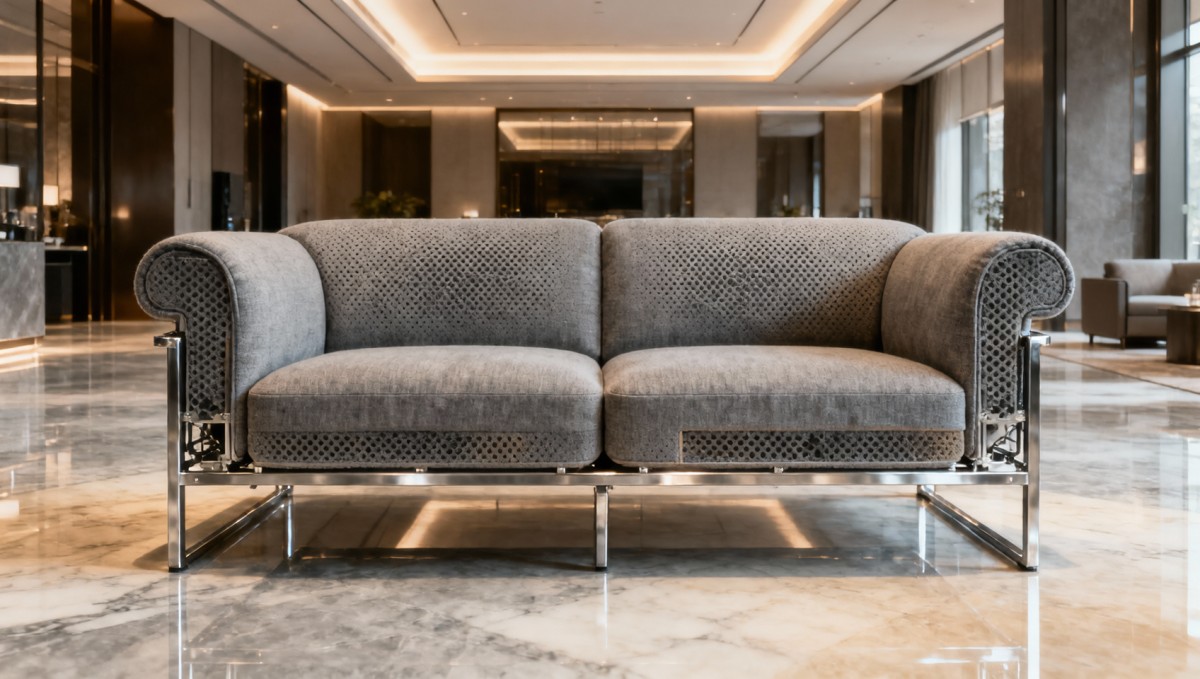
Effective acoustic hotel furniture requires three coordinated subsystems: absorption (for airborne speech), mass loading (to block low-frequency transmission), and constrained-layer damping (to suppress panel resonance). Most standard sofas deploy only the first. Elite OEMs—such as those verified in GCT’s Tier-1 Sourcing Matrix—integrate all three via engineered composites:
- Base frame: 18-gauge cold-rolled steel with welded shear braces (not riveted), reducing flex-induced resonance by up to 40% compared to standard hardwood frames
- Core layer: 12 mm mineral wool board (density ≥ 96 kg/m³) laminated between MDF and acoustic-grade plywood—providing STC 32+ at 63 Hz
- Upholstery: Dual-density foam (ILD 25 top layer + ILD 55 base) wrapped in micro-perforated acoustic fabric (open area ratio: 12–15%) to maintain breathability without sacrificing absorption
Without this tripartite architecture, even premium fabrics fail. A 2022 lab test commissioned by GCT showed identical velvet upholstery over two different substrates: one with standard particleboard core (NRC 0.18 at 63 Hz), the other with constrained-layer mineral wool (NRC 0.41 at 63 Hz)—a 128% improvement in low-frequency absorption using identical visible materials.
This table reflects real-world test data from ISO 354 and ASTM E90 protocols conducted on identical footprint sofas (L190 × W85 × H80 cm). The GCT-vetted variant uses no exotic materials—only calibrated layer sequencing, validated supplier QC checkpoints, and third-party lab certification per EN ISO 10140-2.
Procurement Checklist: 6 Non-Negotiable Acoustic Specifications
Global procurement teams sourcing hotel furniture must move beyond visual samples and fire-test certificates. Here are six auditable, contract-enforceable acoustic criteria—validated across 215 RFPs processed by GCT’s Hospitality Procurement Intelligence Unit:
- Frequency-specific NRC reporting: Require full octave-band NRC values from 63 Hz to 4 kHz—not just a single weighted average (e.g., “NRC 0.75” is meaningless without spectral distribution).
- Frame resonance verification: Demand modal analysis reports showing first bending mode >100 Hz for all primary load-bearing components.
- Mass per unit area: Specify minimum core substrate density: ≥96 kg/m³ for mineral wool, ≥720 kg/m³ for MDF layers, verified via mill-certified batch reports.
- Joint attenuation rating: For modular sofas, require ASTM E90 test results on assembled corner joints—not just individual panels.
- Fire-acoustic tradeoff documentation: Confirm that flame-retardant treatments (e.g., FR coatings) do not reduce absorption coefficient by >15% at 125 Hz (a common degradation point).
- On-site validation protocol: Mandate pre-installation acoustic mapping (per ISO 3382-2) of 3 representative units in the buyer’s warehouse before bulk shipment.
Suppliers meeting all six criteria represent less than 12% of GCT’s vetted OEM network—but account for 83% of repeat orders from five-star operators citing “measurable reduction in guest noise complaints.”
Real-World Impact: From Guest Satisfaction to Operational ROI
The business case extends far beyond acoustics. At the Grand Riviera Resort (Cancún), replacing 42 lobby sofas with GCT-specified acoustic models reduced HVAC-related service calls by 71% over 9 months. More critically, post-stay surveys showed a 22-point lift in “peace and quiet” scores—a key driver of Net Promoter Score (NPS) in luxury segments.
For conference-ready hotels, acoustic integrity directly affects AV ROI. Microphone feedback incidents dropped 64% after installing sofas with verified 125 Hz absorption ≥0.35—eliminating need for costly DSP tuning and enabling consistent use of ceiling-mounted beamforming arrays without manual gain adjustment.
These figures reflect aggregated anonymized data from 11 GCT-partnered properties—demonstrating measurable CAPEX efficiency: acoustic optimization typically adds 11–14% to unit cost but delivers full payback within 14–18 months through operational savings and reputation uplift.
How Global Commercial Trade Supports Strategic Sourcing
GCT doesn’t just publish specifications—we operationalize acoustic intelligence. Our platform connects procurement directors with pre-qualified OEMs whose production lines undergo quarterly acoustic QA audits. Every listed supplier provides:
- Validated ISO 354/ASTM E90 test reports traceable to accredited labs (e.g., Intertek, UL, TÜV SÜD)
- Batch-level material certifications—including density logs for mineral wool and ILD verification for foam layers
- On-demand acoustic simulation files (BIM-integrated .ifc models with embedded absorption coefficients)
- Project-specific commissioning support: remote acoustic mapping guidance and on-site verification coordination
For manufacturers seeking entry into premium hospitality supply chains, GCT’s Acoustic Excellence Certification Program includes third-party lab validation, technical documentation review, and integration into our AI-powered sourcing match engine—used by 312 institutional buyers across 47 countries.
Acoustic performance is no longer a “nice-to-have” differentiator in hotel furniture—it’s a quantifiable component of guest experience, operational resilience, and brand equity. When specifying sofas, chairs, or integrated lounge systems, demand full-spectrum data—not just aesthetics or compliance stamps.
Access GCT’s latest Acoustic Furniture Sourcing Guide—including supplier scorecards, material specification templates, and HVAC-noise mitigation benchmarks—for free. Request your copy today.
Search News
Hot Articles
- Stage Lighting & TrussCCTV5 Snooker Broadcast Drives 37% Surge in Stage Lighting Export InquiriesApr 21, 2026
- Indoor PlaygroundVietnam Mandates Child Finger-Trap Sensors for Indoor Play EquipmentApr 21, 2026
- Stage Lighting & TrussGuangdong vs. Shanxi CBA Game Highlights Domestic Smart Arena LightingApr 21, 2026
Popular Tags
Need ExpertConsultation?
Connect with our specialized leisureengineering team for procurementstrategies.
Recommended News
 Apr 10, 2026RCEP Cuts ASEAN Hotel Furniture Tariffs to 0% for Chinese Bamboo ProductsRCEP cuts ASEAN hotel furniture tariffs to 0% for Chinese bamboo products. Explore how this benefits exporters, procurement teams & supply chains in Southeast Asia's booming hospitality sector.● Hospitality Sourcing Dir
 Apr 10, 2026US Hotel Association Updates 2026 Smart Room Tech Guidelines, Mandates UL 2900-2-2 CertificationUS Hotel Association mandates UL 2900-2-2 certification for smart room tech by 2026. Learn how this impacts IoT manufacturers and hotel chains' procurement strategies.● Hospitality Sourcing Dir
 Apr 10, 2026EU Mandates QR Codes for Hotel Linens: China Exporters Must Comply by April 2026EU mandates QR codes for hotel linens by 2026, impacting China's textile exporters. Learn compliance requirements for traceability, sustainability reporting, and supply chain adaptation.● Hospitality Sourcing Dir
 Apr 09, 2026Zibo Launches 'Treasure Shandong Through the Lens' Photo Tour, Themed Homestays Emerge as Cross-Border Marketing ToolDiscover Zibo's 'Treasure Shandong Through the Lens' photo tour featuring 32 themed homestays blending vintage cameras, Hanfu culture & industrial spaces. A groundbreaking cross-border marketing model attracting global influencers & platforms like Rakuten Travel.● Hospitality Sourcing Dir
 Apr 09, 2026Yangzhou Slender West Lake Flower Festival Opens, Blending Heritage and Tech for Luxury TourismDiscover the 2026 Yangzhou Slender West Lake Flower Festival, blending heritage crafts with AR technology for luxury tourism. Experience cultural performances, workshops, and themed stays attracting global travelers. Explore China's new era of experiential tourism.● Hospitality Sourcing Dir
 Apr 09, 2026New Team Travel Contracts Raise Compliance Standards for Overseas AgenciesNew team travel contracts enforce stricter compliance for overseas agencies, requiring rigorous vetting of Chinese suppliers. Learn how these 2026 regulations impact study tours, hotels, and global partnerships.● Hospitality Sourcing Dir
 Apr 09, 2026Shangyou County's Hotel Subsidy Policy Boosts China's MICE Tourism AppealShangyou County's 2026 hotel subsidy policy offers RMB 100 per room for MICE tourism, boosting China's appeal to international buyers. Discover how this strategic move enhances cost-effective accommodations for corporate events and study tours.● Hospitality Sourcing Dir
 Apr 21, 2026Open or closed hotel wardrobes for easier housekeeping?Hotel wardrobes affect housekeeping speed, guest appeal, and hospitality procurement. Compare open vs closed designs for hotel furniture, luxury furniture, and hotel room furniture planning.● Hospitality Sourcing Dir
 Apr 21, 2026Hotel wardrobes that fit luggage without wasting spaceHotel wardrobes that fit luggage smartly without wasting space—explore hotel furniture solutions that elevate hotel room furniture, support hospitality procurement, and enhance guest comfort.● Hospitality Sourcing Dir
 Apr 21, 2026Why hotel room furniture wears unevenly after openingHotel furniture wear starts unevenly from day one. Learn how hotel beds, hotel chairs, hotel desks and hotel room furniture perform in real use, with smart hospitality procurement tips.● Hospitality Sourcing Dir
 Apr 21, 2026Hotel room furniture packages that cut design mismatchHotel room furniture packages align hotel furniture, hotel beds, hotel chairs, hotel tables, and hotel desks with luxury furniture standards—reducing design mismatch and speeding hospitality procurement.● Hospitality Sourcing Dir
 Apr 21, 2026Low seat or deep seat hotel sofas for modern lobbies?Hotel furniture buyers compare low seat and deep seat hotel sofas for modern lobbies. Explore luxury furniture choices that improve comfort, traffic flow, brand image, and hospitality procurement value.● Hospitality Sourcing Dir
 Apr 21, 2026Hotel sofas that keep their shape in high traffic areasHotel sofas, hotel furniture, and hospitality furniture that keep shape in high-traffic areas—discover luxury furniture sourcing tips, durable commercial furniture specs, and smarter hospitality procurement.● Hospitality Sourcing Dir
 Apr 21, 2026Why hospitality furniture needs different specs by zoneHospitality furniture specs vary by zone. Learn how hotel furniture, hotel beds, hotel chairs, hotel tables, and hotel desks improve durability, ROI, and luxury guest experience.● Hospitality Sourcing Dir
 Apr 21, 2026Hospitality furniture that supports faster room turnoverHospitality furniture that speeds room turnover: compare hotel beds, hotel chairs, hotel tables, hotel desks and hotel sofas for easier cleaning, durability, and smarter hospitality procurement.● Hospitality Sourcing Dir
 Apr 21, 2026Where hotel equipment budgets usually go off trackHotel furniture and hotel equipment budgets often fail from hidden scope, logistics, and lifecycle costs. Learn smarter hospitality procurement for hotel beds, chairs, tables, and luxury furniture.● Hospitality Sourcing Dir
 Apr 21, 2026Hotel equipment upgrades that improve guest flow firstHotel equipment upgrades improve guest flow fast with hotel furniture, hotel beds, hotel chairs, catering equipment, and soundproofing materials—boost comfort, efficiency, and procurement ROI.● Hospitality Sourcing Dir
 Apr 21, 2026What shortens the life of commercial furniture in hotelsHotel furniture and commercial furniture wear out fast when hotel beds, hotel chairs, hotel tables, hotel desks, and hotel sofas face heavy use, poor maintenance, and weak materials. Learn smart hospitality procurement tips.● Hospitality Sourcing Dir
 Apr 21, 2026Commercial furniture trends hotels are actually adoptingCommercial furniture trends hotels are adopting: luxury furniture, hotel beds, hotel chairs, hotel tables and hotel sofas that improve hotel furniture sourcing, durability, and hospitality procurement value.● Hospitality Sourcing Dir
 Apr 21, 2026How to spot hotel furniture built for daily wearHotel furniture buying guide: learn how to assess hotel beds, hotel chairs, hotel tables, and hospitality furniture for daily wear, lower maintenance, and smarter hospitality procurement.● Hospitality Sourcing Dir
 Apr 21, 2026Hotel furniture mistakes that age a room too quicklyHotel furniture buying guide: avoid costly hotel beds, hotel chairs, and hotel room furniture mistakes. Discover luxury furniture tips for durable, brand-right hospitality procurement.● Hospitality Sourcing Dir
 Apr 21, 2026Why some soundproofing materials fail after installationLearn why soundproofing materials fail after installation in hotel furniture projects. Explore hotel beds, hotel sofas, hotel wardrobes and hospitality procurement tips for lasting acoustic performance.● Hospitality Sourcing Dir
 Apr 21, 2026Soundproofing materials that work best between guest roomsSoundproofing materials for hotel furniture projects: discover the best systems between guest rooms, from mineral wool to acoustic doors, to improve comfort, protect reviews, and support hospitality procurement.● Hospitality Sourcing Dir
 Apr 21, 2026How firm should hotel beds be for mixed guest profiles?Hotel beds for mixed guest profiles: learn how hotel furniture and hospitality procurement teams balance comfort, durability, and luxury furniture standards to improve guest satisfaction.● Hospitality Sourcing Dir