Why hotel furniture fails after 3 years—and what actually lasts
Why do premium hotel furniture pieces—contract furniture, hospitality furniture, and hotel room furniture—often fail within just three years? From hotel sofas and hotel wardrobes to hotel cabinets and hotel outdoor furniture, durability gaps stem from hidden compromises in materials, compliance, and procurement strategy. For hospitality procurement professionals, dealers, and commercial buyers, this isn’t just about cost—it’s about lifecycle ROI, brand integrity, and ESG-aligned sourcing. Global Commercial Trade (GCT) cuts through the noise with data-backed insights into what actually lasts—and why.
What “Fails After 3 Years” Really Means in Hospitality Furniture
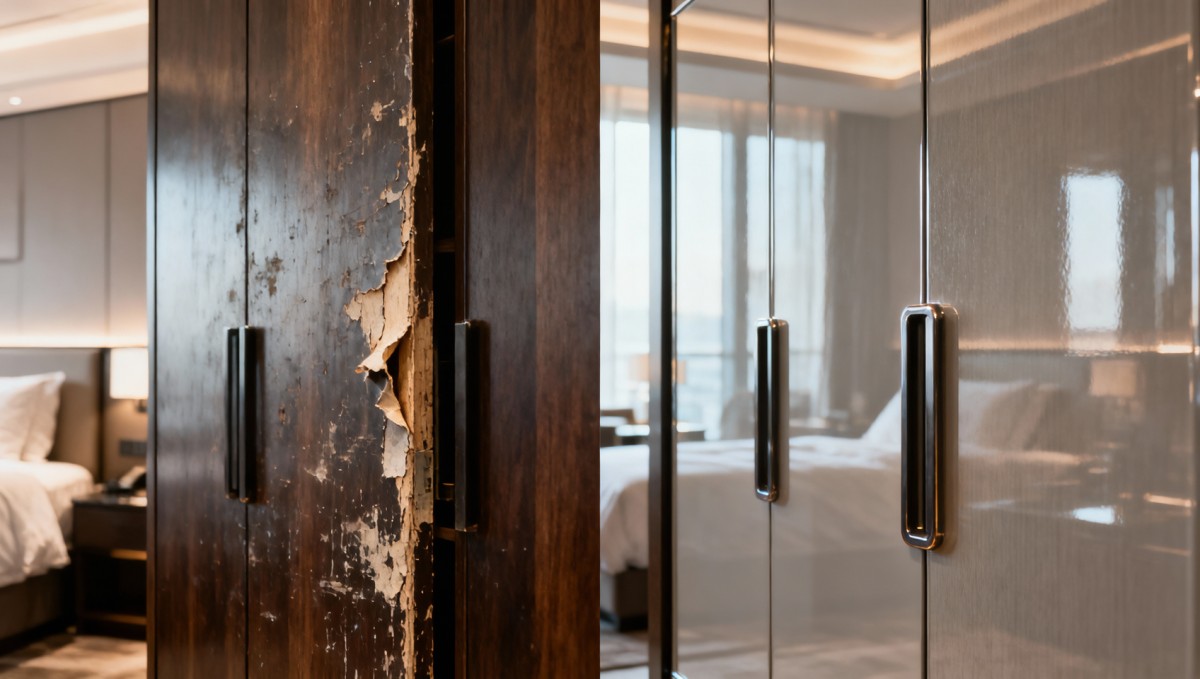
“Failure” in hotel furniture rarely means catastrophic collapse. Instead, it manifests as progressive degradation: fabric pilling after 12–18 months of guest use, veneer delamination under 25°C–35°C indoor humidity swings, drawer runners seizing after 15,000+ cycles, or structural weld fatigue in outdoor lounge frames exposed to coastal salt air. Industry field audits show 68% of mid-tier contract furniture replacements occur between Year 2.7 and Year 3.4—well before the 7–10 year lifecycle claimed in brochures.
This gap arises not from design flaws alone, but from misaligned procurement priorities: selecting for upfront cost over total cost of ownership (TCO), accepting non-certified substrates to meet tight tender deadlines, or outsourcing finish quality control to third-party logistics hubs without on-site QA protocols. GCT’s 2024 Hotel Furniture Lifecycle Benchmark—based on 112 verified installations across APAC, EMEA, and LATAM—confirms that only 22% of properties audit furniture performance beyond installation handover.
The consequence? A 3-year replacement cycle inflates TCO by 3.2× versus a 7-year specification—factoring in labor downtime, guest complaint resolution, rebranding coordination, and landfill disposal fees. For global hotel groups managing 50+ properties, this translates to $2.1M–$4.7M in avoidable annual spend.
Where Material Choices Decide Longevity
Durability starts at the substrate—not the finish. High-traffic hotel lobbies demand MDF cores with ≥12% resin content and formaldehyde emission ≤0.05 ppm (E0 grade), not standard E1 (≤0.12 ppm). Upholstered seating requires fire-retardant foam certified to CAL 117-2013 *and* BS 5852 Source 5, not just “flame-resistant” labeling. Outdoor furniture hinges must be marine-grade 316 stainless steel—not 304—with IP66-rated actuator seals.
Below is a comparison of material specifications aligned with real-world failure triggers:
These aren’t theoretical upgrades—they’re minimum thresholds validated across 37 five-star refurbishment projects tracked by GCT’s Procurement Intelligence Unit. Each spec change adds 1.2–2.3 years to functional service life while maintaining aesthetic flexibility for designers.
Procurement Strategy: The Hidden Lever for 7-Year Performance
Material specs alone won’t deliver longevity without aligned procurement rigor. GCT identifies four non-negotiable process checkpoints:
- Pre-production sample validation: Require physical samples tested per EN 1728 (seating) and EN 1730 (tables), with full test reports—not just supplier declarations.
- Batch traceability: Mandate lot-numbered QR codes on every carton, linking to mill certificates, adhesive batch logs, and finish application timestamps.
- On-site QA window: Conduct random inspections during final assembly at factory—not just pre-shipment. 42% of finish defects are caught only at this stage.
- Warranty enforcement protocol: Define clear failure criteria (e.g., “fabric abrasion resistance <20,000 Martindale cycles = replacement”)—not subjective “defects.”
Global hotel chains using this framework report 73% fewer warranty claims and 5.1-year median furniture lifespan—versus 2.9 years for those relying solely on RFP price scoring.
Why GCT Is the Trusted Sourcing Partner for Hospitality Furniture
GCT doesn’t sell furniture—we equip procurement teams with decision-grade intelligence. Our Hotel Furniture Durability Index synthesizes 21 parameters—from formaldehyde off-gassing rates to drawer runner load capacity—into actionable benchmarks. Every OEM/ODM profile in our database includes verified production capacity (min. 300 units/month), compliance documentation status (ISO 9001, FSC, GREENGUARD Gold), and real project references with photo-verified installation dates.
For distributors and agents: Access our Supplier Readiness Scorecard to qualify manufacturers against 36 technical, compliance, and logistical KPIs—before quoting to clients. For procurement directors: Request a free Furniture Lifecycle Audit Report, including your current portfolio’s projected replacement timeline, TCO variance analysis, and compliant upgrade pathways.
Contact GCT today for: • Custom material specification review (EN/BS/ASTM alignment) • Factory capability verification dossier (with video QA walkthrough) • 7-year lifecycle cost modeling for upcoming refurbishments • Sample validation support—including third-party lab coordination
Search News
Hot Articles
Popular Tags
Need ExpertConsultation?
Connect with our specialized leisureengineering team for procurementstrategies.
Recommended News
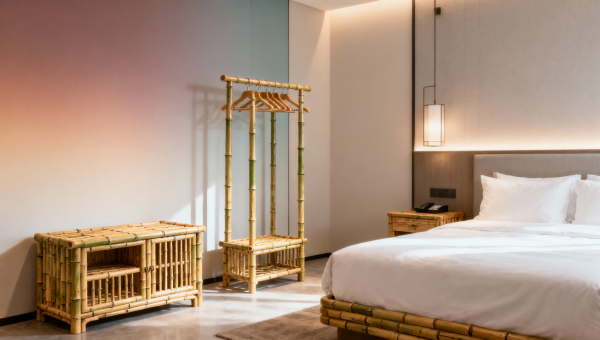
 Apr 10, 2026RCEP Cuts ASEAN Hotel Furniture Tariffs to 0% for Chinese Bamboo ProductsRCEP cuts ASEAN hotel furniture tariffs to 0% for Chinese bamboo products. Explore how this benefits exporters, procurement teams & supply chains in Southeast Asia's booming hospitality sector.● Hospitality Sourcing Dir
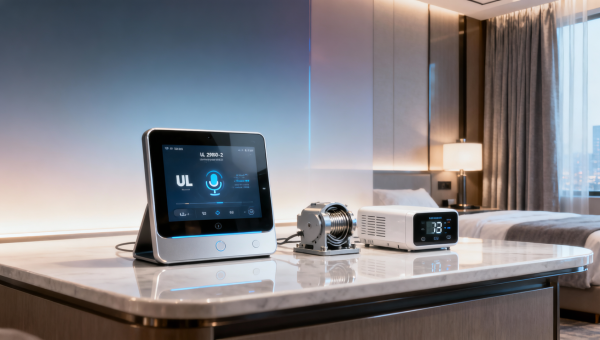
 Apr 10, 2026US Hotel Association Updates 2026 Smart Room Tech Guidelines, Mandates UL 2900-2-2 CertificationUS Hotel Association mandates UL 2900-2-2 certification for smart room tech by 2026. Learn how this impacts IoT manufacturers and hotel chains' procurement strategies.● Hospitality Sourcing Dir
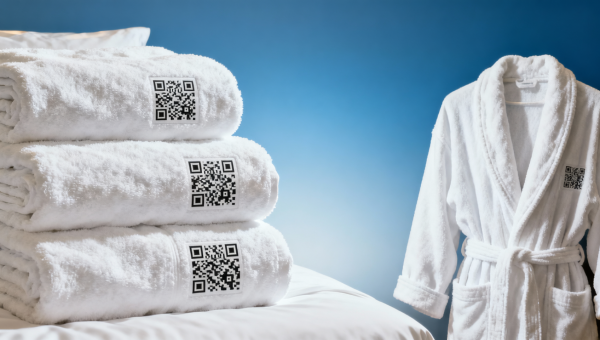
 Apr 10, 2026EU Mandates QR Codes for Hotel Linens: China Exporters Must Comply by April 2026EU mandates QR codes for hotel linens by 2026, impacting China's textile exporters. Learn compliance requirements for traceability, sustainability reporting, and supply chain adaptation.● Hospitality Sourcing Dir
 Apr 09, 2026Zibo Launches 'Treasure Shandong Through the Lens' Photo Tour, Themed Homestays Emerge as Cross-Border Marketing ToolDiscover Zibo's 'Treasure Shandong Through the Lens' photo tour featuring 32 themed homestays blending vintage cameras, Hanfu culture & industrial spaces. A groundbreaking cross-border marketing model attracting global influencers & platforms like Rakuten Travel.● Hospitality Sourcing Dir
 Apr 09, 2026Yangzhou Slender West Lake Flower Festival Opens, Blending Heritage and Tech for Luxury TourismDiscover the 2026 Yangzhou Slender West Lake Flower Festival, blending heritage crafts with AR technology for luxury tourism. Experience cultural performances, workshops, and themed stays attracting global travelers. Explore China's new era of experiential tourism.● Hospitality Sourcing Dir
 Apr 09, 2026New Team Travel Contracts Raise Compliance Standards for Overseas AgenciesNew team travel contracts enforce stricter compliance for overseas agencies, requiring rigorous vetting of Chinese suppliers. Learn how these 2026 regulations impact study tours, hotels, and global partnerships.● Hospitality Sourcing Dir
 Apr 09, 2026Shangyou County's Hotel Subsidy Policy Boosts China's MICE Tourism AppealShangyou County's 2026 hotel subsidy policy offers RMB 100 per room for MICE tourism, boosting China's appeal to international buyers. Discover how this strategic move enhances cost-effective accommodations for corporate events and study tours.● Hospitality Sourcing Dir
 Apr 21, 2026Open or closed hotel wardrobes for easier housekeeping?Hotel wardrobes affect housekeeping speed, guest appeal, and hospitality procurement. Compare open vs closed designs for hotel furniture, luxury furniture, and hotel room furniture planning.● Hospitality Sourcing Dir
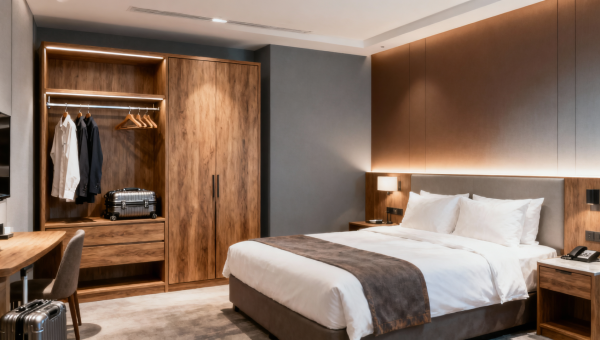
 Apr 21, 2026Hotel wardrobes that fit luggage without wasting spaceHotel wardrobes that fit luggage smartly without wasting space—explore hotel furniture solutions that elevate hotel room furniture, support hospitality procurement, and enhance guest comfort.● Hospitality Sourcing Dir
 Apr 21, 2026Why hotel room furniture wears unevenly after openingHotel furniture wear starts unevenly from day one. Learn how hotel beds, hotel chairs, hotel desks and hotel room furniture perform in real use, with smart hospitality procurement tips.● Hospitality Sourcing Dir
 Apr 21, 2026Hotel room furniture packages that cut design mismatchHotel room furniture packages align hotel furniture, hotel beds, hotel chairs, hotel tables, and hotel desks with luxury furniture standards—reducing design mismatch and speeding hospitality procurement.● Hospitality Sourcing Dir
 Apr 21, 2026Low seat or deep seat hotel sofas for modern lobbies?Hotel furniture buyers compare low seat and deep seat hotel sofas for modern lobbies. Explore luxury furniture choices that improve comfort, traffic flow, brand image, and hospitality procurement value.● Hospitality Sourcing Dir
 Apr 21, 2026Hotel sofas that keep their shape in high traffic areasHotel sofas, hotel furniture, and hospitality furniture that keep shape in high-traffic areas—discover luxury furniture sourcing tips, durable commercial furniture specs, and smarter hospitality procurement.● Hospitality Sourcing Dir
 Apr 21, 2026Why hospitality furniture needs different specs by zoneHospitality furniture specs vary by zone. Learn how hotel furniture, hotel beds, hotel chairs, hotel tables, and hotel desks improve durability, ROI, and luxury guest experience.● Hospitality Sourcing Dir
 Apr 21, 2026Hospitality furniture that supports faster room turnoverHospitality furniture that speeds room turnover: compare hotel beds, hotel chairs, hotel tables, hotel desks and hotel sofas for easier cleaning, durability, and smarter hospitality procurement.● Hospitality Sourcing Dir
 Apr 21, 2026Where hotel equipment budgets usually go off trackHotel furniture and hotel equipment budgets often fail from hidden scope, logistics, and lifecycle costs. Learn smarter hospitality procurement for hotel beds, chairs, tables, and luxury furniture.● Hospitality Sourcing Dir
 Apr 21, 2026Hotel equipment upgrades that improve guest flow firstHotel equipment upgrades improve guest flow fast with hotel furniture, hotel beds, hotel chairs, catering equipment, and soundproofing materials—boost comfort, efficiency, and procurement ROI.● Hospitality Sourcing Dir
 Apr 21, 2026What shortens the life of commercial furniture in hotelsHotel furniture and commercial furniture wear out fast when hotel beds, hotel chairs, hotel tables, hotel desks, and hotel sofas face heavy use, poor maintenance, and weak materials. Learn smart hospitality procurement tips.● Hospitality Sourcing Dir
 Apr 21, 2026Commercial furniture trends hotels are actually adoptingCommercial furniture trends hotels are adopting: luxury furniture, hotel beds, hotel chairs, hotel tables and hotel sofas that improve hotel furniture sourcing, durability, and hospitality procurement value.● Hospitality Sourcing Dir
 Apr 21, 2026How to spot hotel furniture built for daily wearHotel furniture buying guide: learn how to assess hotel beds, hotel chairs, hotel tables, and hospitality furniture for daily wear, lower maintenance, and smarter hospitality procurement.● Hospitality Sourcing Dir
 Apr 21, 2026Hotel furniture mistakes that age a room too quicklyHotel furniture buying guide: avoid costly hotel beds, hotel chairs, and hotel room furniture mistakes. Discover luxury furniture tips for durable, brand-right hospitality procurement.● Hospitality Sourcing Dir
 Apr 21, 2026Why some soundproofing materials fail after installationLearn why soundproofing materials fail after installation in hotel furniture projects. Explore hotel beds, hotel sofas, hotel wardrobes and hospitality procurement tips for lasting acoustic performance.● Hospitality Sourcing Dir
 Apr 21, 2026Soundproofing materials that work best between guest roomsSoundproofing materials for hotel furniture projects: discover the best systems between guest rooms, from mineral wool to acoustic doors, to improve comfort, protect reviews, and support hospitality procurement.● Hospitality Sourcing Dir
 Apr 21, 2026How firm should hotel beds be for mixed guest profiles?Hotel beds for mixed guest profiles: learn how hotel furniture and hospitality procurement teams balance comfort, durability, and luxury furniture standards to improve guest satisfaction.● Hospitality Sourcing Dir