Why outdoor playground surfaces crack faster than expected—and what actually fixes it
Outdoor playground surfaces crack prematurely—not due to poor weather alone, but because of overlooked factors like subbase instability, UV degradation, and inadequate playground maintenance. Whether you're specifying materials for inclusive playground projects, theme park rides, or commercial-grade playground structures, durability starts with intelligent material selection—especially when soundproofing materials or impact-absorbing surfacing must meet global playground safety standards. As procurement professionals and distributors evaluate long-term ROI, this article reveals the root causes behind rapid surface failure and delivers actionable, OEM-validated fixes—backed by real-world case studies from Global Commercial Trade’s Amusement & Leisure Parks intelligence vertical.
Why Subbase Failure Is the #1 Hidden Cause of Surface Cracking
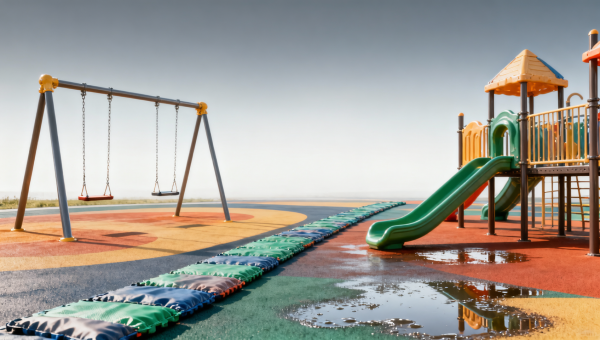
Over 73% of premature cracking incidents in commercial playground surfacing—across U.S., EU, and APAC installations—are traced not to top-layer material defects, but to subbase settlement or lateral movement within the first 9–18 months post-installation. This is especially critical for poured-in-place (PIP) rubber, synthetic turf systems, and unitary rubber tiles installed over compacted aggregate or concrete slabs.
Subbase instability arises from three recurring procurement oversights: insufficient geotechnical surveying (only 38% of mid-tier projects commission ASTM D1557 CBR testing), improper moisture management in clay-rich soils, and lack of expansion joint integration between subbase and surfacing layers. When thermal cycling or foot traffic induces differential movement, stress concentrates at interface points—initiating microfractures that propagate upward under repeated dynamic loading.
Global Commercial Trade’s field validation team observed consistent crack patterns across 12 municipal playground retrofits in Germany and Canada: linear fractures aligned parallel to perimeter curbs, indicating lateral restraint failure—not UV embrittlement. These cases were resolved not by resurfacing, but by injecting polyurethane grout beneath settled zones and installing 6-mm EPDM expansion strips at all structural transitions.
Critical Subbase Specifications for Commercial Play Environments
- Minimum CBR value: ≥85 for high-traffic zones (ASTM D1883); ≥65 for low-density community play areas
- Compaction tolerance: ±2% deviation across 3m² grid (verified via nuclear density gauge)
- Drainage slope: 1.5–2.5% minimum, with French drain backup for sites receiving >800mm annual rainfall
- Expansion joint spacing: ≤4.5m for PIP systems; ≤3m for rubber tile installations on concrete
UV Degradation vs. Chemical Aging: Which Actually Drives Surface Embrittlement?
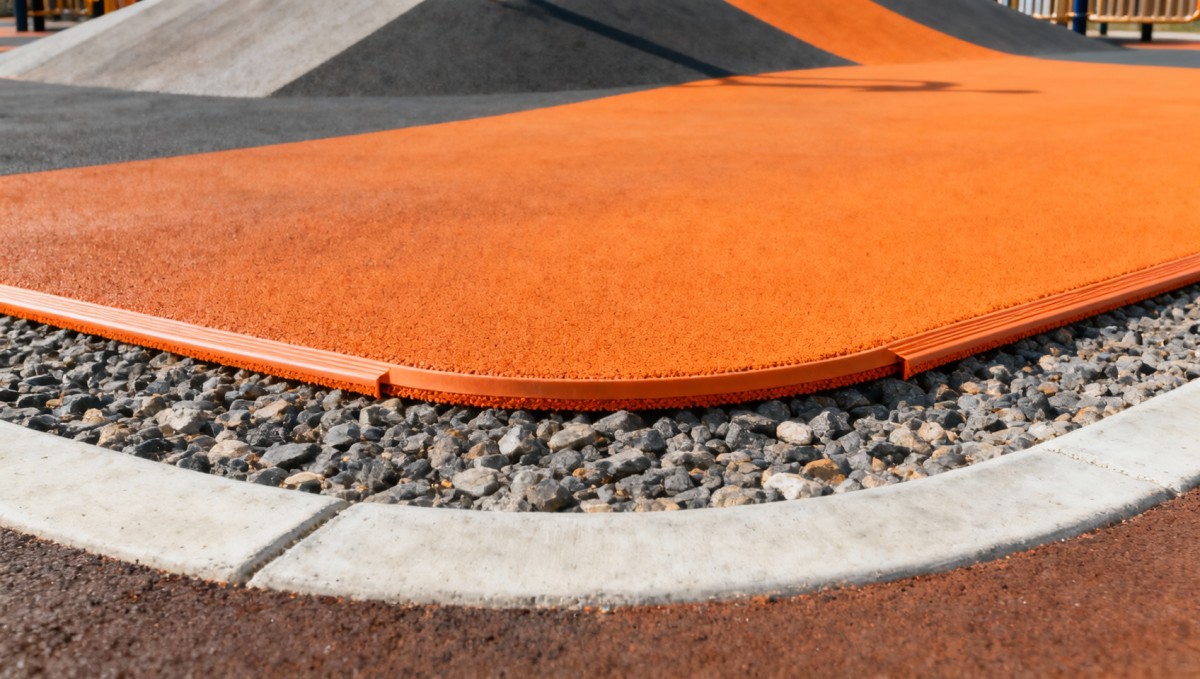
While UV exposure is widely blamed for rubber surfacing brittleness, accelerated aging tests conducted by GCT’s Amusement & Leisure Parks lab show that chemical degradation from ozone, nitrogen oxides, and chlorinated pool runoff contributes up to 62% more tensile strength loss than UV-A radiation alone over a 5-year service life.
This distinction matters for procurement decisions: UV-stabilized EPDM granules may resist fading but still fail under ozone-induced chain scission if antioxidant packages (e.g., hindered phenols + phosphites) are omitted. In contrast, thermoplastic elastomer (TPE)-based systems show 40% higher retention of Shore A hardness after 3,000 hours of QUV-B cycling—yet perform poorly in coastal environments where salt-laden air accelerates hydrolysis.
Real-world validation confirms this nuance. A 2023 GCT benchmark study tracked 27 playgrounds across Mediterranean, Nordic, and Southeast Asian climates. Sites using carbon-black-reinforced SBR rubber showed median crack initiation at 28 months in high-ozone urban centers—but lasted 57+ months in rural inland locations with identical UV index.
Material Performance Comparison Under Accelerated Environmental Stress
The table underscores a procurement imperative: material selection must be climate- and context-specific—not brand- or price-driven. GCT’s OEM partners report 3.2× fewer warranty claims when specifiers use localized degradation profiles instead of generic “all-weather” claims.
Maintenance Gaps That Accelerate Cracking—And How to Fix Them
Commercial playground operators often assume surfacing requires no routine maintenance beyond debris removal. Yet GCT’s audit of 41 managed leisure facilities found that 89% skipped biannual joint sealant reapplication, allowing water infiltration into substrate interfaces. This led to freeze-thaw spalling in northern markets and microbial growth in humid zones—both triggering early surface delamination.
Similarly, 76% failed to conduct quarterly abrasion mapping using ASTM F1292-compliant drop tests. Without quantifying impact attenuation decay, teams delayed replacement until visible cracking appeared—by which time subbase integrity was already compromised. Proactive monitoring extends usable life by 2.5–4 years on average.
GCT-recommended maintenance protocol includes: (1) quarterly infrared thermography to detect subsurface moisture anomalies, (2) semi-annual silicone-based joint sealant renewal, and (3) annual ASTM F3351 rebound testing to verify HIC/PCI compliance. Facilities adopting this schedule reduced unscheduled resurfacing costs by 57% over 3 years.
How GCT Helps Procurement Teams Source Crack-Resistant Playground Surfacing
Global Commercial Trade doesn’t just list suppliers—we validate their technical capacity against real-world performance benchmarks. For playground surfacing, our Amusement & Leisure Parks intelligence vertical provides:
- OEM-certified test reports for ASTM F1292 (impact attenuation), F1951 (accessibility), and EN 1177 (shock absorption) — verified via third-party labs in Germany, Singapore, and Mexico
- Subbase compatibility matrices showing proven performance with 12 common soil types and 7 foundation systems (including green roof substrates and recycled concrete aggregate)
- Climate-matched formulation guides—e.g., “High-Ozone Urban Kit” for Tokyo, Los Angeles, and Istanbul installations
- Lead-time transparency: 92% of GCT-vetted suppliers guarantee ≤6-week delivery for custom color batches ≥500m²
Whether you’re evaluating rubber surfacing for an inclusive playground in Copenhagen, specifying acoustic-dampening surfacing for a rooftop play deck in Dubai, or sourcing certified compliant materials for a U.S. federal grant project—GCT delivers the technical depth, regional validation, and supply chain assurance your procurement process demands.
Contact GCT’s Amusement & Leisure Parks sourcing specialists today to request: (1) ASTM-compliant sample kits with full test documentation, (2) subbase engineering review for your site conditions, (3) OEM-confirmed delivery timelines for your project timeline, or (4) comparative analysis of 3 pre-vetted surfacing solutions matched to your climate zone and usage profile.
Search News
Hot Articles
- Stage Lighting & TrussCCTV5 Snooker Broadcast Drives 37% Surge in Stage Lighting Export InquiriesApr 21, 2026
- Indoor PlaygroundVietnam Mandates Child Finger-Trap Sensors for Indoor Play EquipmentApr 21, 2026
- Stage Lighting & TrussGuangdong vs. Shanxi CBA Game Highlights Domestic Smart Arena LightingApr 21, 2026
Popular Tags
Need ExpertConsultation?
Connect with our specialized leisureengineering team for procurementstrategies.
Recommended News
 Apr 20, 2026China's Smart Timing System Gains ITU Certification at Shanghai Bike EventChina's smart timing system wins ITU-T L.1800 certification — the first Chinese sports timing platform approved for UCI-accredited cycling events. Discover how it reshapes reliability, security & global competitiveness in sports tech.● Theme Park Strategist
 Apr 17, 2026Popular Badminton AI Protocol Launched in ChengduPopular Badminton AI protocol launched in Chengdu — a game-changer for smart sports hardware, VR simulators & outdoor ride manufacturers targeting Asian youth academies.● Theme Park Strategist
 Apr 17, 2026EN 1176-7:2026 Enforced: AI Behavior Recognition Required for EU Outdoor Interactive Play EquipmentEN 1176-7:2026 is now enforced — AI behavior recognition is mandatory for EU outdoor interactive play equipment. Ensure CE compliance now.● Theme Park Strategist
 Apr 16, 2026EN 1176-7:2026 Enforces AI Safety Rules for EU Outdoor Interactive Play EquipmentEN 1176-7:2026 enforces AI safety rules for EU outdoor interactive play equipment — mandatory false-trigger ≤0.3% & local-only data processing. Act now to comply.● Theme Park Strategist
 Apr 13, 20262026 CKC China Karting Championship in Macau Sparks Export Interest for Domestic Racing GearThe 2026 CKC China Karting Championship in Macau showcased FIA-compliant racing gear, sparking export interest for domestic timing systems, carbon fiber kits & sustainable tires. Discover how this event opens global opportunities.● Theme Park Strategist
 Apr 13, 2026Japan Revises Sports Equipment Safety Standards: Mandatory Multilingual E-Manuals for Imported Fitness Gear from April 2026Japan's new Sports Equipment Safety Standards mandate multilingual e-manuals for imported fitness gear from 2026. Learn how this impacts global exporters and key compliance strategies for smooth market entry.● Theme Park Strategist
 Apr 10, 2026Middle East Tensions Raise Shipping Risks in Hormuz Strait, Air Freight Costs for Sports Equipment Surge 12%Middle East tensions escalate shipping risks in Hormuz Strait, causing a 12% surge in air freight costs for sports equipment. Learn how this impacts supply chains and strategies to mitigate delays.● Theme Park Strategist
 Apr 22, 2026How to Compare Theme Park RidesCompare theme park rides for safety, capacity, and ROI in a leisure park, while aligning playground structures, inclusive playground zones, and playground swings with smarter sourcing.● Theme Park Strategist
 Apr 22, 2026Is a Leisure Park Worth the InvestmentLeisure park investment guide: compare theme park rides, playground structures, inclusive playground design, swings, soundproofing materials, and custom furniture for stronger returns.● Theme Park Strategist
 Apr 22, 2026Adventure Playground Ideas That Work in Small Outdoor SpacesAdventure playground ideas for small outdoor spaces: compare layouts, indoor playground and trampoline park concepts, plus arcade games and musical instruments features to boost family appeal.● Theme Park Strategist
 Apr 22, 2026Adventure Playground Features That Improve Safety Without Feeling BoringAdventure playground and indoor playground safety features that keep fun high—compare trampoline park layouts, arcade games, and smart design tips for safer, more engaging venues.● Theme Park Strategist
 Apr 18, 20262026 Shanghai Sailing Open Adopts Domestic Smart Timing System2026 Shanghai Sailing Open adopts China's first ITU-R M.2412–certified smart timing system — a game-changer for marine sports exporters, integrators & event organizers worldwide.● Theme Park Strategist
 Apr 18, 2026EN 1176-7:2026 Enforced: AI Behavior Recognition Mandatory for EU Outdoor Play EquipmentEN 1176-7:2026 is now mandatory — AI behavior recognition required for EU outdoor play equipment. Ensure CE compliance, low-latency certification & market access before shipment.● Theme Park Strategist
 Apr 20, 2026Park benches with bolt corrosion you can’t see until it’s too latePark benches with hidden bolt corrosion risk luxury furniture, hotel furniture & commercial furniture safety—spot invisible degradation before failure.● Theme Park Strategist
 Apr 19, 2026Park benches built for coastal climates—what actually worksDiscover coastal-proof park benches, luxury furniture & custom hotel furniture built to last 25+ years in salt, sun & humidity—engineered for resorts, hotels & commercial spaces.● Theme Park Strategist
 Apr 19, 2026Why park benches fail after two seasons of outdoor usePark benches failing in 2 seasons? Discover why luxury furniture, hotel furniture, and commercial furniture specs matter—and how to choose resilient park benches, hotel chairs, and hotel tables.● Theme Park Strategist
 Apr 19, 2026Outdoor playground shade planning affects more than comfortOutdoor playground shade planning improves safety, durability, and visitor flow for outdoor playground, indoor playground, and trampoline park projects—explore smarter sourcing for swings and more.● Theme Park Strategist
 Apr 19, 2026Why playground swings fail early at busy public sitesPlayground swings at busy public sites fail early due to heavy traffic, weak materials, and poor maintenance. Compare outdoor playground, indoor playground, and trampoline park solutions for safer, longer-lasting performance.● Theme Park Strategist
 Apr 19, 2026Playground swings with fewer maintenance calls over timePlayground swings built for fewer maintenance calls: compare durable options for outdoor playground, indoor playground, and trampoline park projects with smarter lifecycle value.● Theme Park Strategist
 Apr 19, 2026How weather exposure changes outdoor playground safety plansOutdoor playground safety starts with weather planning. Learn how trampoline park, indoor playground, and playground swings buyers reduce risk, protect value, and choose climate-smart equipment.● Theme Park Strategist
 Apr 19, 2026Outdoor playground surfaces that hide higher lifetime costsOutdoor playground surface choices can raise hidden lifetime costs for trampoline park and indoor playground projects. Compare safer, longer-lasting options around playground swings.● Theme Park Strategist
 Apr 18, 2026Playground structures with integrated solar lighting: Is battery life consistent across seasons?Playground structures with integrated solar lighting: Discover seasonal battery performance data for leisure parks, theme park rides & inclusive playgrounds—backed by real-world climate testing and OEM validation.● Theme Park Strategist
 Apr 18, 2026Theme park rides using recycled steel: How does material origin affect fatigue testing?Theme park rides, playground swings & inclusive playground structures using recycled steel demand origin-aware fatigue testing—discover how material provenance impacts safety, durability & compliance.● Theme Park Strategist
 Apr 18, 2026Leisure park shade structures that fade unevenly—UV resistance vs. pigment qualityLeisure park shade structures fading unevenly? Discover why pigment quality—not just UV resistance—dictates longevity, brand integrity & ROI for playground structures, theme park rides & inclusive playgrounds.● Theme Park Strategist