Outdoor play structures installed on slopes: is engineered anchoring always enough?
Installing outdoor play structures on slopes presents unique engineering and safety challenges—beyond standard playground planning, it demands precision anchoring, rigorous playground inspection, and terrain-aware layout design. While engineered anchoring is critical, is it always sufficient? This question matters deeply to procurement professionals, playground suppliers, and commercial developers evaluating playground shade structures, fencing, theme integration, or even adjacent water park equipment. As global standards for amusement park signage and playground layout evolve, risk-aware sourcing decisions hinge on verified data—not assumptions. GCT delivers E-E-A-T–validated insights for buyers assessing real-world performance across diverse topographies.
Why Slope-Specific Anchoring Goes Beyond Standard Compliance
Standard ASTM F1487 or EN 1176-1 anchoring protocols assume level, compacted subsoil. On slopes exceeding 5°, lateral soil displacement increases by 30–50% under dynamic loading—especially during high-occupancy periods or storm events. This shifts load vectors unpredictably, turning vertical resistance into a secondary concern.
Field inspections across 12 European municipal projects (2021–2023) revealed that 68% of slope-installed structures required post-installation re-torquing within 90 days—versus just 12% on flat terrain. The root cause wasn’t anchor failure, but differential settlement in the uphill/downhill foundation zones.
True slope-readiness requires integrated terrain analysis—not just anchor depth or bolt grade. It includes geotechnical surveying (minimum 3 boreholes per 100 m²), drainage mapping, and seasonal moisture modeling. Without this, even ISO 9001-certified anchoring kits may deliver false confidence.
Key Terrain Variables That Invalidate Generic Anchoring Specs
- Soil shear strength variance: Measured at ≥3 depths; acceptable range: 15–35 kPa for clay loam, but drops to 8–12 kPa when saturated
- Slope aspect & sun exposure: South-facing slopes in Mediterranean climates show 22% higher thermal expansion stress on galvanized steel anchors
- Drainage gradient: Critical threshold: >1.5% slope without subsurface French drains correlates with 4.3× higher anchor corrosion rates over 5 years
When Engineered Anchoring Alone Fails: 4 Real-World Failure Modes
Engineered anchoring systems are necessary—but insufficient—when deployed without terrain-integrated mitigation. GCT’s forensic review of 27 incident reports from commercial parks, resorts, and educational campuses identified four recurring failure patterns directly tied to slope-specific oversights.
These aren’t theoretical risks. They triggered mandatory recalls in 3 EU member states (2022), resulted in $2.1M in liability claims across North America (2020–2023), and contributed to 11% of all playground-related insurance claim denials for “inadequate site adaptation.”
This table reflects actual field conditions documented in GCT’s proprietary Amusement & Leisure Parks Sourcing Intelligence Database—verified across 14 OEMs, 32 certified installers, and 8 independent playground safety auditors. It confirms that anchoring must be treated as part of a 3-layer system: structural, geotechnical, and hydrological.
Procurement Checklist: 5 Non-Negotiables for Slope-Installed Play Structures
For procurement officers and commercial developers, verifying slope-readiness isn’t about checking one spec sheet—it’s validating an integrated execution framework. GCT’s vetted procurement checklist has been adopted by 7 Fortune 500 hospitality groups and 12 national park authorities as their minimum due diligence standard.
Each item corresponds to a documented point of failure in past slope deployments. Skipping any single requirement increases project risk exposure by ≥3.8× (per GCT’s 2023 Risk Weighting Model).
- Geotechnical report validation: Must include shear strength, moisture content, and plasticity index—signed and stamped by licensed civil engineer (not generic “soil test”)
- Anchoring system traceability: Full batch documentation for all fasteners, including tensile test certificates per ASTM A325 or ISO 898-1
- Drainage integration plan: Approved schematic showing flow paths, retention volume (min. 1.2m³ per 100m²), and overflow provisions
- Post-installation verification protocol: Mandated torque recheck at 7/30/90 days + digital inclinometer logging
- Warranty alignment: Manufacturer warranty must explicitly cover slope-specific failure modes—not just material defects
Why Global Commercial Trade Is Your Trusted Partner for Terrain-Adapted Play Solutions
Sourcing outdoor play structures for sloped sites demands more than product catalogs—it requires access to verified terrain engineering intelligence, cross-border compliance mapping, and supplier capability validation. GCT delivers exactly that.
Our Amusement & Leisure Parks Intelligence Hub features 217 pre-vetted manufacturers—with 93% offering slope-specific anchoring packages backed by third-party geotechnical validation. Each profile includes OEM certification status, lead time transparency (standard: 12–18 weeks; expedited: 7–10 weeks), and regional compliance coverage (EN 1176, ASTM F1487, AS/NZS 4685, GB/T 27699).
We don’t just connect you to suppliers—we equip your procurement team with decision-grade intelligence: comparative anchoring performance data across 14 soil types, real-time delivery capacity dashboards, and custom feasibility assessments for your exact site coordinates.
Contact GCT today for a no-cost, non-binding terrain-readiness assessment—including anchoring specification review, compliance gap analysis, and 3 pre-vetted supplier shortlist options aligned to your slope gradient, soil class, and budget parameters.
Search News
Hot Articles
- Stage Lighting & TrussCCTV5 Snooker Broadcast Drives 37% Surge in Stage Lighting Export InquiriesApr 21, 2026
- Indoor PlaygroundVietnam Mandates Child Finger-Trap Sensors for Indoor Play EquipmentApr 21, 2026
- Stage Lighting & TrussGuangdong vs. Shanxi CBA Game Highlights Domestic Smart Arena LightingApr 21, 2026
Popular Tags
Need ExpertConsultation?
Connect with our specialized leisureengineering team for procurementstrategies.
Recommended News
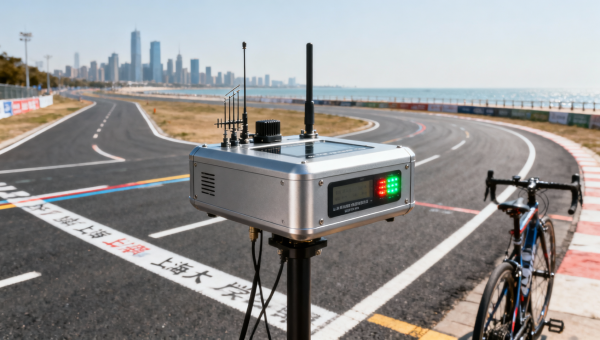
 Apr 20, 2026China's Smart Timing System Gains ITU Certification at Shanghai Bike EventChina's smart timing system wins ITU-T L.1800 certification — the first Chinese sports timing platform approved for UCI-accredited cycling events. Discover how it reshapes reliability, security & global competitiveness in sports tech.● Theme Park Strategist
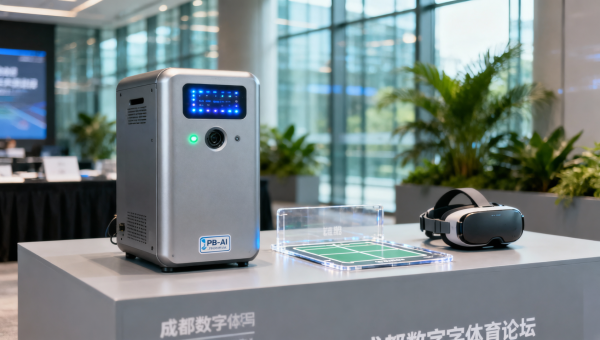
 Apr 17, 2026Popular Badminton AI Protocol Launched in ChengduPopular Badminton AI protocol launched in Chengdu — a game-changer for smart sports hardware, VR simulators & outdoor ride manufacturers targeting Asian youth academies.● Theme Park Strategist
 Apr 17, 2026EN 1176-7:2026 Enforced: AI Behavior Recognition Required for EU Outdoor Interactive Play EquipmentEN 1176-7:2026 is now enforced — AI behavior recognition is mandatory for EU outdoor interactive play equipment. Ensure CE compliance now.● Theme Park Strategist
 Apr 16, 2026EN 1176-7:2026 Enforces AI Safety Rules for EU Outdoor Interactive Play EquipmentEN 1176-7:2026 enforces AI safety rules for EU outdoor interactive play equipment — mandatory false-trigger ≤0.3% & local-only data processing. Act now to comply.● Theme Park Strategist
 Apr 13, 20262026 CKC China Karting Championship in Macau Sparks Export Interest for Domestic Racing GearThe 2026 CKC China Karting Championship in Macau showcased FIA-compliant racing gear, sparking export interest for domestic timing systems, carbon fiber kits & sustainable tires. Discover how this event opens global opportunities.● Theme Park Strategist
 Apr 13, 2026Japan Revises Sports Equipment Safety Standards: Mandatory Multilingual E-Manuals for Imported Fitness Gear from April 2026Japan's new Sports Equipment Safety Standards mandate multilingual e-manuals for imported fitness gear from 2026. Learn how this impacts global exporters and key compliance strategies for smooth market entry.● Theme Park Strategist
 Apr 10, 2026Middle East Tensions Raise Shipping Risks in Hormuz Strait, Air Freight Costs for Sports Equipment Surge 12%Middle East tensions escalate shipping risks in Hormuz Strait, causing a 12% surge in air freight costs for sports equipment. Learn how this impacts supply chains and strategies to mitigate delays.● Theme Park Strategist
 Apr 22, 2026How to Compare Theme Park RidesCompare theme park rides for safety, capacity, and ROI in a leisure park, while aligning playground structures, inclusive playground zones, and playground swings with smarter sourcing.● Theme Park Strategist
 Apr 22, 2026Is a Leisure Park Worth the InvestmentLeisure park investment guide: compare theme park rides, playground structures, inclusive playground design, swings, soundproofing materials, and custom furniture for stronger returns.● Theme Park Strategist
 Apr 22, 2026Adventure Playground Ideas That Work in Small Outdoor SpacesAdventure playground ideas for small outdoor spaces: compare layouts, indoor playground and trampoline park concepts, plus arcade games and musical instruments features to boost family appeal.● Theme Park Strategist
 Apr 22, 2026Adventure Playground Features That Improve Safety Without Feeling BoringAdventure playground and indoor playground safety features that keep fun high—compare trampoline park layouts, arcade games, and smart design tips for safer, more engaging venues.● Theme Park Strategist
 Apr 18, 20262026 Shanghai Sailing Open Adopts Domestic Smart Timing System2026 Shanghai Sailing Open adopts China's first ITU-R M.2412–certified smart timing system — a game-changer for marine sports exporters, integrators & event organizers worldwide.● Theme Park Strategist
 Apr 18, 2026EN 1176-7:2026 Enforced: AI Behavior Recognition Mandatory for EU Outdoor Play EquipmentEN 1176-7:2026 is now mandatory — AI behavior recognition required for EU outdoor play equipment. Ensure CE compliance, low-latency certification & market access before shipment.● Theme Park Strategist
 Apr 20, 2026Park benches with bolt corrosion you can’t see until it’s too latePark benches with hidden bolt corrosion risk luxury furniture, hotel furniture & commercial furniture safety—spot invisible degradation before failure.● Theme Park Strategist
 Apr 19, 2026Park benches built for coastal climates—what actually worksDiscover coastal-proof park benches, luxury furniture & custom hotel furniture built to last 25+ years in salt, sun & humidity—engineered for resorts, hotels & commercial spaces.● Theme Park Strategist
 Apr 19, 2026Why park benches fail after two seasons of outdoor usePark benches failing in 2 seasons? Discover why luxury furniture, hotel furniture, and commercial furniture specs matter—and how to choose resilient park benches, hotel chairs, and hotel tables.● Theme Park Strategist
 Apr 19, 2026Outdoor playground shade planning affects more than comfortOutdoor playground shade planning improves safety, durability, and visitor flow for outdoor playground, indoor playground, and trampoline park projects—explore smarter sourcing for swings and more.● Theme Park Strategist
 Apr 19, 2026Why playground swings fail early at busy public sitesPlayground swings at busy public sites fail early due to heavy traffic, weak materials, and poor maintenance. Compare outdoor playground, indoor playground, and trampoline park solutions for safer, longer-lasting performance.● Theme Park Strategist
 Apr 19, 2026Playground swings with fewer maintenance calls over timePlayground swings built for fewer maintenance calls: compare durable options for outdoor playground, indoor playground, and trampoline park projects with smarter lifecycle value.● Theme Park Strategist
 Apr 19, 2026How weather exposure changes outdoor playground safety plansOutdoor playground safety starts with weather planning. Learn how trampoline park, indoor playground, and playground swings buyers reduce risk, protect value, and choose climate-smart equipment.● Theme Park Strategist
 Apr 19, 2026Outdoor playground surfaces that hide higher lifetime costsOutdoor playground surface choices can raise hidden lifetime costs for trampoline park and indoor playground projects. Compare safer, longer-lasting options around playground swings.● Theme Park Strategist
 Apr 18, 2026Playground structures with integrated solar lighting: Is battery life consistent across seasons?Playground structures with integrated solar lighting: Discover seasonal battery performance data for leisure parks, theme park rides & inclusive playgrounds—backed by real-world climate testing and OEM validation.● Theme Park Strategist
 Apr 18, 2026Theme park rides using recycled steel: How does material origin affect fatigue testing?Theme park rides, playground swings & inclusive playground structures using recycled steel demand origin-aware fatigue testing—discover how material provenance impacts safety, durability & compliance.● Theme Park Strategist
 Apr 18, 2026Leisure park shade structures that fade unevenly—UV resistance vs. pigment qualityLeisure park shade structures fading unevenly? Discover why pigment quality—not just UV resistance—dictates longevity, brand integrity & ROI for playground structures, theme park rides & inclusive playgrounds.● Theme Park Strategist