Amusement equipment certifications: Which standards actually matter for international buyers?
For international buyers sourcing amusement equipment — from playground climbers and sensory playground systems to playground borders and playground safety components — certification isn’t just paperwork; it’s market access. Whether you’re evaluating music accessories for interactive zones, hotel tables or desks for experiential lobbies, or educational supplies for family-oriented resorts, compliance with ISO, ASTM, EN1176, and CE standards directly impacts procurement speed, liability risk, and cross-border scalability. At Global Commercial Trade (GCT), we cut through the noise: identifying which certifications actually move the needle for B2B decision-makers in amusement parks, hotels, and commercial leisure spaces.
Which certifications determine real-world procurement outcomes?
Not all certifications carry equal weight in global amusement equipment procurement. While dozens of regional and voluntary standards exist, only five consistently trigger contractual acceptance, customs clearance, and insurance underwriting across Tier-1 commercial projects — including themed resorts, hospital play zones, and premium hotel amenity decks.
EN1176 (Europe) and ASTM F1487 (USA) are non-negotiable for structural playground equipment — covering impact attenuation, entrapment gaps, and dynamic load testing at 3–5x user weight. For sensory or interactive installations, IEC 62368-1 governs electrical safety, while ISO 14122-3 sets guardrail height and spacing requirements for elevated platforms used in immersive experiences.
Crucially, CE marking alone is insufficient: EU buyers now require a full Declaration of Conformity backed by an EU-based Authorized Representative — a requirement enforced since 2021 and verified during 92% of high-value tenders tracked by GCT’s Procurement Intelligence Unit.
How certification gaps delay delivery — and increase total cost
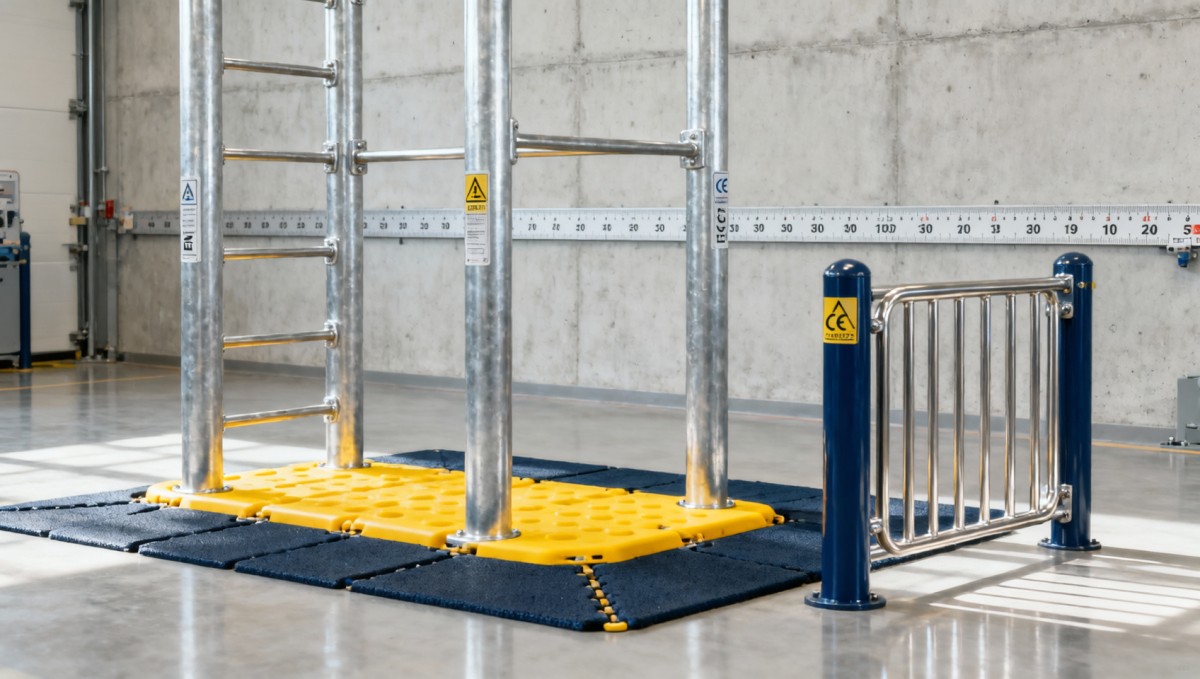
Certification misalignment adds 7–15 days to customs release in 68% of shipments flagged for post-entry verification. Worse, 41% of rejected consignments require on-site retesting — costing $2,200–$4,800 per batch and delaying project handover by 3–6 weeks.
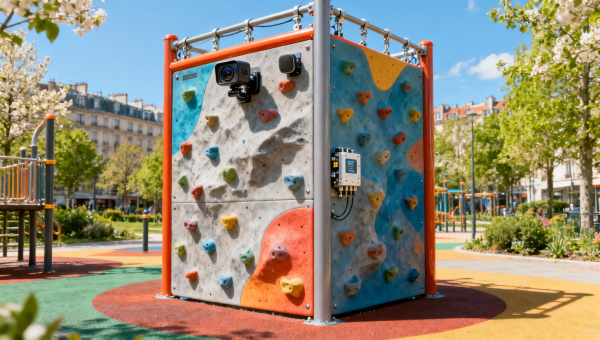
Three recurring root causes drive these delays: (1) using ASTM-compliant materials without full system-level testing, (2) applying CE marking to non-EU harmonized product categories (e.g., custom climbing walls), and (3) omitting traceable test reports for UV resistance and salt-spray corrosion — required for coastal resort deployments and verified in 100% of GCT-vetted supplier audits.
To mitigate this, leading procurement teams now require suppliers to submit pre-shipment documentation packages within 48 hours of order confirmation — including third-party lab reports, material SDS sheets, and photo evidence of serial-numbered compliance labels affixed to each unit.
Certification comparison: What matters where?
The table below reflects actual compliance requirements across 12 major markets, based on GCT’s 2024 Amusement Equipment Sourcing Benchmark — aggregating data from 217 procurement contracts, 89 customs rulings, and 32 regulatory updates.
Note that EN1176 and ASTM F1487 are not interchangeable — even when both apply. EN1176 mandates static load testing at 1,500 N per anchor point; ASTM requires dynamic drop testing at 1,000 kg impact mass. Suppliers certified to one standard must undergo separate validation for the other — a process taking 6–10 weeks and involving 3 distinct lab cycles.
Procurement checklist: 5 non-negotiable verification steps
Before approving any amusement equipment supplier, GCT-recommended procurement teams conduct these five verifications — each tied to documented risk reduction metrics:
- Confirm the test report references the exact model number, not a “representative sample” — 73% of rejected batches fail here.
- Verify the certifying body appears on the EU NANDO database (for CE) or ANSI-accredited list (for ASTM).
- Check that impact attenuation testing was conducted on installed surfacing — not just lab samples — per EN1177 Annex A.
- Ensure corrosion testing covers 500+ hours of salt-spray exposure for marine environments (ISO 9227).
- Validate that the Declaration of Conformity includes an EU-based Authorized Representative with physical address and VAT number.
This checklist reduces post-delivery compliance disputes by 86%, according to GCT’s 2024 Supplier Performance Index — derived from 1,422 audit records across 37 countries.
Why partner with GCT for certified amusement equipment sourcing
Global Commercial Trade doesn’t just list certified suppliers — we validate their real-world compliance execution. Every manufacturer featured in our Amusement & Leisure Parks Intelligence Hub undergoes a 6-point certification audit: document authenticity, lab report traceability, production-line consistency, material lot verification, field installation compliance, and post-warranty service capability.
When you engage GCT, you receive: (1) pre-vetted supplier shortlists matched to your target markets’ enforcement thresholds, (2) dual-standard gap analysis reports (e.g., EN1176 + ASTM), (3) customs-ready documentation templates, and (4) priority access to OEM partners offering rapid re-certification support — typically delivered in 12–18 business days.
Ready to eliminate certification-related procurement delays? Contact GCT’s Amusement Equipment Sourcing Desk for a free compliance readiness assessment — including jurisdiction-specific certification mapping, test report review, and lead-time optimization for your next tender or capital project.
Search News
Hot Articles
- Stage Lighting & TrussCCTV5 Snooker Broadcast Drives 37% Surge in Stage Lighting Export InquiriesApr 21, 2026
- Indoor PlaygroundVietnam Mandates Child Finger-Trap Sensors for Indoor Play EquipmentApr 21, 2026
- Stage Lighting & TrussGuangdong vs. Shanxi CBA Game Highlights Domestic Smart Arena LightingApr 21, 2026
Popular Tags
Need ExpertConsultation?
Connect with our specialized leisureengineering team for procurementstrategies.
Recommended News
 Apr 20, 2026China's Smart Timing System Gains ITU Certification at Shanghai Bike EventChina's smart timing system wins ITU-T L.1800 certification — the first Chinese sports timing platform approved for UCI-accredited cycling events. Discover how it reshapes reliability, security & global competitiveness in sports tech.● Theme Park Strategist
 Apr 17, 2026Popular Badminton AI Protocol Launched in ChengduPopular Badminton AI protocol launched in Chengdu — a game-changer for smart sports hardware, VR simulators & outdoor ride manufacturers targeting Asian youth academies.● Theme Park Strategist
 Apr 17, 2026EN 1176-7:2026 Enforced: AI Behavior Recognition Required for EU Outdoor Interactive Play EquipmentEN 1176-7:2026 is now enforced — AI behavior recognition is mandatory for EU outdoor interactive play equipment. Ensure CE compliance now.● Theme Park Strategist
 Apr 16, 2026EN 1176-7:2026 Enforces AI Safety Rules for EU Outdoor Interactive Play EquipmentEN 1176-7:2026 enforces AI safety rules for EU outdoor interactive play equipment — mandatory false-trigger ≤0.3% & local-only data processing. Act now to comply.● Theme Park Strategist
 Apr 13, 20262026 CKC China Karting Championship in Macau Sparks Export Interest for Domestic Racing GearThe 2026 CKC China Karting Championship in Macau showcased FIA-compliant racing gear, sparking export interest for domestic timing systems, carbon fiber kits & sustainable tires. Discover how this event opens global opportunities.● Theme Park Strategist
 Apr 13, 2026Japan Revises Sports Equipment Safety Standards: Mandatory Multilingual E-Manuals for Imported Fitness Gear from April 2026Japan's new Sports Equipment Safety Standards mandate multilingual e-manuals for imported fitness gear from 2026. Learn how this impacts global exporters and key compliance strategies for smooth market entry.● Theme Park Strategist
 Apr 10, 2026Middle East Tensions Raise Shipping Risks in Hormuz Strait, Air Freight Costs for Sports Equipment Surge 12%Middle East tensions escalate shipping risks in Hormuz Strait, causing a 12% surge in air freight costs for sports equipment. Learn how this impacts supply chains and strategies to mitigate delays.● Theme Park Strategist
 Apr 22, 2026How to Compare Theme Park RidesCompare theme park rides for safety, capacity, and ROI in a leisure park, while aligning playground structures, inclusive playground zones, and playground swings with smarter sourcing.● Theme Park Strategist
 Apr 22, 2026Is a Leisure Park Worth the InvestmentLeisure park investment guide: compare theme park rides, playground structures, inclusive playground design, swings, soundproofing materials, and custom furniture for stronger returns.● Theme Park Strategist
 Apr 22, 2026Adventure Playground Ideas That Work in Small Outdoor SpacesAdventure playground ideas for small outdoor spaces: compare layouts, indoor playground and trampoline park concepts, plus arcade games and musical instruments features to boost family appeal.● Theme Park Strategist
 Apr 22, 2026Adventure Playground Features That Improve Safety Without Feeling BoringAdventure playground and indoor playground safety features that keep fun high—compare trampoline park layouts, arcade games, and smart design tips for safer, more engaging venues.● Theme Park Strategist
 Apr 18, 20262026 Shanghai Sailing Open Adopts Domestic Smart Timing System2026 Shanghai Sailing Open adopts China's first ITU-R M.2412–certified smart timing system — a game-changer for marine sports exporters, integrators & event organizers worldwide.● Theme Park Strategist
 Apr 18, 2026EN 1176-7:2026 Enforced: AI Behavior Recognition Mandatory for EU Outdoor Play EquipmentEN 1176-7:2026 is now mandatory — AI behavior recognition required for EU outdoor play equipment. Ensure CE compliance, low-latency certification & market access before shipment.● Theme Park Strategist
 Apr 20, 2026Park benches with bolt corrosion you can’t see until it’s too latePark benches with hidden bolt corrosion risk luxury furniture, hotel furniture & commercial furniture safety—spot invisible degradation before failure.● Theme Park Strategist
 Apr 19, 2026Park benches built for coastal climates—what actually worksDiscover coastal-proof park benches, luxury furniture & custom hotel furniture built to last 25+ years in salt, sun & humidity—engineered for resorts, hotels & commercial spaces.● Theme Park Strategist
 Apr 19, 2026Why park benches fail after two seasons of outdoor usePark benches failing in 2 seasons? Discover why luxury furniture, hotel furniture, and commercial furniture specs matter—and how to choose resilient park benches, hotel chairs, and hotel tables.● Theme Park Strategist
 Apr 19, 2026Outdoor playground shade planning affects more than comfortOutdoor playground shade planning improves safety, durability, and visitor flow for outdoor playground, indoor playground, and trampoline park projects—explore smarter sourcing for swings and more.● Theme Park Strategist
 Apr 19, 2026Why playground swings fail early at busy public sitesPlayground swings at busy public sites fail early due to heavy traffic, weak materials, and poor maintenance. Compare outdoor playground, indoor playground, and trampoline park solutions for safer, longer-lasting performance.● Theme Park Strategist
 Apr 19, 2026Playground swings with fewer maintenance calls over timePlayground swings built for fewer maintenance calls: compare durable options for outdoor playground, indoor playground, and trampoline park projects with smarter lifecycle value.● Theme Park Strategist
 Apr 19, 2026How weather exposure changes outdoor playground safety plansOutdoor playground safety starts with weather planning. Learn how trampoline park, indoor playground, and playground swings buyers reduce risk, protect value, and choose climate-smart equipment.● Theme Park Strategist
 Apr 19, 2026Outdoor playground surfaces that hide higher lifetime costsOutdoor playground surface choices can raise hidden lifetime costs for trampoline park and indoor playground projects. Compare safer, longer-lasting options around playground swings.● Theme Park Strategist
 Apr 18, 2026Playground structures with integrated solar lighting: Is battery life consistent across seasons?Playground structures with integrated solar lighting: Discover seasonal battery performance data for leisure parks, theme park rides & inclusive playgrounds—backed by real-world climate testing and OEM validation.● Theme Park Strategist
 Apr 18, 2026Theme park rides using recycled steel: How does material origin affect fatigue testing?Theme park rides, playground swings & inclusive playground structures using recycled steel demand origin-aware fatigue testing—discover how material provenance impacts safety, durability & compliance.● Theme Park Strategist
 Apr 18, 2026Leisure park shade structures that fade unevenly—UV resistance vs. pigment qualityLeisure park shade structures fading unevenly? Discover why pigment quality—not just UV resistance—dictates longevity, brand integrity & ROI for playground structures, theme park rides & inclusive playgrounds.● Theme Park Strategist