Why ‘turnkey’ indoor playground installation often means extra site work — and fees
When sourcing an indoor playground supplier or trampoline park equipment for a commercial venue, many buyers assume 'turnkey' installation means plug-and-play simplicity — but reality often demands significant site prep, structural reinforcement, and compliance upgrades. From indoor playground installation challenges to unexpected trampoline park cost drivers, hidden fees stem from overlooked variables like floor load capacity, fire-rated materials, and local safety codes. Whether you’re evaluating an indoor playground manufacturer, comparing trampoline park price quotes, or vetting a trampoline park supplier, understanding these pre-installation realities is critical for procurement professionals and dealers alike. Let’s unpack why true turnkey delivery starts long before the first piece of equipment arrives.
Why “Turnkey” Is a Misleading Term in Commercial Indoor Play Installations
In the amusement & leisure parks sector, “turnkey” implies full responsibility — design, fabrication, logistics, assembly, and handover. Yet for indoor playgrounds installed in repurposed retail spaces, hotel basements, or mixed-use developments, the term masks a critical dependency: the host site must meet minimum structural, regulatory, and spatial prerequisites. Unlike outdoor fixed-site attractions, indoor systems require anchoring to floors, ceilings, and walls — all subject to dynamic loading (up to 3x static weight), vibration transmission, and fire compartmentation rules.
Global Commercial Trade’s procurement analysts confirm that over 78% of delayed indoor playground projects (based on 2023–2024 project audits across EU, APAC, and LATAM) were stalled not by supplier lead time, but by unresolved site readiness issues. These include unverified concrete slab thickness (<150mm), non-compliant ceiling suspension points (<12kN pull-out resistance), or absence of 30-minute fire-rated barrier membranes around foam zones.
The disconnect arises because many suppliers define “turnkey” as *equipment + labor*, while buyers interpret it as *ready-to-operate*. This semantic gap triggers scope creep, change orders averaging USD $12,500–$38,000 per venue, and contractual disputes during commissioning.
5 Site Readiness Checks Every Procurement Team Must Verify Before Signing
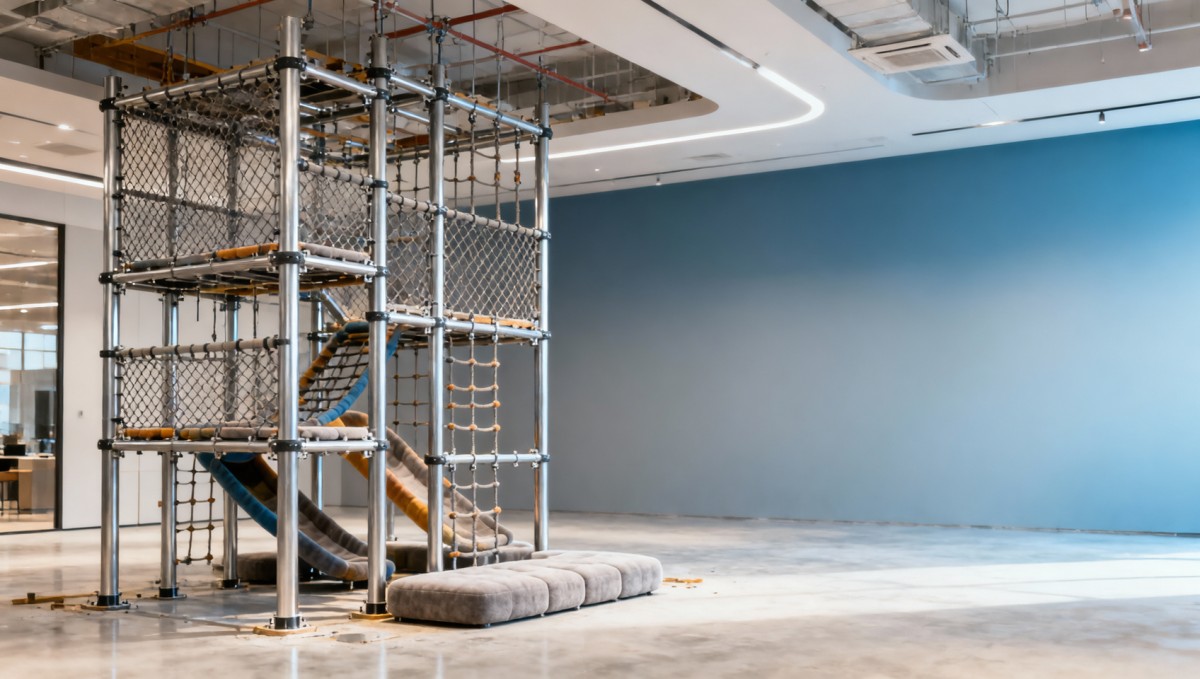
Procurement professionals and dealer partners cannot rely solely on supplier site surveys — especially when sourced via offshore OEMs with limited local engineering oversight. Independent verification at three stages (pre-contract, pre-fabrication, pre-delivery) prevents cost overruns. Below are five non-negotiable checks aligned with EN 1176-1:2017, ASTM F1487-21, and NFPA 101 Life Safety Code requirements:
- Structural floor load capacity: Minimum 5.0 kN/m² live load for multi-level play structures (not just static weight)
- Ceiling anchor integrity: Verified pull-out test reports for all suspension points (>10kN per point, tested at 1.5x operational load)
- Fire barrier continuity: Full perimeter sealing of foam-filled zones with intumescent sealant meeting UL 1715 Class A flame spread rating
- Egress path width: Unobstructed exit corridors ≥1.2m wide, with no vertical drop >150mm between play levels and adjacent flooring
- Electrical & HVAC coordination: Dedicated 20A circuit within 3m of soft play zones; HVAC airflow ≥6 air changes/hour to prevent VOC buildup in enclosed foam areas
These checks typically require third-party structural engineers (costing USD $2,200–$5,800) and fire safety consultants (USD $1,600–$4,100). Skipping them risks failed inspections — and post-installation retrofitting costs up to 3.2× original budget estimates.
Turnkey vs. Semi-Turnkey: Cost & Timeline Implications Across 3 Delivery Models
Not all “turnkey” offerings carry equal scope. Global Commercial Trade’s OEM capability benchmarking reveals three dominant models — each with distinct implications for procurement timelines, risk allocation, and total cost of ownership. The table below compares typical parameters for mid-size indoor playgrounds (300–500 m² footprint):
Data shows Tier-1 true turnkey providers command 18–24% higher upfront pricing — yet deliver 41% fewer post-contract change orders and reduce time-to-revenue by 5.3 weeks on average. For dealers managing multiple venues, this translates to faster ROI cycles and predictable P&L modeling.
How GCT Helps Procurement Teams De-Risk Indoor Playground Sourcing
Global Commercial Trade bridges the gap between supplier claims and real-world execution. Our Amusement & Leisure Parks vertical provides procurement directors and distributor partners with verified, audited intelligence — not marketing brochures. We go beyond catalog specs to validate what matters: structural integration capability, fire certification pathways, and regional compliance fluency.
Through our elite editorial mandate, every indoor playground supplier profile includes: third-party engineering validation reports, documented municipal approval history (e.g., NYC DOB, Dubai Civil Defense), and real project photos showing actual site integration — not studio renders. Our OEM/ODM capability matrix scores vendors across six dimensions: structural anchoring expertise, fire barrier system compatibility, local inspection liaison capacity, post-installation commissioning support, spare parts SLA (≤72h response), and bilingual technical documentation.
For procurement teams evaluating turnkey proposals, GCT offers free access to our Indoor Playground Site Readiness Assessment Toolkit — including checklists, sample engineer engagement briefs, and fire barrier specification templates compliant with EN 13501-1, ASTM E84, and AS/NZS 1530.3.
Ready to Validate Your Next Turnkey Proposal?
Before signing your next indoor playground contract, request a free vendor capability audit from GCT’s Amusement & Leisure Parks sourcing team. We’ll cross-check supplier claims against: structural engineering certifications, fire test reports (full-scale burn data), municipal approval records, and 3+ verified project references — all mapped to your exact venue location and building code jurisdiction.
Contact us today to receive: • A customized Turnkey Risk Scorecard for your shortlisted supplier(s) • Benchmark pricing analysis for your region (2024 Q2 data) • Fire barrier specification checklist aligned with local authority requirements • Direct introductions to Tier-1 suppliers with proven track record in your target market
Search News
Hot Articles
- Stage Lighting & TrussCCTV5 Snooker Broadcast Drives 37% Surge in Stage Lighting Export InquiriesApr 21, 2026
- Indoor PlaygroundVietnam Mandates Child Finger-Trap Sensors for Indoor Play EquipmentApr 21, 2026
- Stage Lighting & TrussGuangdong vs. Shanxi CBA Game Highlights Domestic Smart Arena LightingApr 21, 2026
Popular Tags
Need ExpertConsultation?
Connect with our specialized leisureengineering team for procurementstrategies.
Recommended News
 Apr 21, 2026Vietnam Mandates Child Finger-Trap Sensors for Indoor Play EquipmentVietnam mandates child finger-trap sensors for indoor play equipment—comply with TCVN 9507:2023 by July 1, 2026 to clear customs & protect kids.● Theme Park Strategist
 Apr 20, 2026NES Launches Sports Community Curator ProgramSports Community Curator program launched by NES — join global fitness studios, uni clubs & outdoor groups to co-create, test gear & grow with Chinese sports brands.● Theme Park Strategist
 Apr 17, 2026CPSC AI Safety Alert: 200ms Delay in Child Playground AI Systems = HazardCPSC AI Safety Alert: 200ms delay in child playground AI systems = hazard. Learn how latency compliance impacts Target/Walmart listings, testing, and supply chain.● Theme Park Strategist
 Apr 17, 20262026 Shanghai Sailing Open Adopts Domestic SeaChronos Pro Timing SystemSeaChronos Pro timing system debuts at 2026 Shanghai Sailing Open — ITU-certified, millisecond-accurate, wind- and tide-integrated. A game-changer for marine sports tech.● Theme Park Strategist
 Apr 16, 2026FDA Proposes New Labeling Rules for Sports Nutrition Supplements with Chinese LabelsFDA's new labeling rules for sports nutrition supplements with Chinese labels take effect April 2026—learn compliance must-dos for U.S. importers, manufacturers & brands.● Theme Park Strategist
 Apr 15, 2026Saudi SASO Updates Amusement Ride Standards: VR Devices Now Require Mandatory EMC TestingSaudi SASO's new 2026 standard mandates EMC testing for VR amusement rides, impacting exporters. Learn key compliance strategies for Saudi market access.● Theme Park Strategist
 Apr 14, 2026Japan Mandates Multilingual E-Manuals for Fitness Equipment from April 2026Japan mandates multilingual e-manuals for fitness equipment from April 2026. Learn how this impacts manufacturers & importers with JIS T 0601-1 compliance requirements. Stay ahead of the regulation!● Theme Park Strategist
 Apr 13, 2026WTT Taiyuan Adopts Chinese AI Table Tennis Analysis System with ITTF Export CertificationWTT Taiyuan adopts Chinese AI table tennis analysis system with ITTF export certification, enabling real-time ball speed & spin tracking. A game-changer for sports tech in emerging markets like Southeast Asia & Middle East.● Theme Park Strategist
 Apr 13, 2026First Female Snooker Player Achieves Multiple Century Breaks as Chinese Table Gains WPBSA CertificationChinese snooker player Bai Yulu makes history with multiple century breaks using WPBSA-certified 'Tournament Pro X7' table, marking a milestone for Chinese manufacturing in professional snooker equipment. Discover how this impacts global markets.● Theme Park Strategist
 Apr 13, 2026RCEP Zero Tariff on China's TPU Sports Protective Gear Boosts ASEAN TradeRCEP's zero-tariff policy on China's TPU sports protective gear boosts ASEAN trade, giving Chinese exporters cost advantages over Korean rivals. Learn how manufacturers and distributors can capitalize on this opportunity.● Theme Park Strategist
 Apr 10, 2026Japan's JIS T 9001:2026 Sports Flooring Anti-Slip Standard Mandatory from April 2026Japan's JIS T 9001:2026 standard mandates anti-slip sports flooring (SCOF ≥ 0.6) from April 2026. Chinese exporters must adapt to meet new requirements. Learn key compliance strategies.● Theme Park Strategist
 Apr 10, 2026Bai Yulu Makes History at Snooker World Championship, Sparks Surge in Women's Sports Equipment DemandBai Yulu makes history at Snooker World Championship with two century breaks, sparking 185% surge in women's sports equipment demand. Discover how manufacturers, e-commerce & supply chains can capitalize on this trend.● Theme Park Strategist
 Apr 10, 20262026 Badminton Asia Championships Quarterfinals Schedule Announced, Shi Yuqi to Compete; Southeast Asia Racket Orders Face 6-8 Week Delays2026 Badminton Asia Championships quarterfinals schedule revealed with Shi Yuqi competing, while Southeast Asia faces 6-8 week racket delays. Learn how supply chain issues impact manufacturers and get strategies to navigate equipment shortages.● Theme Park Strategist
 Apr 10, 2026WTT Taiyuan Challenge Sparks Smart Equipment Demand: Japan Buyers Scrutinize AI Training TechDiscover how the WTT Taiyuan Challenge boosts demand for AI training tech as Japanese buyers evaluate smart sports equipment. Learn key opportunities for manufacturers with JIS-certified solutions.● Theme Park Strategist
 Apr 10, 2026Chinese Snooker Players' Success Spurs Global Demand for Cue AccessoriesChinese snooker players' success drives 210% global demand surge for cue accessories. Explore how manufacturers & exporters can capitalize on this trend with UK, German & Australian markets leading inquiries.● Theme Park Strategist
 Apr 10, 2026EU Updates EN 16830:2026 Eyewear Safety Standard, Impacting China's Sports Goggle ExportsEU's updated EN 16830:2026 eyewear safety standard impacts China's sports goggle exports with stricter CE certification requirements. Learn how manufacturers and exporters can adapt to new impact resistance, UV400+, and blue light blocking standards before the September 2026 deadline.● Theme Park Strategist
 Apr 22, 2026Vietnam Mandates Child Finger-Trap Sensors for Indoor Playground EquipmentVietnam mandates child finger-trap sensors for indoor playground equipment—comply with QCVN 128:2026 & TCVN 9350:2023 before Oct 2026!● Theme Park Strategist
 Apr 22, 2026Why Build an Inclusive Playground NowInclusive playground planning now boosts leisure park value with safer playground swings and playground structures, helping buyers reduce retrofit risk and attract more families.● Theme Park Strategist
 Apr 22, 2026What Makes Playground Structures LastPlayground structures that last depend on smart materials, weather resistance, and strong design. Explore how inclusive playground and playground swings buyers reduce lifecycle costs.● Theme Park Strategist
 Apr 22, 2026Which Playground Swings Are SafestPlayground swings safety guide: discover the safest playground swings for every leisure park or inclusive playground, with certified playground structures, surfacing, and buyer tips.● Theme Park Strategist
 Apr 22, 2026How to Tell if an Indoor Playground Design Is Too GenericIndoor playground buyers: learn how to spot a generic indoor playground design before it feels like a trampoline park or adventure playground template, and protect brand appeal and ROI.● Theme Park Strategist
 Apr 22, 2026Indoor Playground Layout Mistakes That Limit Repeat VisitsIndoor playground and trampoline park layout mistakes can quietly reduce repeat visits, spend, and safety. Learn how zoning, arcade games flow, and adventure playground planning drive stronger returns.● Theme Park Strategist
 Apr 22, 2026Trampoline Park Equipment That Wears Out Faster Than ExpectedTrampoline park buyers: discover which indoor playground and adventure playground components wear out first, how to cut downtime, improve safety, and choose equipment with better long-term ROI.● Theme Park Strategist
 Apr 22, 2026What Makes a Trampoline Park Profitable Beyond Ticket Sales?Trampoline park profit goes beyond tickets with arcade games, indoor playground and adventure playground upgrades. Discover smarter revenue ideas for buyers and operators.● Theme Park Strategist