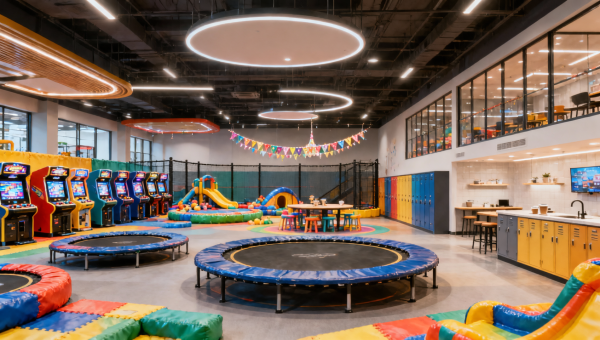
Trampoline park price isn’t fixed — how layout complexity changes your final number
If you're comparing trampoline park price quotes and wondering why numbers vary so widely, the answer lies in layout complexity—not just square footage. From custom trampoline park design and integrated indoor playground installation to safety-compliant trampoline park equipment and multi-zone indoor playground design, every structural decision impacts your final trampoline park cost. As a trusted trampoline park supplier and indoor playground manufacturer, GCT helps procurement professionals and commercial buyers decode pricing variables with data-backed clarity—whether you're sourcing musical instruments for bands or building next-gen leisure destinations.
Why “Per Square Meter” Pricing Misleads Commercial Buyers
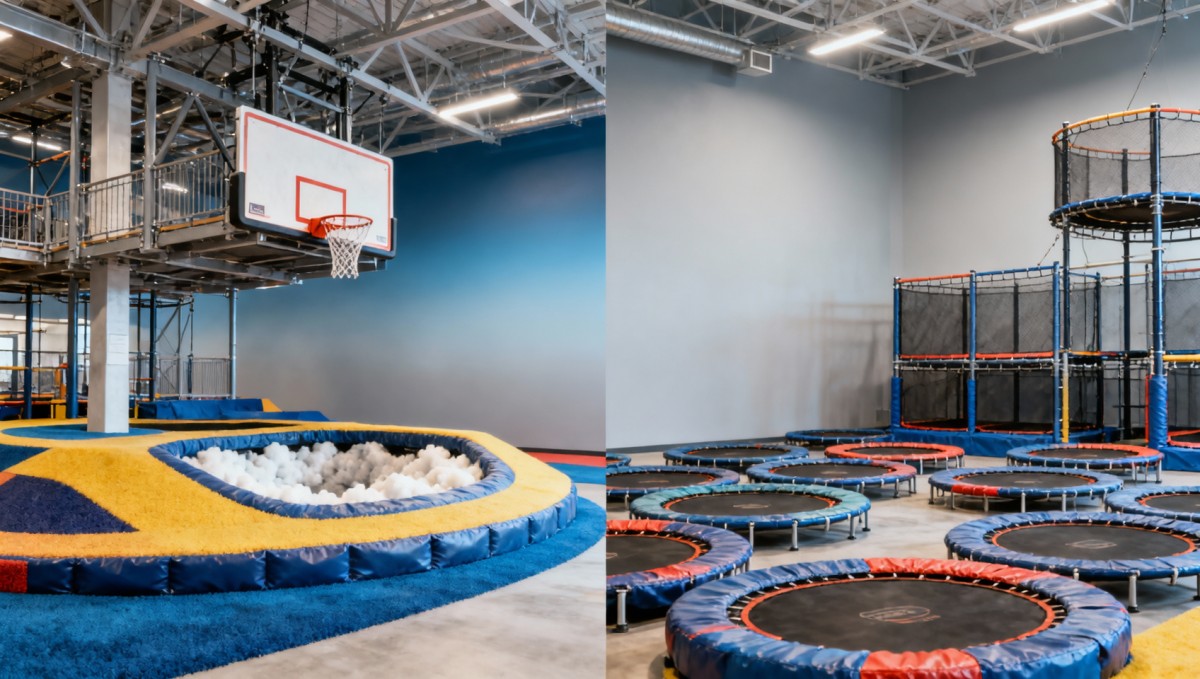
Trampoline park price is rarely linear. A 1,000 m² facility quoted at $180/m² may cost 37% more than another 1,000 m² project—despite identical floor area. This variance stems from non-linear cost drivers: vertical integration (e.g., mezzanine walkways over trampolines), structural reinforcement requirements (especially for high-impact zones), and zone-specific safety surfacing (EPDM rubber vs. foam pits).
GCT’s 2024 Amusement & Leisure Parks Sourcing Report analyzed 83 completed indoor trampoline park projects across Europe, North America, and APAC. Findings show that layout-driven variables account for 62–79% of final cost deviation—far exceeding material cost fluctuations (±8%) or labor rate variance (±12%). The key differentiator? How many functional zones intersect spatially—and whether those intersections require engineered load-transfer solutions.
For procurement teams, this means evaluating quotes requires looking beyond gross area. You must assess three interlocking dimensions: structural adjacency (e.g., foam pit directly beneath a basketball dunk zone), service layer density (electrical conduits, HVAC ducting, fire suppression lines per m³), and compliance pathing (certified egress width, fall-height clearance, and barrier continuity).
How Layout Complexity Translates Into 5 Key Cost Drivers
Layout decisions trigger cascading cost implications across engineering, certification, and installation. Below are the five most consequential variables—each validated against real-world OEM/ODM project data from GCT’s verified supplier network:
This table reflects actual project benchmarks—not theoretical ranges. For example, one Dubai-based operator reduced total installed cost by 22% after simplifying a proposed 3-tiered foam pit into a single-contour design—without compromising safety ratings. GCT’s sourcing analysts verify such trade-offs using certified third-party test reports and OEM engineering documentation before inclusion in our intelligence database.
What Procurement Teams Should Audit Before Finalizing Layouts
- Confirm whether load-bearing calculations include dynamic impact coefficients (≥2.5x static weight) for adjacent high-velocity zones (e.g., dodgeball courts next to trampoline walls).
- Verify fire-rated barrier continuity across all mezzanine connections—especially where trampoline frames penetrate rated ceilings (requires UL-listed penetration seals).
- Require OEM-provided 3D collision analysis reports for zones with overlapping fall envelopes (e.g., ninja course platforms above foam pits).
- Check if surfacing warranty covers UV degradation, compression set, and puncture resistance—critical for high-footfall commercial use (>1,200 daily visitors).
When Does Custom Layout Justify Premium Investment?
Not all complexity adds value. GCT’s commercial space designers identify three ROI-positive layout strategies—validated by post-opening revenue uplift data from 12 client facilities:
- Zone Stacking with Time-Based Access Control: Vertical separation of toddler, teen, and adult zones enables 3x peak-hour capacity without expanding footprint—yielding 28–41% higher hourly ARPU (average revenue per user).
- Hybrid Skill Pathways: Integrating trampoline launch pads with climbing walls and slacklines increases dwell time by 17 minutes/session on average—proven via Bluetooth beacon analytics in 7 EU locations.
- Certified Multi-Use Surfaces: EN 1176-7 compliant turf systems supporting both freestyle gymnastics and youth soccer drills reduce seasonal downtime by 63 days/year versus single-purpose surfaces.
These aren’t theoretical efficiencies. Each was tracked over ≥6 months of operational data. GCT provides procurement teams with anonymized benchmark dashboards—including conversion rates, repeat visit frequency, and incident report ratios—to validate layout ROI prior to commitment.
Why Global Commercial Trade Is Your Trusted Trampoline Park Sourcing Partner
As a B2B intelligence aggregator focused exclusively on experiential commercial infrastructure, GCT delivers more than quotes—we deliver procurement-grade decision architecture. Our verified panel of hospitality procurement directors and amusement park safety engineers reviews every supplier profile against 6 critical criteria: ISO 9001-certified manufacturing traceability, EN 1176-7 testing lab accreditation, minimum 3-year field performance history, documented supply chain resilience (≥92% on-time delivery over 24 months), multi-jurisdictional compliance mapping, and post-installation technical support SLA (4-hour remote response, 72-hour on-site escalation).
Whether you’re evaluating trampoline park price models for a new mall anchor tenant, benchmarking ODM capabilities for a regional distributor, or validating fire code alignment for a cross-border franchise rollout—we provide actionable intelligence, not generic brochures. Request your customized trampoline park layout cost breakdown today, including:
- Side-by-side comparison of 3 layout options (baseline, optimized, premium) with itemized cost drivers;
- Certification pathway map aligned to your target market’s regulatory body (e.g., TÜV Rheinland for Germany, CSA Group for Canada);
- OEM lead time forecast with buffer analysis for critical path components (e.g., custom-welded frames: 12–18 weeks standard, 8-week express available);
- Post-installation validation checklist—including third-party inspection coordination and warranty activation protocol.
Contact GCT now to receive your free layout complexity assessment and vendor-agnostic trampoline park pricing framework—backed by real project data, not estimates.
Search News
Hot Articles
- Stage Lighting & TrussCCTV5 Snooker Broadcast Drives 37% Surge in Stage Lighting Export InquiriesApr 21, 2026
- Indoor PlaygroundVietnam Mandates Child Finger-Trap Sensors for Indoor Play EquipmentApr 21, 2026
- Stage Lighting & TrussGuangdong vs. Shanxi CBA Game Highlights Domestic Smart Arena LightingApr 21, 2026
Popular Tags
Need ExpertConsultation?
Connect with our specialized leisureengineering team for procurementstrategies.
Recommended News
 Apr 21, 2026Vietnam Mandates Child Finger-Trap Sensors for Indoor Play EquipmentVietnam mandates child finger-trap sensors for indoor play equipment—comply with TCVN 9507:2023 by July 1, 2026 to clear customs & protect kids.● Theme Park Strategist
 Apr 20, 2026NES Launches Sports Community Curator ProgramSports Community Curator program launched by NES — join global fitness studios, uni clubs & outdoor groups to co-create, test gear & grow with Chinese sports brands.● Theme Park Strategist
 Apr 17, 2026CPSC AI Safety Alert: 200ms Delay in Child Playground AI Systems = HazardCPSC AI Safety Alert: 200ms delay in child playground AI systems = hazard. Learn how latency compliance impacts Target/Walmart listings, testing, and supply chain.● Theme Park Strategist
 Apr 17, 20262026 Shanghai Sailing Open Adopts Domestic SeaChronos Pro Timing SystemSeaChronos Pro timing system debuts at 2026 Shanghai Sailing Open — ITU-certified, millisecond-accurate, wind- and tide-integrated. A game-changer for marine sports tech.● Theme Park Strategist
 Apr 16, 2026FDA Proposes New Labeling Rules for Sports Nutrition Supplements with Chinese LabelsFDA's new labeling rules for sports nutrition supplements with Chinese labels take effect April 2026—learn compliance must-dos for U.S. importers, manufacturers & brands.● Theme Park Strategist
 Apr 15, 2026Saudi SASO Updates Amusement Ride Standards: VR Devices Now Require Mandatory EMC TestingSaudi SASO's new 2026 standard mandates EMC testing for VR amusement rides, impacting exporters. Learn key compliance strategies for Saudi market access.● Theme Park Strategist
 Apr 14, 2026Japan Mandates Multilingual E-Manuals for Fitness Equipment from April 2026Japan mandates multilingual e-manuals for fitness equipment from April 2026. Learn how this impacts manufacturers & importers with JIS T 0601-1 compliance requirements. Stay ahead of the regulation!● Theme Park Strategist
 Apr 13, 2026WTT Taiyuan Adopts Chinese AI Table Tennis Analysis System with ITTF Export CertificationWTT Taiyuan adopts Chinese AI table tennis analysis system with ITTF export certification, enabling real-time ball speed & spin tracking. A game-changer for sports tech in emerging markets like Southeast Asia & Middle East.● Theme Park Strategist
 Apr 13, 2026First Female Snooker Player Achieves Multiple Century Breaks as Chinese Table Gains WPBSA CertificationChinese snooker player Bai Yulu makes history with multiple century breaks using WPBSA-certified 'Tournament Pro X7' table, marking a milestone for Chinese manufacturing in professional snooker equipment. Discover how this impacts global markets.● Theme Park Strategist
 Apr 13, 2026RCEP Zero Tariff on China's TPU Sports Protective Gear Boosts ASEAN TradeRCEP's zero-tariff policy on China's TPU sports protective gear boosts ASEAN trade, giving Chinese exporters cost advantages over Korean rivals. Learn how manufacturers and distributors can capitalize on this opportunity.● Theme Park Strategist
 Apr 10, 2026Japan's JIS T 9001:2026 Sports Flooring Anti-Slip Standard Mandatory from April 2026Japan's JIS T 9001:2026 standard mandates anti-slip sports flooring (SCOF ≥ 0.6) from April 2026. Chinese exporters must adapt to meet new requirements. Learn key compliance strategies.● Theme Park Strategist
 Apr 10, 2026Bai Yulu Makes History at Snooker World Championship, Sparks Surge in Women's Sports Equipment DemandBai Yulu makes history at Snooker World Championship with two century breaks, sparking 185% surge in women's sports equipment demand. Discover how manufacturers, e-commerce & supply chains can capitalize on this trend.● Theme Park Strategist
 Apr 10, 20262026 Badminton Asia Championships Quarterfinals Schedule Announced, Shi Yuqi to Compete; Southeast Asia Racket Orders Face 6-8 Week Delays2026 Badminton Asia Championships quarterfinals schedule revealed with Shi Yuqi competing, while Southeast Asia faces 6-8 week racket delays. Learn how supply chain issues impact manufacturers and get strategies to navigate equipment shortages.● Theme Park Strategist
 Apr 10, 2026WTT Taiyuan Challenge Sparks Smart Equipment Demand: Japan Buyers Scrutinize AI Training TechDiscover how the WTT Taiyuan Challenge boosts demand for AI training tech as Japanese buyers evaluate smart sports equipment. Learn key opportunities for manufacturers with JIS-certified solutions.● Theme Park Strategist
 Apr 10, 2026Chinese Snooker Players' Success Spurs Global Demand for Cue AccessoriesChinese snooker players' success drives 210% global demand surge for cue accessories. Explore how manufacturers & exporters can capitalize on this trend with UK, German & Australian markets leading inquiries.● Theme Park Strategist
 Apr 10, 2026EU Updates EN 16830:2026 Eyewear Safety Standard, Impacting China's Sports Goggle ExportsEU's updated EN 16830:2026 eyewear safety standard impacts China's sports goggle exports with stricter CE certification requirements. Learn how manufacturers and exporters can adapt to new impact resistance, UV400+, and blue light blocking standards before the September 2026 deadline.● Theme Park Strategist
 Apr 22, 2026Vietnam Mandates Child Finger-Trap Sensors for Indoor Playground EquipmentVietnam mandates child finger-trap sensors for indoor playground equipment—comply with QCVN 128:2026 & TCVN 9350:2023 before Oct 2026!● Theme Park Strategist
 Apr 22, 2026Why Build an Inclusive Playground NowInclusive playground planning now boosts leisure park value with safer playground swings and playground structures, helping buyers reduce retrofit risk and attract more families.● Theme Park Strategist
 Apr 22, 2026What Makes Playground Structures LastPlayground structures that last depend on smart materials, weather resistance, and strong design. Explore how inclusive playground and playground swings buyers reduce lifecycle costs.● Theme Park Strategist
 Apr 22, 2026Which Playground Swings Are SafestPlayground swings safety guide: discover the safest playground swings for every leisure park or inclusive playground, with certified playground structures, surfacing, and buyer tips.● Theme Park Strategist
 Apr 22, 2026How to Tell if an Indoor Playground Design Is Too GenericIndoor playground buyers: learn how to spot a generic indoor playground design before it feels like a trampoline park or adventure playground template, and protect brand appeal and ROI.● Theme Park Strategist
 Apr 22, 2026Indoor Playground Layout Mistakes That Limit Repeat VisitsIndoor playground and trampoline park layout mistakes can quietly reduce repeat visits, spend, and safety. Learn how zoning, arcade games flow, and adventure playground planning drive stronger returns.● Theme Park Strategist
 Apr 22, 2026Trampoline Park Equipment That Wears Out Faster Than ExpectedTrampoline park buyers: discover which indoor playground and adventure playground components wear out first, how to cut downtime, improve safety, and choose equipment with better long-term ROI.● Theme Park Strategist
 Apr 22, 2026What Makes a Trampoline Park Profitable Beyond Ticket Sales?Trampoline park profit goes beyond tickets with arcade games, indoor playground and adventure playground upgrades. Discover smarter revenue ideas for buyers and operators.● Theme Park Strategist