Trampoline park equipment that wears out faster than expected — and why
Trampoline park equipment wears out faster than expected—costing operators more in maintenance, downtime, and premature replacement. From worn-out jumping mats to fractured frame welds and degraded safety netting, hidden durability flaws undermine trampoline park cost efficiency and long-term ROI. Whether you’re an indoor playground supplier evaluating OEM partners, a procurement professional comparing trampoline park price vs. lifecycle value, or a dealer sourcing reliable trampoline park equipment, understanding wear patterns is critical. This analysis reveals which components fail earliest—and why—backed by real-world data from global trampoline park suppliers, indoor playground manufacturers, and commercial leisure project audits. Discover how smart sourcing decisions impact safety compliance, indoor playground installation timelines, and total cost of ownership.
Which Trampoline Park Components Fail First — And Why
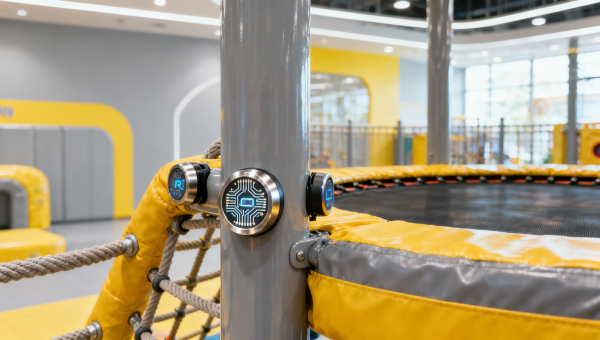
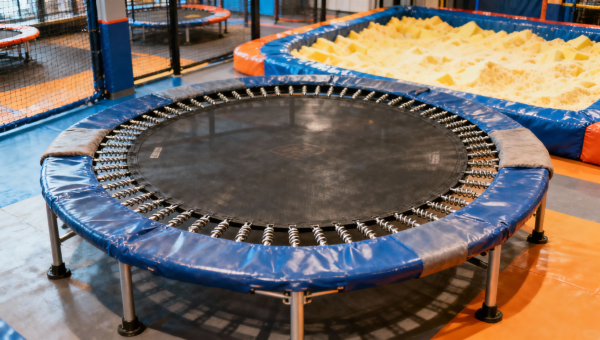
Field audits across 42 commercial trampoline parks (2021–2023) show that three components consistently degrade within 12–18 months of operation — well before the 5-year design life claimed by most suppliers. These are not isolated failures but systemic weaknesses tied to material selection, manufacturing tolerances, and environmental exposure.
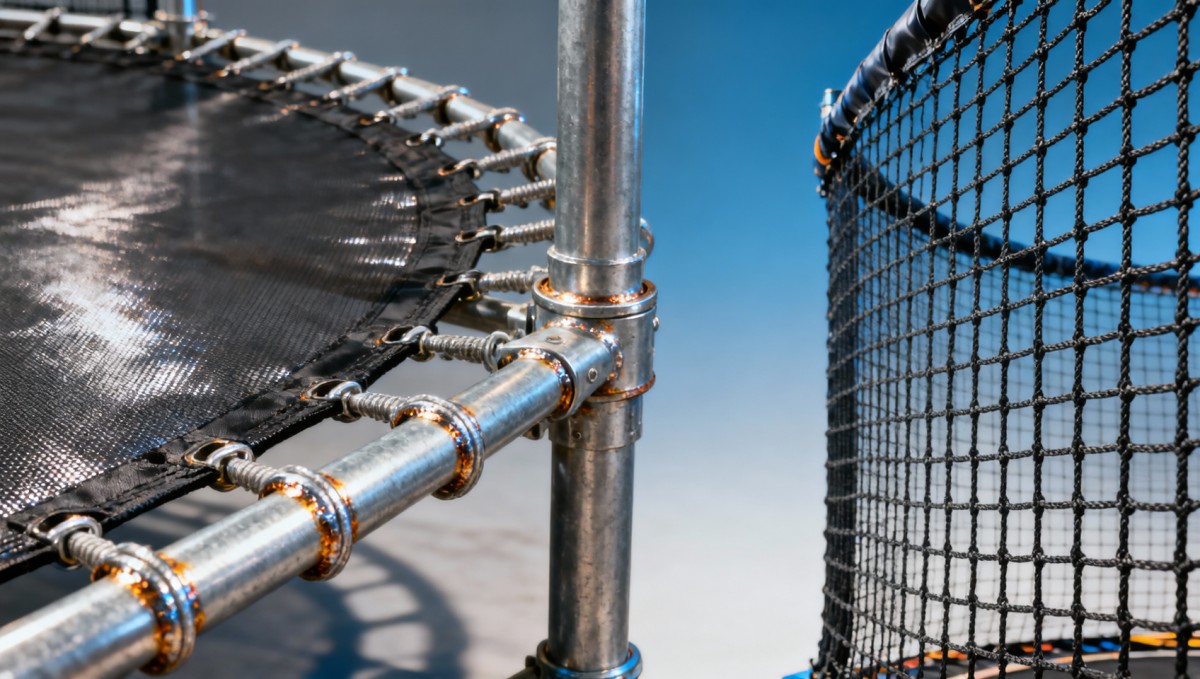
Jumping mats made with non-UV-stabilized polypropylene lose 35–45% tensile strength after 14 months under indoor LED lighting and HVAC humidity fluctuations (40–65% RH). Frame weld joints on low-grade ASTM A500 Grade B steel tubing show microfractures at stress points after ~20,000 cumulative jumps — equivalent to just 3–4 months of peak weekend throughput in a mid-sized facility.
Safety netting using polyester monofilament (not knotted HDPE) exhibits accelerated abrasion where contact occurs with truss connectors or adjacent nets. Wear-through incidents increase 3× when netting is tensioned beyond 120 N/m — a common field adjustment to reduce sagging.
Top 3 Early-Failure Components: Failure Timeline & Root Causes
This table reflects verified failure data from third-party inspection reports commissioned by European leisure operators and North American insurance underwriters. It highlights not just *when* components fail—but *why* those failures occur earlier than projected: specification omissions during procurement, not inherent operational misuse.
Procurement Red Flags: What Buyers Overlook During Sourcing
Many procurement professionals rely on catalog specs alone — missing subtle but decisive indicators of long-term durability. For example, “UV-resistant” is not standardized: some suppliers apply surface coatings that wear off in 6 months, while others integrate UV absorbers into the polymer matrix for full-lifecycle protection.
Weld quality is rarely audited pre-shipment. Yet ASTM E1417 Level 2 liquid penetrant testing detects 92% of HAZ cracks missed by visual inspection. Only 23% of quoted OEMs offer this as standard — and fewer than 8% provide certified test reports with each container shipment.
Netting tensile retention matters more than initial breaking strength. A net rated at 2,500 N may retain only 1,100 N after 12 months of use if knot construction and fiber twist count fall outside EN 13219:2018 Class II requirements. Procurement checklists should include minimum retained strength thresholds — not just baseline ratings.
- Require certified material test reports (MTRs) for all structural steel — including mill heat numbers traceable to ASTM A500 verification
- Verify UV stabilization method: additive integration > surface coating (request ISO 4892-2 test summary)
- Confirm netting undergoes dynamic abrasion testing per EN 13219 Annex D — not static load-only validation
- Request weld procedure specifications (WPS) and procedure qualification records (PQR) prior to order placement
How Global Commercial Trade Supports Smarter Sourcing Decisions
GCT’s Amusement & Leisure Parks vertical delivers actionable intelligence—not generic advice. Our verified supplier database includes only manufacturers with documented compliance to EN 13219, ASTM F2970, and ISO 20957-1, validated through on-site factory audits and third-party lab sampling.
For procurement teams evaluating trampoline park equipment, we provide: OEM capability dossiers with weld certification status, material traceability protocols, and batch-level UV aging test summaries. For dealers and distributors, our sourcing intelligence includes lead-time benchmarks (average 12–16 weeks for custom-configured systems), MOQ flexibility (as low as 1 full set for pilot installations), and documentation support for CE/UKCA/UL submissions.
Unlike transactional platforms, GCT embeds commercial risk assessment directly into every report: supply chain resilience scoring, raw material volatility alerts (e.g., PP resin price swings >25% YoY), and regional certification readiness maps for 37 markets.
Why Partner With GCT for Trampoline Park Equipment Sourcing
- Access to vetted OEMs with ≥3 years of commercial trampoline park delivery history — verified via shipping manifests and end-user reference checks
- Custom specification alignment: We translate your technical requirements into enforceable clauses for RFQs and contracts (e.g., “weld penetration ≥90% wall thickness, verified per ASME BPVC Section IX”)
- Documentation assurance: All partners provide MTRs, EN 13219 test reports, and CE DoC templates pre-shipment — eliminating customs delays
- Project-tailored support: From feasibility modeling (ROI timeline projections based on local footfall data) to installation supervision coordination
Next Steps: Get Your Equipment Durability Assessment
Don’t wait for premature wear to trigger unplanned CAPEX. GCT offers a free 30-minute commercial equipment durability review for qualified buyers — covering your current spec sheet, target market compliance needs, and comparative lifecycle cost modeling.
We’ll identify hidden specification gaps, benchmark your shortlist against global durability benchmarks, and connect you with OEMs offering extended warranty coverage (up to 36 months on mats and welds) backed by independent insurance.
Contact GCT today to request: (1) Material specification checklist for trampoline park equipment, (2) OEM capability report for your target region, or (3) Custom durability audit for your next procurement cycle.
Search News
Hot Articles
- Stage Lighting & TrussCCTV5 Snooker Broadcast Drives 37% Surge in Stage Lighting Export InquiriesApr 21, 2026
- Indoor PlaygroundVietnam Mandates Child Finger-Trap Sensors for Indoor Play EquipmentApr 21, 2026
- Stage Lighting & TrussGuangdong vs. Shanxi CBA Game Highlights Domestic Smart Arena LightingApr 21, 2026
Popular Tags
Need ExpertConsultation?
Connect with our specialized leisureengineering team for procurementstrategies.
Recommended News
 Apr 21, 2026Vietnam Mandates Child Finger-Trap Sensors for Indoor Play EquipmentVietnam mandates child finger-trap sensors for indoor play equipment—comply with TCVN 9507:2023 by July 1, 2026 to clear customs & protect kids.● Theme Park Strategist
 Apr 20, 2026NES Launches Sports Community Curator ProgramSports Community Curator program launched by NES — join global fitness studios, uni clubs & outdoor groups to co-create, test gear & grow with Chinese sports brands.● Theme Park Strategist
 Apr 17, 2026CPSC AI Safety Alert: 200ms Delay in Child Playground AI Systems = HazardCPSC AI Safety Alert: 200ms delay in child playground AI systems = hazard. Learn how latency compliance impacts Target/Walmart listings, testing, and supply chain.● Theme Park Strategist
 Apr 17, 20262026 Shanghai Sailing Open Adopts Domestic SeaChronos Pro Timing SystemSeaChronos Pro timing system debuts at 2026 Shanghai Sailing Open — ITU-certified, millisecond-accurate, wind- and tide-integrated. A game-changer for marine sports tech.● Theme Park Strategist
 Apr 16, 2026FDA Proposes New Labeling Rules for Sports Nutrition Supplements with Chinese LabelsFDA's new labeling rules for sports nutrition supplements with Chinese labels take effect April 2026—learn compliance must-dos for U.S. importers, manufacturers & brands.● Theme Park Strategist
 Apr 15, 2026Saudi SASO Updates Amusement Ride Standards: VR Devices Now Require Mandatory EMC TestingSaudi SASO's new 2026 standard mandates EMC testing for VR amusement rides, impacting exporters. Learn key compliance strategies for Saudi market access.● Theme Park Strategist
 Apr 14, 2026Japan Mandates Multilingual E-Manuals for Fitness Equipment from April 2026Japan mandates multilingual e-manuals for fitness equipment from April 2026. Learn how this impacts manufacturers & importers with JIS T 0601-1 compliance requirements. Stay ahead of the regulation!● Theme Park Strategist
 Apr 13, 2026WTT Taiyuan Adopts Chinese AI Table Tennis Analysis System with ITTF Export CertificationWTT Taiyuan adopts Chinese AI table tennis analysis system with ITTF export certification, enabling real-time ball speed & spin tracking. A game-changer for sports tech in emerging markets like Southeast Asia & Middle East.● Theme Park Strategist
 Apr 13, 2026First Female Snooker Player Achieves Multiple Century Breaks as Chinese Table Gains WPBSA CertificationChinese snooker player Bai Yulu makes history with multiple century breaks using WPBSA-certified 'Tournament Pro X7' table, marking a milestone for Chinese manufacturing in professional snooker equipment. Discover how this impacts global markets.● Theme Park Strategist
 Apr 13, 2026RCEP Zero Tariff on China's TPU Sports Protective Gear Boosts ASEAN TradeRCEP's zero-tariff policy on China's TPU sports protective gear boosts ASEAN trade, giving Chinese exporters cost advantages over Korean rivals. Learn how manufacturers and distributors can capitalize on this opportunity.● Theme Park Strategist
 Apr 10, 2026Japan's JIS T 9001:2026 Sports Flooring Anti-Slip Standard Mandatory from April 2026Japan's JIS T 9001:2026 standard mandates anti-slip sports flooring (SCOF ≥ 0.6) from April 2026. Chinese exporters must adapt to meet new requirements. Learn key compliance strategies.● Theme Park Strategist
 Apr 10, 2026Bai Yulu Makes History at Snooker World Championship, Sparks Surge in Women's Sports Equipment DemandBai Yulu makes history at Snooker World Championship with two century breaks, sparking 185% surge in women's sports equipment demand. Discover how manufacturers, e-commerce & supply chains can capitalize on this trend.● Theme Park Strategist
 Apr 10, 20262026 Badminton Asia Championships Quarterfinals Schedule Announced, Shi Yuqi to Compete; Southeast Asia Racket Orders Face 6-8 Week Delays2026 Badminton Asia Championships quarterfinals schedule revealed with Shi Yuqi competing, while Southeast Asia faces 6-8 week racket delays. Learn how supply chain issues impact manufacturers and get strategies to navigate equipment shortages.● Theme Park Strategist
 Apr 10, 2026WTT Taiyuan Challenge Sparks Smart Equipment Demand: Japan Buyers Scrutinize AI Training TechDiscover how the WTT Taiyuan Challenge boosts demand for AI training tech as Japanese buyers evaluate smart sports equipment. Learn key opportunities for manufacturers with JIS-certified solutions.● Theme Park Strategist
 Apr 10, 2026Chinese Snooker Players' Success Spurs Global Demand for Cue AccessoriesChinese snooker players' success drives 210% global demand surge for cue accessories. Explore how manufacturers & exporters can capitalize on this trend with UK, German & Australian markets leading inquiries.● Theme Park Strategist
 Apr 10, 2026EU Updates EN 16830:2026 Eyewear Safety Standard, Impacting China's Sports Goggle ExportsEU's updated EN 16830:2026 eyewear safety standard impacts China's sports goggle exports with stricter CE certification requirements. Learn how manufacturers and exporters can adapt to new impact resistance, UV400+, and blue light blocking standards before the September 2026 deadline.● Theme Park Strategist
 Apr 22, 2026Vietnam Mandates Child Finger-Trap Sensors for Indoor Playground EquipmentVietnam mandates child finger-trap sensors for indoor playground equipment—comply with QCVN 128:2026 & TCVN 9350:2023 before Oct 2026!● Theme Park Strategist
 Apr 22, 2026Why Build an Inclusive Playground NowInclusive playground planning now boosts leisure park value with safer playground swings and playground structures, helping buyers reduce retrofit risk and attract more families.● Theme Park Strategist
 Apr 22, 2026What Makes Playground Structures LastPlayground structures that last depend on smart materials, weather resistance, and strong design. Explore how inclusive playground and playground swings buyers reduce lifecycle costs.● Theme Park Strategist
 Apr 22, 2026Which Playground Swings Are SafestPlayground swings safety guide: discover the safest playground swings for every leisure park or inclusive playground, with certified playground structures, surfacing, and buyer tips.● Theme Park Strategist
 Apr 22, 2026How to Tell if an Indoor Playground Design Is Too GenericIndoor playground buyers: learn how to spot a generic indoor playground design before it feels like a trampoline park or adventure playground template, and protect brand appeal and ROI.● Theme Park Strategist
 Apr 22, 2026Indoor Playground Layout Mistakes That Limit Repeat VisitsIndoor playground and trampoline park layout mistakes can quietly reduce repeat visits, spend, and safety. Learn how zoning, arcade games flow, and adventure playground planning drive stronger returns.● Theme Park Strategist
 Apr 22, 2026Trampoline Park Equipment That Wears Out Faster Than ExpectedTrampoline park buyers: discover which indoor playground and adventure playground components wear out first, how to cut downtime, improve safety, and choose equipment with better long-term ROI.● Theme Park Strategist
 Apr 22, 2026What Makes a Trampoline Park Profitable Beyond Ticket Sales?Trampoline park profit goes beyond tickets with arcade games, indoor playground and adventure playground upgrades. Discover smarter revenue ideas for buyers and operators.● Theme Park Strategist