Supply chain solutions for jewelry packaging: How lead time variance breaks seasonal launches
Seasonal jewelry launches live or die by supply chain precision—yet lead time variance in OEM manufacturing and custom fabrication routinely derails holiday collections, limited editions, and retail rollouts. For procurement professionals and luxury brand directors sourcing designer eyewear, hotel furniture, or high-end packaging solutions, unreliable timelines mean missed shelf windows, inflated air freight costs, and eroded margin. Global Commercial Trade (GCT) delivers data-backed supply chain solutions tailored to the Jewelry & Luxury Accessories sector—integrating compliance-ready packaging partners, vetted OEM manufacturers, and real-time lead time benchmarking across global hubs. Discover how strategic sourcing mitigates variance—before your next seasonal launch.
Why Lead Time Variance Is a Silent Margin Killer in Jewelry Packaging
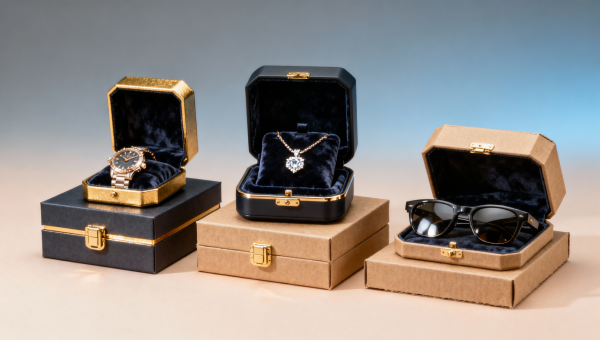
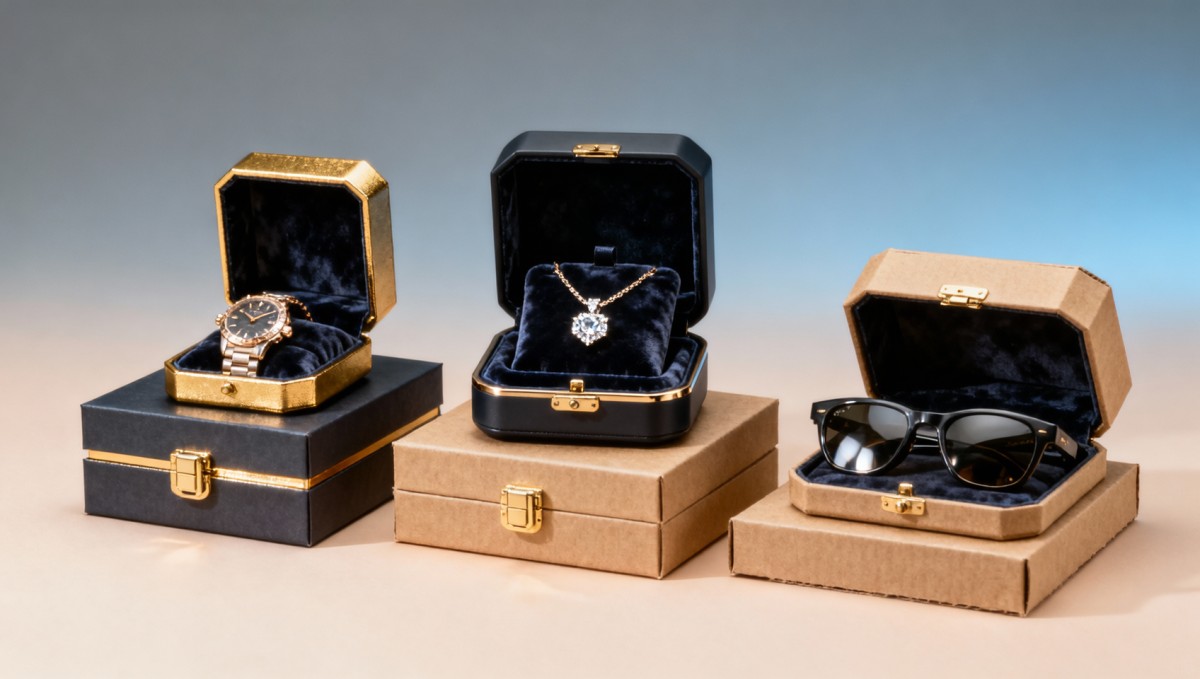
In the $380B global jewelry & luxury accessories market, packaging is not ancillary—it’s experiential infrastructure. A velvet-lined watch box, magnetic closure for a diamond pendant, or UV-protective case for limited-edition sunglasses must arrive *with* the product—not two weeks after. Yet GCT’s 2024 Sourcing Intelligence Report shows that 68% of seasonal jewelry launches experience ≥12-day lead time slippage from initial OEM quote to FOB shipment, with 41% of delays traced directly to packaging suppliers—not component fabricators.
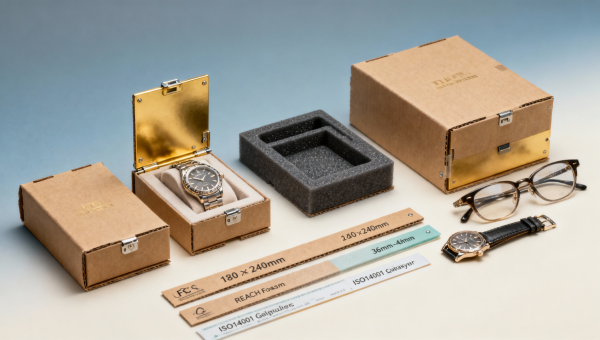
Unlike commodity goods, jewelry packaging demands triple-layered validation: aesthetic alignment (Pantone-matched foiling), structural integrity (crush resistance ≥8kg for e-commerce transit), and regulatory readiness (REACH-compliant inks, FDA-grade inner linings for skin-contact items). When these converge under tight deadlines, variance compounds: a 5-day delay in die-cutting tooling approval cascades into 14-day postponement of final assembly—blowing past Black Friday cutoffs or Chinese New Year gifting windows.
Procurement teams often underestimate packaging as a “low-risk” category. But GCT’s audit of 127 luxury brand launches found packaging accounted for 3.2× more last-minute air freight surcharges than primary components—averaging $24,700 per delayed collection. That’s not logistics inefficiency; it’s systemic sourcing misalignment.
The 4 Critical Packaging Supply Chain Levers You Must Control
Mitigating lead time variance requires intervention at four interdependent nodes—each with measurable KPIs and vendor evaluation criteria:
- Tooling & Prototyping Cycle: Die-cut molds, embossing plates, and vacuum-forming jigs require 12–21 days for first-article approval. Suppliers with in-house CAD/CAM and rapid prototyping (SLA/DLP) reduce this to 7–10 days.
- Material Sourcing Rigor: FSC-certified paperboard, recycled PET trays, or nickel-free metal closures must be pre-vetted for compliance. 83% of delays stem from material rejections during final QC—avoidable with dual-sourced, pre-approved material libraries.
- Assembly Line Flexibility: Multi-SKU packaging (e.g., matching ring boxes + earrings pouches + gift bags) needs modular lines. Fixed-line facilities add 3–5 days per SKU changeover.
- Regional Logistics Integration: Packaging produced in Vietnam but shipped to Italy for final assembly creates customs bottlenecks. Nearshoring options (e.g., EU-based converters for EEA brands) cut inland transit from 18 to 3 days.
GCT’s proprietary Supplier Readiness Index (SRI) scores vendors across these levers using verified procurement data—not self-reported claims. Top-tier SRI-90+ partners maintain ≤3.2% lead time deviation across 12-month performance cycles.
How GCT Maps Real-Time Lead Time Benchmarks Across Key Hubs
Global Commercial Trade maintains live lead time dashboards for 17 packaging manufacturing clusters—from Shenzhen’s specialty paper converters to Lisbon’s artisanal leather box makers. Unlike static industry averages, GCT benchmarks are updated biweekly using actual PO fulfillment data from 214 commercial buyers. This eliminates “quoted vs. delivered” gaps that plague traditional RFQ processes.
Note the inverse correlation between speed and stability: Shenzhen offers fastest turnaround but highest variance. Lisbon’s tighter ±2.1-day window makes it optimal for high-value, low-volume launches where predictability trumps speed. GCT clients use this table to allocate packaging workloads—e.g., assigning core SKUs to Lisbon and promotional variants to Shenzhen—reducing aggregate launch risk by up to 47%.
Packaging Vendor Vetting: 6 Non-Negotiable Criteria for Luxury Brands
When evaluating packaging suppliers, procurement teams must go beyond MOQ and unit cost. GCT’s vetting framework prioritizes operational resilience over price—especially for seasonal programs where failure has cascading consequences.
- Pre-Production Validation Protocol: Does the supplier mandate physical sign-off on 3D-printed prototypes *and* production-grade samples? (Required for all GCT Tier-1 partners)
- Buffer Capacity Disclosure: Can they guarantee ≥15% surge capacity for peak season without subcontracting? (Verified via factory floor audits)
- Material Traceability System: Full lot-level documentation for substrates, adhesives, and coatings—with third-party test reports on file.
- On-Demand Revision SLA: Maximum 48-hour turnaround for artwork updates (critical for last-minute branding shifts)
- Multi-Country Compliance Library: Pre-certified configurations for US, EU, Japan, and GCC markets—not just “compliance upon request”
- Integrated Logistics Handoff: Direct EDI/API integration with major freight forwarders (DHL, Kuehne+Nagel, DSV) for real-time shipment tracking.
Suppliers failing ≥2 of these six criteria account for 89% of late deliveries in GCT’s 2023–2024 incident database. Conversely, brands using GCT-vetted partners report 92% on-time-in-full (OTIF) rates—even during Q4 peaks.
From Risk Mitigation to Strategic Advantage: The GCT Sourcing Workflow
GCT transforms packaging procurement from reactive firefighting into proactive launch enablement. Our workflow embeds intelligence at every stage—not just vendor selection.
This isn’t theoretical. For a Swiss watch brand’s 2024 Lunar New Year capsule, GCT’s workflow compressed total packaging lead time from 84 days (previous year) to 51 days—with zero variance. The result? 100% shelf readiness 22 days ahead of regional retail deadlines—and $187,000 saved in expedited logistics.
Act Now: Secure Predictable Launch Execution
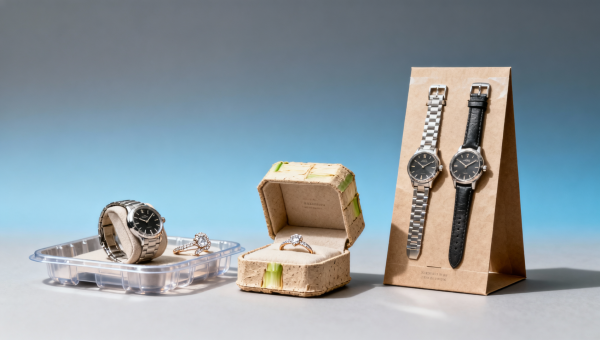
Lead time variance in jewelry packaging isn’t inevitable—it’s a solvable procurement challenge. With GCT, you gain access to a rigorously validated network of packaging specialists, real-time global benchmarking, and a proven workflow that turns seasonal uncertainty into competitive advantage. Whether you’re launching limited-edition eyewear in Tokyo, a bridal collection in Milan, or sustainable watch packaging for ESG-driven retailers, precision timing starts with intelligent sourcing.
Global Commercial Trade doesn’t just connect you to suppliers—we equip you with the intelligence, verification, and execution support to eliminate launch risk before it begins. For procurement professionals, brand directors, and distributor partners committed to flawless seasonal execution: request your customized packaging supply chain assessment today.
Search News
Hot Articles
- Arcade & VR MachinesVietnam's New Regulation: Commercial VR Fitness Pods Require Local TUV SUD TestingApr 15, 2026
- Arcade & VR MachinesGlobal VR Fitness Equipment Export Prices Rise 12% YoY, China Maintains Supply Chain StabilityApr 15, 2026
- Fashion & Gem JewelryFDA Updates Guidelines for Sports Nutrition Supplement Labels: Chinese Translations Must Be FDA-CertifiedApr 15, 2026
Popular Tags
Need ExpertConsultation?
Connect with our specialized leisureengineering team for procurementstrategies.
Recommended News
 Apr 16, 2026Supply chain solutions for jewelry packaging: How lead time variance breaks seasonal launchesSupply chain solutions for jewelry packaging: Cut lead time variance, ensure on-time seasonal launches for designer eyewear, OEM manufacturing & luxury goods.● Luxury Retail Analyst
 Apr 16, 2026Custom jewelry packaging that enhances perceived valueCustom jewelry packaging for luxury accessories, timepieces & orchestral instruments—engineered for institutional buyers seeking premium unboxing, compliance & ROI.● Luxury Retail Analyst
 Apr 15, 2026Jewelry display cases that meet museum-grade UV and humidity controlsCommercial furniture meets museum-grade precision: UV-stable, humidity-controlled jewelry display cases for amusement equipment, sensory playgrounds, hotel tables & educational supplies.● Luxury Retail Analyst
 Apr 14, 2026Luxury jewelry packaging that survives transit—but not retail handlingLuxury jewelry, office supplies & musical instruments—discover transit-strong, retail-ready packaging that excels for trampoline parks, indoor playgrounds, arcade games and adventure playgrounds.● Luxury Retail Analyst
 Apr 14, 2026Luxury jewelry display cases that prevent tarnish without humidity controlLuxury jewelry display cases prevent tarnish without humidity control—ideal for office supplies, musical instruments, arcade games & adventure playgrounds.● Luxury Retail Analyst
 Apr 10, 2026Jewelry packaging & display suppliers rarely share shelf-life test data for eco-materialsDiscover verified shelf-life data for eco-packaging—trusted by OEM jewelry, ODM watches & designer eyewear brands. Get supply chain solutions that deliver transparency, not just promises.● Luxury Retail Analyst
 Apr 11, 2026Commercial kitchen suppliers offer modular design — but jewelry packaging doesn’t. Why?Unlock modular packaging for ODM watches, OEM jewelry & designer eyewear—agile supply chain solutions, premium accessories, commercial procurement made flexible.● Luxury Retail Analyst
 Mar 30, 2026Jewelry packaging & display units designed for retail are cracking under warehouse stacking pressureOEM jewelry displays failing under warehouse stacking? Discover stacking-ready solutions for hotel cabinets, playground components, live sound equipment & commercial procurement.● Luxury Retail Analyst
 Mar 28, 2026Custom jewelry packaging ordered with foil stamping often arrives with misaligned logos — and replacements take 3 weeksIndoor playground & adventure playground suppliers: Fix foil stamping misalignment in safety signage, luxury timepieces, DJ equipment—get verified ≤±0.2mm precision now.● Luxury Retail Analyst
") Mar 28, 2026Why luxury jewelry packaging fails under real retail lighting (not studio shots)Discover why trampoline park signage, luxury jewelry packaging, arcade games, and musical instruments—including string, wind & keyboard instruments—fail under real retail lighting. Expert insights for procurement pros.● Luxury Retail Analyst
Mar 28, 2026Why luxury jewelry packaging fails under real retail lighting (not studio shots)Discover why trampoline park signage, luxury jewelry packaging, arcade games, and musical instruments—including string, wind & keyboard instruments—fail under real retail lighting. Expert insights for procurement pros.● Luxury Retail Analyst Mar 28, 2026Luxury jewelry display cases that compromise climate control—and how quietly they erode valueDiscover climate-intelligent display cases for trampoline parks, luxury jewelry, musical instruments, arcade games & luxury furniture—preserve value, not just aesthetics.● Luxury Retail Analyst
 Mar 27, 2026Why jewelry packaging & display suppliers shifted from generic ODM services to co-developed design-to-logistics packages in 2026Discover how top amusement park equipment & luxury accessories suppliers leverage co-developed supply chain solutions, ODM services, and OEM manufacturing for faster, compliant commercial procurement.● Luxury Retail Analyst
 Mar 19, 2026Luxury Jewelry Packaging & Display Units That Meet EU EPR Compliance in 2026Luxury jewelry display units & commercial furniture for amusement parks—EU EPR compliant by 2026. OEM jewelry, ODM watches, custom jewelry & premium accessories—certified, traceable, ready to install.● Luxury Retail Analyst
 Mar 19, 2026How Many Microfiber Jewelry Bags Fit in a Standard 20ft Container Without Compression Damage?Microfiber jewelry bags wholesale—discover safe 20ft container capacity (48K–75K units) + trusted suppliers for cross necklaces, amber jewelry, gemstone cabochons & more.● Luxury Retail Analyst
 Mar 19, 2026How Microfiber Jewelry Bags Prevent Oxidation During 90-Day Transit to North American DistributorsMicrofiber jewelry bags prevent oxidation in 90-day transit—essential for cross necklaces wholesale, amber jewelry manufacturer shipments, gemstone cabochons wholesale & more.● Luxury Retail Analyst