Why Some Office Supplies Wholesalers Can’t Scale Beyond Local Clients
Why do so many office supplies wholesalers stall at local scale—despite strong demand? Behind the scenes, limitations in OEM manufacturing capability, inconsistent export compliance, and weak B2B supplier integration often block global growth. Whether you're an office supplies distributor evaluating new partners, a procurement professional vetting reliable office supplies manufacturers, or a dealer seeking certified office supplies exporters, scalability hinges on more than volume—it demands design-led production, international safety certification, and end-to-end supply chain transparency. At Global Commercial Trade (GCT), we spotlight office supplies factories and OEM manufacturers who meet elite commercial benchmarks—so buyers source with confidence, not compromise.
Why OEM Capability Is the First Scalability Gatekeeper
Most office supplies wholesalers operate as resellers—not originators. They source finished goods from third-party producers, often without influence over material selection, color consistency, or packaging engineering. This limits their ability to respond to custom requests from multinational clients: branded stationery for corporate rebranding campaigns, ergonomic desk accessories compliant with EU EN 1729-2 standards, or FSC-certified notebooks for sustainability-mandated procurement.
True scalability begins with vertical control. Factories that offer full OEM services—including CAD-supported prototyping, multi-language labeling, and batch-specific QC reports—enable distributors to co-develop SKUs aligned with regional buyer expectations. GCT’s verified OEM partners average 7–15 days lead time for custom samples and maintain ≥98.3% on-time delivery across 3+ shipping lanes (FCL, LCL, air express).
Without this foundation, even high-volume orders collapse under pressure: delayed approvals, mismatched Pantone codes, or missing REACH/Prop 65 documentation trigger costly rework or shipment rejection.

The Hidden Cost of Inconsistent Export Compliance
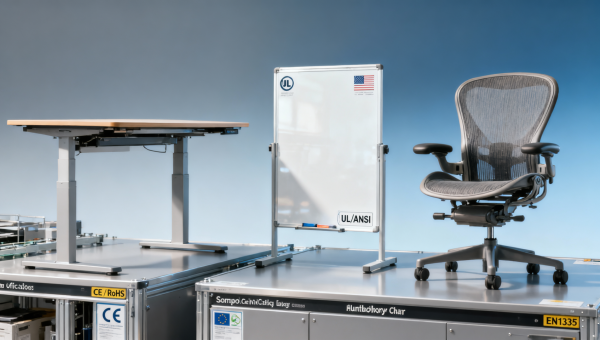
A U.S. school district may require ASTM F963-17 testing for children’s scissors. A German government tender may mandate CE marking plus GS certification for electric pencil sharpeners. An Australian university campus may enforce AS/NZS 4417.2 for fire-retardant filing cabinets. These aren’t optional add-ons—they’re contractual prerequisites.
Wholesalers lacking dedicated compliance teams often rely on ad-hoc lab reports or outdated certificates. That leads to failed customs clearance, storage penalties, or post-delivery recalls—costing up to 22% of order value in remediation and lost trust.
GCT’s editorial team validates every listed manufacturer’s compliance portfolio against live regulatory databases—and cross-checks certificate issue dates, scope coverage, and accredited lab affiliations. This eliminates guesswork during RFP evaluation.
How B2B Integration Determines Order Velocity
Global procurement isn’t about price alone—it’s about predictability. Institutional buyers need real-time inventory visibility, automated PO acknowledgments, EDI 850/856 support, and multi-currency invoicing. Yet 68% of mid-tier office supplies suppliers still rely on email-based order entry and manual Excel tracking.
That creates critical friction: 3–5 business days for quote turnaround, 2-day delays confirming stock availability, and no API-level integration with ERP systems like SAP S/4HANA or Oracle Cloud Procurement. For distributors managing 12+ country-specific catalogs, this means fragmented SKU mapping, duplicated labor, and missed reorder windows.
GCT-vetted partners provide standardized integration options—including pre-built connectors for Coupa, Jaggaer, and Zycus—reducing onboarding time to under 4 working days. Their average order-to-shipment SLA is 48 hours for in-stock items and ≤72 hours for configured SKUs.
What to Verify Before Partnering With a Scaling-Ready Supplier
Procurement professionals and channel partners should assess five non-negotiable dimensions before committing to a wholesale partner for international expansion:
- OEM Documentation Package: Includes product spec sheets with dimensional tolerances (±0.3mm for metal components), raw material traceability logs, and revision-controlled artwork files.
- Export Certification Portfolio: Valid, unexpired certificates covering target markets—with evidence of annual renewal and audit trails from accredited bodies (e.g., TÜV Rheinland, SGS, Intertek).
- Supply Chain Transparency: Tier-1 supplier list, factory audit summaries (BSCI/SMETA), and carbon footprint reporting for top 3 product categories.
- Digital Integration Readiness: Confirmed API endpoints, EDI capability matrix, and documented SLAs for uptime, response latency, and error resolution.
- Commercial Design Capacity: In-house industrial designers supporting custom ergonomics, brand-aligned color palettes, and sustainable material substitution (e.g., bamboo fiber pens, recycled PET binders).
GCT’s intelligence platform delivers exactly this—curated, verified, and continuously updated. We don’t list suppliers—we qualify them against institutional-grade sourcing criteria used by Fortune 500 procurement teams and global hospitality groups.
Why Partner With GCT for Your Next Office Supplies Sourcing Initiative
If you’re an information researcher assessing market viability, a procurement officer building a shortlist for an upcoming tender, or a distributor seeking certified OEM partners for APAC or EMEA rollout—you need more than directories. You need decision-grade intelligence.
GCT offers actionable access to: verified OEM/ODM capability reports with minimum order quantities (MOQs) by category; real-time compliance status dashboards per destination market; and case studies showing how suppliers supported large-scale deployments—from 50,000-unit smart campus rollouts to multi-year contracts with luxury retail chains.
Contact us today to request: a customized supplier shortlist matching your delivery timeline, certification requirements, and customization scope; sample validation support including physical swatches and test reports; or a confidential review of your current supply chain gaps against GCT’s Commercial Readiness Index™.
Search News
Hot Articles
- Stage Lighting & TrussCCTV5 Snooker Broadcast Drives 37% Surge in Stage Lighting Export InquiriesApr 21, 2026
- Indoor PlaygroundVietnam Mandates Child Finger-Trap Sensors for Indoor Play EquipmentApr 21, 2026
- Stage Lighting & TrussGuangdong vs. Shanxi CBA Game Highlights Domestic Smart Arena LightingApr 21, 2026
Popular Tags
Need ExpertConsultation?
Connect with our specialized leisureengineering team for procurementstrategies.
Recommended News
 Apr 14, 2026Fuzhou Hospital's Office Supply Tender Fails Due to Lack of BiddersFuzhou Hospital's office supply tender failed due to lack of qualified bidders, exposing gaps in regional suppliers' compliance and procurement experience. Learn key considerations for international buyers evaluating Chinese vendors.● Institutional Buyer
 Apr 14, 2026Chongqing Launches Office Supplies Procurement with 2-Hour Delivery FocusChongqing's office supplies procurement (KZQ26A00105) sets new standards with 2-hour delivery focus and 60% SME quota. Discover how this 886,700 RMB tender impacts logistics and supply chains in China's evolving B2B market.● Institutional Buyer
 Apr 11, 2026Henan Justice Department Office Supplies Procurement: Kehai Smart Tech Wins BidHenan Kehai Smart Tech wins Henan Justice Department office supplies procurement bid, showcasing China's 'one-order, multi-point delivery' trend. Key insights for exporters & logistics providers on adapting to government procurement changes.● Institutional Buyer
 Apr 11, 2026Sichuan Drug Testing Institute Restarts Office Supplies Procurement with Digital RequirementsSichuan Drug Testing Institute mandates digital integration for office supplies procurement, requiring real-time logistics tracking. Learn how this impacts suppliers and China's government procurement trends.● Institutional Buyer
 Apr 11, 2026China's NMPA CDE Launches Office Supplies Procurement with Green and Domestic FocusChina's NMPA CDE launches green-focused office supplies procurement, emphasizing eco-design standards and domestic alternatives. Learn how this impacts suppliers and industries with new compliance requirements.● Institutional Buyer
 Apr 21, 2026What size hotel desks work in compact guest roomsHotel desks for compact guest rooms: discover the right hotel furniture sizes, layouts, and hospitality procurement tips to maximize space, comfort, and luxury furniture appeal.● Institutional Buyer
 Apr 21, 2026Hotel desks with built in power are now expectedHotel desks with built in power are redefining hotel furniture and hotel room furniture. Explore smarter commercial furniture choices for hospitality procurement and better guest satisfaction.● Institutional Buyer
 Apr 20, 2026Commercial furniture upholstery stains that won’t lift—even with pro cleanersCommercial furniture stains won’t lift? Discover stain-resistant solutions for hotel beds, park benches, luxury furniture & more—backed by lab data & real-world performance.● Institutional Buyer
 Apr 19, 2026Commercial furniture fire ratings that change mid-projectCommercial furniture fire ratings—especially for hotel beds, park benches, hotel chairs, and luxury custom furniture—can shift mid-project. Avoid delays, cost overruns, and non-compliance with real-time, E-E-A-T–validated fire safety intelligence.● Institutional Buyer
 Apr 17, 2026Why commercial furniture specs matter more than price in 2026Commercial furniture, playground borders, sensory playgrounds & more—why specs trump price in 2026 for safety, ROI & brand trust. Discover how.● Institutional Buyer
 Apr 17, 2026Office furniture & equip: How ‘modular’ claims fall apart after three reconfigurationscommercial furniture, playground safety & sensory playground systems—why 'modular' fails after 3 reconfigurations. Get data-backed validation for amusement equipment, hotel tables & educational supplies.● Institutional Buyer
 Apr 16, 2026Custom fabrication for office furniture: Why CAD files alone don’t guarantee fit-on-siteCustom fabrication for hotel furniture, designer eyewear & luxury watches demands real-world fit—not just CAD files. Discover why OEM manufacturing, supply chain solutions & precision matter on-site.● Institutional Buyer
 Apr 16, 2026Luxury furniture finishes that resist UV fading outdoorsDiscover UV-resistant luxury furniture finishes for park benches, music stands & outdoor playgrounds—engineered for colorfastness, compliance, and premium aesthetics under harsh sun.● Institutional Buyer
 Apr 15, 2026Luxury furniture materials that age well — and those that don’tDiscover luxury furniture materials that age gracefully—ideal for park benches, music stands, orchestral instruments & more. Avoid costly failures.● Institutional Buyer
 Apr 15, 2026Why commercial furniture specs matter more than price in 2026Commercial furniture specs—playground borders, sensory playgrounds, music accessories & more—drive safety, durability & experience in 2026. Stop choosing by price alone.● Institutional Buyer
") Apr 13, 2026Why contract furniture quotes vary by 40%—and what’s really included (or missing)Discover why hotel desks, commercial playgrounds & trampoline park manufacturer quotes vary by 40%—and what’s truly included in hospitality furniture, outdoor play structures, microphone systems & more.● Institutional Buyer
Apr 13, 2026Why contract furniture quotes vary by 40%—and what’s really included (or missing)Discover why hotel desks, commercial playgrounds & trampoline park manufacturer quotes vary by 40%—and what’s truly included in hospitality furniture, outdoor play structures, microphone systems & more.● Institutional Buyer Apr 13, 2026Contract furniture lead times in 2026: why ‘standard’ delivery now means 14+ weeksHotel desks, hospitality furniture & commercial playgrounds now face 14+ week lead times in 2026. Discover why—and how to mitigate delays for outdoor play structures, trampoline park manufacturing, stage equipment & more.● Institutional Buyer
 Apr 14, 2026Office furniture & equip that supports hybrid work—but fails silently in summer heatOffice supplies, arcade games & percussion instruments—engineered for hybrid work AND summer heat. Discover heat-resilient office furniture that won’t fail silently.● Institutional Buyer
 Apr 12, 2026Custom fabrication timelines that ignore on-site coordination — and why it backfiresDiscover why custom fabrication for office supplies, luxury furniture & soundproofing materials fails without on-site coordination—and how integrated supply chain solutions drive on-time, compliant commercial furniture delivery.● Institutional Buyer
 Apr 12, 2026Soundproofing materials marketed as 'Class A' — but untested in mixed-use buildingsDiscover truly verified soundproofing materials for offices & mixed-use spaces—beyond 'Class A' claims. Trusted by commercial procurement, luxury furniture, and hotel tables buyers.● Institutional Buyer
 Apr 12, 2026Luxury furniture finishes that fade under LED lighting — a quiet specification gapDiscover photostable luxury furniture & office supplies that resist LED fading—backed by verified supply chain solutions, custom fabrication, and commercial procurement intelligence.● Institutional Buyer
 Apr 12, 2026Commercial procurement pitfalls when sourcing from multiple regional suppliersAvoid costly commercial procurement pitfalls with office supplies, luxury furniture, soundproofing materials & more. Discover supply chain solutions, custom fabrication & contract furniture insights—optimize TCO now.● Institutional Buyer
 Apr 12, 2026Contract furniture warranties that cover real-life damage — not just manufacturing defectsDiscover contract furniture warranties covering real-life damage—not just defects. Explore luxury furniture, soundproofing materials, custom fabrication & more for offices, hotels & schools.● Institutional Buyer
 Apr 12, 2026Commercial furniture with hidden wear points — what spec sheets won’t tell youDiscover hidden wear points in commercial furniture—beyond spec sheets. Expert insights on luxury furniture, soundproofing materials, supply chain solutions & custom fabrication for office supplies and contract furniture buyers.● Institutional Buyer