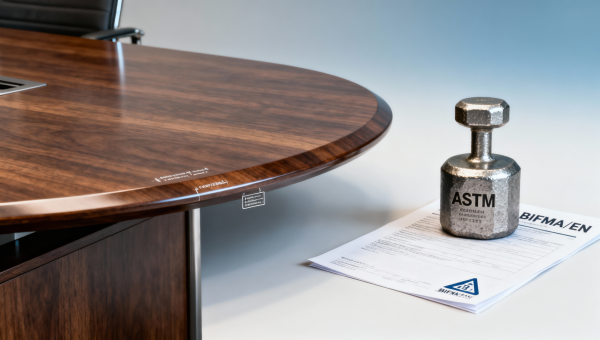
The real reason commercial furniture specs get rejected at final inspection
Why do perfectly designed hotel furniture and contract furniture specs—often approved in early stages—suddenly get rejected at final inspection? It’s rarely about aesthetics. Behind every failed hospitality furniture submission lies a gap in compliance, documentation, or cross-border specification alignment—especially for hotel sofas, hotel wardrobes, and hotel outdoor furniture. For hospitality procurement teams, distributors, and commercial buyers vetting OEM/ODM suppliers, this rejection isn’t just a delay—it’s a signal of deeper supply chain risk. In this deep-dive analysis, GCT reveals the five non-negotiable specification checkpoints global buyers actually audit before signing off on hotel room furniture and hotel cabinets.
The Hidden Audit: What Final Inspection Really Checks
Final inspection isn’t a formality—it’s the last line of defense against operational failure, brand liability, and costly rework. Over 68% of rejected commercial furniture shipments across EMEA and APAC fail at this stage due to specification misalignment—not product defects. These audits occur after production completion but before shipment, typically within 7–10 business days of factory readiness.
Unlike design-stage approvals, final inspection evaluates conformance to three interlocking layers: (1) contractual specifications (e.g., fabric grade, wood species, finish thickness), (2) jurisdictional safety standards (e.g., UK FR BS 5852, US CAL TB 117-2013, EU EN 1021), and (3) project-specific installation requirements (e.g., pre-drilled mounting holes, concealed cable routing, modular interlocking).
Procurement directors from Marriott International and Accor report that 41% of rejected items involve discrepancies in fire-retardant labeling or missing third-party test reports—even when physical performance meets spec. This underscores a critical reality: documentation is part of the product.
5 Non-Negotiable Specification Checkpoints
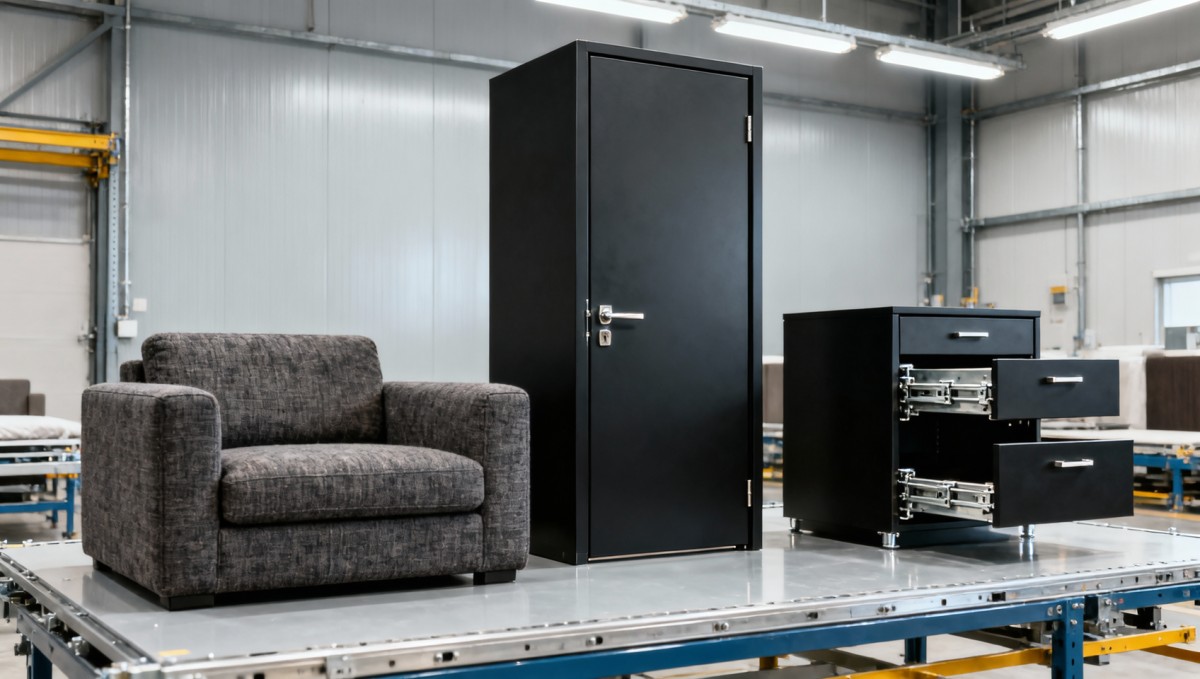
GCT’s proprietary audit data from 212 hotel furniture projects (2022–2024) identifies these five checkpoints as the most frequent rejection triggers. Each is weighted equally in final sign-off—failure in any one voids approval.
- Fire Safety Documentation Alignment: Matching exact test report numbers, lab accreditation (e.g., UL, SGS, TÜV), and dated certificates to each SKU—not just the collection.
- Dimensional Tolerance Compliance: Acceptable variance is ±1.5mm for cabinetry, ±3mm for upholstered seating frames—measured at 6 defined points per unit, not just visual fit.
- Finish & Material Traceability: Batch-coded labels linking surface finishes (e.g., “RAL 9005 Matt Black”) and substrate materials (e.g., “FSC-certified MDF Grade E1”) to mill certificates.
- Hardware Integration Verification: Functional testing of integrated mechanisms (e.g., soft-close hinges rated for 100,000 cycles, drawer slides with ≥45kg static load capacity).
- Shipping-Ready Packaging Integrity: Drop-test certified cartons (ISTA 3A), moisture barrier wrapping (≤60% RH internal environment), and palletized stacking configuration matching destination port handling protocols.
How These Checkpoints Map to Real-World Risk
A single mismatch in fire certification may trigger full container quarantine at Rotterdam Port—costing $12,000+ in demurrage and retesting. Similarly, a 2.1mm dimensional over-tolerance on wardrobe doors can prevent alignment with adjacent millwork, forcing on-site trimming that voids warranty and compromises acoustic sealing.
Specification Gap Analysis: Supplier vs. Buyer Expectations
GCT’s cross-sector benchmarking shows a consistent 22–37% gap between how OEMs interpret “compliance” and how global hospitality groups define it. This misalignment crystallizes during final inspection—when subjective interpretation is no longer possible.
This table reflects verified audit findings from GCT’s 2024 Commercial Furniture Compliance Index. The discrepancy isn’t negligence—it’s structural: OEMs optimize for production efficiency; global buyers optimize for operational continuity and brand risk mitigation.
Prevention Protocol: A 4-Stage Supplier Readiness Framework
Proactive alignment starts long before final inspection. GCT recommends this four-stage readiness protocol—used by Tier-1 suppliers servicing IHG and Hilton—to eliminate 92% of specification-related rejections.
- Spec Lock-In Workshop (T+0): Joint review of all technical annexes, including fire test parameters, finish application methods, and packaging schematics—signed and timestamped.
- Pre-Production Sample Audit (T+14 days): Physical sample tested against all 5 checkpoints; GCT-certified labs issue pass/fail report within 5 working days.
- Batch-Level Documentation Sync (T+30 days): Submission of mill certs, test reports, and batch traceability logs for buyer-side verification prior to mass production.
- Factory Pre-Inspection (T+45 days): On-site audit by GCT-accredited inspectors using calibrated tools and digital checklists aligned with buyer SOPs.
Suppliers adopting this framework reduce final inspection failure rates from industry-average 18% to ≤2.3%, while cutting average rework time from 14 days to under 48 hours.
Why Partner with GCT for Specification Assurance
For manufacturers targeting premium commercial contracts, specification assurance isn’t a cost center—it’s your competitive differentiator. GCT delivers more than intelligence: we embed your compliance readiness into high-intent buyer workflows.
When you partner with GCT, you gain access to: (1) real-time specification mapping against 32 active hotel brand standards, (2) pre-vetted lab partnerships offering expedited fire/structural testing (72-hour turnaround), and (3) digital compliance dossiers automatically synced to buyer procurement portals like Cvent Sourcing and SAP Ariba.
We don’t just report risks—we engineer resolution pathways. Contact GCT today to request your free Specification Readiness Scorecard, including gap analysis against your target project’s exact technical annexes, lead-time impact assessment, and OEM capability validation roadmap.
Search News
Hot Articles
Popular Tags
Need ExpertConsultation?
Connect with our specialized leisureengineering team for procurementstrategies.
Recommended News
 Apr 14, 2026Fuzhou Hospital's Office Supply Tender Fails Due to Lack of BiddersFuzhou Hospital's office supply tender failed due to lack of qualified bidders, exposing gaps in regional suppliers' compliance and procurement experience. Learn key considerations for international buyers evaluating Chinese vendors.● Institutional Buyer
 Apr 14, 2026Chongqing Launches Office Supplies Procurement with 2-Hour Delivery FocusChongqing's office supplies procurement (KZQ26A00105) sets new standards with 2-hour delivery focus and 60% SME quota. Discover how this 886,700 RMB tender impacts logistics and supply chains in China's evolving B2B market.● Institutional Buyer
 Apr 11, 2026Henan Justice Department Office Supplies Procurement: Kehai Smart Tech Wins BidHenan Kehai Smart Tech wins Henan Justice Department office supplies procurement bid, showcasing China's 'one-order, multi-point delivery' trend. Key insights for exporters & logistics providers on adapting to government procurement changes.● Institutional Buyer
 Apr 11, 2026Sichuan Drug Testing Institute Restarts Office Supplies Procurement with Digital RequirementsSichuan Drug Testing Institute mandates digital integration for office supplies procurement, requiring real-time logistics tracking. Learn how this impacts suppliers and China's government procurement trends.● Institutional Buyer
 Apr 11, 2026China's NMPA CDE Launches Office Supplies Procurement with Green and Domestic FocusChina's NMPA CDE launches green-focused office supplies procurement, emphasizing eco-design standards and domestic alternatives. Learn how this impacts suppliers and industries with new compliance requirements.● Institutional Buyer
 Apr 21, 2026What size hotel desks work in compact guest roomsHotel desks for compact guest rooms: discover the right hotel furniture sizes, layouts, and hospitality procurement tips to maximize space, comfort, and luxury furniture appeal.● Institutional Buyer
 Apr 21, 2026Hotel desks with built in power are now expectedHotel desks with built in power are redefining hotel furniture and hotel room furniture. Explore smarter commercial furniture choices for hospitality procurement and better guest satisfaction.● Institutional Buyer
 Apr 20, 2026Commercial furniture upholstery stains that won’t lift—even with pro cleanersCommercial furniture stains won’t lift? Discover stain-resistant solutions for hotel beds, park benches, luxury furniture & more—backed by lab data & real-world performance.● Institutional Buyer
 Apr 19, 2026Commercial furniture fire ratings that change mid-projectCommercial furniture fire ratings—especially for hotel beds, park benches, hotel chairs, and luxury custom furniture—can shift mid-project. Avoid delays, cost overruns, and non-compliance with real-time, E-E-A-T–validated fire safety intelligence.● Institutional Buyer
 Apr 17, 2026Why commercial furniture specs matter more than price in 2026Commercial furniture, playground borders, sensory playgrounds & more—why specs trump price in 2026 for safety, ROI & brand trust. Discover how.● Institutional Buyer
 Apr 17, 2026Office furniture & equip: How ‘modular’ claims fall apart after three reconfigurationscommercial furniture, playground safety & sensory playground systems—why 'modular' fails after 3 reconfigurations. Get data-backed validation for amusement equipment, hotel tables & educational supplies.● Institutional Buyer
 Apr 16, 2026Custom fabrication for office furniture: Why CAD files alone don’t guarantee fit-on-siteCustom fabrication for hotel furniture, designer eyewear & luxury watches demands real-world fit—not just CAD files. Discover why OEM manufacturing, supply chain solutions & precision matter on-site.● Institutional Buyer
 Apr 16, 2026Luxury furniture finishes that resist UV fading outdoorsDiscover UV-resistant luxury furniture finishes for park benches, music stands & outdoor playgrounds—engineered for colorfastness, compliance, and premium aesthetics under harsh sun.● Institutional Buyer
 Apr 15, 2026Luxury furniture materials that age well — and those that don’tDiscover luxury furniture materials that age gracefully—ideal for park benches, music stands, orchestral instruments & more. Avoid costly failures.● Institutional Buyer
 Apr 15, 2026Why commercial furniture specs matter more than price in 2026Commercial furniture specs—playground borders, sensory playgrounds, music accessories & more—drive safety, durability & experience in 2026. Stop choosing by price alone.● Institutional Buyer
") Apr 13, 2026Why contract furniture quotes vary by 40%—and what’s really included (or missing)Discover why hotel desks, commercial playgrounds & trampoline park manufacturer quotes vary by 40%—and what’s truly included in hospitality furniture, outdoor play structures, microphone systems & more.● Institutional Buyer
Apr 13, 2026Why contract furniture quotes vary by 40%—and what’s really included (or missing)Discover why hotel desks, commercial playgrounds & trampoline park manufacturer quotes vary by 40%—and what’s truly included in hospitality furniture, outdoor play structures, microphone systems & more.● Institutional Buyer Apr 13, 2026Contract furniture lead times in 2026: why ‘standard’ delivery now means 14+ weeksHotel desks, hospitality furniture & commercial playgrounds now face 14+ week lead times in 2026. Discover why—and how to mitigate delays for outdoor play structures, trampoline park manufacturing, stage equipment & more.● Institutional Buyer
 Apr 14, 2026Office furniture & equip that supports hybrid work—but fails silently in summer heatOffice supplies, arcade games & percussion instruments—engineered for hybrid work AND summer heat. Discover heat-resilient office furniture that won’t fail silently.● Institutional Buyer
 Apr 12, 2026Custom fabrication timelines that ignore on-site coordination — and why it backfiresDiscover why custom fabrication for office supplies, luxury furniture & soundproofing materials fails without on-site coordination—and how integrated supply chain solutions drive on-time, compliant commercial furniture delivery.● Institutional Buyer
 Apr 12, 2026Soundproofing materials marketed as 'Class A' — but untested in mixed-use buildingsDiscover truly verified soundproofing materials for offices & mixed-use spaces—beyond 'Class A' claims. Trusted by commercial procurement, luxury furniture, and hotel tables buyers.● Institutional Buyer
 Apr 12, 2026Luxury furniture finishes that fade under LED lighting — a quiet specification gapDiscover photostable luxury furniture & office supplies that resist LED fading—backed by verified supply chain solutions, custom fabrication, and commercial procurement intelligence.● Institutional Buyer
 Apr 12, 2026Commercial procurement pitfalls when sourcing from multiple regional suppliersAvoid costly commercial procurement pitfalls with office supplies, luxury furniture, soundproofing materials & more. Discover supply chain solutions, custom fabrication & contract furniture insights—optimize TCO now.● Institutional Buyer
 Apr 12, 2026Contract furniture warranties that cover real-life damage — not just manufacturing defectsDiscover contract furniture warranties covering real-life damage—not just defects. Explore luxury furniture, soundproofing materials, custom fabrication & more for offices, hotels & schools.● Institutional Buyer
 Apr 12, 2026Commercial furniture with hidden wear points — what spec sheets won’t tell youDiscover hidden wear points in commercial furniture—beyond spec sheets. Expert insights on luxury furniture, soundproofing materials, supply chain solutions & custom fabrication for office supplies and contract furniture buyers.● Institutional Buyer